
Why in News?
Andhra Pradesh Police arrested a Red Sanders smuggler facing 99 cases recently, highlighting the continuing illegal trade in this valuable timber.
| UPSC Relevance: GS-3 Environment and Biodiversity: Species in News, Biodiversity Prelims: Red Sanders |
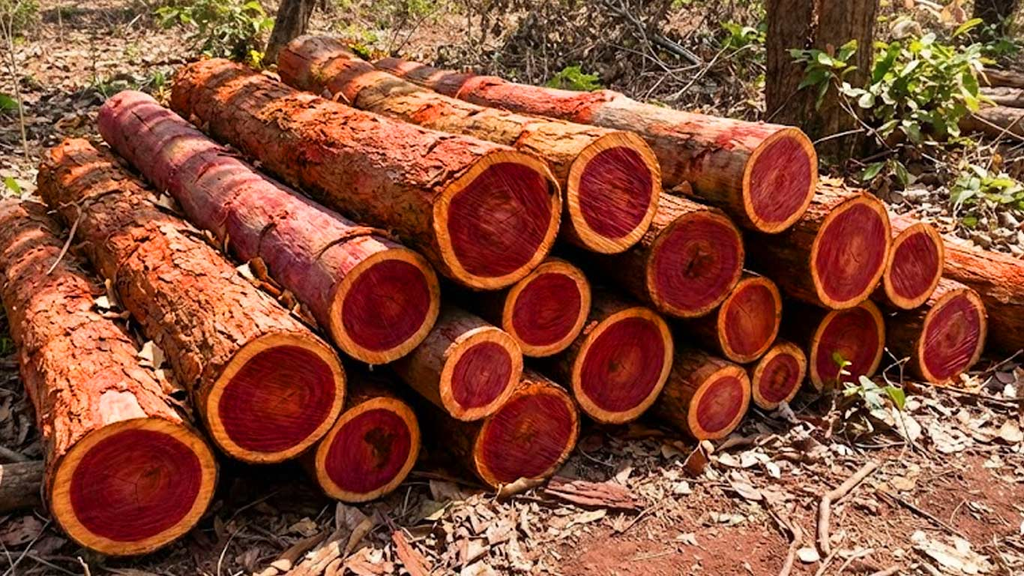
Key facts about Red Sanders:
- Common name: Red sandalwood, Rakta Chandan and Lal Chandan.
- Distinctive wood: Prized for its deep-red, largely non-aromatic heartwood, unlike fragrant sandalwood.
- Pigment: Its heartwood yields santalin, a natural red dye.
- Growth: A slow-growing tree, taking approximately 25-40 years to attain maturity in natural forests.
Distribution and Habitat:
- Range: The Indian endemic species is found in the southern Eastern Ghats, with its principal natural populations in Andhra Pradesh, particularly the Seshachalam landscape. Smaller cultivation areas (non-native) include adjoining Tamil Nadu and Karnataka.
- Habitat: Tropical dry deciduous forests, typically with rocky, well-drained soils and a seasonally hot, dry climate.
- Adaptation: Drought-resistant
Economic Importance and Threats:
- Uses: Luxury furniture, carvings, musical instruments, dyes and traditional medicinal preparations.
- Principal threat: High timber demand, especially in East Asian markets, drives illegal logging and international smuggling.
- Additional pressures: Habitat degradation, agricultural expansion, grazing and forest fires; slow growth makes recovery difficult.
Conservation Status:
- IUCN Red List: Endangered
- CITES: Appendix II; international trade is regulated through permits and sustainability safeguards. This does not itself impose a blanket trade ban.
UPSC PYQ 2016
Q. With reference to ‘Red Sanders’, sometimes seen in the news, consider the following statements:
1. It is a tree species found in a part of South India.
2. It is one of the most important trees in the tropical rainforest areas of South India.
Which of the statements given above is /are correct?
(a) 1 only
(b) 2 only
(c) Both 1 and 2
(d) Neither 1 nor 2
Answer: (a)
Tell Google you want more of this.
Add Anantam IAS as a preferred sourceOne tap, and this site shows up more often in your own Top Stories, AI Overviews and AI Mode. Remove it any time.