Why in the News?
The High Seas Treaty was ratified by over 60 countries in September; it will now be enforced in January 2026.
UPSC Relevance
GS3, Conservation, Environmental Pollution and Degradation, Environmental Impact Assessment.
Prelims – Environmental laws
PYQ
2018 – What is wetland? Explain the Ramsar concept of ‘wise use’ in the context of wetland conservation. Cite two examples of Ramsar sites from India.
2023
Consider the following statements:
1. Recently, all the countries of the United Nations have adopted the first-ever compact for international migration, the ‘Global Compact for Safe, Orderly and Regular Migration (GCM)’.
2. The objectives and commitments stated in the GCM are binding on the UN member countries.
3. The GCM addresses internal migration or internally displaced people also in its objectives and commitments.
How many of the above statements are correct?
a) Only one
b) Only two
c) All three
d) None
The High Seas Treaty 2023
- Formal Name: Biodiversity Beyond National Jurisdiction (BBNJ) agreement.
- Legally Binding treaty operating under the UNCLOS, 1982
- 3rd treaty to be approved under UNCLOS.
- Adopted by UN.
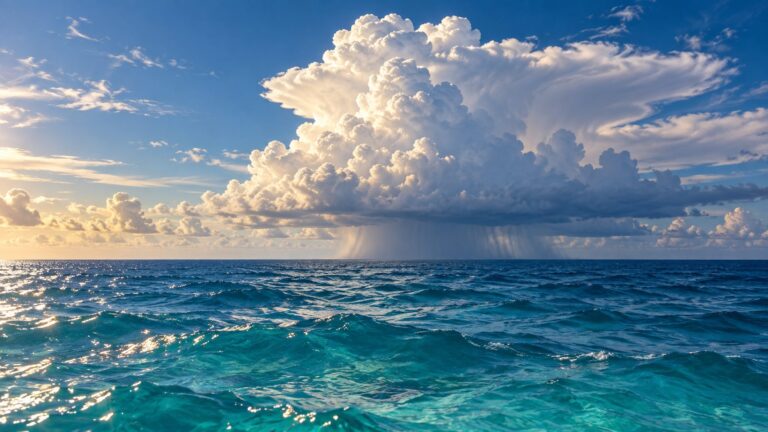
- Purpose: Creates a framework to govern and manage common marine biodiversity on the high seas.
- High seas – seas beyond 200 nautical miles or about 370 Kms from any country’s coastline.
- 2/3rd of the world’s oceans.
- High seas – seas beyond 200 nautical miles or about 370 Kms from any country’s coastline.
- Key Goals: Sets rules for sustainable use of marine biodiversity and addresses threats from climate change, overfishing, and pollution.
- Enforcement: As of September 2025, the treaty reached 60 state ratifications (the required number) to trigger its entry into force. This means it is scheduled to take effect globally on January 17, 2026.
- Members : Currently, the Agreement counts 145 signatories and 74 Parties (countries that have fully ratified it).
- Both states and Regional Organisations can be members.
- Signed by India in September 2024. India is not a founding Member.
- Features:
- Marine Genetic Resources (MGRs): Identifies them as the “common heritage of humankind.” Commitment to the sustainable use of MGRs.
- Area-Based Management Tools (ABMTs): Formal establishment of Marine Protected Areas (MPAs) for conservation.
- Environmental Impact Assessments (EIAs): Required for activities potentially affecting these areas, considering cumulative and transboundary impacts.
- Access and Benefit-Sharing (ABS): An access and benefit-sharing committee will be established to frame guidelines for accessing benefits from the commercialization of resources.
- Financial and Capacity Support: A special fund will be established to help developing countries, alongside provisions for Capacity Building and technology transfer.
UNCLOS
| Feature | Key Fact/Information | Significance |
| Formal Name | United Nations Convention on the Law of the Sea (UNCLOS) | Establishes a comprehensive legal framework for all marine and maritime activities globally. |
| Adoption/Entry | Adopted in 1982; Entered into force in 1994 (after 60 ratifications). | Replaced the four separate 1958 Geneva Conventions with a single, unified treaty. |
| Core Principle | Law and Order for the World’s Oceans. | Governs the use of oceans, allocation of rights and jurisdiction, resource management, and peaceful dispute settlement. |
| Maritime Zones Defined | Defines and regulates five main zones measured from the baseline: Internal Waters, Territorial Sea, Contiguous Zone, Exclusive Economic Zone (EEZ), and High Seas. | Clearly delineates coastal state sovereignty and international waters/rights. |
| EEZ Limit | Coastal states have sovereign rights over resources up to 200 nautical miles from the baseline. | Grants coastal states exclusive rights to explore, exploit, conserve, and manage living and non-living resources in this zone. |
| High Seas Status | Beyond the EEZ (Area) is considered the “common heritage of mankind” (seabed resources). | Ensures traditional freedoms (navigation, overflight, etc.) but also includes obligations for conservation. |
| Institutions Created | Established the International Seabed Authority (ISA) and the International Tribunal for the Law of the Sea (ITLOS). | ISA regulates deep seabed mining; ITLOS provides a mechanism for dispute settlement. |
Meaning of ‘Common Heritage of Humankind’
- Definition: This principle supports equitable access and benefit-sharing of marine resources for all nations.
- Contrast: It is in tension with the principle of “freedom on the high seas,” which emphasizes unrestricted rights of states for navigation, resource usage, and research.
- Application in Treaty: The common heritage principle is only partially applicable in the treaty, particularly regarding MGRs, which is described as a compromise rather than a full resolution.
Significance of the BBNJ Treaty
The BBNJ Treaty, also known as the High Seas Treaty, is important for managing areas beyond national Exclusive Economic Zones (EEZ) for several reasons:
- Conservation:
- 30×30 Pledge: It establishes a legal framework to help countries meet the pledge agreed at COP15 to protect 30% of the world’s land and sea by 2030.
- Regulation and Resource Management:
- Vulnerability Reduction: The mandatory Regulation-EIA (Environmental Impact Assessment) will reduce the vulnerability of these areas from potentially damaging activities like deep-sea mining.
- Resource Potential: It helps manage resources like polymetallic nodules, deep-water oil reserves, fisheries, and tourism.
- Inclusion and Participation:
- Data Sharing: Inter-country sharing of data and technology will help advance scientific research and environmental monitoring.
- Inclusion: Access and benefit sharing, alongside seeking Free, Prior, and Informed Consent (FPIC) of Indigenous Peoples and local communities, promotes inclusion and empowerment.
Challenges and Ambiguities of the High Seas Treaty
- Uncertainty over Guiding Principles:
- The concurrent application of the “common heritage of humankind” and “freedom of the high seas” principles creates ambiguity in exploration, research, and benefit-sharing.
- Governance of Marine Genetic Resources (MGRs):
- There were concerns over “biopiracy” and the unfair exploitation of discoveries by developed countries, potentially excluding developing nations from profits.
- The treaty includes a framework for sharing monetary and non-monetary benefits, but lacks clear details on how such benefits will be calculated or shared.
- Reluctance of Major Powers:
- The treaty’s effectiveness is threatened by the non-participation of key nations like the U.S., China, and Russia, who have yet to ratify it.
- Interaction with Multilateral Institutions:
- The treaty must coexist and not conflict with existing international institutions (like the International Seabed Authority and Regional Fisheries Management Organisations) to prevent legal conflicts and fragmentation of ocean governance.
- Ambiguous Language:
- The text suggests the ambiguous language concerning MGRs and the common heritage of humankind principle will challenge the execution of the treaty, despite the treaty providing more clarity on other aspects of UNCLOS.
- Scope and Coverage:
- It falls short of addressing key threats like fishing and industrial expansion such as deep-sea mining.
- Access and benefit sharing is limited to only aquatic resources.
- Enforcement Weaknesses:
- It did not identify a suitable international enforcement agency.
- It did not negotiate or include financial commitments for enforcement.
- Delayed Implementation :
- The long, drawn-out process of ratification (requiring 60 ratifications) has delayed its implementation.
Way Ahead
To successfully implement the BBNJ Treaty and address its challenges, the following actions are suggested:
- Universal Ratification:
- Focus: Encourage universal ratification, especially by key maritime nations like the U.S., China, and Russia, whose non-participation currently undermines the treaty’s effectiveness and enforcement capacity.
- Clarify and Finalize Operational Mechanisms:
- Marine Genetic Resources (MGRs): Finalize clear, detailed, and enforceable operational guidelines for calculating and distributing both monetary and non-monetary benefits to ensure fair and equitable sharing.
- Environmental Impact Assessments (EIAs): Develop and harmonize clear standards and guidelines for the EIA process, ensuring a strong scientific basis for all assessments.
- Strengthen Institutional Cooperation:
- Coordination: Establish robust coordination mechanisms to integrate the BBNJ framework with existing international and regional bodies, such as the International Seabed Authority (ISA) and Regional Fisheries Management Organisations (RFMOs), to prevent legal conflicts and fragmentation of ocean governance.
- Ensure Effective Implementation and Enforcement:
- MPA Management: Implement regular monitoring and adopt dynamic management approaches for Marine Protected Areas (MPAs).
- Compliance: Develop mechanisms to ensure compliance, particularly concerning the “freedom of the high seas” principle conflicting with conservation efforts, and encourage states to take responsibility for activities under their flag.
- Commit to Funding and Capacity Building:
- Financial/Technical Support: Ensure sustained financial and technological support to developing countries, making the established fund operational and ensuring technology transfer mechanisms are effective to achieve the “no country left behind” principle
Tell Google you want more of this.
Add Anantam IAS as a preferred sourceOne tap, and this site shows up more often in your own Top Stories, AI Overviews and AI Mode. Remove it any time.