Why in News?
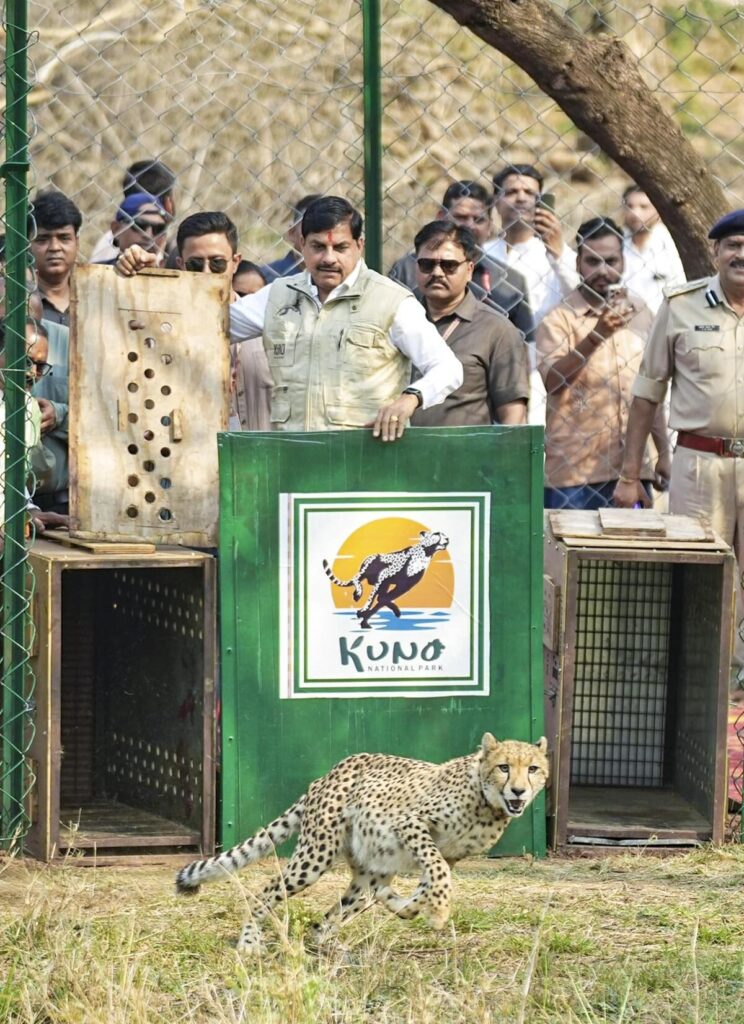
Two female cheetahs brought from Botswana were released into the wild at Kuno National Park on May 11, 2026, after completing their quarantine period. With this, India’s cheetah population has risen to 57, including cubs born in India. The development marks another milestone in Project Cheetah, the world’s first intercontinental large carnivore translocation project.
UPSC Relevance
GS-III: Wildlife conservation in India, biodiversity governance, ecosystem restoration, challenges in species reintroduction, India’s international environmental cooperation.
Background: Extinction and Return of the Cheetah
The cheetah once inhabited large parts of India, especially grasslands and semi-arid ecosystems. However, due to excessive hunting, habitat degradation, and decline of prey species during the colonial period, the species rapidly declined.
In 1952, the Government of India officially declared the cheetah extinct in the country. The Asiatic cheetah, once found in India, now survives only in critically low numbers in Iran.
To restore ecological balance and revive grassland ecosystems, India launched Project Cheetah in 2022.
What is Project Cheetah?
Project Cheetah is an ambitious conservation initiative aimed at reintroducing African cheetahs into suitable habitats in India.
The project was launched on September 17, 2022, when the first batch of cheetahs arrived from Namibia and were released by Prime Minister Narendra Modi at Kuno National Park.
Objectives of the roject
- Restore cheetahs as a functional part of India’s ecosystems.
- Revive degraded grasslands and open forest habitats.
- Enhance biodiversity conservation.
- Develop India as a global model for species reintroduction.
- Promote eco-tourism and local livelihoods.
Phases of Cheetah Reintroduction
Namibia Phase (2022)
Eight cheetahs were brought from Namibia in the first phase.
South Africa Phase (2023)
Twelve additional cheetahs were translocated from South Africa.
Botswana Phase (2026)
Nine cheetahs arrived from Botswana in February 2026 to improve genetic diversity and strengthen the long-term viability of the population.
The recent release of two female cheetahs into the wild represents the next stage — preparing them for independent hunting and adaptation.
Why was Kuno National Park Chosen?
Kuno National Park was selected because of:
- Large prey base.
- Suitable dry deciduous and grassland habitat.
- Relatively low human pressure.
- Existing conservation infrastructure.
- Potential for landscape-level expansion.
Originally, Kuno had also been prepared as a possible relocation site for Asiatic lions from Gujarat.
Importance of the Botswana Cheetahs
Wildlife experts believe the Botswana cheetahs are significant because they:
- Increase genetic diversity.
- Reduce risks of inbreeding.
- Improve adaptability of the cheetah population.
- Enhance chances of long-term population sustainability.
Genetic diversity is crucial for disease resistance and reproductive success in small populations.
Ecological Significance of Cheetah Reintroduction
Restoration of Grassland Ecosystems
The cheetah is a flagship species for grasslands and scrublands, ecosystems historically neglected in India’s conservation policy.
Its presence can help conserve:
- Blackbuck
- Chinkara
- Indian hare
- Grassland bird species
Trophic Regulation
As a predator, the cheetah contributes to balancing prey populations and maintaining ecological equilibrium.
Umbrella Species Effect
Protecting cheetah habitats indirectly protects many other species sharing the same ecosystem.
Challenges Facing Project Cheetah
Adaptation Difficulties
African cheetahs must adapt to:
- Indian climate conditions.
- Different prey behaviour.
- Human-dominated landscapes.
Mortality Concerns
Several cheetahs and cubs have died since the project began due to:
- Infections.
- Heat stress.
- Territorial conflicts.
- Radio-collar complications.
This has triggered debate regarding project preparedness and veterinary protocols.
Limited Habitat
India’s grasslands are fragmented and often classified as “wastelands,” making conservation difficult.
Human-Wildlife Conflict
As cheetahs disperse outside protected areas, risks of conflict with local communities may rise.
Long-Term Genetic Sustainability
Maintaining a healthy breeding population will require periodic introduction of unrelated cheetahs.
International Cooperation in Wildlife Conservation
Project Cheetah reflects growing international collaboration in biodiversity conservation involving:
- Namibia
- South Africa
- Botswana
- International conservation organisations
The project also demonstrates India’s expanding role in global wildlife diplomacy.
Broader Conservation Significance
India now hosts:
- Tigers
- Lions
- Leopards
- Snow leopards
- Cheetahs
This makes India one of the few countries with such diverse big cat populations.
The initiative also complements broader conservation programmes such as:
- Project Tiger
- Project Lion
- Project Snow Leopard
Way Forward
Develop Grassland Conservation Policy
India needs a dedicated national grassland ecosystem policy to protect habitats essential for cheetahs and associated fauna.
Strengthen Scientific Monitoring
Continuous veterinary surveillance, genetic assessment, and behavioural monitoring are essential for project success.
Expand Suitable Habitats
Future relocation sites such as:
- Gandhi Sagar Wildlife Sanctuary
- Nauradehi Wildlife Sanctuary
should be scientifically prepared.
Community Participation
Local communities must receive:
- Livelihood support.
- Compensation mechanisms.
- Eco-tourism benefits.
Improve Inter-State Conservation Planning
Landscape-level wildlife corridors should be developed to ensure long-term species dispersal and gene flow.
Conclusion
Project Cheetah represents far more than the return of a species. It is a test of India’s ability to restore lost ecosystems, balance development with conservation, and undertake scientifically informed wildlife management. The successful integration of cheetahs into Indian habitats could become a landmark achievement in global conservation history.
Practice Questions
1. Consider the following statements regarding Project Cheetah:
- It is the world’s first intercontinental large carnivore translocation project.
- The project involves the reintroduction of Asiatic cheetahs into India.
- Kuno National Park is located in Madhya Pradesh.
How many of the above statements are correct?
(a) Only one
(b) Only two
(c) All three
(d) None
Answer: (b)
2. Which of the following ecosystems is most closely associated with cheetah conservation in India?
(a) Mangrove forests
(b) Alpine ecosystems
(c) Grasslands and scrublands
(d) Tropical evergreen forests
Answer: (c)
Mains
- “Project Cheetah represents a shift in India’s conservation strategy from species protection to ecosystem restoration.” Discuss.
- Examine the ecological and governance challenges associated with species reintroduction programmes in India.
Tell Google you want more of this.
Add Anantam IAS as a preferred sourceOne tap, and this site shows up more often in your own Top Stories, AI Overviews and AI Mode. Remove it any time.