
Why in News?
In a major global consensus, Polycystic Ovary Syndrome (PCOS) has been renamed as Polyendocrine Metabolic Ovarian Syndrome (PMOS). The previous name incorrectly implied the disease was strictly an ovarian or reproductive issue. This caused delays in diagnosis and fragmented medical care.
| UPSC Relevance: GS-3 Science and Technology: Biology and Biotechnology Prelims: Polyendocrine Metabolic Ovarian Syndrome (key facts) |
What is PMOS?
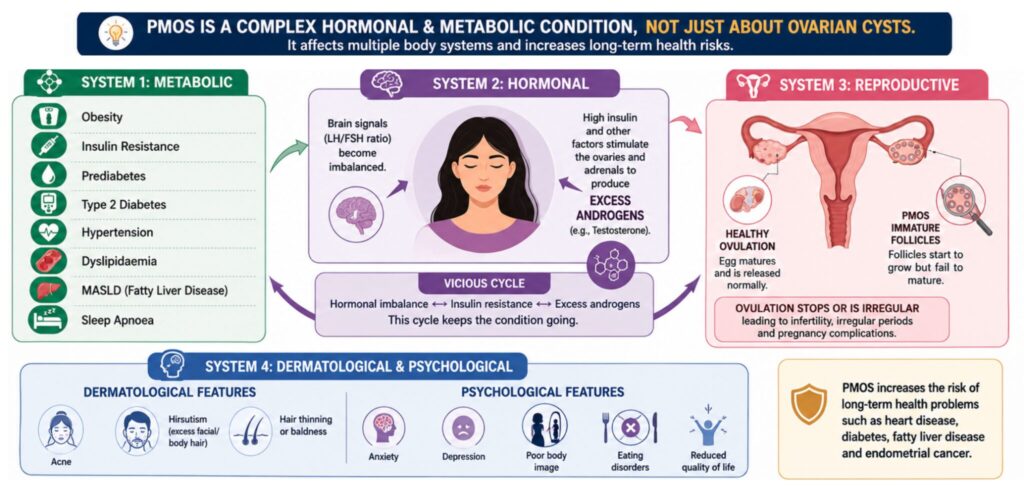
- Polyendocrine Metabolic Ovarian Syndrome (PMOS) is a complex hormonal and metabolic disorder affecting women, particularly during reproductive age.
- It is characterised by:
- Hormonal imbalance
- Excess androgen production
- Ovulatory dysfunction
- Metabolic abnormalities
- Multiple immature ovarian follicles
- The condition affects nearly 8-18% women in India, while globally, around 170 million women are estimated to be affected during their reproductive years.
Why was PCOS Renamed as PMOS?
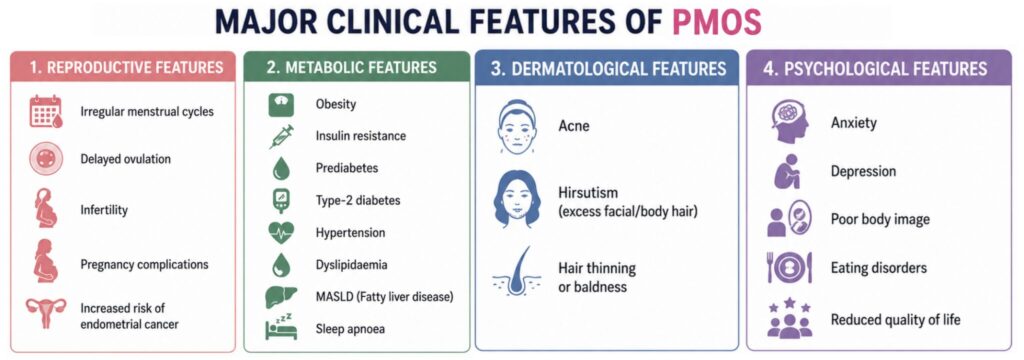
The earlier term “PCOS” was considered medically misleading because it focused mainly on ovarian cysts, while the disorder actually involves multiple body systems.
- Misleading Reference to Cysts:
- During a normal menstrual cycle, several follicles begin developing in the ovary. One becomes dominant, matures fully, and releases an egg (ovulation), while the remaining follicles naturally regress.
- In PMOS, this maturation process is disrupted. Many follicles stall midway, remaining small and immature, a state called arrested follicle development. These immature follicles accumulate and appear as multiple small, fluid-filled structures, misleadingly called “cysts.”
- Ignored Metabolic Risks: The older terminology underemphasised major metabolic complications such as obesity, Insulin resistance, Type-2 Diabetes, Hypertension, Fatty liver disease and Cardiovascular disease.
- Narrow Reproductive Focus: PCOS was widely perceived merely as a fertility disorder, leading to delayed diagnosis, stigma related to infertility and inadequate long-term management.
Diagnosis of PMOS:
Currently, diagnosis still follows existing PCOS criteria, which include at least two of the following:
- Irregular ovulation
- Excess androgen production (hyperandrogenism)
- Polycystic ovarian morphology on ultrasound.
Significance for India:
India has a particularly high burden of the disorder due to a sedentary lifestyle, rising obesity, genetic predisposition to insulin resistance and urban dietary changes.
- The PMOS framework may help India adopt preventive screening, adolescent awareness programmes, lifestyle-based interventions and integrated women’s healthcare strategies.
- The updated terminology aims to improve early screening and help women better understand long-term health risks.
The renaming of PCOS to PMOS reflects a deeper scientific understanding that the condition is a lifelong multisystem endocrine-metabolic disorder rather than merely an ovarian abnormality.
Tell Google you want more of this.
Add Anantam IAS as a preferred sourceOne tap, and this site shows up more often in your own Top Stories, AI Overviews and AI Mode. Remove it any time.