Why in News?
On November 20, 2026, MeitY announced a revised domestic value addition methodology for six IT hardware product groups under India’s public procurement preference framework.
- The revision covers desktop and all-in-one computers, laptops, thin clients, servers, monitors and interactive flat-panel displays.
- Eligible manufacturing processes, Indian research and development, product design and intellectual property receive recognition in the calculation.
- A standard format supports calculation, supplier self-certification and verification of declarations.
- The methodology takes effect six months after publication in the Official Gazette, replacing corresponding provisions of the earlier notification.
- Public procurement can influence where firms assemble, source and design equipment because government demand creates an incentive to qualify under local-content rules.
- The policy question is whether the declared domestic contribution can be traced to eligible work and inputs within India.
UPSC Relevance
Prelims Relevance
- Domestic value addition and local-content calculation.
- Bill of Materials as a record of product components.
- Surface Mount Technology in motherboard assembly.
- Self-certification and verification of supplier declarations.
- Gazette publication as the trigger for the transition period.
Mains Relevance
GS Paper 3
- Using public purchasing to develop domestic manufacturing and design capability.
- Balancing measurable local content, supplier participation and procurement accountability.
GS Paper 2
- Designing transparent certification and verification in government contracting.
Background and Context
What the Procurement Methodology Measures
Domestic value addition connects a hardware product’s eligible Indian contribution to its treatment under the procurement preference framework.
- Public procurement preference gives domestic production a role in purchasing decisions. MeitY’s sector-specific methodology explains how local content is calculated for the covered hardware, within the wider procurement framework.
- The official announcement describes a process-oriented calculation based on the Bill of Materials. This connects the declaration to identifiable components and manufacturing activities within the finished product.
- A Bill of Materials lists the parts that make up a product. Its usefulness for verification depends on connecting those parts with the location and nature of eligible manufacturing work.
- Think of a laptop supplied to a public institution. The relevant question is which eligible inputs and processes contribute domestically, alongside any recognised design or research contribution claimed by its manufacturer.
- The revision applies to specified product groups. A supplier needs to identify the applicable product and methodology before making its declaration, rather than assume one calculation covers every electronic device.
Which Domestic Activities Receive Recognition
The revised approach recognises several stages of production and gives weight to eligible intellectual work performed in India.
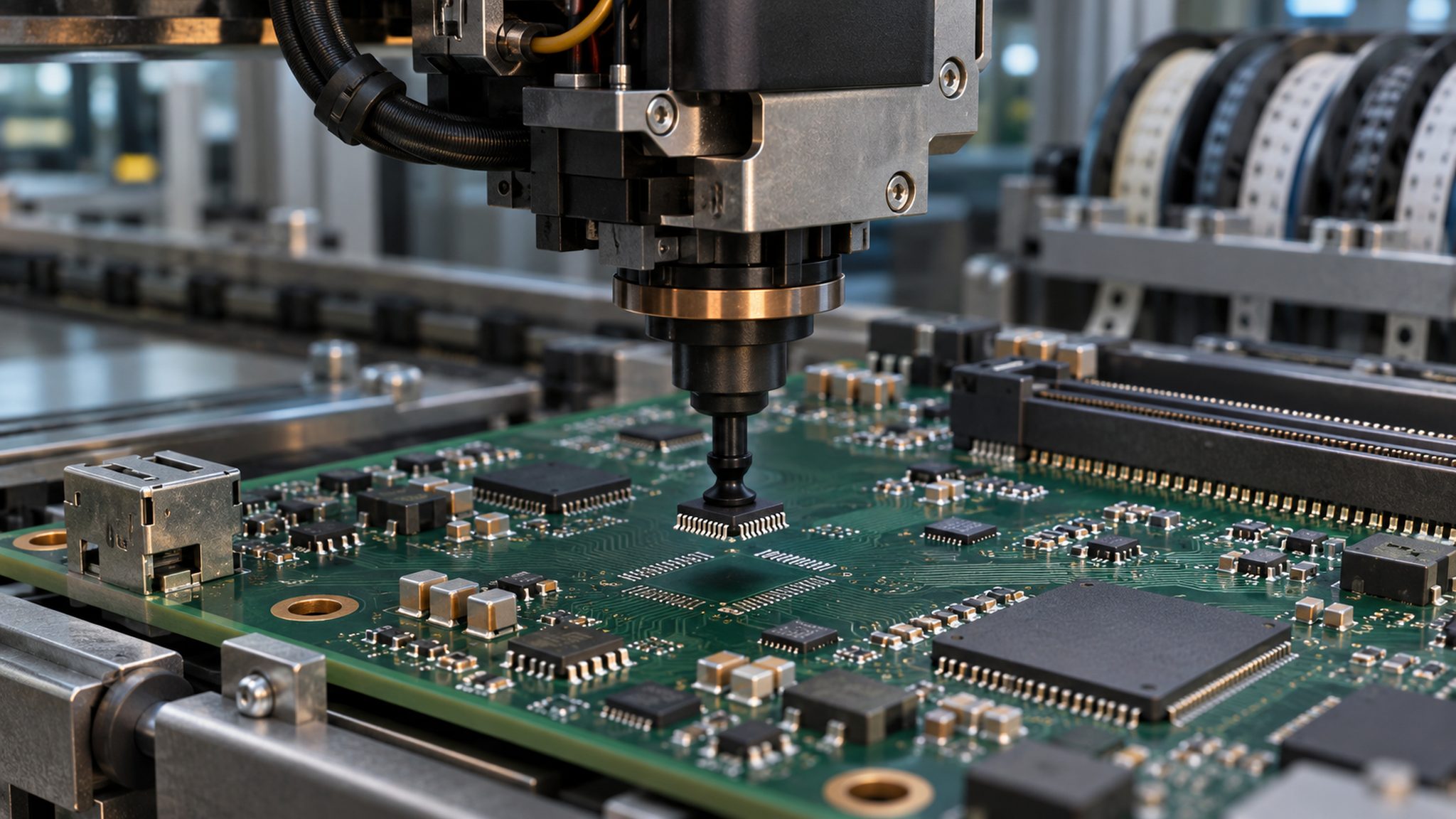
- Motherboard assembly through Surface Mount Technology is an eligible activity. It places electronic components onto circuit-board surfaces, providing a concrete manufacturing step that can be associated with production records.
- The framework also recognises domestic bare circuit boards and assembly, testing and packaging of memory and storage. These activities connect the accounting exercise to work performed on identifiable parts.
- Display assembly, domestic chassis and power modules, final assembly and testing also appear in the announced methodology. Each claim concerns a particular input or process within the finished hardware product.
- Eligible in-house research and development in India receives weightage. Additional recognition for Indian product design and intellectual property extends the policy incentive to developing the product’s underlying technical capability.
- This complements the broader electronics manufacturing chain. Here, the practical task is to establish which eligible contribution enters the procurement calculation and retain the evidence supporting it.
Why Verification and Timing Matter
A common calculation format helps buyers examine declarations and helps suppliers understand the evidence expected from them.
- Self-certification means the manufacturer declares its domestic value addition. The standardised format makes declarations more comparable and provides a basis for objective verification whenever such checking is required.
- A declaration and its supporting evidence perform different roles. The declaration states the claimed contribution, while production, sourcing and design records help a reviewer assess whether the claim follows the applicable methodology.
- The central administrative challenge is consistent treatment. Similar eligible activities should be evaluated consistently across suppliers, while unsupported claims should be identified through examination of the underlying records.
- The transition period begins from Gazette publication. The press announcement gives a six-month interval, so implementation planning must use the actual Gazette date to establish when the revised provisions apply.
- The stated goals include manufacturing, indigenous capability and employment. Their achievement will depend on supplier responses and purchasing practice, including whether recognised activities expand and declarations remain credible over time.
Way Forward
Make Declarations Checkable
- Suppliers should map each claimed activity to the applicable provision and retain consistent sourcing, production and design records.
- Procuring agencies should apply the standard format consistently and seek clarification when a declaration cannot be reconciled with supporting evidence.
- Implementation guidance should explain the Gazette-based commencement date and give worked examples using the notified methodology.
Conclusion
- Domestic value addition is an accounting and verification question with industrial-policy consequences. The revised approach links procurement recognition to eligible manufacturing, research and design contributions within India.
- A strong policy assessment should examine both capability creation and credible declarations. The announced method provides a structure for measurement, while its results depend on implementation after the prescribed transition.
UPSC Practice Questions
Prelims MCQ 1
Consider the following statements about MeitY’s revised IT hardware domestic value addition methodology.
- It recognises eligible in-house research and development undertaken in India.
- It introduces a standardised format for calculation and self-certification.
- It takes effect immediately on the date of the PIB press announcement.
How many of the above statements are correct?
(a) Only one (b) Only two (c) All three (d) None
Answer: (b) Only two
Explanation:
The first two statements are correct. The methodology takes effect six months after its publication in the Official Gazette.
Prelims MCQ 2
What is the main purpose of using a Bill of Materials in the announced domestic value addition methodology?
(a) To identify components and relate eligible domestic contributions to a product (b) To determine the country’s annual fiscal deficit (c) To certify every imported component as domestically manufactured (d) To replace all product testing requirements
Answer: (a) To identify components and relate eligible domestic contributions to a product
Explanation:
The revised framework uses a process-oriented, Bill of Materials-based mechanism to calculate domestic value addition for the covered products.
UPSC Mains Questions
- Explain how public procurement rules can encourage domestic manufacturing and design capability. Discuss the importance of verifiable local-content declarations.
- What administrative challenges arise when procurement preferences depend on domestic value addition? Suggest measures to improve consistent assessment.
Source: PIB, Ministry of Electronics and Information Technology.
Frequently Asked Questions
What is domestic value addition in this procurement context?
It measures the eligible domestic contribution to covered IT hardware under the procurement methodology. The revised framework recognises specified manufacturing activities and gives weight to eligible Indian research, design and intellectual property.
Which IT hardware products are covered?
The six groups are desktops and all-in-one computers, laptops, thin clients, servers, computer monitors and interactive flat-panel displays. Suppliers must use the provisions applicable to the relevant product.
Does self-certification remove the possibility of verification?
Manufacturers self-certify their calculations using the standardised format. The announcement expressly states that this structure supports objective verification of the domestic value addition they declare, wherever required.
When does the revised methodology take effect?
It takes effect six months after publication in the Official Gazette. The precise implementation date must be calculated from the Gazette publication date, rather than inferred from the press announcement.
Tell Google you want more of this.
Add Anantam IAS as a preferred sourceOne tap, and this site shows up more often in your own Top Stories, AI Overviews and AI Mode. Remove it any time.