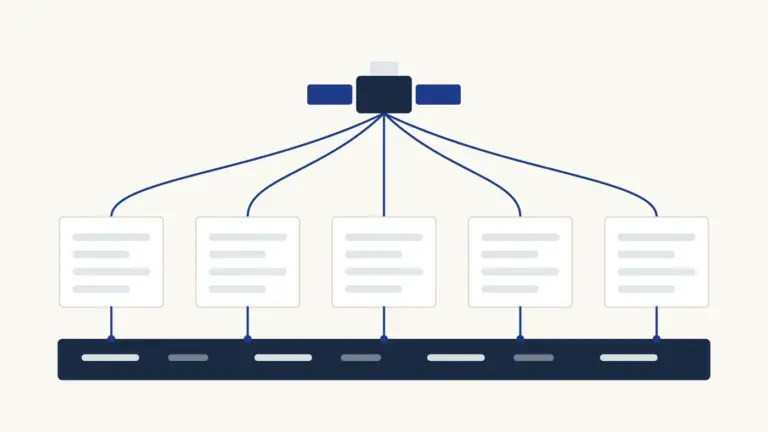
India’s growth strategy has quietly changed. In a world of geo-economic fragmentation, exports can no longer be relied on to carry growth, so the burden shifts to domestic engines. The most important of those levers is deregulation and economic freedom, and the reason it matters is arithmetic: lowering the cost of doing legitimate business raises output without requiring new capital.
Deregulation means reducing unnecessary government controls, approvals, licences and compliance requirements, so that legitimate economic activity carries lower cost, lower delay and greater certainty. It is not deregulation in the sense of removing safeguards. It is the removal of requirements that no longer serve a live public purpose.
The Major Areas
Simplifying business laws. Reducing redundant compliance and digitising approvals lowers the time and cost of doing business. The concrete instruments are decriminalisation of minor offences, simplification of taxation procedures and single-window clearance systems.
Rationalising labour regulation. India’s labour framework carries multiple registrations, inspections and returns. Rationalisation aims to reduce that load while preserving essential worker protections, with the labour codes as the vehicle.
Simplifying environmental compliance. Transparent, risk-based approvals can protect ecological interests while improving investment predictability. This is the area where deregulation carries the most genuine risk, and it needs the most care.
Reforming land and building regulation. Simplifying land-use conversion, reforming building bye-laws and rationalising setback and parking norms directly affect the feasibility of infrastructure and industrial development.
Rationalising utility charges. Industrial electricity tariffs often carry significant cross-subsidies. Rationalising them improves competitiveness, though it raises a distributional question that has to be answered rather than ignored.
Risk-based regulation. Regulatory intensity proportionate to actual risk rather than uniform across all firms.
- Longer validity for fire no-objection certificates for low and moderate risk establishments
- Differential inspection frequency based on the risk profile of the industry
- Simplified compliance for low-risk MSMEs
Why This Is Now a State Subject
This is the most important structural point on the topic, and it is frequently missed.
Most business regulation that actually binds a firm relates to land, buildings, local trade, utilities and municipal governance. Those subjects fall within the legislative or administrative domain of state governments and urban local bodies, not the Union.
The Centre has already reformed a great deal of what it controls: FDI norms, tax procedure, insolvency, company law compliance. What remains is where the friction now lives. A factory does not stall for want of a central approval; it stalls for a building plan sanction, a fire clearance, a land-use conversion or an electricity connection.
The consequence is that the next generation of ease-of-doing-business reform has to be led by states, and measured at the district and municipal level rather than at the national one.
What Has Already Moved
- FDI liberalisation in services: progressive relaxation in insurance, telecom, civil aviation and single-brand retail, encouraging capital inflows, technology transfer and competition
- Higher education: UGC Regulations 2023 allowing reputed foreign universities to establish campuses in India
- Decriminalisation: conversion of minor procedural business offences from criminal to civil liability
- Single-window systems and digitised approvals at both central and state level
The Honest Limits
Three cautions belong in any serious treatment.
First, deregulation is not costless in the environmental domain. Faster clearance and weaker clearance are not the same thing, and the distinction survives only if the risk classification underlying it is technically sound and publicly available.
Second, cross-subsidy rationalisation in electricity transfers cost from industrial to domestic and agricultural consumers unless it is paired with direct benefit transfer. Presenting it purely as a competitiveness measure hides who pays.
Third, compliance burden is not evenly distributed. A large firm has a compliance department; a small firm has the owner. Uniform deregulation therefore delivers its largest proportionate gains to MSMEs, which is an argument for sequencing reform there first.
The Way Forward
- Publish state-level regulatory cost indices so that reform is measurable and comparable across states.
- Adopt risk classification formally, with published criteria, so that lighter compliance is defensible rather than discretionary.
- Extend decriminalisation across state legislation, where most of the remaining criminal provisions for technical violations sit.
- Tie central incentives to municipal reform, since city-level approvals are where most delay occurs.
- Separate speed from standard in environmental clearance: shorten timelines, keep thresholds.
Economic freedom is not an ideological preference here. It is the cheapest available source of growth for an economy that cannot count on the world buying more of what it makes.
Frequently Asked Questions
What is deregulation?
Deregulation means reducing unnecessary government controls, approvals, licences and compliance requirements so that individuals and businesses can undertake legitimate economic activity with lower cost, lower delay and greater certainty. It is not the absence of regulation but the removal of regulation that serves no live public purpose.
Why is deregulation the priority reform now?
Because geo-economic fragmentation limits how far India can rely on exports for growth. If external demand cannot be counted on, domestic growth engines have to be strengthened, and the cheapest way to raise domestic output is to lower the cost of doing legitimate business.
What are the main areas of deregulation?
Simplifying business laws, rationalising labour regulation, simplifying environmental compliance without weakening ecological protection, reforming land and building regulation, rationalising utility charges and cross-subsidies, and moving to risk-based regulation.
What is risk-based regulation?
Instead of imposing identical requirements on every business, regulatory intensity is made proportionate to actual risk. High-risk industries face stricter oversight; low-risk businesses face lighter compliance. Examples include longer validity for fire no-objection certificates for low and moderate risk establishments, differential inspection frequency by risk profile, and simplified compliance for low-risk MSMEs.
What is decriminalisation of minor offences?
It is the conversion of minor procedural and technical business violations from criminal offences into civil penalties. Criminal liability for a filing error is disproportionate, and its main effect is to raise perceived risk for entrepreneurs and to create discretion at the inspector level.
Why must the next generation of reform be state-led?
Because most business regulation relating to land, buildings, local trade, utilities and municipal governance falls within the legislative or administrative domain of states and urban local bodies. The Centre has already reformed much of what it controls, so further gains depend on state and municipal action.
How has FDI liberalisation in services contributed?
Progressive liberalisation of foreign direct investment norms in insurance, telecom, civil aviation and single-brand retail has encouraged capital inflows, technology transfer and greater competition in sectors that were previously restricted.
What did the UGC Regulations 2023 change?
They allow reputed foreign universities to establish campuses in India. The intent is to promote competition, improve quality and strengthen India as a global education destination, and it is an example of deregulation applied to a service sector rather than to manufacturing.
Practice Questions
Prelims MCQs
- Deregulation is best defined as
(a) Complete withdrawal of the state from economic activity
(b) Reducing unnecessary controls, approvals and compliance requirements
(c) Privatisation of public sector undertakings
(d) Removal of all environmental safeguards
Answer: (b) Deregulation targets unnecessary controls and compliance cost, not the existence of regulation as such. - Risk-based regulation implies that
(a) All businesses face identical compliance requirements
(b) Regulatory intensity is proportionate to actual risk
(c) Only large firms are inspected
(d) Compliance is voluntary for MSMEs
Answer: (b) High-risk industries face stricter oversight while low-risk businesses face lighter compliance. - The UGC Regulations, 2023 are associated with
(a) Online degree programmes only
(b) Foreign universities establishing campuses in India
(c) Reservation in private universities
(d) A common entrance test for all universities
Answer: (b) They permit reputed foreign universities to set up campuses in India. - Most regulation affecting land, buildings, local trade and utilities falls within the domain of
(a) The Union Government alone
(b) State governments and urban local bodies
(c) The judiciary
(d) Statutory regulators such as SEBI
Answer: (b) These subjects are largely state and municipal, which is why further ease-of-doing-business gains must be state-led. - Decriminalisation of minor offences in business laws primarily aims to
(a) Increase penalty amounts
(b) Replace criminal liability for technical violations with civil penalties
(c) Remove all penalties
(d) Transfer enforcement to the police
Answer: (b) Converting procedural violations into civil penalties removes disproportionate criminal exposure and reduces discretionary enforcement.
Mains Questions
- With export-led growth constrained, deregulation is India's most important domestic reform. Critically examine. (250 words)
- Risk-based regulation improves both compliance and safety outcomes. Discuss with reference to Indian regulatory practice. (250 words)
- The next generation of ease-of-doing-business reform must be led by state governments. Examine the constitutional and administrative reasons. (250 words)
- Discuss the case for decriminalising minor procedural offences in Indian business law. (150 words)
- Environmental deregulation risks trading ecological safeguards for growth. How should this tension be managed? (150 words)
Tell Google you want more of this.
Add Anantam IAS as a preferred sourceOne tap, and this site shows up more often in your own Top Stories, AI Overviews and AI Mode. Remove it any time.