The Planning Commission of India served the country for 65 years. Set up in 1950 as a non-statutory advisory body, it shaped twelve Five-Year Plans, built public sector behemoths, and allocated hundreds of lakh crores in central plan assistance to states. Yet in 2014, the Prime Minister announced from the ramparts of the Red Fort that the body would be replaced. The National Institution for Transforming India (NITI) Aayog took its place on 1 January 2015. This was not merely an administrative change. It marked a philosophical shift in how India thought about the state's role in development, from imperative planner to cooperative facilitator. For UPSC aspirants, understanding why the Planning Commission was dismantled and what replaced it is essential for questions on economic governance, fiscal federalism, and public administration.
The Planning Commission in Its Prime
The Planning Commission was created through a Cabinet Resolution in March 1950. Its chairperson was the Prime Minister, and it had a Deputy Chairperson of cabinet rank along with full-time and part-time members drawn from economics, industry, and public administration. Its mandate included assessing the country's resources, formulating Five-Year Plans, allocating resources to states, and monitoring plan implementation.
For four decades, it was the most influential economic body in the country. It set sectoral priorities, fixed targets for steel and cement capacity, decided which states received plan grants, and influenced which industries the private sector could enter. The Commission worked closely with the Ministry of Finance, but its financial clout often exceeded that of line ministries.
Why the Commission Was Dismantled
Several deep problems had accumulated by the 2010s.
More Suited to the Pre-1991 Era
The Commission was designed for a command economy in which the state was planner, financer, and implementer. Government decided what to build, allocated money, and executed through public sector units. The private sector's role was marginal. The 1991 LPG reforms changed this equation fundamentally. The private sector became the main driver of investment and employment. The Commission's imperative planning model, based on five-year targets and directive allocations, no longer fit a liberalised, globalised, largely market-driven economy.
One-Size-Fits-All Planning
Plans were formulated at the national level with limited state participation. The role of states was essentially to approve and implement centrally conceived plans. This ignored the enormous regional diversity of India. Punjab's agriculture problems are different from Odisha's, and the needs of hill states differ from those of industrial states. A uniform template stifled local innovation.
Damage to Fiscal Federalism
The Planning Commission had the power to allocate central funds to states. This gave it extraordinary leverage over state finances, undermining states' financial and operational autonomy. Critics argued that this was unconstitutional in spirit, since the Finance Commission is the constitutional body tasked with fiscal transfers under Article 280.
Overlap with the Finance Commission
Both bodies transferred funds to states, but in different forms. The Finance Commission gave untied statutory grants based on a constitutional formula. The Planning Commission gave tied plan grants with central schemes attached. This dual flow confused accountability and left states juggling two masters.
Limited Evaluative Role
The Commission focused heavily on formulating Five-Year Plans but rarely undertook rigorous critical evaluation of schemes and their outcomes. Policy-making became reactive, a firefighting exercise, rather than evidence-based course correction.
Concentration of Power
The Commission's combination of financial muscle and proximity to the Prime Minister concentrated power in ways that undermined the Finance Ministry and individual line ministries. Over time, this bred bureaucratic resentment and reduced coordination.
Differences Between the Planning Commission and NITI Aayog
| Criteria | Planning Commission | NITI Aayog |
|---|---|---|
| Set up as | Non-Statutory body (1950) | Non-Statutory body (2015) |
| Nature of Planning | Imperative, Five-Year Plans | Indicative: 15-Year Vision, 7-Year Strategy, 3-Year Action Agenda |
| Best Suited To | Pre-1991 Era | Post-1991 Era |
| Power to Allocate Finances | Yes, tied grants | No, recommends |
| Role of Government | Planner, Financer, Implementer | Coordinator, Enabler, Facilitator |
| Role of Private Sector | Limited | Enhanced |
| Role of States | Limited to approval | Participative planning (cooperative federalism) |
| Acts as Think Tank | No | Yes, publishes SDG India Index, Health Index, Water Index |
| Role with Ministries | Top-down | Collaborative (e.g., Aspirational Districts) |
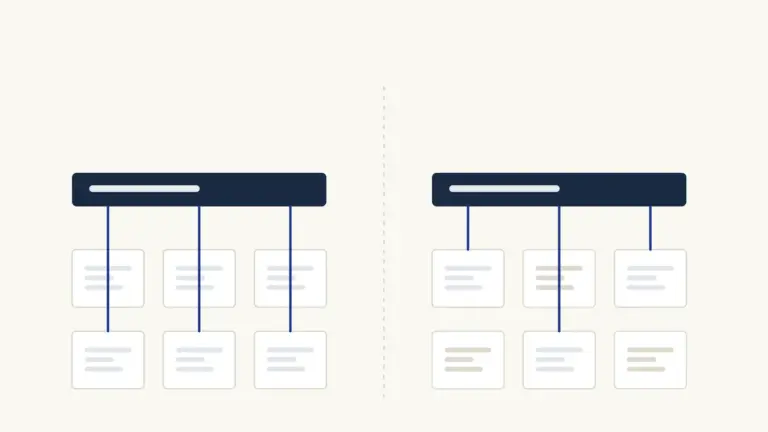
The practical difference is sharp. Earlier, if the government wanted a new highway, the Commission planned it, the Ministry of Finance allocated funds, and NHAI built it. Today, the government identifies the need, creates a policy and regulatory environment through NITI Aayog‘s indicative documents, and the private sector finances and builds the highway through Hybrid Annuity Model PPPs.
What NITI Aayog Actually Does
NITI Aayog's functions cluster around four roles. First, it is a think tank, producing research, sectoral strategies, and international comparison studies. Second, it is an outcome monitor, publishing indices like SDG India Index, Composite Water Management Index, State Health Index, and School Education Quality Index, which create competitive federalism among states. Third, it is a coordinator, running flagship initiatives like the Aspirational Districts Programme and Aspirational Blocks Programme, which converge central schemes in the most backward geographies. Fourth, it serves as a platform for Centre-state dialogue through the Governing Council chaired by the Prime Minister with all Chief Ministers as members.
Criticism of NITI Aayog
The shift has not been without criticism. Some argue that NITI Aayog has no financial teeth, so its recommendations can be ignored. Others say that cooperative federalism has been uneven, with some states engaging seriously while others disengage. Still others worry that without a long-term planning horizon, India risks short-termism in infrastructure and social investment.
Latest Developments (2024-26)
NITI Aayog has sharpened its outcome-monitoring role. The Aspirational Blocks Programme, launched in 2023 and scaled through 2024-26, takes the district-level model to 500 of India’s most underdeveloped blocks. The Governing Council met in 2024 and 2025 to steer a Viksit Bharat 2047 vision, an explicit long-horizon planning document. NITI Aayog continues to anchor India’s G20 policy work, chair task forces on critical minerals, semiconductors, electric mobility, and green hydrogen, and publish multi-dimensional poverty and innovation indices. The institutional model has matured into what the government calls indicative, participative, and outcome-oriented planning, with the 16th Finance Commission now responsible for fiscal transfers.
UPSC Relevance
Prelims
Direct factual comparisons between Planning Commission and NITI Aayog are frequent. Know that both are non-statutory, that NITI Aayog has no financial allocation power, the 15-year Vision / 7-year Strategy / 3-year Action Agenda structure, and NITI indices like SDG India Index and Health Index.
Mains (GS II and GS III)
This topic cuts across governance, federalism, and economic policy. Frame answers around why the Commission outlived its design environment, how NITI Aayog embodies cooperative federalism, and the continuing role of indicative planning in a market economy. Acknowledge criticisms about NITI's lack of financial authority, and argue that its value lies in convening, benchmarking, and outcome measurement.
Essay
Dismantling the Planning Commission is a rich example in essays on institutional reform, federalism, or the evolving role of the Indian state. It shows that even constitutional culture evolves, and that institutions must match the economy they serve.
Tell Google you want more of this.
Add Anantam IAS as a preferred sourceOne tap, and this site shows up more often in your own Top Stories, AI Overviews and AI Mode. Remove it any time.