The Central Industrial Security Force (CISF) is India’s central armed police force for guarding vital installations, raised on 10 March 1969 under the Central Industrial Security Force Act, 1968. It works under the Ministry of Home Affairs and, as of March 2026, protects 361 installations across the country, 70 of them airports. At most large Indian airports, the personnel at the terminal gate and the frisking booth belong to this force.
Most people meet the CISF at an airport and assume that’s its whole job. It isn’t. The force was built for public sector plants and took on airports only after the hijacking of flight IC-814 in 1999, and it also runs the only full fire service among the central forces. The second confusion is legal: a 1999 amendment let the CISF advise private companies, while a 2009 amendment let it actually guard them. Keep those layers apart and the force makes sense.
What is the Central Industrial Security Force?
The Central Industrial Security Force is a statutory armed force of the Union that protects installations the Union government specifies, starting with its own industrial undertakings. It is one of the Central Armed Police Forces under the Ministry of Home Affairs, and it has carried one unusual rule since its first day: an undertaking that asks for the force pays for it. The table below holds the facts worth fixing first.
| Fact | Detail |
|---|---|
| Full form | Central Industrial Security Force (CISF) |
| Raised | 10 March 1969, the day the Act was brought into force |
| Legal basis | Central Industrial Security Force Act, 1968 (Act 50 of 1968) |
| Status | Armed force of the Union since the 1983 amendment, in force from 15 June 1983 |
| Parent ministry | Ministry of Home Affairs; one of the Central Armed Police Forces |
| Head | Director General, who holds command of the force under section 7 of the Act |
| Headquarters | Block 13, CGO Complex, Lodhi Road, New Delhi |
| Motto | “Suraksha aur Sanraksha” (security and protection), as given on the force’s website |
| Coverage | 361 vital installations, including 70 airports (Union Home Minister, March 2026) |
One number is missing from the table on purpose. The CISF began with about 3,000 personnel, and a citizen’s charter dated December 2008, hosted by the MHA, put it at about 1,05,000. There is no single, dated official figure for its strength today, so the safer numbers to quote are the installations and airports the Home Minister gave in March 2026.
Why was the CISF raised, and how did it become an armed force?
The CISF was raised because India’s new public sector plants were guarded by their own watch and ward staff, and that arrangement was found wanting. The 1968 Bill’s statement of objects put it plainly: the watch and ward staff generally guarded entrances and perimeters and stopped unauthorized entry. A steel plant or a refinery needed more than a gatekeeper.
The force’s own account starts with a fire. On 29 January 1964, a major fire at the Heavy Engineering Corporation plant in Ranchi caused heavy losses. A commission headed by Justice B. Mukherjee cited sabotage as the cause and recommended a disciplined, uniformed force to provide fire and security cover to public sector undertakings.
Parliament answered with the Central Industrial Security Force Act, 1968, numbered Act 50 of 1968. The Act didn’t start the force on the day it passed. Section 1(3) let the Union government choose the date, and a notification of 3 March 1969 brought the Act into force on 10 March 1969. That is why the CISF is “established” in 1968 on paper and “raised” in 1969 in practice. It is also why its Raising Day falls in March: the ceremony in March 2026 was the 57th.
The 1983 amendment
The turning point came in 1983. An amending Act, Act 14 of 1983, in force from 15 June 1983, converted the CISF into an armed force of the Union. Its statement of objects noted that the force had existed for about 13 years and that it needed to become “a more effective instrument” for guarding vital industrial undertakings.
That phrase does real work. An armed force of the Union is raised and controlled by the Union under its own law, with its own rank structure and discipline. It belongs to the category the Constitution names in Entry 2 of the Union List: “any other armed forces of the Union”. Before 1983, the CISF was closer to a trained security staff lent to factories. After 1983, it was a disciplined central force that happened to specialize in factories.
The same amendment widened the power to arrest without warrant, so that it covers assault on members of the force and offenses against property lying inside the premises they guard. A 1989 amendment, Act 20 of 1989, then added a duty to protect the employees of the undertakings, not just the plant. Its statement of objects records that the CISF was deployed in 182 government and public undertakings at the time, a useful anchor against the 361 installations of 2026.
What powers does the CISF Act give the force?
The CISF Act does three separate jobs, and each one sits in its own section:
- Section 3 constitutes the force and, since the 1999 amendment, lets the Union government entrust it with “such other duties” as it decides. This clause is the legal door through which a factory force walked into airports and, later, Parliament.
- Section 14 lets the Director General deploy the force at an undertaking on a request from its Managing Director. Since 2009 that covers joint venture and private undertakings, not just the public sector.
- Section 14A, added in 1999, allows the force to provide technical consultancy on security to private industrial establishments.
Two more provisions matter. Section 7 vests superintendence of the force in the Union government and its command in the Director General. Section 11 gives members the power to arrest without warrant in specified cases, and section 10 lets the Union government entrust duties “within and outside India”.
Most notes blur the two amendments, so take one example, a private refinery that wants CISF protection, and follow what the law allowed it:
- Before December 1999, the answer was no. The Act covered undertakings owned by the Central Government and the public sector.
- From 29 December 1999, the refinery could buy advice. A CISF team could study its threats and audit its security arrangements for a fee, and the consultancy service was formally launched on 7 December 2001.
- From 10 January 2009, the refinery could ask for the force itself: armed CISF personnel posted at its gates, with the refinery paying the cost.
So the consultancy role is a 1999 idea and the deployment role a 2009 one. Consultancy sells a plan; deployment puts armed personnel at the gate.
The MHA approves the consultancy fee and it is revised every two years; under the schedule in force from 18 July 2023, a security consultancy for a large establishment costs ₹16.25 lakh, and a combined security and fire consultancy ₹21 lakh.
The 2009 change carries a retrospective start date of 10 January 2009, some six weeks after the November 2008 Mumbai attacks. Its statement of objects gave the reason directly: with the growing threat from terrorist outfits, private and joint venture industries also needed CISF security, to be provided on a cost-reimbursement basis. The same principle had applied to public sector plants since 1968, when the original Bill specified that the cost of a deployment would be borne by the undertaking and not by the government.
Why does the CISF guard airports and Parliament?
Because the Union government used its section 3 power to hand the force new jobs, usually after a specific security failure. Each takeover follows the same pattern: an incident exposes a gap at a high-value site, and the access-control drill the CISF built in industry is moved there.
Airports
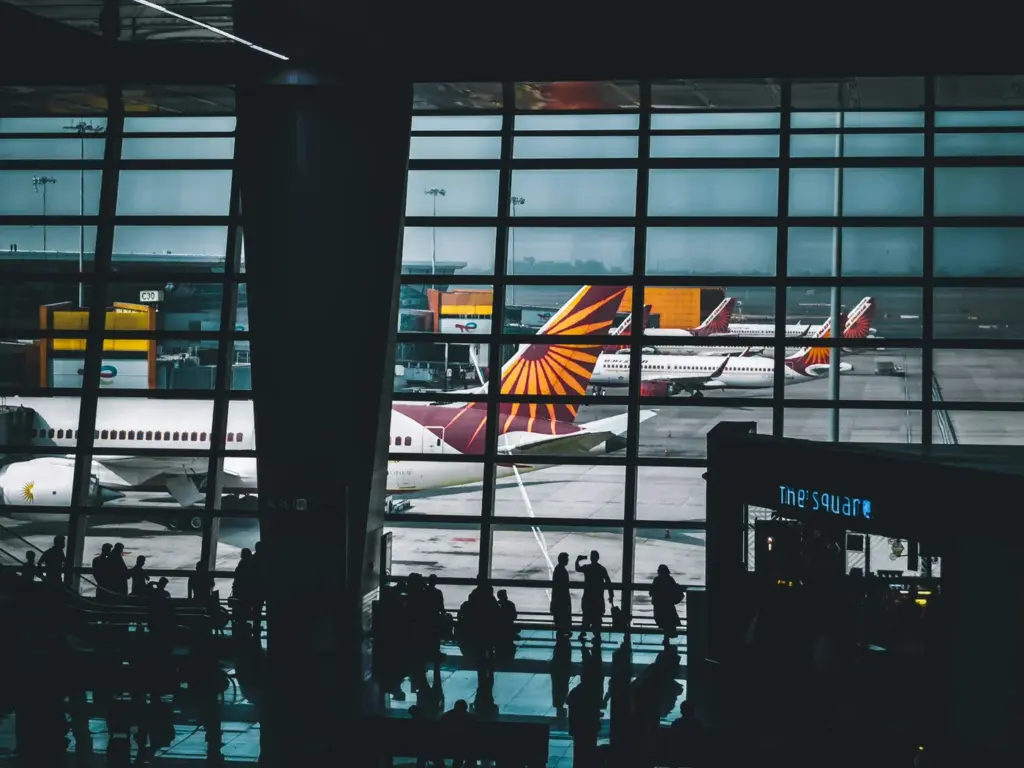
The airport role traces back to the hijacking of Indian Airlines flight IC-814, which was taken from Kathmandu to Kandahar in December 1999. The move to deploy the CISF at airports was first discussed after that hijacking, and a 2001 report tied it to demands for a more professional force at sensitive installations. The pace picked up after the September 2001 attacks in the United States; by that October, Kolkata’s airport was lined up for takeover.
The 2008 citizen’s charter counted 56 airports under the CISF, and the Home Minister put the figure at 70 in March 2026, with Noida International Airport and Navi Mumbai Airport among the newest. The force runs them through a dedicated Airport Sector. At an airport, the CISF is the first responder to an attack or a hijack attempt; the specialized counter-hijack assault remains the job of the National Security Guard.
Delhi Metro
Delhi Police guarded the Delhi Metro from 2002. With the network “high on the terror radar”, as a PTI report put it in March 2007, the MHA moved it to the CISF from 15 April 2007. By March 2025, the Home Minister said, the force was handling more than 70 lakh passengers a day on the network. Official releases name only the Delhi Metro, so don’t assume CISF cover for other city metros.
Parliament
The newest addition is the most symbolic. On 13 December 2023, two intruders jumped into the Lok Sabha chamber from the public gallery and released smoke canisters. From 20 May 2024, a contingent of 3,317 CISF personnel took full charge of counter-terror and anti-sabotage security for both the old and the new Parliament buildings, replacing the CRPF’s Parliament Duty Group and Delhi Police.
How is the CISF organized, and why does it run a fire service?
The CISF runs as a pyramid under a Director General at its New Delhi headquarters, with a fire wing alongside the security units. The field formations work like this:
- Units sit at each protected installation and are supervised through zones under Deputy Inspectors General.
- Sectors come under Inspectors General. The 2008 citizen’s charter listed six, including a separate Airport Sector with its headquarters in New Delhi.
- Reserve battalions supply trained personnel at short notice. In January 2025 the Union government approved two new ones of about 1,025 personnel each.
- The Special Security Group handles the VIP protection work assigned to the force.
- Training institutions are led by the National Industrial Security Academy (NISA) in Hyderabad, with recruit training centers in several states, including Thakkolam in Tamil Nadu and Mundali in Odisha.
The force also lends people outward. The National Disaster Response Force draws its 16 battalions from the central armed police forces, and the CISF is one of the contributors. The note on the internal security grid maps how these forces fit together.
The fire wing
The fire wing goes back to the origin story. The Mukherjee commission had asked for a force to provide fire and security cover, so the first CISF fire unit, 53 personnel strong, was inducted at FACT in Cochin on 16 April 1970, barely a year after the force was raised.
A separate fire service cadre, with its own recruitment rules, came much later, on 12 January 1991. So the CISF had firefighters for two decades before it had a fire cadre, an easy pair of dates to swap in revision.
Today it’s the only central armed police force with a full-fledged fire wing, covering 115 undertakings and government establishments, the Parliament House complex among them. In 2024 alone the wing attended 3,291 fire calls, according to the CISF fire wing page. Its staff train at the Fire Service Training Institute, set up at Deoli in 1987 and moved to the NISA campus at Hakimpet, Hyderabad, in 1999.
What has changed for the CISF since 2024?
The CISF’s legal footing hasn’t moved since 2009: it’s still an armed force of the Union under the 1968 Act. What has changed is the size of its job and the rules for its top posts. The dated record:
- 20 May 2024: the CISF took full charge of the Parliament House complex.
- 13 November 2024: the MHA approved the force’s first all-women battalion, to be trained for VIP protection as commandos and for airport and Delhi Metro duty. Women then made up more than 7% of the force.
- January 2025: the Union government approved two new reserve battalions.
- 7 March 2025: the 56th Raising Day parade was held at Thakkolam in Tamil Nadu, under a 2019 decision to take the ceremony out of Delhi. The same day, 125 CISF cyclists began a 6,553 km coastal cyclothon that ended at Kanyakumari on 31 March.
- 6 March 2026: at the 57th Raising Day in Mundali, Odisha, the Home Minister said the MHA had decided to hand the security of all ports to the CISF. He also said the force had been made the nodal agency for drone security.
- April 2026: Parliament passed the Central Armed Police Forces (General Administration) Act, 2026, with the Rajya Sabha voting on 1 April and the Lok Sabha on 2 April.
- 28 August 2026: the CISF signed an MoU with the Drone Federation of India to turn its training center at Behror into a center of excellence for drone and counter-drone systems.
The drone work deserves a closer look, because it changes what guarding a perimeter means. A wall and an access gate don’t stop a cheap quadcopter flying over them. The August 2026 agreement, covered in this current-affairs brief on CISF counter-drone capacity, builds on more than 3,000 CISF personnel already trained in drone and anti-drone protocols. The wider technology question is covered in the note on drone swarms and counter-drone systems.
What are the open questions about the CISF?
Three debates recur, and each has a fair case on both sides.
Scope. A force designed for factory gates now covers airports and Parliament, and it is about to take on ports. The case for this is consistency: access control and screening are one skill, and a single central force brings a single standard to every site. The case against is strain. Each new site pulls trained personnel from somewhere, and the MHA’s own reason for the January 2025 battalions was the growing demand on the force.
Private industry. Consultancy has been open to private firms since 1999 and deployment since 2009. Yet in March 2026 the Home Minister described private-sector cover as something the CISF would provide “in the coming days”, through a hybrid model it had been asked to develop four years earlier. One plausible reason for the slow start is cost, since a company pays the full cost of the personnel it asks for.
Leadership. The Central Armed Police Forces (General Administration) Act, 2026 applies to five forces, the CISF among them, and reserves these senior posts for IPS officers on deputation:
- half the posts of Inspector General;
- at least 67% of the posts of Additional Director General;
- every post of Director General and Special Director General.
The Bill’s stated aim was to harmonize judicial directions with administrative needs, and it lets the Union government frame service rules notwithstanding any court judgment. The mechanical effect is a ceiling on how far the forces’ own cadre officers can rise, and that ceiling is the heart of the debate. A balanced answer gives both sides: IPS officers bring wider policing experience, while cadre officers bring years spent inside the force.
How to study the Central Industrial Security Force for exams
The CISF sits in GS Paper III under “various security forces and agencies and their mandate”. For Prelims, the testable layer is the Act and its amendment dates.
Mains tests the force indirectly, through questions on internal security and new threats. Mains 2023 GS Paper III asked “The use of unmanned aerial vehicles (UAVs) by our adversaries across the borders to ferry arms/ammunitions, drugs, etc., is a serious threat to the internal security. Comment on the measures being taken to tackle this threat.” The CISF’s 2026 designation as the nodal agency for drone security is the kind of dated, specific fact that lifts such an answer above a generic list. On the Prelims side, the Prelims question bank of 1,403 questions from 2013 to 2026 shows how statutory bodies get framed as statement questions.
Revise these seven facts until they come back without effort:
- The Act is Act 50 of 1968; it came into force, and the force was raised, on 10 March 1969.
- The 1983 amendment made the CISF an armed force of the Union.
- The 1999 amendment added section 14A, the consultancy service for private industry.
- The 2009 amendment allowed deployment at private and joint venture units on cost reimbursement.
- Airport security followed the IC-814 hijack of December 1999; the count reached 70 airports by March 2026.
- The CISF took over the Delhi Metro on 15 April 2007 and Parliament on 20 May 2024.
- The fire wing’s first unit came in April 1970; its separate cadre came in January 1991.
The confusions to keep apart come in pairs. The first is 1968 against 1969: the Act is from 1968, the raising from 1969. The second is 1999 against 2009: advice first, armed personnel a decade later. The third is the CISF against the Railway Protection Force: the CISF guards the Delhi Metro, but the RPF guards Indian Railways and answers to the Ministry of Railways, not Home Affairs.
The quickest way to fix the CISF in memory is against its siblings. The Border Security Force is the cleanest contrast: same ministry and an Act from the same year, 1968, but a frontier to guard instead of a plant.
| Force | Ministry | Law | What it guards |
|---|---|---|---|
| CISF | Home Affairs | CISF Act, 1968 | Vital installations, airports, the Delhi Metro and Parliament |
| CRPF | Home Affairs | CRPF Act, 1949 | Internal security and support to state police |
| BSF | Home Affairs | BSF Act, 1968 | India-Pakistan and India-Bangladesh borders |
| NSG | Home Affairs | NSG Act, 1986 | Counter-terror and counter-hijack operations |
| RPF | Railways | RPF Act, 1957 | Railway property and passengers |
The CISF is a small topic that rewards precision. “CISF guards airports” earns little in an answer. Showing that two amendments turned a public sector guard force into a paid national service, with ports and drones as its next load, shows you understand how India builds security institutions after each failure.
Frequently Asked Questions
What is the full form of CISF?
CISF stands for Central Industrial Security Force. It is a central armed police force under the Ministry of Home Affairs, created by the Central Industrial Security Force Act, 1968 to protect industrial undertakings and other vital installations.
When was the CISF established?
Parliament passed the CISF Act in 1968, and the Act was brought into force on 10 March 1969, the date the force counts as its raising. That is why both years appear in textbooks. The Raising Day ceremony in March 2026 was the 57th.
Is the CISF an armed force?
Yes. An amendment in 1983, in force from 15 June 1983, made the CISF an armed force of the Union. Before that it worked more like a trained security staff deputed to public sector plants.
Does the CISF only handle airport security?
No. Airports are its most visible duty, with 70 under its cover as of March 2026, but they are only part of the 361 vital installations it protects. It also guards the Delhi Metro and Parliament House, and it runs a fire wing that covers 115 establishments.
Can private companies get CISF security?
Yes. Since the 2009 amendment, the force can be deployed at private and joint venture undertakings on a cost-reimbursement basis, which means the company pays for the personnel. Since the 1999 amendment, private firms can also hire its consultancy service for security and fire audits.
Who is responsible for Parliament House security?
The CISF has handled counter-terror and anti-sabotage security of the Parliament House complex since 20 May 2024. The MHA gave it the job after two intruders entered the Lok Sabha chamber on 13 December 2023.
How is the CISF different from the CRPF?
Both are central armed police forces under the Ministry of Home Affairs, but their jobs differ. The CRPF is the main force for internal security and law and order support to the states. The CISF protects specified installations such as airports and industrial plants, usually at the cost of the organization that asks for it.
Who heads the CISF?
The CISF is headed by a Director General, who holds command of the force under section 7 of the CISF Act. Under the Central Armed Police Forces (General Administration) Act, 2026, the post of Director General is filled by an IPS officer on deputation.
Practice Questions
Prelims
1. Consider the following statements about the Central Industrial Security Force:
1. It was raised in 1969 under an Act passed by Parliament in 1968.
2. It became an armed force of the Union only through an amendment in 2009.
Which of the statements given above is/are correct?
- (a) 1 only
- (b) 2 only
- (c) Both 1 and 2
- (d) Neither 1 nor 2
Answer: (a) The 1968 Act came into force on 10 March 1969; armed-force status came with the 1983 amendment, not in 2009.
2. Consider the following statements:
1. The 1999 amendment to the CISF Act enabled the force to provide technical consultancy on security to private industrial establishments.
2. The 2009 amendment enabled the deployment of the CISF at private and joint venture undertakings free of cost to them.
Which of the statements given above is/are correct?
- (a) 1 only
- (b) 2 only
- (c) Both 1 and 2
- (d) Neither 1 nor 2
Answer: (a) Deployment at private and joint venture undertakings is on a cost-reimbursement basis, so the second statement is wrong.
3. Which one of the following Central Armed Police Forces has a full-fledged fire service wing?
- (a) Border Security Force
- (b) Central Reserve Police Force
- (c) Central Industrial Security Force
- (d) Indo-Tibetan Border Police
Answer: (c) The CISF’s first fire unit was inducted at FACT, Cochin in 1970, and a separate fire cadre began in 1991.
4. The CISF took full charge of security at the Parliament House complex in May 2024 after:
- (a) the attack on Parliament in December 2001
- (b) the security breach in the Lok Sabha chamber in December 2023
- (c) the hijacking of flight IC-814 in December 1999
- (d) the Mumbai terror attacks of November 2008
Answer: (b) Two intruders entered the Lok Sabha chamber from the public gallery on 13 December 2023, and the MHA then moved the complex to the CISF.
5. Consider the following statements:
1. The CISF functions under the Ministry of Defence.
2. The CISF is one of the forces from which the National Disaster Response Force draws its battalions.
3. The Central Armed Police Forces (General Administration) Act, 2026 requires every post of Director General in the CISF to be filled by deputation of IPS officers.
Which of the statements given above are correct?
- (a) 1 and 2 only
- (b) 2 and 3 only
- (c) 1 and 3 only
- (d) 1, 2 and 3
Answer: (b) The CISF works under the Ministry of Home Affairs; the other two statements are correct.
Mains
- The CISF was raised to guard public sector plants but now secures airports and Parliament. Examine the legal changes and security events that drove this expansion. (15 marks, 250 words)
- Distinguish between the consultancy role given to the CISF in 1999 and the deployment role opened to private and joint venture undertakings in 2009. Why might a private company choose one over the other? (10 marks, 150 words)
- Low-cost drones have changed the problem of protecting critical installations. Evaluate the designation of the CISF as the nodal agency for drone security in this context. (10 marks, 150 words)
- Critically examine the Central Armed Police Forces (General Administration) Act, 2026 from the point of view of leadership and morale in forces such as the CISF. (15 marks, 250 words)
- Is a single central force the right model for securing both airports and ports, or should specialized agencies take over parts of the task? Discuss. (15 marks, 250 words)
Tell Google you want more of this.
Add Anantam IAS as a preferred sourceOne tap, and this site shows up more often in your own Top Stories, AI Overviews and AI Mode. Remove it any time.