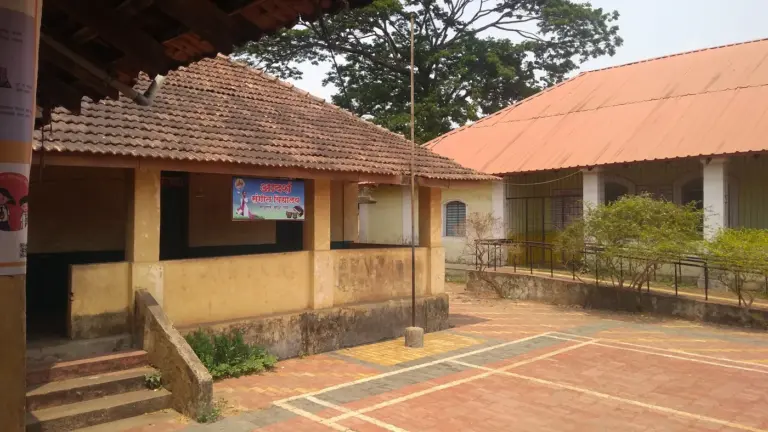
The first six years of a child's life form the foundation of everything that follows — physical health, cognitive development, emotional well-being, social skills and later academic success. Early Childhood Care and Education (ECCE) covers stimulation programmes for children up to 3 years (delivered through crèches, home stimulation and community programmes) and early childhood education for 3–6 year olds delivered through Anganwadis, balwadis, nurseries, preschools, kindergartens and preparatory classes. These years are the bridge between home and school, critical for physical, cognitive, socio-emotional, language and early numeracy development.
As per the 2011 Census, India had 16.45 crore children aged 0–6 — about 13.59 per cent of the population. Current estimates suggest roughly 10 million children are in the 3–6 age group enrolled in some form of pre-school at any given time. Sustainable Development Goal 4.2 commits India and other countries to ensure that by 2030 every girl and boy has access to quality early childhood development, care and pre-primary education and is ready for primary education.
The Heckman Curve, developed by Nobel laureate James Heckman, shows that the highest rate of economic return from investment in children comes from the earliest investments — the curve is steeply downward sloping with age. Society invests too little in the years when the returns are highest, and too much in later years of remedial education when the marginal returns are small. ECCE is therefore not just a children's issue — it is one of the most efficient forms of public investment available.
Why ECCE Matters
A critical age for brain development. More than 85 per cent of a child's brain development happens before age 6. Nutrition, stimulation and protection during this window are the single biggest determinants of adult cognitive and emotional capacity.
Realisation of potential. Children who are healthy and learning well in their early years are better able to reach their full developmental potential and to participate effectively in economic, social and civic life later.
Inclusive development. Quality ECCE promotes equity and social justice. Children from disadvantaged households start primary school many steps behind their better-off peers; ECCE narrows the gap before it hardens.
Foundation for future learning. Neuroscience research makes clear that early experience — positive or adverse — provides either a strong or a fragile foundation for all later learning, development and behaviour.
High rate of return. The larger economic returns on investment in pre-school programmes than in adolescent or adult training have been documented in long-running studies such as the Perry Preschool Project and the Carolina Abecedarian Project.
Reduced dropout rates. Participation in ECCE boosts school readiness and narrows the gap between socially advantaged and disadvantaged children, leading to better completion rates in primary and secondary school.
Foundational skilling. ECCE programmes build social skills, ethical reasoning, teamwork and domain competences across physical, cognitive, socio-emotional, cultural and communication dimensions.
Human rights perspective. Expanding early learning is a central means of realising the right to education within a lifelong learning framework.
Multilingualism. Research shows that children acquire languages with surprising ease between ages 2 and 8. Early multilingual education yields lasting cognitive advantages.
Government Initiatives
India's ECCE framework rests on several interconnected programmes:
- Integrated Child Development Services (ICDS) Scheme (1975): The world's largest early childhood programme, delivering a package of six services (supplementary nutrition, pre-school non-formal education, nutrition and health education, immunisation, health check-up and referral services) through a network of roughly 14 lakh Anganwadi centres.
- National Initiative for Proficiency in Reading with Understanding and Numeracy (NIPUN Bharat): Ensures universal acquisition of foundational literacy and numeracy so that every child achieves desired learning competencies by the end of Grade 3, targeted for 2026–27.
- Vidya Pravesh: A three-month play-based school preparation module for Grade 1, integral to NIPUN Bharat. It promotes holistic development with age-appropriate experiences to build competencies needed for Grade 1.
- Ministry of Education's Guidelines for Parent Participation in Home Learning: A strategy to turn everyday routines into playful learning moments.
- National Curriculum Framework for Early Childhood Education (ECE) 2013: Promotes inclusive, equitable and contextualised opportunities for optimal development of children below six years.
- National Education Policy 2020: Formalises ECCE from age 3 as part of the new 5+3+3+4 structure, integrating Anganwadi-based pre-school with the formal school system.
- Poshan Bhi, Padhai Bhi (2023): Requires every child at an Anganwadi to receive at least two hours of high-quality pre-school instruction daily, alongside nutrition services. It is a major operational shift for Anganwadis from primarily nutritional delivery to dual nutrition-plus-learning delivery.
- Saksham Anganwadi and POSHAN 2.0: Umbrella schemes for modernising Anganwadis with smart infrastructure, growth monitoring tools and revised nutrition norms.
- National Curriculum Framework for the Foundational Stage (NCF-FS) 2022: Provides a unified curriculum framework for children aged 3–8, combining the last year of pre-school with Grades 1 and 2.
Way Forward
- Build the Anganwadi workforce by training Anganwadi Workers and Helpers in ECCE pedagogy, providing developmentally appropriate materials, and moving toward two workers per Anganwadi so that nutrition and education functions do not crowd each other out.
- Increase public investment in ECCE to match its return on investment; India's education spending share directed to ECCE remains minimal.
- Introduce mother-tongue-based multilingual education from pre-school, as NEP 2020 recommends.
- Expand and standardise monitoring and assessment through tools such as the Early Childhood Environment Rating Scale and the recent FLN Study baseline.
- Engage parents and caregivers actively — home learning guidance, community-based parenting classes and SMS/voice campaigns in local languages.
- Ensure inclusion of children with disabilities in every Anganwadi and pre-primary setting, with trained staff and adaptive material.
- Create convergence between ministries — Women and Child Development (Anganwadis), Education (NIPUN Bharat and NCF-FS), and Health (immunisation, growth monitoring).
Latest Developments (2024–26)
The rollout of Poshan Bhi, Padhai Bhi across Anganwadis accelerated in 2024 and 2025, with state governments training Anganwadi Workers on structured pre-school curricula. The NCF-FS 2022 has been operationalised through new NCERT learning materials and the Jaadui Pitara set of age-appropriate play-based resources introduced in 2023. Saksham Anganwadi and POSHAN 2.0 continued scaling with upgraded infrastructure and digital growth monitoring through the Poshan Tracker app. NIPUN Bharat shows state-level progress with assessments through the Foundational Learning Study and subsequent National Achievement Surveys indicating modest post-pandemic gains. International conferences such as the World Conference on Early Childhood Care and Education and the Global Child Nutrition Forum have featured India's initiatives as case studies. Private sector and CSR investments in ECCE expanded, particularly through partnerships between NGOs (Pratham, Room to Read) and state governments.
UPSC Relevance
ECCE features strongly in GS Paper II (education, women and child welfare, government policies) and in GS Paper I (social issues, demography). Mains questions have asked about the Anganwadi system, ICDS reform, the Heckman Curve, and the integration of ECCE with formal schooling. For Prelims, remember ICDS launched in 1975, NCF-FS is for ages 3–8, NIPUN Bharat targets 2026–27 for universal FLN, and Poshan Bhi Padhai Bhi mandates two hours of daily pre-school learning. Connect ECCE with SDG 4.2, maternal and child health, the demographic dividend, and nutrition indicators such as stunting and wasting. Essay questions can use ECCE to argue for early-stage state investment and the long-run pay-off for social equity.
Tell Google you want more of this.
Add Anantam IAS as a preferred sourceOne tap, and this site shows up more often in your own Top Stories, AI Overviews and AI Mode. Remove it any time.