India adds solar capacity that generates at noon and serves a demand curve that peaks after sunset. Every additional gigawatt of solar widens that gap rather than closing it. Energy storage technology is what converts renewable capacity into usable power, which is why it has moved from a technical footnote to the central question in India’s electricity transition.
Battery Energy Storage Systems
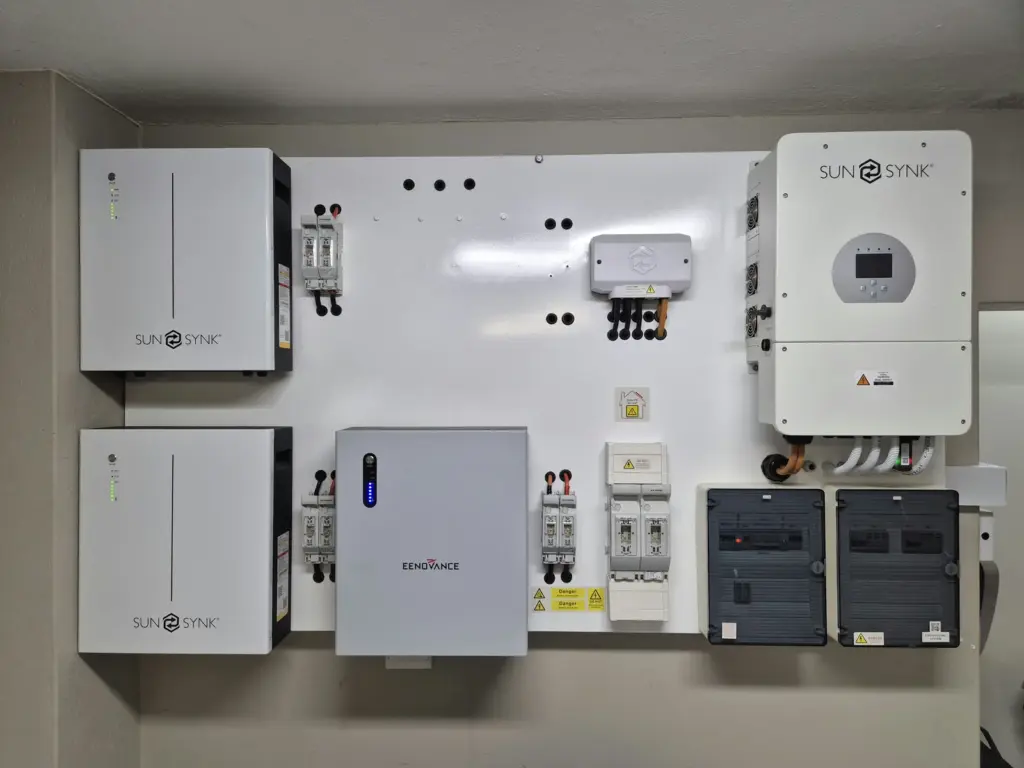
A BESS is a grid-connected rechargeable battery system that stores electricity when generation is surplus and releases it when demand rises.
| Component | Function |
|---|---|
| Batteries | Store energy; lithium-ion, lead-acid or flow chemistries |
| Inverters | Convert stored DC to AC for the grid, and back |
| Battery Management System | Monitor cell health, state of charge and performance |
| Thermal Management System | Regulate temperature and prevent thermal runaway |
India’s first utility-scale standalone BESS is a 20 MW / 40 MWh system at Kilokri in South Delhi, at BSES Rajdhani Power Limited’s substation, supporting reliability for over 12,000 low-income consumers.
What storage delivers: it stores surplus solar and wind, provides backup during outages, manages peak demand, enhances grid stability, supports round-the-clock renewable supply, and underpins EV charging stations, hospitals, data centres, telecom towers and other critical infrastructure.
The Policy Support
| Instrument | Detail |
|---|---|
| Viability Gap Funding | Rs 3,760 crore approved; up to 40 percent of capital cost |
| VGF target | Raised from 4 GWh to 13.2 GWh |
| PLI-ACC scheme | Rs 18,100 crore for domestic Advanced Chemistry Cell manufacturing |
The two instruments do different jobs. VGF makes deployment bankable now; PLI-ACC builds the manufacturing base that makes deployment affordable later. Running both simultaneously is the correct sequencing, because a storage market served entirely by imports would simply relocate the energy import bill from oil to cells.
How Lithium-Ion Batteries Work
Lithium ions act as charge carriers, moving between electrodes through an electrolyte.
| Component | Material |
|---|---|
| Cathode | Lithium metal oxides or phosphates |
| Anode | Graphite, with silicon-based anodes emerging |
| Electrolyte | Lithium salt in organic solvent |
| Separator | Prevents electrode contact while allowing ion flow |
During charging, lithium ions move from cathode to anode and are stored there. During discharging they move back to the cathode while electrons travel through the external circuit, producing electricity. That reversibility is what makes the cell rechargeable.
Applications span electric mobility, from two-wheelers to buses, drones and future electric aviation; grid storage; and the digital economy, including phones, laptops, medical equipment and telecom infrastructure.
The Limitations, Stated Plainly
- High upfront cost. Large-scale BESS remains capital-intensive, which is what VGF exists to correct.
- Degradation. Repeated charge-discharge cycles reduce capacity, so a nameplate rating overstates lifetime output.
- Round-trip losses. Some energy is lost in charging and discharging.
- Critical mineral dependence. Lithium, cobalt, nickel and graphite are largely imported, which converts an energy security solution into a mineral security problem.
- Safety. Poor cell quality or weak thermal management causes fire risk.
- Recycling gap. India needs far stronger recycling and second-life systems than currently exist.
Why Chemistry Choice Is Strategic
The mineral dependence point deserves separating out, because it determines what India should build rather than merely buy.
Lithium-ion gives the best energy density available at scale, and locks India into imported lithium, cobalt and nickel.
Sodium-ion uses abundant, domestically available raw material and accepts lower energy density. For stationary grid storage, where weight and volume matter far less than they do in a vehicle, that trade is often worth making.
Solid-state replaces the liquid electrolyte with a solid one, improving safety and potentially energy density, and remains earlier in commercialisation.
The implication is that India should not pursue a single chemistry. Grid storage is the natural home for sodium-ion, which removes import exposure exactly where energy density is least important, while lithium-ion remains necessary for mobility.
The Way Forward
- Direct sodium-ion development explicitly at stationary grid storage, where its weaknesses do not bind.
- Build recycling capacity now, since the first large cohort of EV and grid batteries will retire within this decade.
- Mandate cell quality and thermal management standards before deployment scales, because fire incidents would set the sector back years.
- Tie storage procurement to renewable tenders, so that firm power rather than raw capacity is what gets contracted.
- Treat critical mineral security and battery policy as one programme, not two.
Storage is the difference between installed renewable capacity and delivered renewable electricity. India has been measuring the first for a decade. The next decade will be judged on the second.
Frequently Asked Questions
What is a Battery Energy Storage System?
A grid-connected rechargeable battery system that stores electricity when generation is surplus and releases it when demand rises. Its components are the batteries themselves, inverters to convert stored DC to AC and back, a Battery Management System to monitor health and performance, and thermal management to regulate temperature.
Why does India need BESS?
Because solar output peaks during the day while electricity demand often peaks in the evening, and wind output fluctuates. Storage bridges that mismatch, which is what allows a renewable-heavy system to supply firm power. Without it, renewable capacity additions deliver energy at the wrong time of day.
What is India’s first utility-scale BESS?
A 20 MW / 40 MWh standalone system at Kilokri in South Delhi, at BSES Rajdhani Power Limited’s substation. It supports electricity reliability for over 12,000 low-income consumers.
What government support exists for storage?
Viability gap funding of Rs 3,760 crore approved by the Union Cabinet, covering up to 40 percent of capital cost, with the target raised from 4 GWh to 13.2 GWh. The PLI scheme for Advanced Chemistry Cell batteries provides Rs 18,100 crore to build domestic manufacturing.
How does a lithium-ion battery work?
Lithium ions move between the cathode and anode through an electrolyte. During charging they move from cathode to anode and are stored there; during discharging they move back while electrons flow through the external circuit to produce electricity. The reversibility of that movement is what makes the battery rechargeable.
What are the components of a lithium-ion cell?
A cathode, usually a lithium metal oxide or phosphate; an anode, usually graphite though silicon-based anodes are emerging; an electrolyte of lithium salt in an organic solvent; and a separator that prevents electrode contact while allowing ion flow.
What are the limitations of battery storage?
High upfront capital cost, capacity degradation over repeated charge-discharge cycles, energy loss during charging and discharging, dependence on critical minerals including lithium, cobalt, nickel and graphite, fire risk where cell quality or thermal management is poor, and an immature recycling and second-life ecosystem.
Why do sodium-ion and solid-state batteries matter for India?
Sodium is abundant and not import-dependent, which addresses the critical mineral vulnerability that lithium chemistry creates, at the cost of lower energy density. Solid-state batteries replace the liquid electrolyte with a solid one, improving safety and potentially energy density. Both reduce the strategic exposure that a lithium-only pathway creates.
Practice Questions
Prelims MCQs
- India's first utility-scale standalone BESS is located at
(a) Kilokri, South Delhi
(b) Bhadla, Rajasthan
(c) Pavagada, Karnataka
(d) Kutch, Gujarat
Answer: (a) The 20 MW / 40 MWh system at BSES Rajdhani Power Limited's Kilokri substation was India's first utility-scale standalone BESS. - Viability gap funding for BESS covers up to what share of capital cost?
(a) 20 percent
(b) 30 percent
(c) 40 percent
(d) 60 percent
Answer: (c) Up to 40 percent of capital cost, under an outlay of Rs 3,760 crore with a target raised to 13.2 GWh. - The PLI scheme for Advanced Chemistry Cell batteries has an outlay of
(a) Rs 3,760 crore
(b) Rs 10,900 crore
(c) Rs 18,100 crore
(d) Rs 24,000 crore
Answer: (c) Rs 18,100 crore, aimed at building domestic ACC manufacturing capacity. - In a lithium-ion battery during charging, lithium ions move
(a) From anode to cathode
(b) From cathode to anode
(c) Only within the electrolyte
(d) From separator to cathode
Answer: (b) Ions move from cathode to anode during charging and back during discharging. - The main strategic advantage of sodium-ion over lithium-ion batteries is
(a) Higher energy density
(b) Faster charging
(c) Abundant, non-import-dependent raw material
(d) Longer cycle life
Answer: (c) Sodium abundance removes the critical mineral import dependence, though at lower energy density.
Mains Questions
- Energy storage is the missing link between renewable generation and reliable electricity. Examine India's storage strategy. (250 words)
- Battery chemistry choices carry strategic as well as technical consequences. Discuss with reference to lithium, sodium and solid-state batteries. (250 words)
- Evaluate viability gap funding and production-linked incentives as instruments for building a domestic battery ecosystem. (250 words)
- Discuss the environmental and safety challenges of large-scale battery deployment in India. (150 words)
- Battery recycling and second-life systems are as important as manufacturing capacity. Comment. (150 words)
Tell Google you want more of this.
Add Anantam IAS as a preferred sourceOne tap, and this site shows up more often in your own Top Stories, AI Overviews and AI Mode. Remove it any time.