
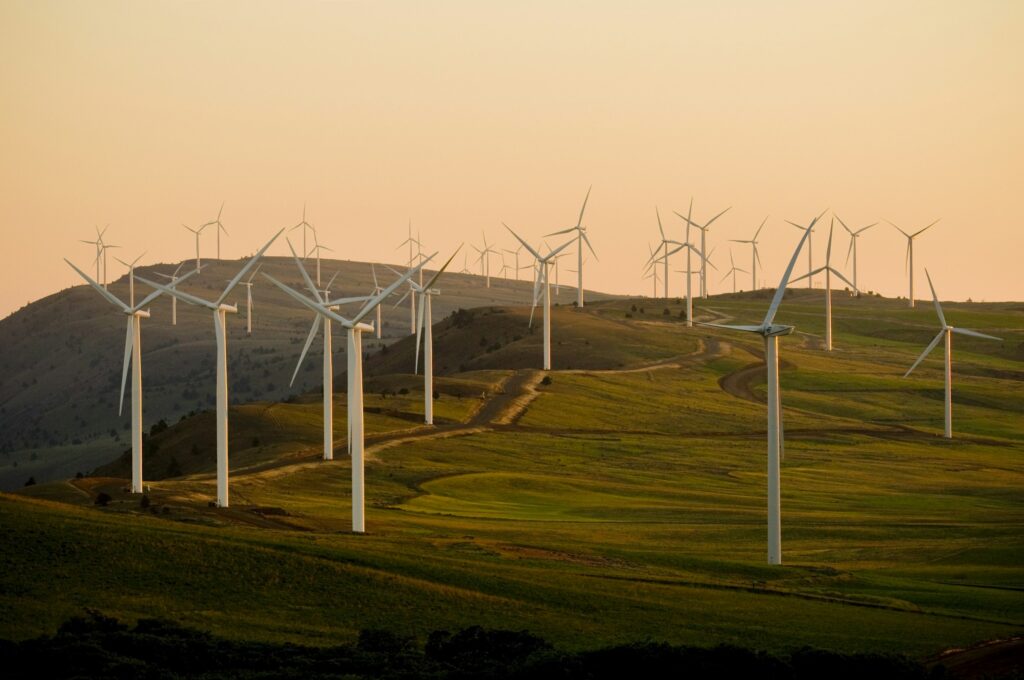
“Alternative technologies for a climate change resilient India” appeared as Topic 1 of Section A in the UPSC Civil Services Mains Essay paper held on 28 September 2018. Eight words on a question paper. One hundred and twenty-five marks if you can hold the argument together, a thin script if you cannot. This guide breaks the topic down the way it should be tackled in the hall — first the meaning, then the angles, then the time map, then the paragraph-by-paragraph plan, and finally a complete 1,200-word model essay you can study, dissect and adapt.
When this was asked and what UPSC is really testing
The topic was set in UPSC CSE Mains 2018, Essay paper, Section A. Three hours, two essays, one from each section, roughly 1,000 to 1,200 words each, 125 marks per essay. Unlike the abstract prompts that have come to dominate the paper since 2020, this one is concrete — a policy-flavoured question with two technical words (“alternative technologies”) and one normative phrase (“climate change resilient India”). The page is yours to fill, but the page is also fenced.
UPSC is checking four things at once. One, can you define “alternative” without sliding into a coaching-class list of green gadgets. Two, can you organise unfamiliar material around a thesis instead of reciting every renewable, every scheme, every acronym you remember. Three, can you move comfortably across energy, agriculture, mobility, buildings and industry without flattening any one of them. Four, can you hold a counter-argument — that some “alternatives” carry their own ecological and social costs — without collapsing your case. The aspirant who handles all four scores in the 130s. The aspirant who writes a tidy GS III answer dressed as an essay scores in the 90s.
Five angles that unlock “Alternative technologies for a climate change resilient India”
The trap with policy prompts is to pick the first obvious angle — renewable energy — and ride it for 1,200 words. The mark-pulling answer instead identifies several lenses, names them clearly, and weaves them. Here are the five most defensible readings. You do not need all five — three, treated well, is the sweet spot. But you should know all five so your choice is conscious.
- Alternative as substitution — the literal reading. Replace what is fossil-based, water-intensive or chemical-heavy with what is renewable, regenerative or efficient. Solar replaces coal, millets replace water-hungry rice, drip irrigation replaces flood irrigation. Used well, this opens the energy transition, the Glasgow Panchamrit, and India’s 2070 net-zero pledge.
- Alternative as resilience — technology that helps India absorb the shocks that climate change has already made unavoidable. Cyclone-resistant housing, heat-resistant seeds, urban cool-roof programmes, flood-warning systems. Mitigation alone is a 2050 conversation; resilience is a 2030 one.
- Alternative as indigenous — recovering Indian knowledge systems that pre-date the fossil age. Stepwells and johads, sacred groves, dryland millet farming, vernacular cooling in haveli architecture. The angle treats “alternative” as not only foreign-imported but also home-grown.
- Alternative as system — no single gadget delivers resilience. What matters is the system around it: grids that absorb variable renewables, finance that flows to small farmers, skilling that converts coal workers into solar technicians. The angle insists that the missing technology is often institutional, not engineering.
- Alternative as just transition — who pays for the switch, who loses livelihoods, who bears the lithium-mining footprint or the biofuel land-use cost. The angle asks whether an “alternative” India means the same India for everyone or a sharper inequality painted green.
A strong essay picks angles 1, 2 and 4 as its backbone (substitution, resilience, systems), uses 3 as an Indian anchor and 5 as a counter-current (just transition). That gives the essay rhythm — promise, complication, resolution — instead of a straight march through schemes.
A time map for the 1,500-second window
One essay deserves about 75 to 90 minutes inside the three-hour paper. Spending more on Essay 1 starves Essay 2. The single biggest source of below-100 essay scores is poor time discipline — beautiful introductions, panicked conclusions. Use a rough breakdown like this:
| Minutes | Activity | What it earns you |
|---|---|---|
| 0 — 10 | Decode the topic. Define “alternative” and “resilience” in one line each. List 4 to 5 angles. Pick 3. | Direction. The single most important investment of the 90 minutes. |
| 10 — 18 | Brainstorm examples across energy, agriculture, mobility, buildings, industry. Note one Indian anchor and one counter-argument. | The substance the body paragraphs will run on. |
| 18 — 22 | Draft a paragraph-level outline — 12 to 14 bullets, in sequence. | Prevents the mid-essay drift that kills 60% of attempts. |
| 22 — 80 | Write the essay — opening, body, conclusion — without re-planning. | The actual marks come from this window. Protect it. |
| 80 — 85 | Read the conclusion. Tighten the last two sentences. Fix factual errors. | Conclusions are over-weighted by examiners. A clean ending saves 5 marks. |
Notice what is not on the list: rewriting the introduction halfway, hunting for the perfect quote, fancy diagrams, decorative underlining. None of that earns marks. Discipline does.
What to add — and what to avoid at all costs
The essay paper rewards what most aspirants under-do and punishes what most aspirants over-do. Memorise this list before you walk into the hall.
Add liberally
- One precise thesis, stated by the end of paragraph two and not abandoned. “Alternative technology is not a basket of green gadgets but a layered choice — about substitution, about resilience, and about who bears the cost of the switch.”
- Concrete examples across four domains — one energy (Rewa solar park, the International Solar Alliance, the National Green Hydrogen Mission), one agriculture (millets and the International Year of Millets 2023, drip irrigation under PMKSY, natural farming in Andhra Pradesh), one urban (cool roofs in Telangana, ECBC, the metro), and one industrial (CCUS pilots, e-waste recycling, steel decarbonisation).
- One Indian philosophical or constitutional anchor. The Atharva Veda’s mata bhumih putro aham prithivyah (“the earth is my mother, I am her son”), Gandhi’s “the world has enough for everyone’s need, not for everyone’s greed,” or Article 48A of the Constitution. Examiners read 300 essays a day; an Indian anchor in an essay full of acronyms stands out.
- Numbers that anchor the argument — used sparingly. India’s NDC of 50% non-fossil electricity capacity by 2030. Net-zero by 2070. The Glasgow Panchamrit’s 500 GW non-fossil target. Three figures, well-placed, beat fifteen scattered through the essay.
- Counter-arguments handled briefly. “It might be objected that lithium mining and biofuel land-use carry their own ecological costs…” — then resolved in two lines. Acknowledging the other side earns more marks than ignoring it.
- A clean conclusion that returns to the opening image — not a fresh scheme, not a new statistic.
Avoid — even when tempted
- Listing every scheme you remember. KUSUM, FAME, PLI, PMKSY, UJALA, SATAT, BEE, GRIHA — five well-chosen schemes are an argument; fifteen are a coaching-class handout.
- Restating the topic in the first sentence. “Alternative technologies are very important for a climate-resilient India…” — this signals you have nothing to add. Open with an image — a stepwell, a salt-pan, a village solar microgrid at dusk.
- Treating “alternative” as a synonym for “renewable”. The prompt is wider — it covers resilience, indigenous knowledge, behavioural change, institutional redesign.
- Naming current parties or leaders. The essay paper is graded by humans across the ideological spectrum. Use the institution, not the personality. Say “the Union government” or “the Council on Energy, Environment and Water,” not a minister’s name.
- Unsourced statistics. “India will lose 4.5% of GDP by 2050” — if you cannot name the source, do not write the number. Examiners cross-mark this.
- Moralising. “We must all save the planet for our children” reads like a school speech. The essay paper rewards examination, not exhortation.
A paragraph-by-paragraph blueprint
Twelve paragraphs at roughly 95 words each gets you to 1,140. Thirteen at 90 each gets you to 1,170. Either works. What follows is a 13-paragraph plan that maps cleanly onto the model essay below. Each line is what that paragraph is doing, not what it is saying.
- Opening image — a Rajasthani village evening lit by a rooftop solar lamp, or a stepwell in Gujarat still working in 2025. No mention of the topic yet.
- The pivot to thesis — name the topic, then state the thesis in one sentence.
- Define the terms — what is “alternative” (substitute, resilient, indigenous, systemic), what is “resilient” (absorbs shocks, recovers fast, fails safe).
- The energy substitution — solar, wind, green hydrogen, biofuels, small modular reactors, pumped hydro. The Glasgow Panchamrit framing.
- The Indian anchor — Atharva Veda, Article 48A, the International Solar Alliance launched from Indian soil.
- Agriculture and water — millets, natural farming, drip irrigation, drought-tolerant seeds, Kisan Drones.
- Cities and buildings — cool roofs, ECBC, vernacular architecture, urban heat-island mitigation.
- Mobility — electric two-wheelers, metros, hydrogen buses, biofuel aviation.
- Industry — green steel, CCUS pilots, circular economy, e-waste recycling.
- The complication — costs and contradictions — lithium mining, biofuel land-use, the imported nature of much “alternative” tech.
- Counter-argument handled — yes, alternatives carry hidden costs. No, that does not justify staying with coal.
- Way forward — institutional and just — R&D, finance, technology-transfer in the COP process, just transition for coal districts, indigenous knowledge revival.
- Closing image — return to the opening village or stepwell, close with one resonant line.
How to make an examiner stop and read
An essay examiner reads several hundred scripts in a sitting. The first paragraph decides whether they read the second with attention or with autopilot. Four small habits separate the essays that get attention from the ones that get skimmed.
- Open with a scene, not a statement. A village microgrid humming at dusk, a Bundelkhand farmer kneeling over a millet sheaf, a Mumbai child gasping in a heatwave. Concrete images cost no marks and earn attention.
- Use the topic phrase itself two or three times across the essay. Once in the thesis, once at the turn, once at the close. It signals discipline and prevents drift.
- Vary sentence length. A short sentence after three long ones lands. Examiners feel rhythm before they parse meaning.
- End paragraphs with the takeaway, not with examples. Place the example mid-paragraph. Let the last sentence be the thought, so the reader carries it into the next paragraph.
The complete essay — “Alternative technologies for a climate change resilient India”
What follows is a 1,200-word model essay built on the blueprint above. Read it twice — once for the argument, once for the moves. The moves are what you can carry into your own essay; the argument is one of many you could make.
In a Rajasthani hamlet at the edge of the Thar, the sun sets and a single white lamp comes on above a doorway. The lamp draws no kerosene and waits for no grid. A small photovoltaic panel on the roof has stored the desert’s most reliable harvest. Inside the house, a woman finishes the day’s cooking on an improved chulha; outside, a stepwell built four centuries ago still holds water her grandmother taught her to draw at dawn. Old technology and new, indigenous and imported, sit on the same plot of land. This is what a climate-resilient India will, increasingly, look like.
“Alternative technologies for a climate change resilient India” begins from that picture, but it does not end there. The phrase is at once practical and contested. It is practical because India must decarbonise a coal-heavy energy system while still lifting two hundred million people out of poverty. It is contested because no single alternative is innocent — every renewable carries its own footprint, every imported solution carries dependency, every transition has losers. The task of an essay on this topic is to hold all three: that alternative technology is necessary, that it is plural, and that it must be just.
Some careful definitions help. “Alternative” here is wider than “renewable.” It includes substitution (solar for coal, millets for paddy), resilience (cyclone-resistant housing, drought-tolerant seeds), indigenous revival (stepwells, vernacular cooling, natural farming) and system redesign (smart grids, just-transition finance, skilling). “Resilient” is wider than “low-carbon.” It means an India that can absorb a 2°C shock, recover quickly from a cyclone, fail safe in a heatwave. Mitigation is a 2070 conversation; resilience is a 2030 one.
The substitution story is the loudest. At Glasgow in 2021, India offered the Panchamrit — five commitments anchored by 500 GW of non-fossil electricity capacity by 2030, 50% of generation from non-fossil sources by the same year, and net-zero by 2070. The Rewa Ultra Mega Solar Park in Madhya Pradesh, once the world’s largest single-site project, already powers the Delhi metro. The KUSUM scheme is putting solar pumps in farmers’ fields. The National Green Hydrogen Mission, announced in 2023, aims to make Indian electrons travel as molecules. Each is a substitute for something dirtier — and each is, on its own, insufficient.
India anchored this transition in language older than the Glasgow pledges. The Atharva Veda’s mata bhumih putro aham prithivyah — the earth is my mother, I am her son — entered the country’s environmental conscience long before “carbon” did. Article 48A makes protection of the environment a directive principle. The International Solar Alliance, launched from Indian soil in 2015, took that older intuition and gave it diplomatic shape: a hundred-plus sunny countries pooling finance so the sun does not become another fossil-style oligopoly. Indian alternative technology, at its best, is not a Western import re-skinned; it is a recovery of an older settlement with the land.
That recovery is sharpest in agriculture. The International Year of Millets in 2023 was India’s own crop diplomacy, marketing a grain that needs a third of the water rice does and grows on land paddy will abandon when the monsoon shifts. Andhra Pradesh’s community-managed natural farming programme has moved hundreds of thousands of farmers off synthetic inputs. The Pradhan Mantri Krishi Sinchayee Yojana is shifting water from flood furrows to drip lines. None of these is glamorous. All of them are the difference between a Bundelkhand district that survives a 2°C world and one that does not.
Cities tell the same story in concrete. Telangana’s cool-roof programme paints reflective coating on low-income housing for a few hundred rupees per home and cuts indoor temperatures by three to five degrees. The Energy Conservation Building Code, refined into ECBC and the IGBC and GRIHA ratings, embeds insulation, ventilation and daylighting into new construction. Metros in fourteen cities are taking diesel buses off the road. Old technology helps too: the courtyard, the jaali screen, the thick lime wall — vernacular cooling that ran for centuries on no electricity and is now being reintroduced into climate-responsive design.
Mobility is moving more slowly, but it is moving. Electric two-wheelers, supported by FAME and the PLI for advanced cells, are already a tenth of the new-vehicle market in some states. Hydrogen buses have begun pilot runs. The freight sector — heavy trucks, coastal shipping — is the hardest chapter and the most likely candidate for green hydrogen, electrified railways, and the National Logistics Policy’s modal shift from road to rail.
Industry is the deepest test. Steel, cement and chemicals account for nearly a third of Indian emissions and cannot be electrified by simply greening the grid. Here the alternatives are CCUS pilots at large refineries, green-hydrogen-reduced steel under industrial PLI, the circular economy of e-waste recycling formalised under the 2022 rules, and a slow but real decoupling of growth from materials. The hardest emissions to abate are the ones where Indian R&D will be most prized.
It would be dishonest to end there. Lithium mining in the Atacama scars Andean ecosystems for batteries that power Indian scooters. Bio-ethanol blending under E20 puts pressure on sugarcane land in already water-stressed districts. Solar parks displace pastoralists from grazing commons. A great deal of “alternative” technology is imported under licence, leaving Indian utilities tied to foreign supply chains and Indian start-ups to single-digit value capture. No transition is innocent, and pretending otherwise is the surest way to lose public trust in the next decade.
It might be objected that these hidden costs make the whole project suspect — that an India dependent on lithium and rare earths simply trades coal lock-in for mineral lock-in. The objection is partly right and entirely insufficient. The fact that every technology has costs does not mean every technology has equal costs. A coal plant kills with particulates today and with climate damage tomorrow; a solar park, sited well and decommissioned responsibly, does neither. The point is not to pretend alternatives are clean. It is to design, finance and govern them so they are cleaner — and to keep that improvement honest.
For the republic, this points to a familiar list — pushed harder. Domestic R&D taken from under one per cent of GDP towards two. Tech-transfer norms negotiated firmly in COP corridors. Sovereign green bonds and SIDBI’s green-credit market to move private capital. A just-transition authority for coal districts in Jharkhand, Odisha and Chhattisgarh, with retraining and pensions written into law, not left to charity. And, quietly, the recovery of indigenous knowledge — sacred groves, traditional water harvesting, dryland farming — that survived four millennia of weather and may yet help us survive the next four decades.
Return for a moment to the white lamp in the Rajasthani hamlet. The lamp is a small thing — a panel, a battery, an LED bulb, perhaps a thousand rupees of imported silicon and Indian assembly. But it sits above a doorway that opens onto a courtyard built for cross-ventilation, beside a stepwell sunk in a different century, in a state whose grid is being rebuilt around the sun. Alternative technology for a climate-resilient India is not one lamp, and not one mission. It is the patient stitching together of new and old, of imported and indigenous, of engineering and institution. Civilisations rise to the degree that they manage that stitching well.
Word count: approximately 1,200.
How to use this model essay
Do not memorise it. Memorised essays read like memorised essays, and examiners spot them in two paragraphs. Use the model the way a chess student uses a master game: study the opening image, the pivot, the placement of the Indian anchor, the way the counter-argument is brought up and then closed, the way the conclusion returns to the opening scene. Then take a different climate-flavoured topic — try “Water disputes between States in federal India” or “Sustainable development is a fashionable slogan in the present-day world” — and write your own essay using the same blueprint. Repeat that exercise eight to ten times and the structure becomes muscle memory. On the day of the exam, the only thing you should have to think about is the topic itself.
Tell Google you want more of this.
Add Anantam IAS as a preferred sourceOne tap, and this site shows up more often in your own Top Stories, AI Overviews and AI Mode. Remove it any time.