Disclosure: this guide contains Amazon affiliate links. As an Amazon Associate, Anantam IAS earns from qualifying purchases — at no extra cost to you.
“Best for an individual is not necessarily best for the society” appeared as Topic 3 of Section A in the UPSC Civil Services Mains Essay paper held on 20 September 2019. Six terse words. A trap dressed as a truism. Treated lazily, it produces a sermon against selfishness; treated well, it opens onto game theory, ecology, constitutional design and the oldest debates of Indian philosophy. This guide breaks the topic down the way it should be tackled in the hall — first the meaning, then the angles, then the time map, then the paragraph-by-paragraph plan, and finally a complete 1,200-word model essay you can study, dissect and adapt.
When this was asked and what UPSC is really testing
The topic was set in UPSC CSE Mains 2019, Essay paper, Section A. Three hours, two essays, one from each section, roughly 1,000 to 1,200 words each, 125 marks per essay. The phrasing is deceptively analytical — it looks like an economics or sociology proposition rather than a philosophical abstraction, and that distinction matters. You are not being asked to celebrate community or to scold the individual. You are being asked to examine the structural gap between what optimises for one and what optimises for many.
UPSC is checking four things at once. One, can you recognise this as a collective-action problem rather than a morality fable. Two, can you move comfortably across economics, ecology, ethics, polity and Indian thought without sounding like a textbook. Three, can you hold the counter — that sometimes the individual’s pursuit is the social interest — without losing your thesis. Four, can you write 1,200 disciplined words that examine the proposition rather than 1,500 loose ones that decorate it. The aspirant who handles all four scores in the 130s. The aspirant who only sermonises scores in the 90s.
Five angles that unlock “Best for an individual is not necessarily best for the society”
The trap with this topic is to pick the obvious moral reading — selfishness bad, sacrifice good — and ride it for 1,200 words. The mark-pulling answer instead identifies several lenses, names them clearly, and weaves them. Here are the five most defensible readings of best for an individual is not necessarily best for the society. You do not need all five — three, treated well, is the sweet spot. But you should know all five so your choice is conscious.
- The collective-action problem — the rigorous reading. Hardin’s tragedy of the commons, Olson’s logic of collective action, the prisoner’s dilemma. Each actor optimises locally; the aggregate is worse for everyone. This angle gives the essay analytical spine.
- The externality reading — economics. The smoker’s pleasure, the polluter’s profit, the tax avoider’s saving — each is rational for the individual and costly for the public. Pigou’s correction, congestion pricing, carbon tax. This angle gives the essay policy traction.
- The ecological reading — the most visible today. Each car owner finds owning a car convenient; Delhi chokes. Each household pumps a borewell; the aquifer collapses. Each plastic bottle is harmless; the ocean is not. This angle gives the essay urgency.
- The philosophical reading — Indian and Greek. The Gita’s nishkam karma, the Upanishadic Vasudhaiva Kutumbakam, Antyodaya, Gandhi’s talisman. Plato’s republic, Rousseau‘s general will. This angle gives the essay depth and the mandatory Indian anchor.
- The constitutional reading — design. The Fundamental Rights and Fundamental Duties sit on facing pages; the Directive Principles bind the state to the social good; Article 19 places “reasonable restrictions” on the most individual of freedoms. The Constitution itself is a long answer to the prompt.
A strong essay picks angles 1, 3 and 4 as its backbone (collective action, ecology, philosophy), uses 5 as a constitutional anchor and 2 as policy traction. A separate counter-paragraph holds the case where individual interest is the social interest — entrepreneurship, dissent, conscience. That gives the essay rhythm — definition, complication, counter, resolution — instead of a single straight line.
A time map for the 1,500-second window
One essay deserves about 75 to 90 minutes inside the three-hour paper. Spending more on Essay 1 starves Essay 2. The single biggest source of below-100 essay scores is poor time discipline — beautiful introductions, panicked conclusions. Use a rough breakdown like this:
| Minutes | Activity | What it earns you |
|---|---|---|
| 0 — 10 | Decode the topic. Write the thesis in one line. List 4 to 5 angles. Pick 3. | Direction. The single most important investment of the 90 minutes. |
| 10 — 18 | Brainstorm examples — commons, smog, vaccines, taxes, Gita, Constitution. | The substance the body paragraphs will run on. |
| 18 — 22 | Draft a paragraph-level outline — 12 to 15 bullets, in sequence. | Prevents the mid-essay drift that kills 60% of attempts. |
| 22 — 80 | Write the essay — opening, body, conclusion — without re-planning. | The actual marks come from this window. Protect it. |
| 80 — 85 | Read the conclusion. Tighten the last two sentences. Fix factual errors. | Conclusions are over-weighted by examiners. A clean ending saves 5 marks. |
Notice what is not on the list: rewriting the introduction halfway, hunting for the perfect quote, fancy diagrams, decorative underlining. None of that earns marks. Discipline does.
What to add — and what to avoid at all costs
The essay paper rewards what most aspirants under-do and punishes what most aspirants over-do. Memorise this list before you walk into the hall.
Add liberally
- One precise thesis, stated by the end of paragraph two and not abandoned. “What is locally rational for the individual is often globally damaging for the society; the work of civilisation is to redesign the choice so the two coincide.”
- Concrete examples across three or four domains — one ecological (Delhi’s winter smog, falling water tables, single-use plastic), one economic (tax avoidance, congestion, free-riding on vaccination), one Indian-philosophical (Gita’s nishkam karma, Antyodaya, Gandhi’s talisman) and one constitutional (Article 19’s reasonable restrictions, the Directive Principles).
- Two or three short, named references — Hardin on commons, Mancur Olson on collective action, Elinor Ostrom on commons governance. One per major section is enough.
- One Indian philosophical anchor. Vasudhaiva Kutumbakam, the Gita on swadharma, Gandhi’s talisman that asks you to recall the face of the poorest. Examiners read 300 essays a day; an Indian anchor in an essay full of Western examples stands out.
- A counter-argument paragraph handled with care. The entrepreneur’s profit, the dissenter’s conscience, the scientist’s curiosity — sometimes the individual’s good is the social good. Acknowledging this complication earns more marks than ignoring it.
- A clean conclusion that returns to the opening image — not a fresh argument, not a new example.
Avoid — even when tempted
- Restating the topic in the first sentence. “Best for an individual is not necessarily best for the society is a profound statement…” — this signals that you have nothing to add. Open with an image.
- A sermon against selfishness. The essay is an examination, not a moral lecture. Diagnose the structure; do not scold the actor.
- Unsourced statistics. “Delhi loses six years of life expectancy to pollution” — if you cannot name the source, do not write the number. Examiners cross-mark this.
- Naming sitting politicians or current ruling parties. The essay paper is graded by humans across the ideological spectrum. Use the institution or the historical figure, not the personality of the day.
- Lurching into pure collectivism. Insisting that the individual must always yield to the collective is its own kind of mistake; majoritarian polities crush minorities in exactly that way. Hold the tension.
- Moralising. “We must all think of society first” reads like a school speech. The essay paper rewards examination, not exhortation.
A paragraph-by-paragraph blueprint
Twelve paragraphs at roughly 95 words each gets you to 1,140. Thirteen at 90 each gets you to 1,170. Either works. What follows is a 13-paragraph plan that maps cleanly onto the model essay below. Each line is what that paragraph is doing, not what it is saying.
- Opening image — a winter morning in a megacity, every car its owner’s private convenience, the sky the collective bill. No mention of the topic yet.
- The pivot to thesis — name the topic, then state the thesis in one sentence.
- Define the terms — what does “best for an individual” mean (rational, local, narrow), what does “best for the society” mean (aggregate, durable, distributional).
- Angle 1 — Collective action — Hardin’s commons, Olson, the prisoner’s dilemma. Why locally rational becomes collectively ruinous.
- Angle 2 — Ecology — Delhi’s winter smog, vanishing water tables, plastic in the ocean. The most physical evidence for the proposition.
- Angle 3 — Externalities and public goods — tax avoidance, smoking, vaccination free-riders, scientific R&D. Why prices alone fail.
- Indian philosophical anchor — Gita’s nishkam karma, Vasudhaiva Kutumbakam, Antyodaya, Gandhi’s talisman.
- Constitutional design — Fundamental Rights and Duties, Directive Principles, Article 19’s reasonable restrictions.
- Counter-argument — the entrepreneur, the dissenter, the scientist; sometimes the individual is the social good. Collectivism unrestrained crushes minorities.
- Why simple appeals fail — moral exhortation has limits at scale; structures matter more than sermons.
- Way forward — economic instruments — Pigovian taxes, congestion pricing, carbon pricing, nudges.
- Way forward — civic and ecological — Ostrom’s commons principles, civic education, sustainable-lifestyle campaigns.
- Closing image — return to the winter morning, close with one resonant line.
How to make an examiner stop and read
An essay examiner reads several hundred scripts in a sitting. The first paragraph decides whether they read the second with attention or with autopilot. Four small habits separate the essays that get attention from the ones that get skimmed.
- Open with a scene, not a statement. A November morning in Delhi, a borewell drilling deeper than last year, a child wearing a mask to school. Concrete images cost no marks and earn attention.
- Use the topic phrase itself two or three times across the essay. Once in the thesis, once at the turn, once at the close. It signals discipline and prevents drift.
- Vary sentence length. A short sentence after three long ones lands. Examiners feel rhythm before they parse meaning.
- End paragraphs with the takeaway, not with examples. Place the example mid-paragraph. Let the last sentence be the thought, so the reader carries it into the next paragraph.
The complete essay — “Best for an individual is not necessarily best for the society”
What follows is a 1,200-word model essay built on the blueprint above. Read it twice — once for the argument, once for the moves. The moves are what you can carry into your own essay; the argument is one of many you could make.
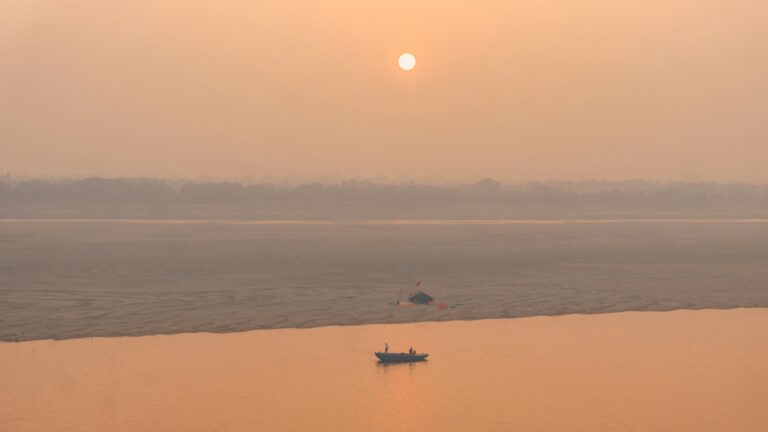
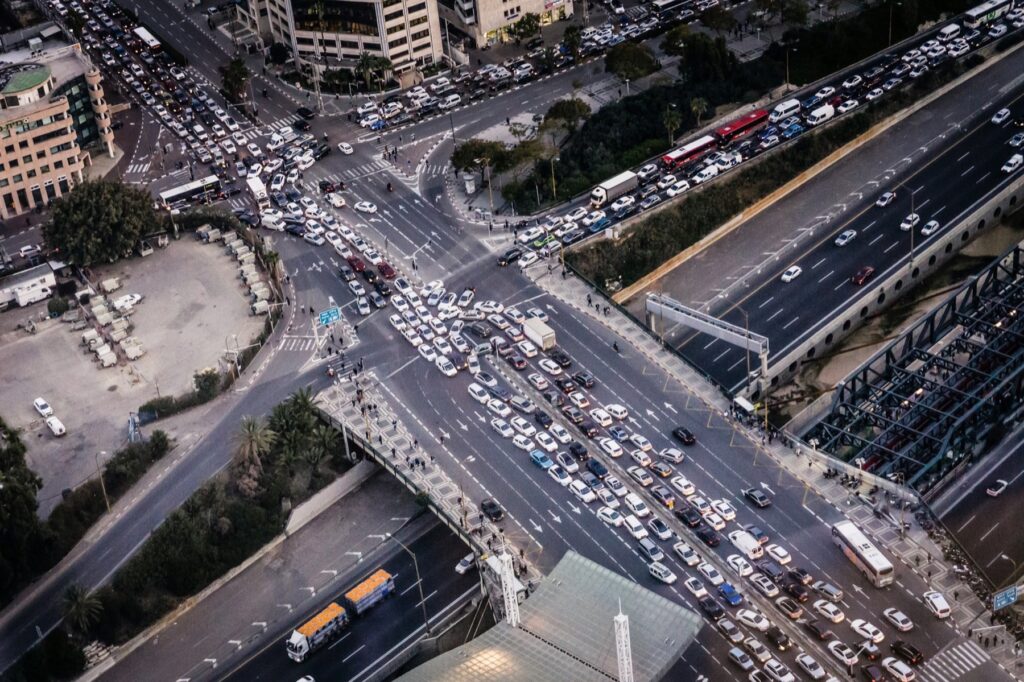
On a November morning in Delhi, a million households make a million small, sensible decisions. The car is more comfortable than the metro. The diesel generator is more reliable than the grid. The leaf-fire is easier than the compost bin. Each choice, taken on its own, would barely register on a moral ledger. Stacked together, they produce a sky the colour of wet cement and a winter in which children carry inhalers to school. The bill that no individual signed is paid by the lungs of every individual together. It is one of the oldest puzzles of organised life: the sum of rational choices is often an irrational world.
“Best for an individual is not necessarily best for the society” begins from that puzzle, and it does not resolve into a sermon against selfishness. The proposition is structural, not moral. It says there is a recurring, almost mechanical gap between what optimises for one and what optimises for many — and that the work of civilisation is to redesign the choice so the two coincide, not to scold the chooser.
Some definitions help. “Best for an individual” is the narrowly rational — what maximises one person’s convenience, profit or pleasure in the immediate frame. “Best for the society” is the aggregate and the durable — outcomes counted across many people, across generations, across the most vulnerable. The proposition does not say the two always diverge. It says they diverge in patterned, predictable ways, and that the patterns deserve names.
The deepest of those patterns is the collective-action problem. Garrett Hardin’s tragedy of the commons describes a pasture open to all herders: each adds one more cow because the gain is private and the loss to the grass is shared. The pasture dies, and every herder loses. Mancur Olson generalised the point: a group of rational individuals does not automatically act in the group’s interest, because the gains from selfishness are concentrated and the costs of cooperation are personal. The prisoner’s dilemma is the schematic version — two players, each better off defecting, both worse off than had they trusted. Once you see this structure, you see it everywhere.
You see it most physically in our ecology. Each household that drills a deeper borewell finds water for one more summer; the aquifer dies in a decade. Each tonne of plastic that simplifies a kitchen drifts, eventually, into a fish. Each car that spares its owner a crowded bus joins a million others at a red light, burning fuel and burning lungs. None of these acts is wicked. Each is the answer a sensible person would give if asked only about herself. The wickedness is in the structure that asks only that question.
Economics has a precise vocabulary for the gap: externalities and public goods. The smoker pays for the cigarette but not for the cancer ward that treats the passive smoker. The polluter pays for the coal but not for the monsoon that arrives late. The taxpayer who avoids tax keeps more of her income; the school, the hospital and the road her taxes would have built do not get built. Public goods reverse the logic: vaccination, clean air, basic research, public broadcasting. Each individual benefits whether she contributes or not, so each is tempted to free-ride, and the collective good is under-supplied. Price signals alone do not bridge the gap; they were never designed to.
Indian philosophy saw the gap long before economics named it. The Bhagavad Gita’s nishkam karma asks the actor to perform action without grasping at the personal fruit, on the understanding that hoarded fruit poisons both the actor and the field. The Upanishadic Vasudhaiva Kutumbakam — the world is one family — refuses the boundary between my good and another’s. Gandhi turned the intuition into a daily practice with his talisman: in doubt, recall the face of the poorest person you have seen, and ask whether your next step will help her. Antyodaya — the rise of the last — is the political programme that follows. These texts do not deny the individual; they re-describe her so that her flourishing is bound up with another’s.
The Constitution of India is a long, secular attempt at the same balance. Part III enshrines Fundamental Rights — the protected space of the individual. Part IV-A adds Fundamental Duties — her obligation back to the commons, from protecting the environment to safeguarding public property. The Directive Principles bind the state to the social good where rights are silent. Article 19 grants the most personal of freedoms and adds the words “reasonable restrictions” — an acknowledgement that even speech is exercised inside a society it can damage. The architecture is not anti-individual; it is anti-isolation.
It would be lazy, however, to pretend the individual’s pursuit is always the society’s loss. The entrepreneur who built India’s vaccine manufacturing capacity in pursuit of profit ended up supplying the world. The dissenter who refused an unjust law in pursuit of conscience created the precedent that protected millions. The scientist chasing private curiosity discovered the antibiotic that altered a century. A philosophy that erases the individual produces its own pathologies — Stalinist collectives that starved peasants, majoritarian polities that crushed minorities. The proposition is “not necessarily“, not “never”. The work of judgement is to know which case is which.
Moral exhortation is the weakest tool we have. Telling a million commuters to love their neighbours will not unclog a single road. The leverage lies upstream, in design. Pigou’s century-old insight is now the toolbox of policy: tax the externality so the private price tells the social truth. A congestion charge prices the road. A carbon tax prices the sky. A cigarette duty prices the second-hand smoke. Behavioural nudges — default opt-ins for organ donation, opt-out pensions, salience cues on energy bills — change choices without restricting them. None of this requires the individual to become a saint. It requires the architecture of choice to stop pretending her decisions are private.
Elinor Ostrom, who won the Nobel for studying commons that did not collapse, showed that communities under the right conditions govern shared resources sustainably without privatisation or top-down control. Her principles — clear boundaries, local rule-making, graduated sanctions, conflict-resolution forums — describe village forests in Uttarakhand, fishing cooperatives in Kerala and grazing systems in the Alps. Add civic education that treats ecological and fiscal responsibility as citizenship, and campaigns that frame restraint as a national project rather than sacrifice, and the social fabric begins to do what neither the market nor the magistrate can do alone.
Return to the November morning with which we began. The car will still leave its garage. The borewell will still be drilled. But imagine the choice architecture redesigned: a metro that arrives every three minutes, a congestion charge that prices the empty seat beside the driver, a water tariff that climbs as the table falls, a curriculum that teaches the child in the back seat what the haze in the windscreen is made of. None of this asks the individual to stop being herself. It asks the society to be honest about the bill she is signing in her name. That is the practical meaning of accepting that best for an individual is not necessarily best for the society — and the patient, unglamorous work of closing the gap.
Word count: approximately 1,200.
How to use this model essay
Do not memorise it. Memorised essays read like memorised essays, and examiners spot them in two paragraphs. Use the model the way a chess student uses a master game: study the opening image, the pivot, the way each paragraph hands the reader to the next, the placement of the Indian anchor, the way the counter-argument is brought up and then closed. Then take a related essay topic — try “There can be no social justice without economic prosperity but economic prosperity without social justice is meaningless” or “Public health expenditure for sustainable development” — and write your own essay using the same blueprint. Repeat that exercise eight to ten times and the structure becomes muscle memory. On the day of the exam, the only thing you should have to think about is the topic itself.
Books quoted in this essay
The Bhagavad Gita, Eknath Easwaran’s translation. The plain-English edition most essay readers start with.
Tell Google you want more of this.
Add Anantam IAS as a preferred sourceOne tap, and this site shows up more often in your own Top Stories, AI Overviews and AI Mode. Remove it any time.