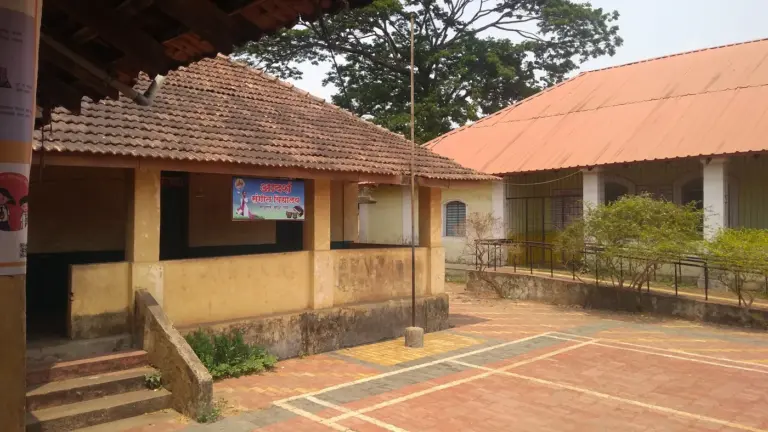
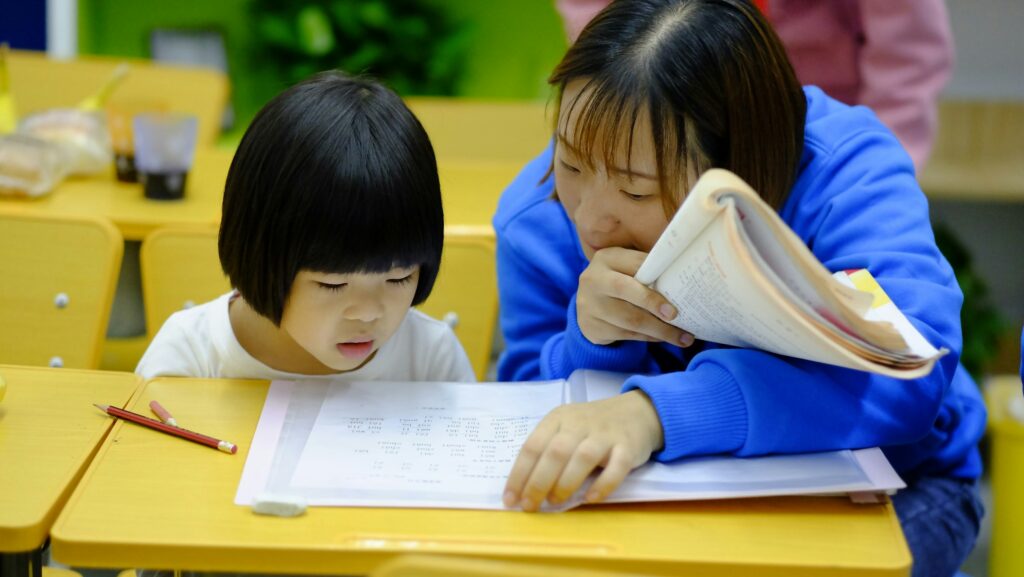
A child sits in the third row of a government school in a small district town. The teacher writes a theorem on the board, turns, and asks the class to copy it. The child copies it perfectly and understands none of it, and no one in the room notices the gap between the two. Multiply that moment across a few hundred million desks and you have the quiet crisis at the centre of Indian education. The phrase “education without empathy is mere instruction” names exactly this: a system that can transmit content flawlessly and still fail to teach a single human being. This guide breaks the topic down the way it should be handled in the examination hall — meaning, angles, time map, a paragraph plan, and a complete model essay to study and adapt.
Why UPSC could set this in 2026 — and what it would really test
This is a predicted prompt for UPSC CSE Mains 2026, not a past question — but it sits squarely in the territory the Essay paper has favoured since 2020: an abstract value-claim with a live policy charge underneath it. National Education Policy 2020 made “holistic, integrated, enjoyable” learning its declared aim; the annual ASER surveys keep reporting that large shares of children in higher grades cannot read a Standard II text or do basic arithmetic. That tension — a humane vision on paper, a mechanical reality on the ground — is precisely the kind of contradiction the examiner loves to hang an essay on. UPSC would be testing four things at once: can you read an abstract maxim and build a clear thesis; can you connect philosophy to Indian policy without sounding like a GS answer; can you range across history, pedagogy, ethics and personal experience; and can you write 1,100 disciplined words that examine the claim rather than merely agree with it.
Five angles that unlock “Education without empathy is mere instruction”
The trap with a maxim this agreeable is to nod along for 1,100 words. The mark-pulling answer instead names several distinct lenses, weighs them, and weaves three together. Here are the five most defensible readings of education without empathy is mere instruction. You do not need all five — three, treated well, is the sweet spot — but you should know all five so your choice is deliberate.
- Education versus instruction — the definitional reading. Instruction transmits information; education forms a person. The distinction runs from the Latin educare (to draw out) to Tagore’s quarrel with the “teaching factory.” This angle lets you anchor the whole essay in what the two words actually mean.
- The head, the hand and the heart — Gandhi’s Nai Talim insisted that learning detached from feeling and work is incomplete. Empathy is the heart that instruction alone leaves out. This is your strongest Indian anchor.
- The learning crisis — the policy reading. ASER data and the NEP 2020 ambition show a system that delivers instruction at scale yet struggles to deliver learning, because a child who is not seen does not learn. Empathy here is not sentiment; it is the precondition of effective teaching.
- Empathy as ethical formation — education is also moral education. A brilliantly instructed mind without empathy produces competent cruelty: the efficient bureaucrat, the clever fraudster. This angle pulls the essay toward citizenship and ethics.
- The limits of empathy — the counter-current. Can care become indulgence? Is rigour itself a form of respect for a child’s potential? Holding this tension keeps the essay from becoming a sermon.
A strong essay takes angles 1, 2 and 3 as its backbone — definition, the Indian heart-tradition, the learning crisis — uses 4 to raise the stakes to ethics, and admits 5 as an honest counter-argument. That gives the essay rhythm: definition, evidence, complication, resolution.
A time map for the 1,500-second window
One essay deserves about 75 to 90 minutes inside the three-hour paper. Spending more on Essay 1 starves Essay 2. The single biggest source of below-100 essay scores is poor time discipline — beautiful introductions, panicked conclusions. Use a rough breakdown like this:
| Minutes | Activity | What it earns you |
|---|---|---|
| 0 — 10 | Decode the topic. Write the thesis in one line. List 4 to 5 angles. Pick 3. | Direction. The single most important investment of the 90 minutes. |
| 10 — 18 | Brainstorm examples — Tagore, Gandhi’s Nai Talim, NEP 2020, ASER, a personal teacher. | The substance the body paragraphs will run on. |
| 18 — 22 | Draft a paragraph-level outline — 12 to 15 bullets, in sequence. | Prevents the mid-essay drift that kills 60% of attempts. |
| 22 — 80 | Write the essay — opening, body, conclusion — without re-planning. | The actual marks come from this window. Protect it. |
| 80 — 85 | Read the conclusion. Tighten the last two sentences. Fix factual errors. | Conclusions are over-weighted by examiners. A clean ending saves 5 marks. |
Notice what is not on the list: rewriting the introduction halfway, hunting for the perfect quote, decorative underlining. None of that earns marks. Discipline does.
What to add — and what to avoid at all costs
The essay paper rewards what most aspirants under-do and punishes what most aspirants over-do. Memorise this list before you walk into the hall.
Add liberally
- One precise thesis, stated by the end of paragraph two and not abandoned. “Instruction fills a mind with content; education forms a person around that content, and empathy is what turns the first into the second.”
- Concrete examples across three or four domains — one philosophical (the root educare, Rousseau, Dewey), one Indian-policy (NEP 2020, ASER findings, the mid-day-meal experience), one ethical (a technically competent but heartless professional), one personal or literary (a teacher who changed a life, the Tagore school at Santiniketan).
- One Indian philosophical anchor used substantively — Gandhi’s Nai Talim and its education of head, heart and hand; or Tagore’s Santiniketan, where lessons were held under trees so the child stayed connected to life.
- A genuine counter-argument — that rigorous, demanding instruction is itself a form of care, and that empathy untethered from standards can coddle. Raise it, then resolve it in two lines.
- Two or three short, named references — Tagore on freedom of mind, Gandhi on the heart, the NEP 2020 aim of holistic development. One per major section is enough.
- A clean conclusion that returns to the opening image — the child in the third row — not a fresh argument.
Avoid — even when tempted
- Restating the topic in the first sentence. “Education without empathy is mere instruction is a profound statement…” signals you have nothing to add. Open with a scene.
- Drifting into a single domain. A 1,100-word essay only on school pedagogy looks like a GS answer. Range across philosophy, policy and ethics.
- Unsourced statistics. If you cannot name the survey behind a learning-outcome figure, describe the finding qualitatively instead of inventing a number.
- Naming living politicians or current ministers. Refer to the policy, the ministry or the institution, never the personality. The paper is graded across the ideological spectrum.
- Decorative theorist-dropping. Citing Rousseau, Dewey, Freire and Vygotsky in one paragraph to look serious. One thinker, used well, beats four named in passing.
- Moralising. “Teachers must love their students” reads like a school-day speech. The paper rewards examination, not exhortation.
A paragraph-by-paragraph blueprint
Twelve paragraphs at roughly 90 words each gets you to 1,080. Thirteen at 90 gets you near 1,170. What follows is a 13-paragraph plan that maps cleanly onto the model essay below. Each line is what that paragraph is doing, not what it is saying.
- Opening scene — the child copying a theorem he does not understand. No mention of the topic yet.
- The pivot to thesis — name the maxim, then state the thesis in one sentence.
- Define the terms — instruction as transmission, education as formation; what empathy means here.
- The etymology and the philosophers — educare, drawing out; the long Western tradition from Socrates to Dewey.
- Indian anchor — Gandhi and Tagore — Nai Talim’s head-heart-hand, Santiniketan under the trees.
- The policy reading — NEP 2020 — the holistic-development aim, the official recognition that rote instruction is not enough.
- The evidence — the learning crisis — ASER’s reading-and-arithmetic gap as instruction without learning.
- Empathy as the missing mechanism — a child who is not seen does not learn; why empathy is practical, not soft.
- The ethical stake — instruction without empathy yields competent harm; education must form citizens, not just experts.
- Counter-argument handled — rigour is also care; empathy can curdle into indulgence; resolve the tension.
- Way forward — the classroom — teacher training, smaller attention gaps, valuing the relationship not just the syllabus.
- Way forward — the system — assessment that measures understanding, dignity for the teaching profession, policy honoured in practice.
- Closing image — return to the child in the third row; one resonant line.
How to make an examiner stop and read
An essay examiner reads several hundred scripts in a sitting. The first paragraph decides whether they read the second with attention or with autopilot. Four small habits separate the essays that get attention from the ones that get skimmed.
- Open with a scene, not a statement. A child copying a theorem he cannot follow, a school under a tree, a teacher who knelt to a student’s eye level. Concrete images cost no marks and earn attention.
- Use the topic phrase itself two or three times. Once in the thesis, once at the turn, once at the close. It signals discipline and prevents drift.
- Vary sentence length. A short sentence after three long ones lands. Examiners feel rhythm before they parse meaning.
- End paragraphs with the takeaway, not with examples. Place the example mid-paragraph. Let the last sentence be the thought the reader carries forward.
The complete essay — “Education without empathy is mere instruction”
What follows is a model essay of roughly 1,200 words built on the blueprint above. Read it twice — once for the argument, once for the moves. The moves are what you can carry into your own essay; the argument is one of many you could make.
A boy sits in the third row of a crowded classroom in a small town. On the board is a theorem, written in a confident hand. The teacher turns and tells the class to copy it, and the boy does — every symbol in its place, the diagram neatly labelled, not one stroke wrong. He has reproduced the lesson perfectly and understood nothing of it, and in the press of forty other children, no one notices the distance between the two. The page is full; the boy is empty. It is the most ordinary scene in the country, and it is the whole problem in miniature.
“Education without empathy is mere instruction” begins from that scene. The maxim draws a line between two things we too easily treat as one. Instruction is the transmission of content from a knower to a learner; it can be measured, scaled, automated. Education is the slower work of forming a person around that content — shaping how they think, feel and act. My argument is simple: instruction fills a mind with material, education forms a human being, and empathy is the faculty that turns the first into the second. Strip empathy out, and what remains is not bad education. It is not education at all.
The words themselves point this way. To educate comes from the Latin educare — to draw out, to lead forth — not to pour in. Socrates drew knowledge out of a slave boy by questioning, not lecturing. Centuries later, John Dewey insisted that education is not preparation for life but life itself, a continuous reconstruction of experience. Across these traditions the constant is relationship: a teacher who attends to the particular child in front of them, not to an average pupil who does not exist. Empathy is the name for that attention. Without it, a teacher addresses a room; with it, a teacher reaches a person.
India has held this insight close. Gandhi’s Nai Talim rejected the colonial schoolroom precisely because it educated the head while starving the heart and the hand; true learning, he held, must join all three. Rabindranath Tagore built Santiniketan around the same conviction, holding lessons under open trees so that the child never lost contact with the living world the lessons described. Neither man was sentimental. Both were arguing something hard-edged: that knowledge severed from feeling and from doing is inert, and that the teacher’s first task is not to deliver a syllabus but to see the learner whole.
Modern Indian policy has, on paper, caught up with these old teachers. The National Education Policy of 2020 sets out an aim its drafters describe as holistic, integrated and joyful — an education meant to develop the whole person, not merely to cram for examinations. The language is unmistakably the language of empathy: the child at the centre, learning made meaningful, the rote drill demoted. A society that writes such an aim into its founding education document has, at least, admitted that instruction by itself is not the goal.
The trouble is that admission and reality diverge. Year after year, the Annual Status of Education Report finds that large shares of children in the upper primary grades cannot read a simple text from two classes below, or perform basic division. These are not children who were never instructed; they sat through the lessons, copied the boards, passed from grade to grade. They were instructed and not educated. The gap is the boy in the third row, scaled to a nation — proof, in cold numbers, that transmission without connection does not become learning.
Why should empathy close that gap, when it sounds so soft beside syllabi and assessments? Because learning is not a download. A child learns when a teacher notices where exactly the understanding broke, hears the question behind the wrong answer, and adjusts. That noticing is empathy in its working clothes. The teacher who cannot or will not see the particular confusion in front of them can only repeat the lesson louder. Empathy is not the opposite of rigour; it is what makes rigour land. It is the most practical instrument in the classroom, not the most decorative.
There is a deeper stake than test scores. An education that instructs the mind and neglects the moral imagination can produce something worse than ignorance: competent harm. The clever official who processes a family’s hardship as a file, the brilliant engineer indifferent to whom a design endangers, the trained mind without a formed conscience — each is a product of instruction that forgot the heart. To educate a citizen, and not merely a skill-holder, a society must teach the young to feel the reality of other lives. Empathy is not an ornament on education; it is part of its purpose.
It might be objected that this praise of empathy is itself a danger — that demanding, rigorous instruction is its own form of respect, and that a classroom soft on standards merely lowers the ceiling for the poor child who most needs the climb. The objection is partly right and entirely manageable. Empathy that excuses a child from effort is not empathy; it is condescension. The point is not to choose between care and rigour but to recognise that real care is rigorous — it holds a child to a high standard precisely because it believes in the person who can reach it. Discipline without warmth is cruelty; warmth without discipline is neglect; education needs both, fused.
What follows for practice is concrete. In the classroom, it means valuing the teacher’s relationship with the child as much as the coverage of the syllabus, training teachers to diagnose rather than merely deliver, and shrinking the gap between one adult and too many faces. At the level of the system, it means assessments that reward understanding over recall, an examination culture that does not punish curiosity, and a profession given the dignity and the time to teach human beings rather than to process them. The empathy the policy promises must survive the journey from the document to the desk.
Return, at the end, to the boy in the third row. Imagine the teacher had walked over, looked at his neat and meaningless page, and asked one question — what do you think this line means? In that small act of attention, instruction would have become education. That is the entire distance the maxim measures. A nation can build schools, print textbooks and frame fine policies, and still leave that boy untaught, unless it remembers that education without empathy is mere instruction — and that the cure costs nothing more than the will to see the child.
Word count: approximately 1,200.
How to use this model essay
Do not memorise it. Memorised essays read like memorised essays, and examiners spot them in two paragraphs. Use the model the way a chess student uses a master game: study the opening scene, the pivot to thesis, the placement of the Indian anchor, the way the counter-argument is raised and then closed, the return to the opening image at the end. Then take a related value-topic — try “The purpose of education is to replace an empty mind with an open one” or “We learn more from failure than from success” — and write your own essay using the same blueprint. Repeat that exercise eight to ten times and the structure becomes muscle memory. On exam day, the only thing you should have to think about is the topic itself.
Tell Google you want more of this.
Add Anantam IAS as a preferred sourceOne tap, and this site shows up more often in your own Top Stories, AI Overviews and AI Mode. Remove it any time.