Disclosure: this guide contains Amazon affiliate links. As an Amazon Associate, Anantam IAS earns from qualifying purchases — at no extra cost to you.
“There can be no social justice without economic prosperity but economic prosperity without social justice is meaningless” appeared as Topic 6 of Section B in the UPSC Civil Services Mains Essay paper held on 8 January 2021. Six lines on the question paper. One hundred and twenty-five marks if you handle it well. A wasted hour if you do not. This guide breaks the topic down the way it should be tackled in the hall — first the meaning, then the angles, then the time map, then the paragraph-by-paragraph plan, and finally a complete 1,200-word model essay you can study, dissect and adapt.
When this was asked and what UPSC is really testing
The topic was set in UPSC CSE Mains 2020, Essay paper, Section B. Three hours, two essays, one from each section, roughly 1,000 to 1,200 words each, 125 marks per essay. Unlike the abstract Section A prompts, this is a policy-philosophy hybrid — a paired claim that yokes economics to ethics. The paper was written nine months into the pandemic, when the migrant-worker crisis had made the trade-off between growth and dignity painfully concrete.
UPSC is checking four things at once. One, can you read a two-clause proposition without collapsing it into a single argument. Two, can you weave economic theory, constitutional values and lived Indian reality without sounding like a textbook. Three, can you handle the genuine tension between growth and redistribution without sliding into ideology. Four, can you write 1,150 disciplined words that examine the proposition rather than 1,500 loose words that decorate it. The aspirant who handles all four scores in the 130s. The aspirant who treats the topic as a slogan and lists welfare schemes scores in the 90s.
Five angles that unlock the proposition
The trap with two-clause topics is to argue only one half. The mark-pulling answer treats the proposition as a feedback loop — prosperity funds justice; justice legitimises prosperity — and tests it with theory, history and policy. Here are the five most defensible readings. You do not need all five — three, treated well, is the sweet spot. But you should know all five so your choice is conscious.
- The capability reading — Amartya Sen’s argument that justice is the substantive freedom to live a life one has reason to value. Without resources, the right to education or health remains a paper promise. This angle pulls in the basic-needs literature and India’s pre-1991 inability to fund welfare at scale.
- The Rawlsian reading — John Rawls‘ difference principle: inequalities are tolerable only if they improve the position of the worst-off. Pure growth that concentrates at the top fails this test. This angle frames the second clause — prosperity without justice is meaningless because it offends the basic structure of a fair society.
- The constitutional reading — the Preamble promises justice “social, economic and political” in a single breath. Articles 38 to 41 of the Directive Principles operationalise it. This angle treats the proposition as a paraphrase of the Indian Constitution itself.
- The policy reading — NREGA, NFSA, RTE, Ayushman Bharat, DBT, PMMY. Each scheme is a working hypothesis that prosperity and justice can be designed to reinforce each other. This angle anchors the essay in delivery rather than rhetoric.
- The inequality reading — Oxfam India’s annual reports, the rising share of the top one percent in national wealth, the gender wage gap, the persistence of caste-coded earnings. This angle gives you the empirical counterweight that prevents the essay from sounding celebratory.
A strong essay picks 1, 3 and 4 as its backbone (capability, Constitution, policy), uses 5 as the empirical pressure point and 2 as the philosophical anchor. That gives the essay rhythm — premise, evidence, complication, resolution — instead of a single straight line.
A time map for the 1,500-second window
One essay deserves about 75 to 90 minutes inside the three-hour paper. Spending more on Essay 1 starves Essay 2. The single biggest source of below-100 essay scores is poor time discipline — beautiful introductions, panicked conclusions. Use a rough breakdown like this:
| Minutes | Activity | What it earns you |
|---|---|---|
| 0 — 10 | Decode both clauses. Write the thesis in one line. List 4 to 5 angles. Pick 3. | Direction. The single most important investment of the 90 minutes. |
| 10 — 18 | Brainstorm examples — Sen, Rawls, NREGA, Oxfam numbers, Ambedkar, antyodaya. | The substance the body paragraphs will run on. |
| 18 — 22 | Draft a paragraph-level outline — 12 to 13 bullets, in sequence. | Prevents the mid-essay drift that kills 60% of attempts. |
| 22 — 80 | Write the essay — opening, body, conclusion — without re-planning. | The actual marks come from this window. Protect it. |
| 80 — 85 | Read the conclusion. Tighten the last two sentences. Fix factual errors. | Conclusions are over-weighted by examiners. A clean ending saves 5 marks. |
Notice what is not on the list: rewriting the introduction halfway, hunting for the perfect quote, fancy diagrams, decorative underlining. None of that earns marks. Discipline does.
What to add — and what to avoid at all costs
The essay paper rewards what most aspirants under-do and punishes what most aspirants over-do. Memorise this list before you walk into the hall.
Add liberally
- One precise thesis, stated by the end of paragraph two and not abandoned. “Prosperity without justice is wealth without legitimacy; justice without prosperity is dignity without means — a republic must engineer both, or it will lose both.”
- Concrete examples across three or four domains — one theoretical (Sen’s capabilities, Rawls’ difference principle), one Indian-historical (1991 reforms, NREGA 2005, NFSA 2013), one constitutional (Preamble, Articles 38–41, Article 39(b) and (c)) and one empirical (Oxfam India figures, top-one-percent wealth share, gender gap).
- Two or three short, named anchors — Ambedkar on annihilation of caste tied to economic emancipation; Gandhi’s antyodaya; JRD Tata’s trusteeship; Vinoba Bhave’s Bhoodan. One per major section.
- One Indian philosophical anchor. The Preamble’s threefold justice, antyodaya, the Upanishadic ideal of sarve bhavantu sukhinah. Examiners read 300 essays a day; an Indian anchor in an essay full of policy acronyms stands out.
- Counter-arguments handled briefly. “Critics of the 1991 reforms argue that liberalisation widened the gap…” — then resolved in two lines. Acknowledging the trade-off earns more marks than ignoring it.
- A clean conclusion that returns to the opening image — not a fresh argument, not a new example.
Avoid — even when tempted
- Restating the topic in the first sentence. “Social justice and economic prosperity are two sides of the same coin…” — this signals that you have nothing to add. Open with an image or a paradox.
- Drifting into a scheme-listing exercise. A 1,150-word essay that names NREGA, NFSA, RTE, Ayushman Bharat, PMMY, DBT, PM-KISAN, MUDRA without analysing any of them reads like a GS II answer. Pick two, treat them properly.
- Unsourced statistics. “The top one percent owns 80% of national wealth” — if you cannot name the source, do not write the number. Examiners cross-mark this.
- Naming current parties, leaders or active judgments. The Essay paper is graded by humans across the ideological spectrum. Use the institution, not the personality. Historical figures — Ambedkar, Nehru, Manmohan Singh in his 1991 finance-minister capacity — are safe.
- Decorative scholar-dropping. Citing Piketty, Stiglitz, Sen and Rawls in one paragraph to look serious. Examiners spot performance citations instantly. One scholar, used well, beats four named in passing.
- Moralising. “We must all care for the poor” reads like a school speech. The essay paper rewards examination, not exhortation.
A paragraph-by-paragraph blueprint
Twelve paragraphs at roughly 95 words each gets you to 1,140. Thirteen at 90 each gets you to 1,170. Either works. What follows is a 13-paragraph plan that maps cleanly onto the model essay below. Each line is what that paragraph is doing, not what it is saying.
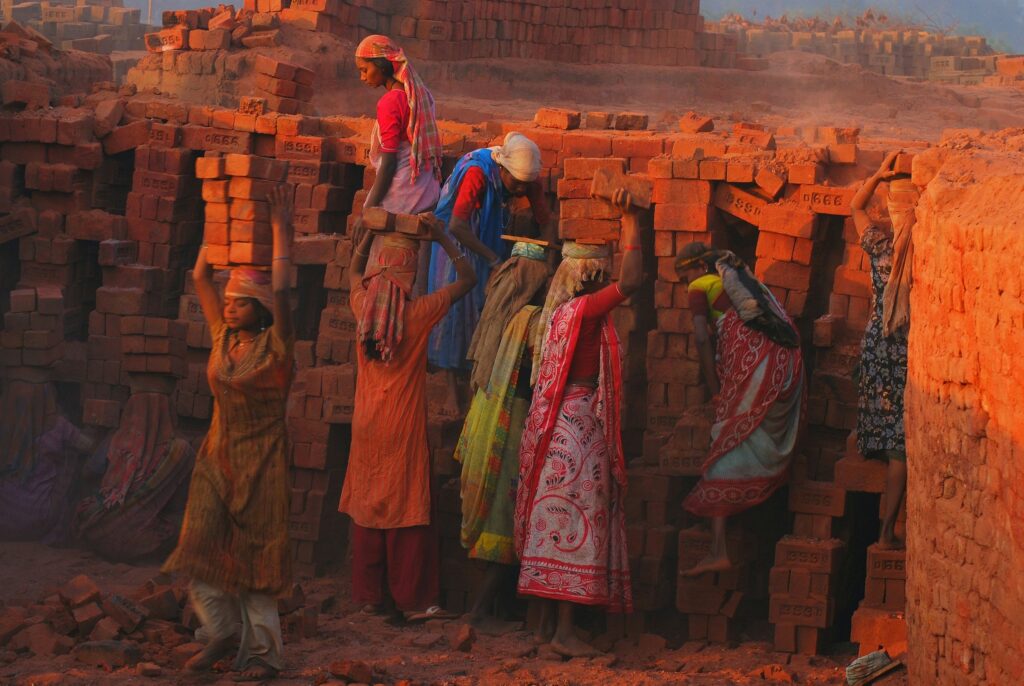
- Opening image — a brick-kiln scene or a ration-shop queue that physically embodies both clauses. No mention of the topic yet.
- The pivot to thesis — name the proposition, then state the thesis in one sentence.
- Define the terms — what does “social justice” mean (Preamble’s threefold sense), what does “economic prosperity” mean (output, productivity, distribution).
- Clause one — prosperity funds justice — Sen on capabilities, India’s pre-1991 inability to fund welfare at scale.
- The constitutional anchor — Preamble, Articles 38, 39, 41, the Directive Principles as the bridge.
- Clause two — justice legitimises prosperity — Rawls’ difference principle, Ambedkar on economic emancipation, Gandhi’s antyodaya.
- Empirical pressure point — Oxfam India figures, top-one-percent wealth share, gender and caste wage gaps.
- Policy embodiment — NREGA as right-to-work plus rural demand; NFSA as right-to-food plus agricultural off-take.
- Plumbing of delivery — Aadhaar-DBT plugging leakages, RTE building human capital, PMMY credit access to MSMEs.
- Counter-argument handled — yes, there is a real growth-versus-redistribution trade-off. No, it does not collapse the proposition.
- Way forward — instruments — progressive taxation, social-security floor for gig workers, cooperative federalism on welfare delivery.
- Way forward — ethics — JRD Tata’s trusteeship, ESG standards, the moral economy of business.
- Closing image — return to the opening kiln or queue, close with one resonant line on the Preamble’s threefold justice.
How to make an examiner stop and read
An essay examiner reads several hundred scripts in a sitting. The first paragraph decides whether they read the second with attention or with autopilot. Four small habits separate the essays that get attention from the ones that get skimmed.
- Open with a scene, not a statement. A brick kiln at dawn, a queue outside a ration shop, a balance sheet beside a hospital bill. Concrete images cost no marks and earn attention.
- Use the topic phrase itself two or three times across the essay. Once in the thesis, once at the turn, once at the close. It signals discipline and prevents drift.
- Vary sentence length. A short sentence after three long ones lands. Examiners feel rhythm before they parse meaning.
- End paragraphs with the takeaway, not with examples. Place the example mid-paragraph. Let the last sentence be the thought, so the reader carries it into the next paragraph.
The complete essay — “There can be no social justice without economic prosperity but economic prosperity without social justice is meaningless”
What follows is a 1,200-word model essay built on the blueprint above. Read it twice — once for the argument, once for the moves. The moves are what you can carry into your own essay; the argument is one of many you could make.
Before sunrise in a brick kiln outside an Indian town, a woman stacks wet clay into moulds. Her wage is fixed by a contractor she has not met, her child plays in the dust beside her, and the bricks she shapes will rise as walls of houses she will never enter. A few kilometres away, a glass tower hosts a quarterly results call in which the construction sector reports record profits. Both scenes belong to the same economy. Neither, on its own, is the whole of it. Holding them together in one sentence is the work of any serious argument about justice and prosperity.
“There can be no social justice without economic prosperity but economic prosperity without social justice is meaningless.” The proposition is doubled on purpose. It refuses both the Marxist hope that redistribution alone can deliver dignity and the trickle-down faith that growth alone can deliver fairness. The thesis it invites is exact: prosperity without justice is wealth without legitimacy; justice without prosperity is dignity without means; a republic must engineer both, or it will lose both.
Some careful definitions help. “Social justice” in the Indian sense is wider than welfare; the Preamble pairs it with economic and political justice in a single breath, and Articles 38 to 41 give it operational content — equitable distribution of material resources, a right to work, to education, to assistance in old age and sickness. “Economic prosperity” is wider than GDP; it is the productive capacity to generate the goods, jobs and revenues that any project of justice must finance. The proposition links the two as cause and condition, not as substitutes.
Consider the first clause. Amartya Sen has long argued that justice is not the formal right to a thing but the substantive capability to use it. A right to education without a school is paper; a right to health without a hospital is paper; a right to work without an economy that creates work is paper. India learnt this the hard way. For four decades after Independence, the Republic believed in justice but could not finance it. Welfare schemes were announced; a sluggish economy reduced them to gestures. When the 1991 reforms unlocked growth, revenues multiplied, and the same Republic could at last afford the NREGAs and NFSAs of the next two decades. Prosperity did not produce justice automatically — it produced the means.
The Indian Constitution anticipated this dependency. The Preamble’s threefold justice — social, economic and political — is one promise read in three registers. Article 39(b) and (c) bind the State to ensure that material resources serve the common good and that wealth does not concentrate to the common detriment. Article 41 commits the State to public assistance in unemployment, sickness and old age. These are not aspirations decorated with legal language; they are the constitutional translation of the proposition under examination.
Now the second clause. John Rawls’ difference principle insists that inequalities of wealth are tolerable only if they improve the position of the worst-off. By that test, prosperity that lifts only the top deciles is not merely unfair; it is a category error. B.R. Ambedkar made the same point in starker terms: political democracy without social and economic democracy is a façade, for one cannot annihilate caste without redistributing the material base on which caste sits. Gandhi reduced it to a single instruction — antyodaya, the uplift of the last person, as the test of any policy. By each of these standards, prosperity without justice is meaningless in the strict sense — it has no claim on the loyalty of those it leaves behind.
The empirical record sharpens the point. Successive Oxfam India reports have documented a sustained rise in the share of national wealth held by the top one percent, while the bottom half has barely budged. The gender wage gap persists across formal and informal employment. Caste-coded earnings remain stubborn even controlling for education. None of these numbers cancels the gains India has made in absolute poverty reduction since 1991. All of them ask the harder question — for whom is this prosperity, and on what terms.
This is where policy steps in as the working hypothesis that prosperity and justice can be designed to reinforce each other. The National Rural Employment Guarantee Act of 2005 created a legally enforceable right to work and, in the same stroke, became a vast counter-cyclical demand stimulus — rural wages stabilised, distress migration eased, household cash returned as consumption. The National Food Security Act of 2013 turned a welfare claim into an entitlement and, by routing grain through procurement, gave farmers an off-take floor. The architecture is the same — a right is created, financed by prosperity, that in turn strengthens the prosperity which finances it.
The plumbing matters as much as the architecture. Aadhaar-linked Direct Benefit Transfers have reduced the leakage that once made welfare a synonym for waste. The Right to Education Act has put children in classrooms whose future earnings will broaden the tax base. The Pradhan Mantri Mudra Yojana has extended credit to micro-enterprises no formal lender would touch, converting informal hustle into formal livelihood. None of these is flawless. All are honest attempts to make the two clauses of the proposition reinforce each other in practice.
It might be objected that the proposition assumes away a real trade-off; that taxing prosperity to fund justice slows the prosperity, and that the “grow first, distribute later” school has a point. The objection is partly right and entirely insufficient. There is a real trade-off at the margin — capital is mobile, incentives matter, badly designed welfare can hollow out the tax base it depends on. But societies which postpone justice indefinitely do not eventually arrive at it; they arrive at instability. The choice is not between justice and prosperity. It is between sequencing them well and sequencing them badly.
Sequencing well, in this decade, points to a familiar list of instruments. A more progressive direct-tax structure that asks more of accumulated wealth than of working incomes. A social-security floor that follows the worker, not the employer, so the gig economy is not a parallel republic without rights. Cooperative federalism that lets states tailor delivery. Credit access for the MSMEs that employ the largest share of Indian workers. Climate-resilient livelihoods that do not force a choice between today’s prosperity and tomorrow’s habitability.
Beyond instruments lies ethics. JRD Tata’s idea of trusteeship treated the corporation as a custodian of social wealth, not its owner. Modern ESG standards formalise something similar — capital that damages the social or natural commons is not creating value, only externalising cost. Vinoba Bhave’s Bhoodan, however limited in reach, embedded the same intuition in voluntary action. A prosperity disciplined by these ethics is not slowed by justice; it is anchored by it.
Return to the brick kiln with which we began. The walls the woman shapes will hold up someone else’s roof. The Constitution she lives under has promised her justice — social, economic, political — in one breath. The proposition under examination works that promise out in policy: a republic that pursues either prosperity or justice in isolation will end with neither; one that engineers both in the same act of will may yet keep them both. Social justice without economic prosperity is dignity without means. Economic prosperity without social justice is means without meaning. The Republic’s task, set down in the Preamble, is to refuse the choice between them.
Word count: approximately 1,200.
How to use this model essay
Do not memorise it. Memorised essays read like memorised essays, and examiners spot them in two paragraphs. Use the model the way a chess student uses a master game: study the opening move, the pivot, the way each paragraph hands the reader to the next, the placement of the Indian anchors, the way the counter-argument is brought up and then closed. Then take a different paired-proposition topic — try “Fulfilment of new women in India is a myth” or “Technology cannot replace manpower” — and write your own essay using the same blueprint. Repeat that exercise eight to ten times and the structure becomes muscle memory. On the day of the exam, the only thing you should have to think about is the topic itself.
Books quoted in this essay
Annihilation of Caste, B.R. Ambedkar, Navayana’s annotated edition.
Tell Google you want more of this.
Add Anantam IAS as a preferred sourceOne tap, and this site shows up more often in your own Top Stories, AI Overviews and AI Mode. Remove it any time.