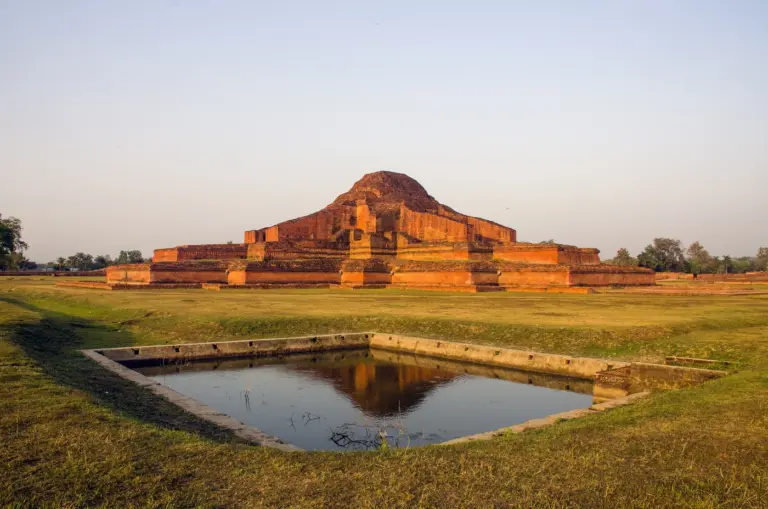
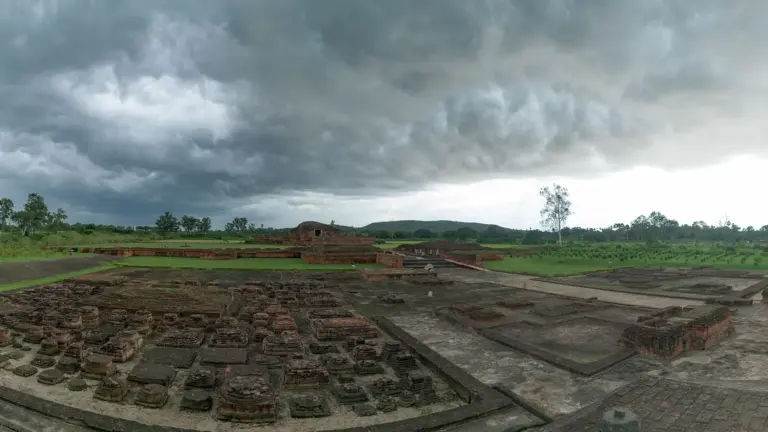
The founder of Jainism, according to Jain tradition, is Rishabhanatha (Adinatha), the first of twenty-four Tirthankaras, while the religion in its present organised form is credited to Vardhamana Mahavira, the 24th and last Tirthankara (599–527 BCE). Jains reject the idea of a single historical founder because, in their belief, the faith is eternal — revived in each cosmic cycle by enlightened teachers who "ford" the stream of rebirth. Modern historians, however, treat Mahavira as the systematiser who gave Jainism its philosophy, monastic order, and ethical code. For UPSC Prelims and GS-I Mains, both names matter, along with the 23rd Tirthankara Parshvanatha, who is historically attested.
Who Really Founded Jainism
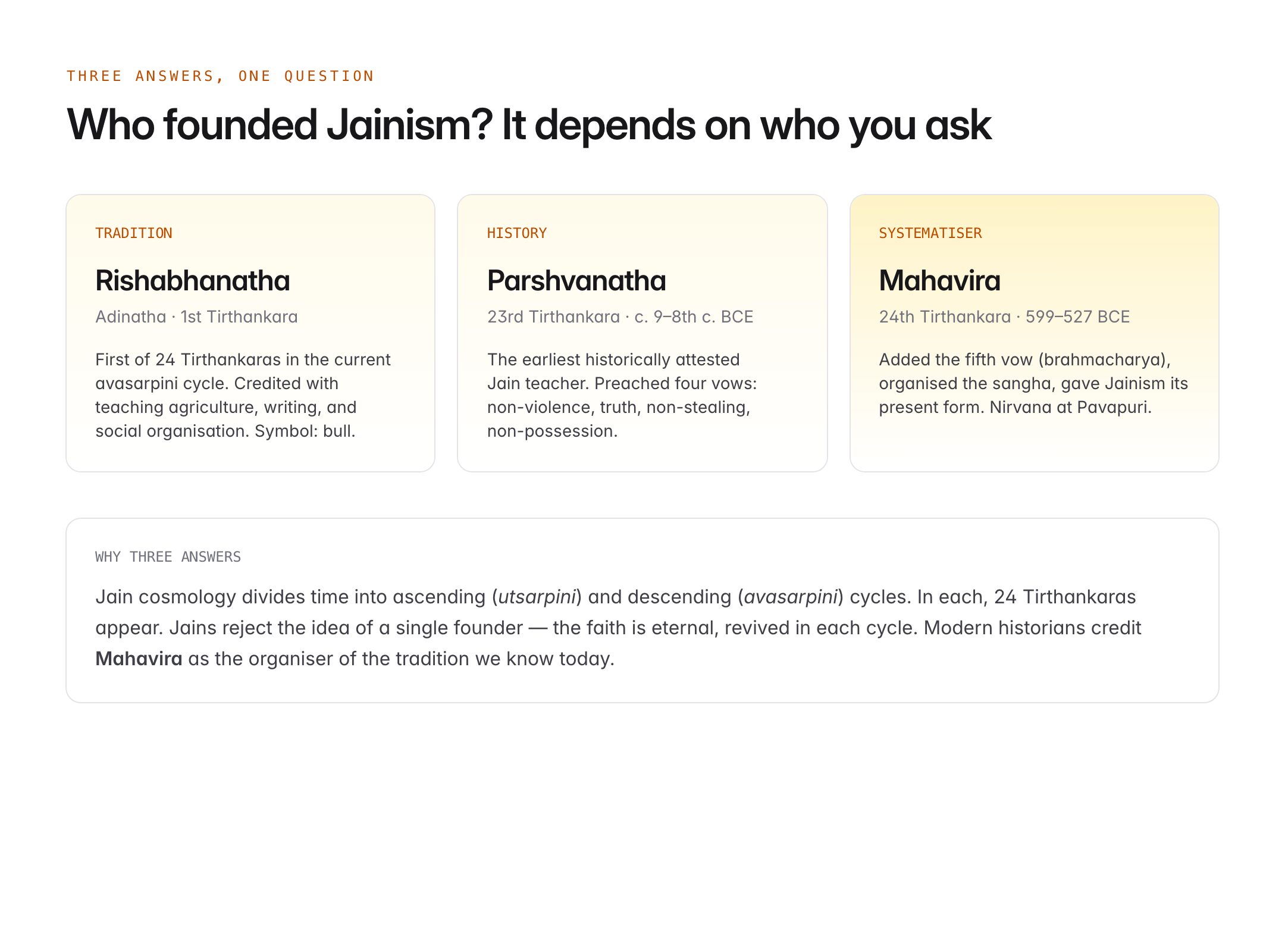
Jain cosmology divides time into endless ascending (utsarpini) and descending (avasarpini) half-cycles. In each half-cycle, 24 Tirthankaras appear. The current 24 include:
- Rishabhanatha (Adinatha) — first Tirthankara; credited in Jain texts with teaching agriculture, writing, and social organisation. Symbol: bull.
- Parshvanatha — 23rd Tirthankara; a historical figure who lived around the 9th–8th century BCE; preached four vows (non-violence, truth, non-stealing, non-possession).
- Mahavira — 24th Tirthankara; added the fifth vow of brahmacharya (celibacy); organised the sangha.
So the tradition-based answer is Rishabhanatha; the historical-founder answer is Mahavira; and the earliest historically verified Jain teacher is Parshvanatha.
Life of Mahavira
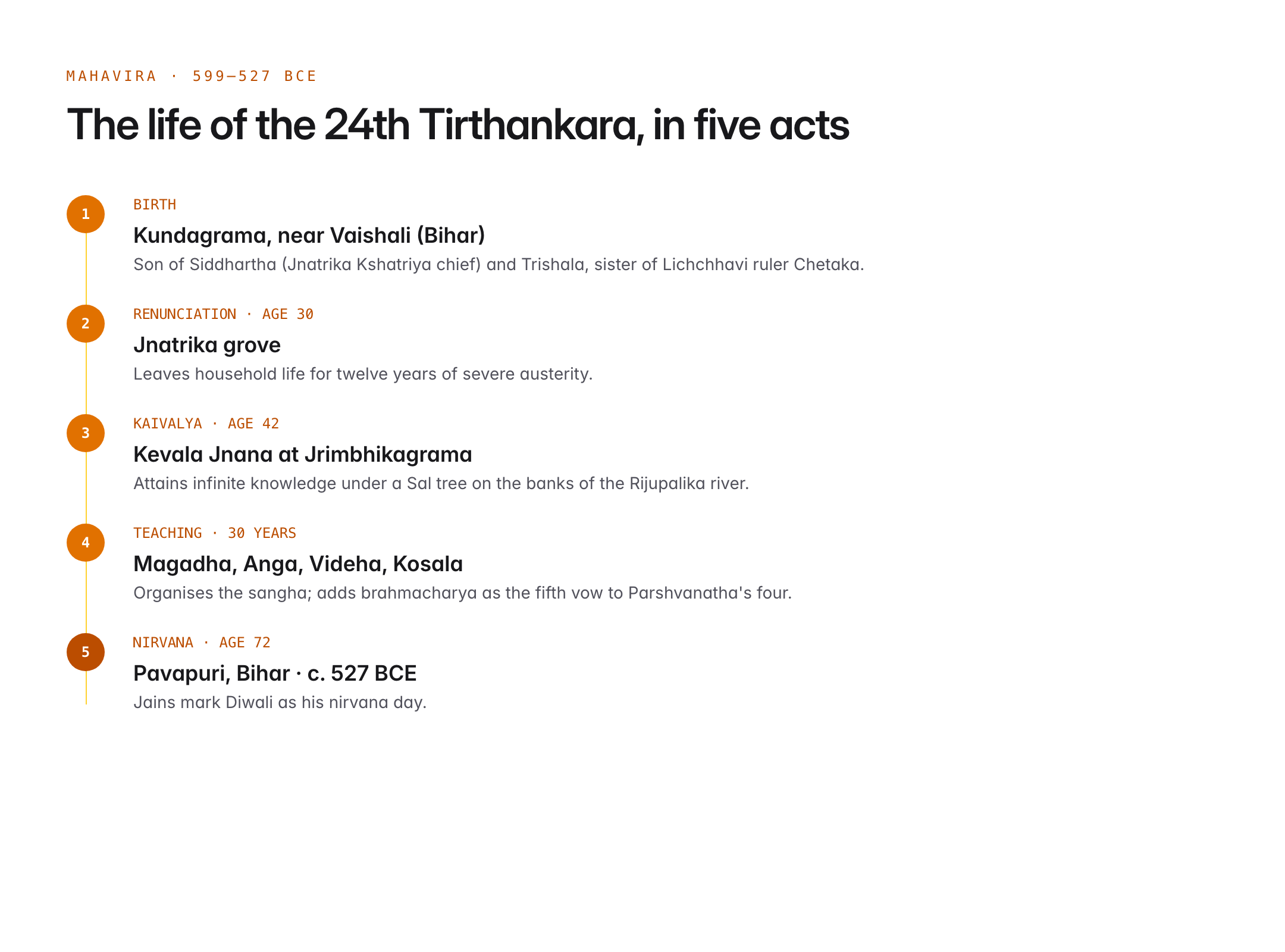
Vardhamana Mahavira was born in Kundagrama near Vaishali (modern Bihar) around 599 BCE into the Kshatriya Jnatrika clan. His father Siddhartha was a chief and his mother Trishala was sister of Chetaka, the Lichchhavi ruler.
| Event | Age | Place |
|---|---|---|
| Birth | — | Kundagrama, Vaishali |
| Renunciation | 30 | Jnatrika grove |
| Kaivalya (omniscience) | 42 | Jrimbhikagrama, by the Rijupalika river |
| First sermon | 42 | — |
| Nirvana (death) | 72 | Pavapuri, Bihar (c. 527 BCE) |
After twelve years of severe austerity, Mahavira attained Kevala Jnana (infinite knowledge) under a Sal tree. He then taught for thirty years across Magadha, Anga, Videha, and Kosala, and died at Pavapuri, where Diwali is celebrated by Jains as his nirvana day.
Core Philosophy: Three Jewels and Five Vows
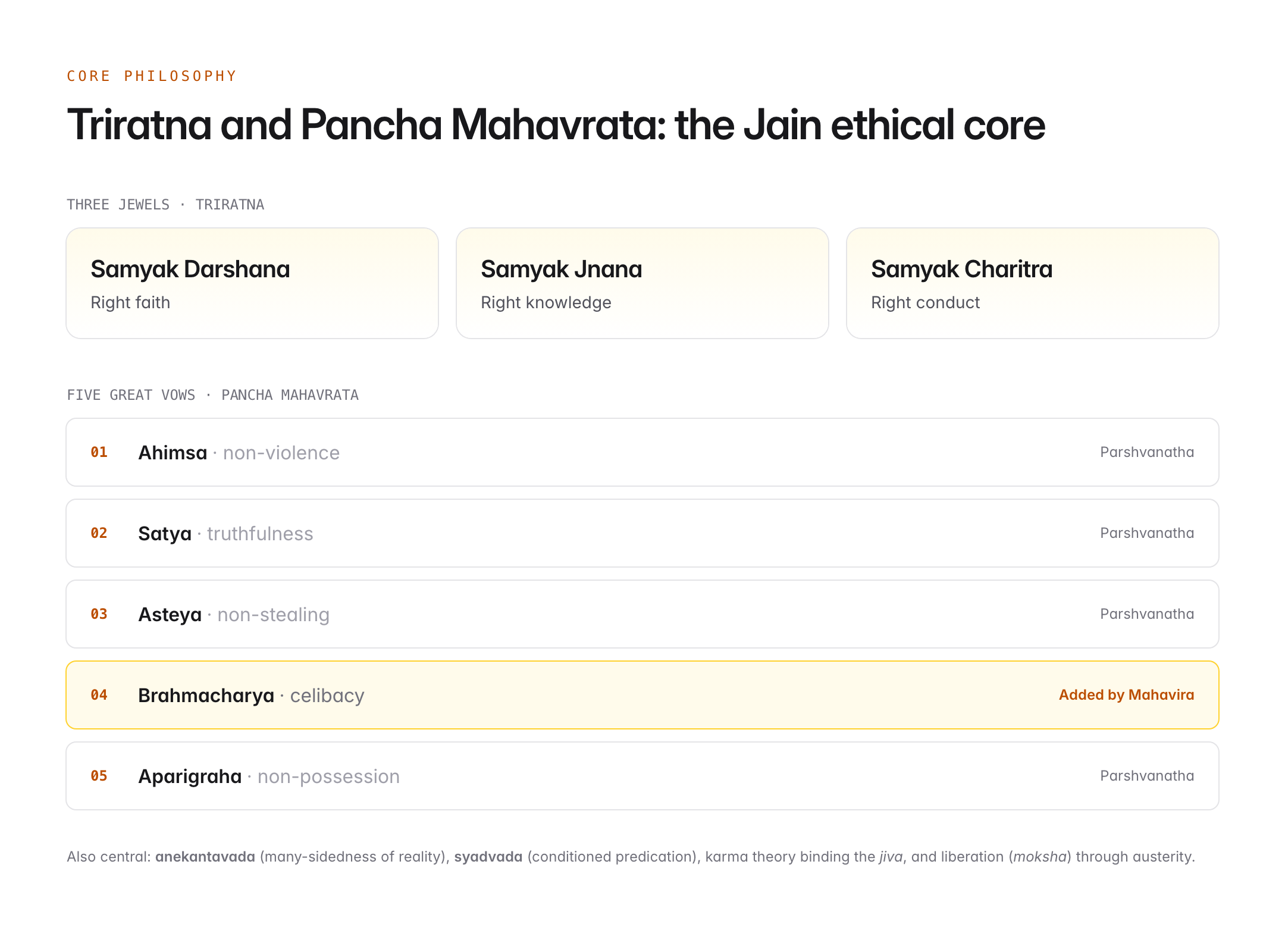
Jain ethics rest on the Triratna (Three Jewels):
- Samyak Darshana — right faith
- Samyak Jnana — right knowledge
- Samyak Charitra — right conduct
Conduct is governed by the Pancha Mahavrata (Five Great Vows), expanded by Mahavira from Parshvanatha's four:
- Ahimsa — non-violence
- Satya — truthfulness
- Asteya — non-stealing
- Brahmacharya — celibacy (added by Mahavira)
- Aparigraha — non-possession
Other core doctrines:
- Anekantavada — the doctrine of many-sidedness of reality.
- Syadvada — theory of conditioned predication ("maybe").
- Karma theory — karmic particles bind the soul (jiva); liberation (moksha) comes through austerity and right conduct.
- Atheistic in the theistic sense — Jainism does not accept a creator God but accepts the soul and liberation.
Schism: Digambara and Svetambara
Around the 3rd century BCE, during a famine in Magadha, Bhadrabahu led monks south to Karnataka, while Sthulabhadra stayed back. On return, differences hardened into two sects:
| Feature | Digambara | Svetambara |
|---|---|---|
| Meaning | "Sky-clad" | "White-clad" |
| Dress | Monks remain naked | Monks wear white robes |
| Women's liberation | Women cannot attain moksha in this life | Women can attain moksha |
| Canon | Rejects the surviving canon | Accepts 45 Agamas |
| Strongholds | Karnataka, Maharashtra | Gujarat, Rajasthan |
Jain Councils and Literature
Two major councils shaped the Jain canon:
- First Council at Pataliputra (c. 3rd century BCE) under Sthulabhadra — compiled the 12 Angas.
- Second Council at Valabhi (Gujarat, 5th–6th century CE) under Devardhi Kshamasramana — finalised the Svetambara canon of 45 Agamas.
Jain literature is written in Prakrit, especially Ardha-Magadhi, and later in Sanskrit, Apabhramsha, Tamil, and Kannada. Key texts: Kalpasutra, Acharanga Sutra, Tattvartha Sutra by Umaswami.
Royal Patrons and Spread
Jainism spread widely thanks to royal patronage:
- Chandragupta Maurya — traditionally said to have abdicated, turned Jain monk under Bhadrabahu, and died at Shravanabelagola (Karnataka) by sallekhana (ritual fasting).
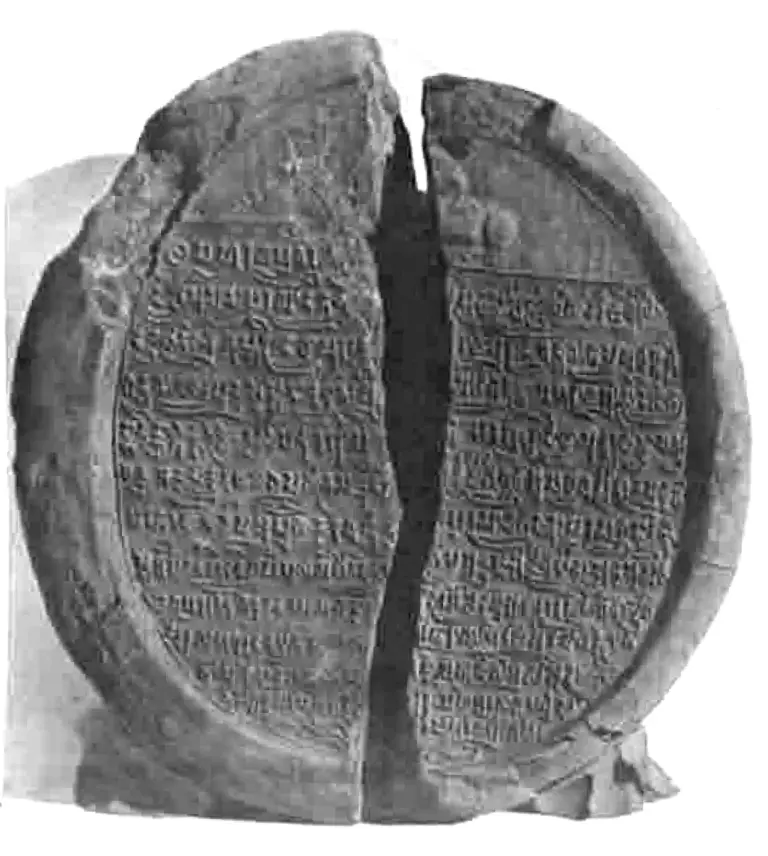
- Kharavela of Kalinga — Hathigumpha inscription records his Jain patronage.
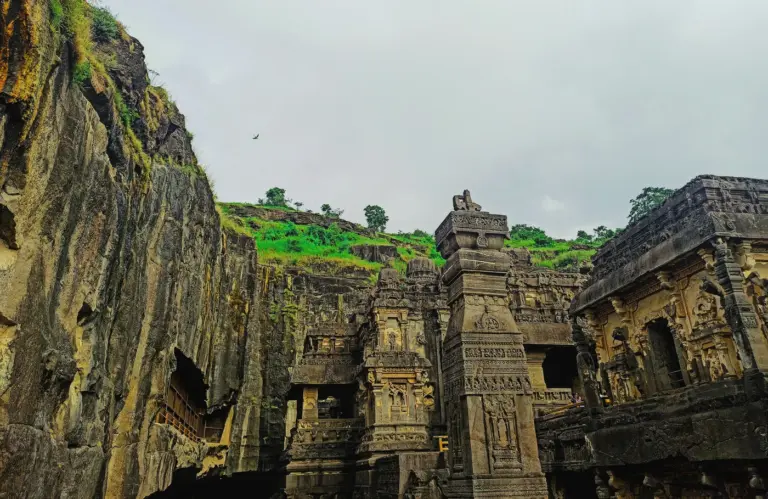
- Chalukyas, Rashtrakutas, Gangas — patronised Jain art in the Deccan; Rashtrakutas built the Ellora Jain caves.
- Chaulukyas (Solankis) of Gujarat — Kumarapala and minister Vastupala-Tejapala built the Dilwara temples at Mount Abu.
- Hoysalas and later Vijayanagara kings — patronised Jain centres in Karnataka.
Unlike Buddhism, Jainism never became a global religion but retained a continuous, uninterrupted presence in India, especially in Rajasthan, Gujarat, Maharashtra, Karnataka, and Madhya Pradesh.
Contribution to Indian Civilisation
- Language — Jain monks preserved regional languages like Prakrit, Apabhramsha, Tamil, and Kannada when Sanskrit was elite.
- Art and architecture — Shravanabelagola's Gommateshwara (Bahubali) statue (57 ft, 10th century), Dilwara temples (11th–13th century), Ranakpur, Palitana, Khajuraho Jain temples.
- Trade and economy — Jain merchant communities (Oswals, Porwals, Agrawals) shaped medieval banking and trade.
- Ethics — deep influence on Indian ideas of ahimsa, later inspiring Mahatma Gandhi, who credited the Jain teacher Raychandbhai Mehta.
UPSC Relevance
Prelims focus:
- Traditional founder: Rishabhanatha (Adinatha); historical systematiser: Mahavira; first historically attested Tirthankara: Parshvanatha.
- Mahavira's birthplace (Kundagrama, Vaishali) and nirvana site (Pavapuri).
- Five vows and the brahmacharya addition by Mahavira.
- Digambara–Svetambara split and location of Jain councils (Pataliputra, Valabhi).
- Symbols and flagship sites: Shravanabelagola, Dilwara, Palitana, Ellora Jain caves, Ranakpur.
Mains GS-I angle:
- Contribution of Jainism to Indian culture, language, and architecture.
- Comparative study of Jainism and Buddhism — why Buddhism spread globally while Jainism remained Indian.
- Jain principles of ahimsa and aparigraha as a framework for ecological ethics and non-violent politics (Gandhian thought).
Sample PYQ angle: "Early Buddhist Stupa-art, while depicting folk motifs and narratives, successfully expounds Buddhist ideals. Elucidate." — similar questions on Jainism expect candidates to link philosophy (anekantavada, ahimsa) with tangible cultural outputs (Dilwara, Gommateshwara, Prakrit literature).
Tell Google you want more of this.
Add Anantam IAS as a preferred sourceOne tap, and this site shows up more often in your own Top Stories, AI Overviews and AI Mode. Remove it any time.