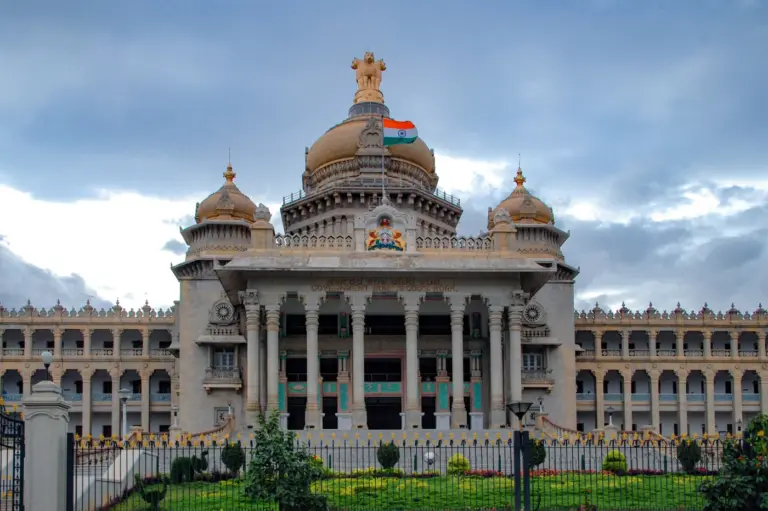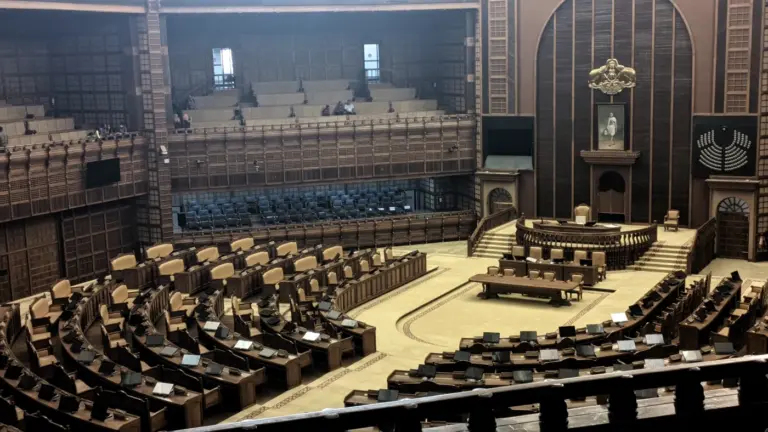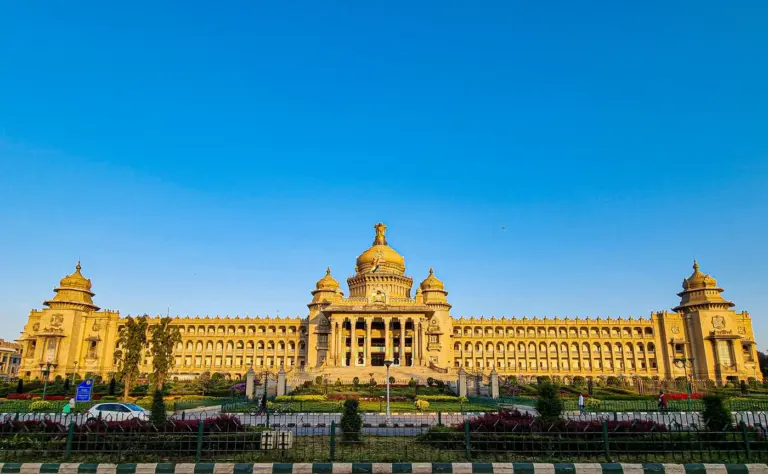
The GST Council is the constitutional body that takes every decision about India’s Goods and Services Tax — rates, slabs, exemptions, the design of compensation, and the procedural architecture of the world’s most populous indirect tax federation. Created by the One Hundred and First Constitutional Amendment, 2016, and inserted into the Constitution as Article 279A, the GST Council is a unique experiment in federalism — it institutionalises shared sovereignty over indirect taxation between the Union and 28 States plus 3 Union Territories with legislatures.
The GST Council is the only constitutional body in which the Union and the States sit together on a near-equal footing every quarter to decide a tax that both administer. Where the finance-commission-of-india decides how Union taxes are shared and the cag-comptroller-auditor-general audits how all taxes are spent, the GST Council decides what the indirect tax actually is. Its votes are weighted, its quorum is fixed, and its decisions effectively bind every legislature that adopted GST.
This explainer walks through the constitutional creation of the GST Council, its composition, voting structure, decision-making mandate, the rate slab architecture, the compensation cess, and the recent meetings — including the debate over GST on popcorn and online gaming — that have tested its consensus model.
Quick Facts on the GST Council
- Constitutional article. Article 279A, inserted by the 101st Constitutional Amendment, 2016.
- Chairperson. Union Finance Minister.
- Vice-Chairperson. Elected from among State Finance Ministers.
- Members. Union Minister of State for Finance/Revenue, and Finance/Tax Minister of each State and UT with legislature.
- Quorum. 50% of total membership.
- Voting weight. Union 1/3; States together 2/3.
- Decision threshold. 3/4 majority of weighted votes cast.
- Secretariat. GST Council Secretariat, New Delhi.
Article 279A — Constitutional Creation
The 101st Constitutional Amendment Act, 2016, came into force on 16 September 2016 and inserted Article 279A. Sub-article (1) requires the President to constitute a GST Council within 60 days. The notification came on 12 September 2016, and the first meeting was held on 22-23 September 2016.
Article 279A(2) sets the composition. Article 279A(3) makes the Union Minister of State (Finance) and one State minister nominated by each State a member. Article 279A(4) sets out the mandate. Article 279A(5) defines the rates of tax on petroleum products as a deferred decision. Article 279A(6) requires the Council to be “guided by the need for a harmonised structure of GST and for the development of a harmonised national market.” Article 279A(9) — the heart of the design — prescribes the voting structure.
Composition of the GST Council
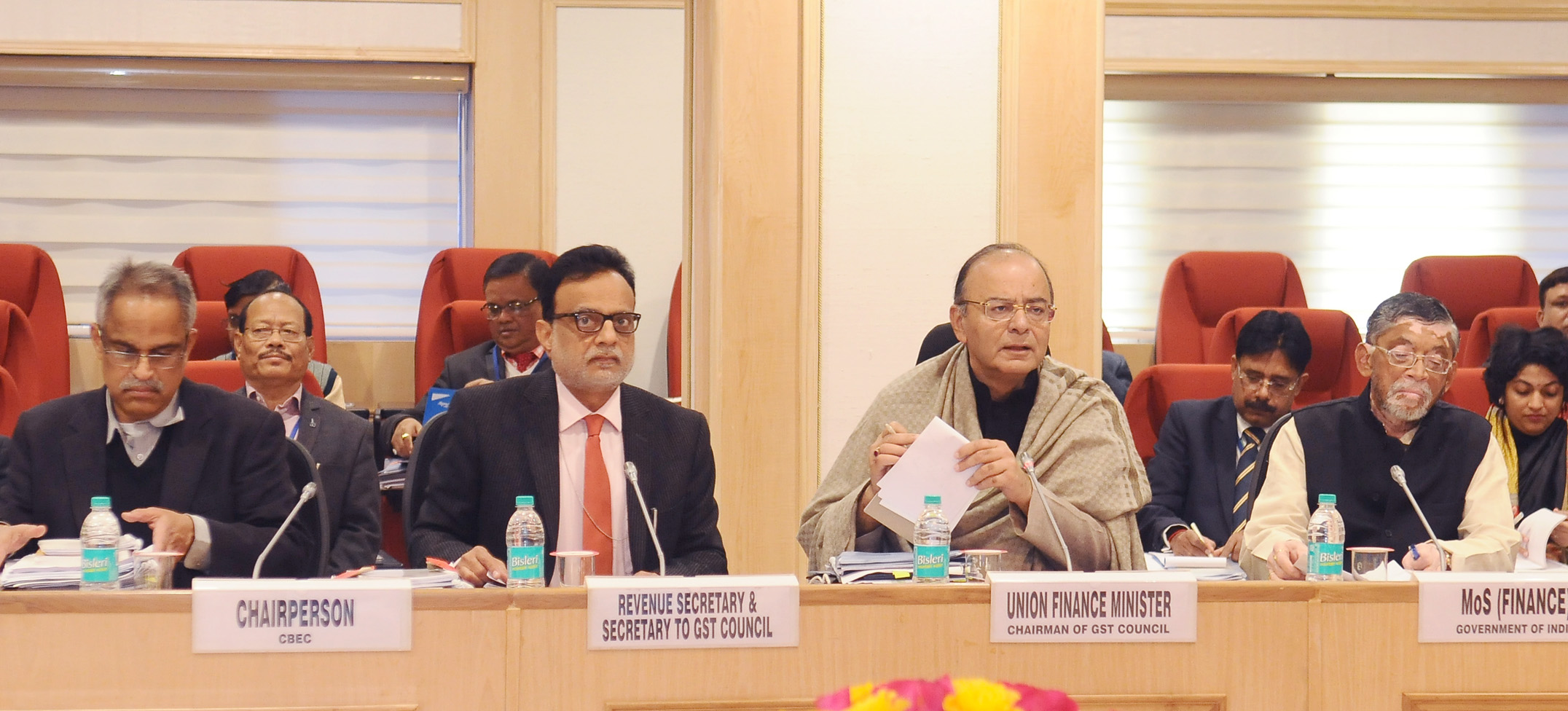
The GST Council brings to a single table:
- The Union Finance Minister, who chairs the Council.
- The Union Minister of State in charge of Revenue or Finance.
- The Minister in charge of Finance, Taxation, or any other relevant ministry from each State Government, and from each Union Territory with a legislature (currently Delhi, Puducherry, and Jammu and Kashmir when constituted).
A Vice-Chairperson is elected from among the State members. Each member casts one vote, but the votes are weighted: the Union vote counts for one-third of the total, and the State votes collectively count for two-thirds.
The Secretary (Revenue) is the ex-officio Secretary to the GST Council. The Chairperson of the Central Board of Indirect Taxes and Customs is a permanent invitee.
Voting Structure
The voting design is the constitutional answer to the question: how do you make a decision when 28 States have unequal stakes and the Union has a national interest. Article 279A(9) provides:
- The total weight of votes is 100.
- The Union has one-third (33.3%).
- All States together have two-thirds (66.7%).
- Within the two-thirds, every State has an equal vote.
For any decision, at least 75% of the weighted votes cast must support it. This means neither the Union alone (33.3%) nor the States together without the Union (66.7%) can pass anything. Effectively, the Union needs a majority of States, and the States need the Union — a constitutional requirement of cooperative federalism.
In practice, the GST Council has worked overwhelmingly by consensus. Every decision from September 2016 to July 2022 was taken without a formal vote. The first formal vote was in the July 2022 meeting on the levy on online gaming and casinos — described below.
Mandate of the GST Council
Article 279A(4) lists what the GST Council recommends to the Union and the States:
- the taxes, cesses, and surcharges that may be subsumed in GST;
- the goods and services that may be subjected to or exempted from GST;
- model GST laws, principles of levy, apportionment of IGST, and the principles that govern place of supply;
- the threshold limit of turnover below which goods and services may be exempted;
- the rates, including floor rates with bands;
- any special rate or rates for a specified period to raise additional resources during a natural calamity or disaster;
- special provisions for North-East States, Himachal Pradesh, Uttarakhand, and Jammu and Kashmir;
- and any other matter relating to GST as the Council may decide.
The recommendations are not binding under Mohit Minerals v. Union of India (2022), which held that GST Council recommendations are persuasive, not constitutionally mandatory, on either Union or States. But in practice, all parliamentary and State legislative action on GST tracks the Council’s decisions.
GST Rate Slabs
The GST Council has built an indirect tax architecture with multiple slabs. The core rate structure is:
- 0% — essential goods and services (unbranded food grains, fresh produce, healthcare, education).
- 5% — items of mass consumption (packaged food, footwear under threshold, transport).
- 12% — standard rate for many manufactured goods, certain services.
- 18% — the principal standard rate for most goods and services.
- 28% — sin and luxury goods (tobacco, aerated drinks, automobiles, air conditioners).
- Compensation cess — over and above 28% on a narrow band of demerit goods.
- 0.25% and 3% — special rates for rough precious stones and bullion respectively.
The Council periodically reviews and rationalises rates. This long-standing reform culminated in GST 2.0, approved at the 56th Council meeting in September 2025, which replaced the four-slab structure (5/12/18/28) with a simplified two-rate regime of 5 per cent and 18 per cent, plus a 40 per cent de-merit rate for luxury and sin goods (detailed below).
Compensation Cess
To secure the agreement of States in 2016, the Constitution provided in Section 18 of the 101st Amendment for compensation to States for any revenue loss arising from GST implementation for a period of five years. The Goods and Services Tax (Compensation to States) Act, 2017, operationalised this guarantee — States were assured 14% annual growth on a 2015-16 base, with any shortfall met from a compensation cess levied on demerit goods.
The compensation period was July 2017 to June 2022. The compensation cess itself was extended beyond June 2022 to service the borrowings the Union undertook on behalf of States during the pandemic-hit 2020-21 and 2021-22. The cess will continue until March 2026 to service these back-to-back loans, after which the GST Council will decide on its future structure.
Recent Meetings and Decisions
Online gaming, 50th and 51st meetings (July-August 2023)
In a contested 50th meeting on 11 July 2023, the GST Council recommended 28% GST on the full face value of bets in online gaming, casinos, and horse racing. The 51st meeting on 2 August 2023 confirmed the decision and notified amendments to the CGST and IGST Acts. Several States including Goa, Delhi, and Sikkim opposed; the decision was nonetheless adopted. This was the most contentious GST Council decision in its history and led to litigation by online gaming platforms.
Popcorn debate, 55th meeting (December 2024)
The 55th GST Council meeting on 21 December 2024 in Jaisalmer drew unusual public attention when the Council clarified the GST rates on popcorn — unbranded loose popcorn at 5%, pre-packaged and labelled at 12%, and caramelised popcorn at 18%. The three-rate classification became a meme on the complexity of GST classification and reopened the broader debate on whether the slab structure needed urgent rationalisation.
Rate rationalisation push, 2025
Through the first half of 2025 the GST Council prioritised the work of the GoM on rate rationalisation, weighing how to collapse the four slabs while protecting revenue. The fiscal impact on the fiscal-deficit-india calculation was one of the principal considerations. That work culminated in the GST 2.0 decision described below.
GST 2.0 — the two-slab structure, 56th meeting (September 2025)
At the 56th GST Council meeting on 3–4 September 2025, chaired by Union Finance Minister Nirmala Sitharaman, the Council approved GST 2.0 — a shift from the four-slab structure to a simplified two-rate regime of 5 per cent and 18 per cent, scrapping the 12 per cent and 28 per cent slabs, with a new 40 per cent de-merit rate for luxury and sin goods such as tobacco products, aerated drinks and high-end automobiles. Most of the new rates took effect on 22 September 2025. Items in the old 12 per cent slab moved mainly to 5 per cent and much of the 28 per cent slab shifted to 18 per cent, making a wide range of goods cheaper — packaged foods, dairy, household appliances, small cars and tractors. Tobacco and related products stay at their existing rates and compensation cess until the cess loan obligations are fully discharged. GST 2.0 is the biggest rate overhaul since the tax’s 2017 launch and the clearest test yet of whether the Council can rationalise slabs while holding its consensus model together.
Standing Critiques
Three standing critiques follow the GST Council. First, that the Union holds an effective veto with 33.3% — no decision can pass without Union support, and States cannot independently set rates even after the constitutional bargain of 2016. Second, that the loss of fiscal autonomy by States has been only partially compensated; the post-2022 compensation cliff is real. Third, that the unwieldy slab structure and frequent rate changes have hurt compliance — a critique the GoM on rationalisation is meant to address.
The GST Council, like the other statutory-constitutional-bodies-overview, works best when consensus holds. The online gaming vote of 2023 showed that the model can fracture; the popcorn classification of 2024 showed that even consensus produces absurdities. Whether the Council can rationalise the slab structure without breaking consensus is the central federal question of GST 2.0.
Frequently Asked Questions
What is the GST Council and under which Article is it created?
The GST Council is the constitutional body that decides every aspect of India’s Goods and Services Tax — rates, slabs, exemptions, and the design of compensation. It is created under Article 279A of the Constitution, inserted by the 101st Constitutional Amendment, 2016, which came into force on 16 September 2016.
Who chairs the GST Council?
The Union Finance Minister chairs the GST Council. The Union Minister of State for Finance or Revenue is a member, and one Finance or Taxation Minister from each State and each Union Territory with a legislature is a member. A Vice-Chairperson is elected from among the State members.
What is the voting structure of the GST Council?
Under Article 279A(9), the Union holds one-third of the total weighted votes and all States together hold two-thirds. Every decision requires at least 75% of the weighted votes cast. This means the Union cannot pass anything alone, and States cannot pass anything without the Union — a constitutional design for cooperative federalism.
What is the quorum for a GST Council meeting?
The quorum for a meeting of the GST Council is 50% of the total membership. With one Union member, one Union MoS, and 31 State and UT members (28 States plus Delhi, Puducherry, and Jammu and Kashmir when constituted), the quorum is approximately 17 members present.
What are the GST rate slabs in India?
The standard GST rate slabs are 0%, 5%, 12%, 18%, and 28%. A compensation cess is levied over and above the 28% rate on a narrow band of demerit goods like tobacco, aerated drinks, and large automobiles. Special rates of 0.25% on rough precious stones and 3% on bullion also exist.
What is the compensation cess?
The compensation cess is a levy on demerit goods imposed under the Goods and Services Tax (Compensation to States) Act, 2017, to compensate States for any revenue loss from GST implementation. The guaranteed compensation period ended in June 2022; the cess itself continues until March 2026 to service back-to-back loans the Union took on behalf of States during the pandemic.
Are GST Council decisions binding on Parliament and State Legislatures?
In Mohit Minerals v. Union of India (2022), the Supreme Court held that GST Council recommendations are persuasive but not binding on the Union or the States. In practice, however, every legislative change to the GST regime tracks the Council’s decisions, and the cooperative federalism design depends on this convention.
What was the GST Council’s decision on online gaming?
In its 50th meeting on 11 July 2023 and 51st meeting on 2 August 2023, the GST Council recommended a 28% levy on the full face value of bets in online gaming, casinos, and horse racing. Several States including Goa, Delhi, and Sikkim opposed; the decision was adopted nonetheless. It was the most contentious decision in the Council’s history and triggered extensive litigation.
Tell Google you want more of this.
Add Anantam IAS as a preferred sourceOne tap, and this site shows up more often in your own Top Stories, AI Overviews and AI Mode. Remove it any time.