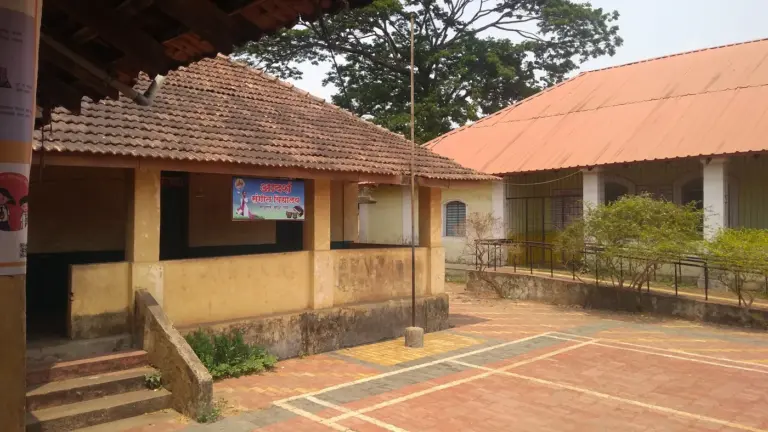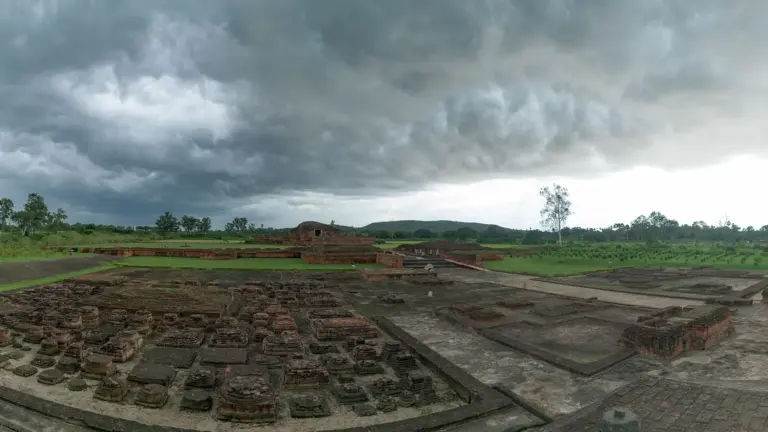
India has a long tradition of holistic and multidisciplinary learning. Ancient universities such as Takshashila and Nalanda drew students from across Asia to study grammar, medicine, mathematics, philosophy, astronomy and statecraft in the same campus. The country’s textual tradition — from the Arthashastra to the Charaka Samhita — combined multiple disciplines in a single work. The National Education Policy (NEP) 2020 explicitly invokes this tradition and argues that India’s higher education must return to it if the country is to thrive in the twenty-first century and the fourth industrial revolution.
Integrating the humanities and arts with Science, Technology, Engineering and Mathematics (STEM) has measurable benefits: it improves learning outcomes, creativity, innovation and critical thinking, and it cultivates social awareness and civic responsibility. Engineers who have read history make better policy analysts; doctors who have studied ethics make better clinicians; economists who understand literature communicate better.
Why India Needs Holistic and Multidisciplinary Education
At present, most Indian higher education institutions remain narrowly focused — single-discipline engineering colleges, stand-alone business schools, medical institutes that do not teach public health, law schools that rarely connect with policy. This siloed structure reflects three constraints:
- Faculty shortage in specialised areas that would round out a degree programme
- Limited financial resources to hire interdisciplinary faculty and build integrated curricula
- Lack of institutional autonomy in setting curricula, which has traditionally been dictated by affiliating universities and regulatory bodies
NEP 2020 tries to remove these constraints by encouraging the conversion of stand-alone colleges into multi-disciplinary universities, by offering a four-year undergraduate programme with multiple entry and exit options, and by institutionalising an Academic Bank of Credits (ABC) through which students can combine learning across institutions. The University Grants Commission has notified the ABC scheme and the associated regulations.
The Academic Bank of Credit Scheme
- The Academic Bank of Credits is a virtual, digital storehouse that holds the credits a student earns through their academic journey across one or more institutions.
- Every student opens a unique digital ABC account. When the student completes a course and passes the examination, credits are awarded automatically. Institutions upload the credits to the student's account on the national ABC portal, which is integrated with DigiLocker.
- ABC allows students in undergraduate and postgraduate programmes to exit a course and re-enter within a stipulated period, carrying their completed credits with them. The student can earn up to 50 per cent of total credits from outside the college or university where the degree is being pursued.
Advantages
- Option to exit and re-enter: Students who need to take a break for family, work or relocation reasons can carry forward their completed credits instead of losing them.
- Wider choice of courses: A student formally enrolled in University A can take courses from University B and University C, building a genuinely personalised degree.
- Access to MOOCs: Students can add credits from SWAYAM, NPTEL and other recognised online platforms into their ABC account.
- Reduced burden on single institutions: Small colleges need not offer every elective in-house, and inter-institutional competition raises overall quality.
Concerns and Problems
- Grade inflation on MOOC platforms: One of the metrics of success for MOOC courses is student performance in the final assessment, giving course coordinators an incentive to grade leniently and paint a rosy picture of learning outcomes.
- Dilution of degree quality: A student at a premier institution such as an IIT or IISER may find it tempting to substitute a challenging in-house course with an easier equivalent from a less rigorous university, weakening the brand value and actual preparation of the degree.
- Contraction of teaching posts in smaller institutions: Because the number of faculty positions in any institution is calculated on the basis of student enrolment in in-house courses, widespread substitution via ABC could reduce enrolment-linked faculty strength at smaller or weaker universities.
- Quality variation: In a system where quality varies dramatically across institutions — from IITs to unregulated private colleges — students and employers need reliable signals about what a credit actually represents.
The scheme has laudable intentions and would work well in a system with a more even distribution of resources. In India, careful rollout and strong quality assurance are essential to prevent the erosion of standards in elite institutions and the hollowing out of faculty strength in smaller ones.
Broader Reforms Supporting Holistic Education
Beyond ABC, NEP 2020 advances holistic multidisciplinary learning through:
- Multidisciplinary Education and Research Universities (MERUs), meant to be on par with IITs and IIMs in breadth and rigour.
- Four-year undergraduate programmes with entry and exit: a certificate after one year, a diploma after two years, a bachelor's degree after three years, and a bachelor's degree with research after four years.
- Choice-Based Credit System already in place across many universities, now being deepened.
- National Credit Framework (NCrF) that unifies credits from general education, vocational education and skilling.
- Liberal arts and multi-disciplinary institutions such as Ashoka, Krea, OP Jindal and Flame Universities showing the model at scale in the private sector.
Way Forward
- Phase rollout of ABC with strong quality assurance on MOOCs and partner institutions.
- Rebuild faculty strength at smaller universities so they can offer high-quality multidisciplinary electives rather than lose students to distant institutions.
- Allow and encourage joint-degree and dual-degree programmes across Indian and foreign universities.
- Build assessment standards so that credits from MOOCs are comparable with classroom credits.
- Fund faculty training in interdisciplinary pedagogy — team teaching, project-based learning and capstones.
- Give institutions meaningful autonomy in curriculum design, subject to outcome-based accreditation.
Latest Developments (2024–26)
The Academic Bank of Credits and National Academic Depository have scaled, with millions of student registrations and hundreds of institutions onboarded. The National Credit Framework (NCrF), released by the Ministry of Education in 2023, was operationalised across schools and HEIs in 2024–25, integrating credits from Class 5 upwards and from both academic and vocational streams. Four-year undergraduate programmes with research exit are now mainstream in central universities and an increasing number of state universities (Delhi University, JNU, BHU, Jadavpur and others). UGC issued regulations for dual degrees and joint degrees with Indian and foreign partners, and for SWAYAM-based credit transfer. Multidisciplinary universities have begun to emerge through cluster formation of affiliated colleges, particularly in Maharashtra, Gujarat and Andhra Pradesh. QS World University Rankings 2025 introduced sustainability and employability indicators that favour interdisciplinary institutions.
UPSC Relevance
Holistic and multidisciplinary education features in GS Paper II (education, government policies) and connects with Essay themes on the purpose of education. Mains prompts have asked candidates to analyse NEP 2020’s push for multidisciplinary higher education and to discuss the Academic Bank of Credits. For Prelims, remember: ABC is a UGC-notified scheme, up to 50 per cent of credits can be earned outside the parent institution, it integrates with DigiLocker, SWAYAM and NPTEL are recognised platforms, and NCrF unifies credits across school, higher and vocational education. Candidates should be able to place holistic education within India’s historical tradition (Takshashila, Nalanda), its link with the demographic dividend, and the role of liberal arts in shaping critical citizens.
Tell Google you want more of this.
Add Anantam IAS as a preferred sourceOne tap, and this site shows up more often in your own Top Stories, AI Overviews and AI Mode. Remove it any time.