
Two Commonwealth democracies with common law, common language and a shared cricketing obsession took the better part of seventy years to build a serious partnership. Understanding India-Australia relations means understanding that delay, because the obstacles were specific rather than accidental.
Four things held it back: Australia’s Cold War alignment with the West, India’s non-alignment, differences over India’s nuclear programme, and Australia’s reluctance to supply uranium to a state outside the Non-Proliferation Treaty.
Every one of those has now been resolved or set aside. The 2026 Melbourne Summit finalised the Administrative Arrangement enabling long-term Australian uranium exports to India for exclusively peaceful purposes under IAEA safeguards, operationalising an agreement signed in 2014.
What Changed
The end of the Cold War removed the alignment problem. India’s economic rise made the market matter. Chinese assertiveness gave both countries a shared strategic concern. Indo-Pacific convergence gave that concern an institutional home.
Relations were elevated to a Comprehensive Strategic Partnership in 2020, which is when episodic engagement became structured cooperation.
For India: critical minerals, energy security, uranium, education, Indo-Pacific maritime security, Quad cooperation, defence interoperability and Indian Ocean outreach.
For Australia: a large democratic market, a strategic Indo-Pacific partner, a source of skilled migrants and students, and an alternative economic partner amid concern about overdependence on China.
Maritime Security and Defence
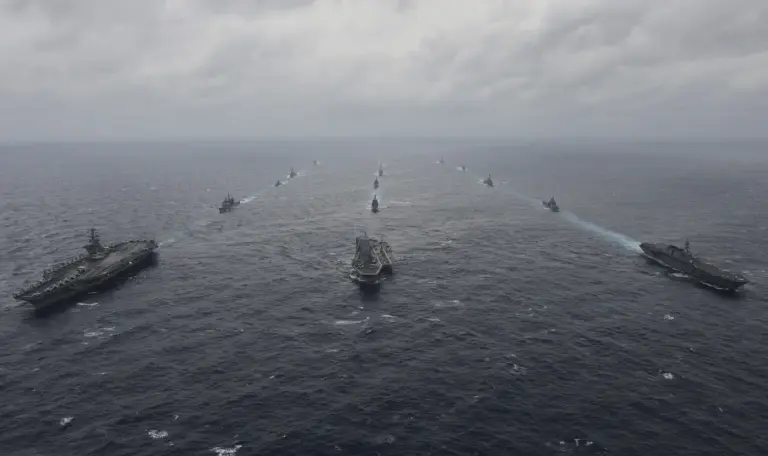
Both are maritime democracies with a shared vision of a free, open, inclusive and rules-based Indo-Pacific, and shared concern about coercive behaviour, grey-zone activity, freedom of navigation and disruption of sea lanes.
The architecture is now substantial.
- Mutual Logistics Support Arrangement, 2020: reciprocal access to logistics facilities, improving interoperability in exercises, disaster relief and maritime deployments
- 2+2 Foreign and Defence Ministerial Dialogue: institutionalised high-level coordination
- 2026 Joint Declaration on Defence and Security Cooperation: maritime security, counter-terrorism, cyber, defence industry, intelligence, disaster response and regional security
- Exercises: AUSINDEX bilaterally, Malabar quadrilaterally, plus the Indian Ocean Naval Symposium and military training
Logistics access is the quiet enabler here. Interoperability is not built by declarations; it is built by ships being able to refuel in each other’s ports.
The Economic Track
The India-Australia Economic Cooperation and Trade Agreement of 2022 gave the relationship commercial momentum. Merchandise trade reached about USD 24.1 billion in FY 2024-25, and Australia granted 100 percent tariff-line access, with zero duty on all Indian exports from 2026.
Both sides are now working towards a broader Comprehensive Economic Cooperation Agreement covering trade, services, investment, mobility, standards and supply chains.
ECTA is worth studying as a template because Australia conceded full tariff-line access while India protected its sensitive sectors, which is close to the best outcome India has achieved in a bilateral trade agreement with a developed economy.
Uranium, Energy and Critical Minerals
The uranium arrangement supports India’s clean energy and nuclear expansion, and it settles the one issue that poisoned the relationship for four decades.
Beyond uranium, Australia matters for coal, LNG, critical minerals, renewable energy, green hydrogen and battery supply chains. It holds lithium, cobalt, rare earths, vanadium and other minerals essential for electric vehicles, batteries, semiconductors, defence and clean energy.
The Australia-India Critical Minerals Investment Partnership of 2022 supports Indian investment in Australian projects, and the Quad Critical Minerals Initiative of 2026 extends the logic to a four-country supply chain with Japan and the United States.
This is the most strategically consequential part of the relationship. India’s entire clean-energy transition depends on minerals it does not have, and Australia is the most politically reliable source of several of them.
People
Indians are Australia’s fastest-growing large diaspora and became the second-largest group of overseas-born residents by 2020. India remains Australia’s second-largest source of international students in 2026, supported by migration and mobility arrangements.
Education here is strategic rather than commercial. A generation of Indian graduates in Australian institutions builds a constituency that outlasts any government.
The Honest Limits
- Trade is narrow. Australian exports remain heavily resource-based and Indian exports are concentrated in a few categories; ECTA has grown volume more than breadth.
- Critical minerals need processing, not just extraction. Australian ore refined in a third country does not remove India’s supply-chain exposure.
- Australia’s China exposure is large. Its economic dependence on Chinese demand limits how far it can align on economic decoupling.
- Student welfare and visa politics are recurring irritants that can sour public sentiment quickly.
The Way Forward
- Move critical mineral cooperation from investment to joint processing, which is where the strategic value sits.
- Conclude CECA and use it to broaden the export basket beyond resources and commodities.
- Institutionalise logistics access into routine, not exceptional, use.
- Protect the student relationship with clearer post-study work and welfare frameworks.
- Keep the Quad’s economic agenda, particularly minerals, moving even when its security agenda stalls.
Frequently Asked Questions
Why did India-Australia relations remain underdeveloped for so long?
Despite shared Commonwealth links and democratic institutions, four factors held the relationship back: Australia’s Cold War alignment with the West, India’s non-alignment, differences over India’s nuclear programme, and Australia’s reluctance to supply uranium to a state outside the Non-Proliferation Treaty.
When were relations elevated to a Comprehensive Strategic Partnership?
In 2020. The shift followed the end of the Cold War, India’s economic rise, Chinese assertiveness and growing Indo-Pacific convergence, and it marked the move to structured rather than episodic cooperation.
What did the 2026 Melbourne Summit achieve on nuclear cooperation?
It finalised the Administrative Arrangement under the India-Australia Civil Nuclear Cooperation Agreement, enabling long-term Australian uranium exports to India for exclusively peaceful purposes under IAEA safeguards. This operationalised the agreement signed in 2014 and brought into force in 2015.
What is ECTA and what does it deliver?
The India-Australia Economic Cooperation and Trade Agreement, signed in 2022. Australia granted 100 percent tariff-line access to India, with zero duty on all Indian exports from 2026. Merchandise trade reached about USD 24.1 billion in FY 2024-25, and both sides are negotiating a broader Comprehensive Economic Cooperation Agreement.
Why do critical minerals matter in this relationship?
Australia holds lithium, cobalt, rare earths, vanadium and other minerals essential for electric vehicles, batteries, semiconductors, defence and clean energy. The Australia-India Critical Minerals Investment Partnership announced in 2022 supports Indian investment in Australian projects, and the Quad Critical Minerals Initiative of 2026 extends this to a four-country supply chain.
What is the Mutual Logistics Support Arrangement?
Signed in 2020, it enables reciprocal access to each other’s logistics facilities, improving interoperability during exercises, humanitarian assistance and disaster relief operations, and maritime deployments.
Which defence exercises involve India and Australia?
AUSINDEX as the bilateral naval exercise, Malabar as the quadrilateral naval exercise with the United States and Japan, plus the Indian Ocean Naval Symposium and military training exchanges. The 2+2 Foreign and Defence Ministerial Dialogue institutionalises strategic coordination.
How significant is the Indian diaspora in Australia?
Indians are Australia’s fastest-growing large diaspora and became the second-largest group of overseas-born residents by 2020. India remains Australia’s second-largest source of international students in 2026, which makes education a strategic rather than merely commercial sector.
Practice Questions
Prelims MCQs
- India-Australia relations were elevated to a Comprehensive Strategic Partnership in
(a) 2014
(b) 2017
(c) 2020
(d) 2022
Answer: (c) The elevation took place in 2020, marking the shift to structured cooperation. - The India-Australia Civil Nuclear Cooperation Agreement was signed in
(a) 2008
(b) 2014
(c) 2020
(d) 2026
Answer: (b) Signed in 2014 and in force from 2015; the Administrative Arrangement operationalising uranium supply was finalised in 2026. - Under ECTA, Australia granted India
(a) Preferential access on 40 percent of tariff lines
(b) 100 percent tariff-line access with zero duty on Indian exports from 2026
(c) Duty-free access only for textiles
(d) Quota-based access for agriculture
Answer: (b) Australia extended 100 percent tariff-line access, with zero duty on all Indian exports from 2026. - AUSINDEX is
(a) A trade index
(b) A bilateral India-Australia naval exercise
(c) A critical minerals fund
(d) A student mobility scheme
Answer: (b) AUSINDEX is the bilateral naval exercise; Malabar is the quadrilateral one. - The Australia-India Critical Minerals Investment Partnership was announced in
(a) 2018
(b) 2020
(c) 2022
(d) 2025
Answer: (c) It was announced in 2022 to support Indian investment in Australian critical mineral projects.
Mains Questions
- India-Australia relations were constrained for decades by nuclear differences and Cold War alignment. Examine what changed and why. (250 words)
- Australia is central to India's critical minerals strategy. Discuss the opportunities and the limits of this dependence. (250 words)
- Evaluate ECTA as a template for India's trade agreements with developed economies. (150 words)
- Discuss the role of the Quad in the India-Australia security relationship. (250 words)
- Education and diaspora have become strategic assets in the India-Australia relationship. Comment. (150 words)
Tell Google you want more of this.
Add Anantam IAS as a preferred sourceOne tap, and this site shows up more often in your own Top Stories, AI Overviews and AI Mode. Remove it any time.