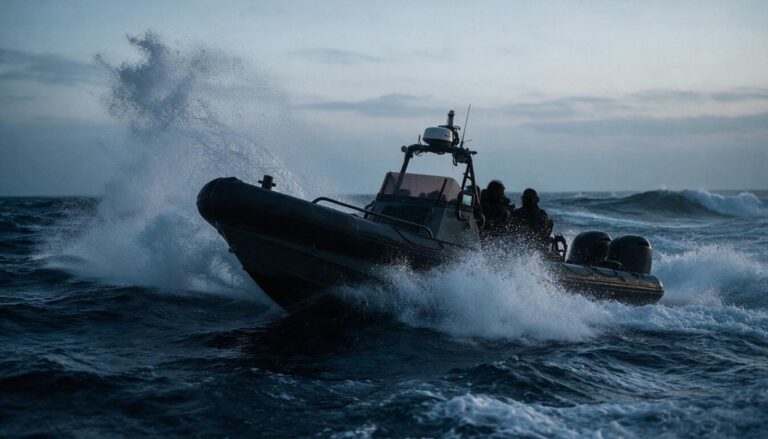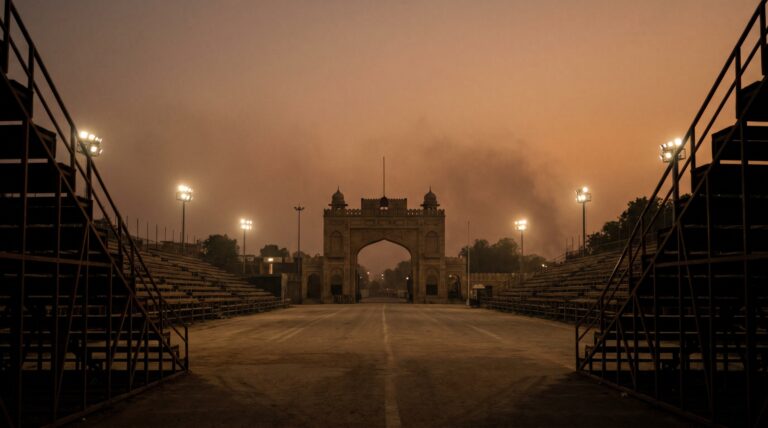
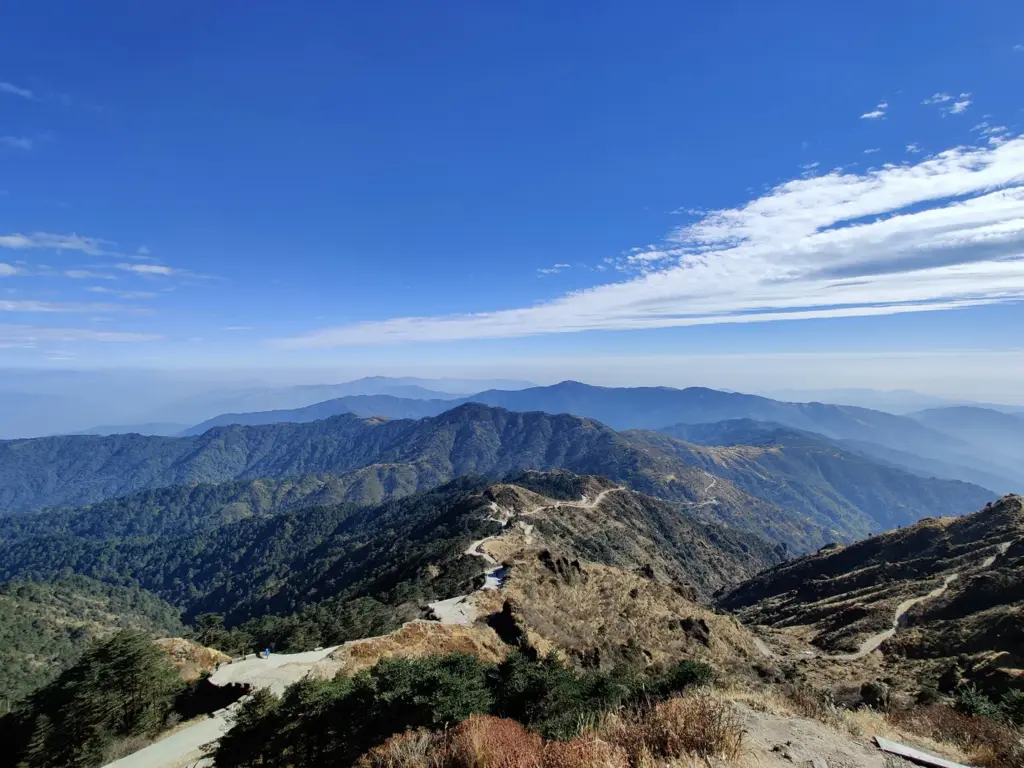
The Sashastra Seema Bal (SSB) is the Central Armed Police Force that guards India’s borders with Nepal and Bhutan, 1,751 km and 699 km long. It began in 1963, in the months after the war with China, as a body meant to work among border villagers, and it has held the Nepal border for the Ministry of Home Affairs since 2001. What sets it apart is the border itself: Indians and their neighbors on the other side cross it without a passport or visa.
Two mix-ups follow the letters SSB around. The first is the Services Selection Board, which tests candidates for officer training in the armed forces and has no link with this force. The second is a date: many notes, and even a line in the Home Ministry’s annual report, fold the new name into 2001, but the force’s own record says the Special Service Bureau became the Sashastra Seema Bal on 15 December 2003. This note settles when each change happened and why policing an open border is a different job from guarding a fenced one.
What Is the Sashastra Seema Bal?
The Sashastra Seema Bal guards two open land borders in peacetime, and the Home Ministry’s annual report counts it among the five Central Armed Police Forces. The Hindi name translates as armed border force. The note on Central Armed Police Forces shows how the whole family is grouped.
| Fact | Detail |
|---|---|
| Full form | Sashastra Seema Bal (SSB); earlier the Special Service Bureau |
| Origin | Special Service Body, created in early 1963 after the 1962 war; renamed Special Service Bureau in 1966 |
| Ministry | Ministry of Home Affairs since 15 January 2001; earlier the Cabinet Secretariat |
| Law | Sashastra Seema Bal Act, 2007 (Act No. 53 of 2007), assented to on 20 December 2007; SSB Rules in force from 1 August 2009 |
| Borders guarded | India-Nepal, 1,751 km (from 19 June 2001), and India-Bhutan, 699 km (from 12 March 2004) |
| Strength and units | 94,202 personnel on 31 December 2024, in 73 battalions (MHA Annual Report 2024-25) |
| Headquarters and head | Force Headquarters, East Block-V, R.K. Puram, New Delhi; commanded by a Director-General, a post the 2026 CAPF Act reserves for IPS officers on deputation |
| Motto | Service, Security and Brotherhood |
| Raising Day | 20 December; the 61st was marked at Siliguri on 20 December 2024 |
Why Was the SSB Raised in 1963?
The SSB was raised to work with the people of the border, not to hold a line. In the MHA’s words, the Special Service Bureau was set up in early 1963, after the conflict with China, “to build up the morale and capability of the border population against threats of subversion, infiltration and sabotage from across the border”. Subversion here means an enemy turning local people against their own state, which is why the answer began with the people.
The force’s history page fills in the design. It says the Special Service Body was conceived in November 1962 and created in March 1963 under the Cabinet Secretariat, aiming at “total security preparedness” in remote border areas and a stay-behind role in the event of war. A stay-behind force remains among local people if an area is overrun, instead of withdrawing with the regular troops. Its first areas of work were:
- North Assam and North Bengal;
- the hill districts of Uttar Pradesh, now Uttarakhand;
- Himachal Pradesh and part of Punjab;
- the Ladakh area of the former state of Jammu and Kashmir.
The first establishments came up at Tezpur in Assam and in NEFA, today’s Arunachal Pradesh, and B. N. Mullik was appointed the first Director.
The month depends on which record you read. The MHA report says early 1963 and the history page says March 1963, while a timeline graphic on the same website gives 15 May 1963 and places the new body under the Ministry of External Affairs. The year is settled and the month isn’t, so 1963 is the fact worth carrying. The force marks its Raising Day on 20 December each year.
Two forces from one war
The 1962 war produced two forces with different jobs. ITBP was raised on 24 October 1962 for the Himalayan frontier with China, while the Special Service Body was built to work with the people living behind the frontier. That split in purpose explains why the two now guard different borders, China for one and Nepal and Bhutan for the other.
From bureau to border force
A Group of Ministers set up after the Kargil Review Committee’s report recommended One Border, One Force, so that a single force answers for every stretch of each land border, and the Vajpayee government adopted it. The Home Ministry now calls it One Border, One Border Guarding Force. For the SSB, the changes came in steps:
- 1966: the Special Service Body was renamed the Special Service Bureau.
- 15 January 2001: it moved from the Cabinet Secretariat to the Ministry of Home Affairs.
- 19 June 2001: it was given the India-Nepal border and declared the Lead Intelligence Agency for it.
- 15 December 2003: the Special Service Bureau was renamed Sashastra Seema Bal.
- 12 March 2004: it was given the India-Bhutan border and made the Lead Intelligence Agency there too.
- 27 March 2004: it received the President’s Colour, presented by the Deputy Prime Minister.
- 20 December 2007: the Sashastra Seema Bal Act received the President’s assent.
- 1 August 2009: the SSB Rules came into force.
Read the 2001 and 2003 lines together. Border duty and the move to the MHA came first, and the new name followed more than two years later. A Lead Intelligence Agency is the agency that leads intelligence gathering and sharing for a border, so on these two frontiers the SSB is both the guard and the main collector of information.
What Does the SSB Act, 2007 Say?
The force existed for 44 years before Parliament gave it a statute. The Sashastra Seema Bal Act, 2007, Act No. 53 of 2007, received the President’s assent on 20 December 2007 and left its date of commencement to a government notification. Three sections carry most of its weight:
- Section 4 creates “an armed force of the Union called the Sashastra Seema Bal for ensuring the security of the borders of India and performing such other duties as may be entrusted to it by the Central Government”.
- Section 5 vests general superintendence, direction and control in the Central Government, and command and supervision in a Director-General appointed by it.
- Section 7 makes every member liable to serve in any part of India as well as outside India.
The words “such other duties” in Section 4 are what allow the force to serve far from Nepal and Bhutan, in Jammu and Kashmir or in districts hit by Left Wing Extremism. The Act also defines active duty to include a unit at a picket, a small guard post, or on patrol or guard duty along the borders of India. The practical result: a routine patrol along the Nepal border sits in the same legal definition as operations against an enemy.
The force’s website sets out its tasks as the Act and Rules define them:
- safeguard the assigned borders and promote a sense of security among people living in border areas;
- prevent trans-border crime, smuggling and other illegal activity;
- prevent unauthorized entry into or exit from India;
- carry out the Civic Action Programme in its area of responsibility;
- perform any other duty the Central Government assigns.
The fourth task carries the 1963 idea into the statute. Civic action is welfare work the force runs for residents in its own area, so winning the confidence of the border population is still part of a border guarding job.
Why Is the Open Nepal Border Hard to Police?
It’s hard because the law expects people to cross. A Home Ministry reply in the Rajya Sabha on 26 July 2017 said the movement of Indian and Nepalese citizens across the border “is governed by Indo-Nepal Treaty of Peace and Friendship, 1950, which provides for free movement of citizens of both the countries across the border”. The same reply called the border “open, porous and thickly populated”. The SSB’s site adds that no visa or passport formalities apply at the Bhutan border either. The treaty’s wider place in the relationship is covered in India-Nepal relations.
Between them, the two borders touch seven states:
- India-Nepal, 1,751 km: Uttarakhand, Uttar Pradesh, Bihar, West Bengal and Sikkim.
- India-Bhutan, 699 km: Sikkim, West Bengal, Assam and Arunachal Pradesh.
A fenced border works like a locked gate with a guard, where anyone crossing without leave is suspect. An open border is closer to a railway station, where thousands pass lawfully and the guard’s job is to pick out the few who misuse the crowd. The comparison breaks on scale: a station has a few entrances, while this frontier runs 2,450 km and can be crossed on foot at almost any point. The SSB’s own site calls the task “perhaps more daunting than securing a restricted border that has defined enemies”.
So the work is about checking, not stopping. The 2017 reply listed the methods:
- checking people who cross, both at random and on specific inputs from the SSB’s own sources or sister agencies;
- vigilance by the state police alongside the force;
- regular talks with Nepal, including Home Secretary-level talks and the Joint Working Group on Border Management.
The MHA’s 2024-25 report names the main challenge on both borders as checking “misuse of the open border by terrorists and criminals”, and it lists the network built for the purpose:
- 539 border outposts on the Nepal border and 195 on the Bhutan border, each a self-contained post from which a stretch of border is watched;
- 1,299.80 km of roads approved along the Nepal border in Uttarakhand, Uttar Pradesh and Bihar;
- Integrated Check Posts at Raxaul (3 June 2016), Jogbani (15 November 2016) and Rupaidiha (1 June 2023) on the Nepal border, and at Darranga in Assam (8 August 2024) on the Bhutan border.
An Integrated Check Post brings the government’s checks on goods and people into one facility at a formal crossing. On an open border, a well-run formal crossing gives lawful traffic a reason to use it. The note on border management covers the same system across India’s other land borders.
West Bengal sits on both borders, and its northern tip holds the Siliguri Corridor, where the Home Minister called the SSB’s deployment a reason for national reassurance at the 2024 Raising Day. The note on the Chicken’s Neck explains why that strip matters.
How Is the SSB Organized and Where Does It Serve?
The SSB runs from a Force Headquarters in New Delhi down to the battalion, its basic field unit. The MHA’s 2024-25 report gives the layout:
- 1 Force Headquarters;
- 6 Frontiers and 18 Sectors, the regional and middle layers of command;
- 73 battalions;
- 12 training establishments, from 4 Recruits Training Centres and 2 Central Training Centres to the SSB Academy and a Counter Insurgency and Jungle Warfare School;
- 3 Composite Hospitals, with stores and workshops.
The report put the posted strength at 94,202 on 31 December 2024. Its table on women in the CAPFs counts 4,116 women in the SSB on the same date, 4.46% of the posted strength recorded there. The Home Minister’s goal, announced in January 2024, is 6% by 2026, about a third higher.
Beyond its borders, the SSB performs internal-security and counter-insurgency duties. The MHA report lists deployments in:
- the Union Territory of Jammu and Kashmir;
- Assam;
- Left Wing Extremism areas of Chhattisgarh, Jharkhand and Bihar.
Most public detail on this work comes from Raising Day speeches, which makes it the government’s own account. On 20 December 2024 the Home Minister said SSB personnel had killed more than 19 terrorists and arrested 14 in Jammu and Kashmir, and had arrested more than 600 Maoists in seven years. He also credited the force, working with the CRPF and local police, for making Bihar and Jharkhand Naxal-free. Treat that as the government’s assessment; the ministry’s own report still listed SSB deployments in the LWE-affected areas of both states.
On the border itself, the record is mostly about smuggling and trafficking. For 1 January 2023 to 31 December 2024, the MHA report counts:
- 1,026 narcotics cases, with 539 people arrested and 16,494.6 kg seized;
- 3,663.6 acres of illicit cannabis, opium and poppy crop destroyed.
On trafficking, the Home Minister said at the 2024 Raising Day that the SSB had arrested 183 human traffickers and rescued 301 victims, 231 of them girls. On a border people cross freely, that’s the harm the checking exists to catch.
How Is the SSB Different From ITBP, the BSF and the Assam Rifles?
All four guard land borders, and each is tied to particular neighbors under One Border, One Border Guarding Force. The table draws on the MHA’s 2024-25 report.
| Point | SSB | ITBP | BSF | Assam Rifles |
|---|---|---|---|---|
| Origin | Special Service Body, early 1963 | Raised 24 October 1962 | Raised 1965 with 25 battalions | Raised as the Cachar Levy in 1835 |
| Border guarded | Nepal (1,751 km) and Bhutan (699 km) | China (3,488 km) | Pakistan (3,323 km) and Bangladesh (4,096.7 km) | Myanmar (1,643 km) |
| Headquarters | New Delhi | New Delhi | New Delhi | Shillong |
| Work beyond the border | Internal security in Jammu and Kashmir and Assam; LWE areas | First responder for Himalayan disasters | Anti-Naxal operations in Chhattisgarh and Odisha | Counter-insurgency in the North East |
| Place in the MHA’s list | One of five CAPFs | One of five CAPFs | One of five CAPFs | Described separately, as the oldest paramilitary force |
The border row is the one to memorize, since it pairs each force with its neighbors. The last row explains why books disagree on how many CAPFs there are: the MHA’s report counts five and describes the Assam Rifles apart.
SSB Today: A Court Ruling, a New Law and Border Villages
The SSB’s recent news is less about the border than about its officers and the villages it guards. Most of it dates from 2025 and 2026.
The 2025 judgment and the 2026 Act
On 23 May 2025, a Supreme Court bench of Justices Abhay S. Oka and Ujjal Bhuyan ordered a cadre review of all the CAPFs, the SSB included, within six months. The pleas came from the forces’ own officers, who sought an end to IPS deputation among other things. Cadre officers are those recruited into a force, usually as Assistant Commandants; deputation posts are held by officers lent from the Indian Police Service. As LiveLaw reported, the court held the CAPFs to be Organised Group A Services, a status tied to structured career growth for a service’s own officers, and asked for deputation posts up to the senior administrative grade to be cut back progressively within two years. The Centre’s review petition was dismissed on 28 October 2025.
Parliament answered with a statute. The Central Armed Police Forces (General Administration) Act, 2026 was introduced in the Rajya Sabha on 25 March 2026. It passed the Rajya Sabha on 1 April and the Lok Sabha on 2 April, and the President assented on 9 April. It covers five forces, the SSB among them, and the Assam Rifles isn’t one of them. For senior posts it fixes deputation from the IPS at:
- 50% of Inspector General posts;
- at least 67% of Additional Director General posts;
- all Special Director General and Director General posts.
All India Radio reported that the Act also lets the Centre frame service rules that override conflicting laws and court judgments. The government’s case is a single framework for officers’ service conditions; the tension with the 2025 judgment, which wanted deputation reduced, sits in the text itself. The note on the 2026 Act sets out the arguments on both sides.
Border villages and the Nepal talks
On 4 April 2025 the Union Cabinet approved the Vibrant Villages Programme-II, with Rs 6,839 crore up to 2028-29, for villages in blocks along the land borders other than the northern border covered by the first phase. Its list of states covers every state on the SSB’s two borders, and its stated aim is to make residents the “eyes and ears of the border guarding forces”. That’s the 1963 idea of a confident border population, now run as a development scheme.
The border also stays on the bilateral agenda. The 14th India-Nepal Joint Working Group on border management and security met in Dehradun on 20-21 August 2026. DD India reported that the agenda covered:
- trans-border crime;
- better use of Integrated Check Posts, roads and railway links;
- removal of encroachments and upkeep of boundary pillars.
Encroachment is a live issue for the SSB too: at the 2024 Raising Day, the Home Minister said it had removed more than 1,100 encroachments from the No Man’s Land, the strip both sides keep clear along the boundary. The note on the Dehradun meeting explains why an open border needs this layered management.
How to Study the Sashastra Seema Bal for Exams
The SSB sits in General Studies Paper III, under the syllabus lines on security challenges in border areas and on the various security forces and their mandate. The open border also feeds Paper II through India-Nepal and India-Bhutan relations. No Mains question in the site’s bank names the force; the questions ask about porous borders and who manages them. Mains 2016 GS Paper III asked “Border management is a complex task due to difficult terrain and hostile relations with some countries. Elucidate the challenges and strategies for effective border management.” A good answer to that needs the open-border case, and the SSB is where it lives.
Facts to carry into revision:
- Origin: Special Service Body, 1963, after the 1962 war; Special Service Bureau from 1966; Sashastra Seema Bal from 15 December 2003.
- Ministry: Cabinet Secretariat until 15 January 2001, then the MHA.
- Borders: Nepal (1,751 km) from 19 June 2001 and Bhutan (699 km) from 12 March 2004, with the SSB as Lead Intelligence Agency on both.
- Law: SSB Act, 2007 (No. 53 of 2007), assent on 20 December 2007; Rules from 1 August 2009.
- Identity: motto Service, Security and Brotherhood; Raising Day on 20 December; headquarters in New Delhi.
- Duties: a Civic Action Programme sits among its statutory tasks, a legacy of the 1963 mandate.
- Size: 94,202 personnel in 73 battalions on 31 December 2024.
Most slips on this force come from four confusions:
| Confusion | How to keep it apart |
|---|---|
| SSB the force and SSB the interview | The Services Selection Board runs the intelligence and personality test for officer entries such as the NDA; it has nothing to do with border guarding |
| Renamed in 2001 or 2003 | 2001 brought the MHA and the Nepal border; the name Sashastra Seema Bal dates from 15 December 2003 |
| SSB or ITBP for 1962 | Both trace to the 1962 war; ITBP guards the China border and the SSB the Nepal and Bhutan borders |
| Largest CAPF | Not the BSF: the MHA’s 2024-25 report gives the CRPF a sanctioned strength of 3,30,983, against 2,72,450 for the BSF |
Keep the two forces that don’t guard land borders in a separate box: the CRPF for internal security and the CISF for installations such as airports.
The SSB deserves more attention than its size suggests. Learn it as the force built for an open border and the rest follows, from the 1963 mandate to the Vibrant Villages scheme: on this frontier, the people living along the line are part of its security. A border-management answer that makes this point will read differently from one that only lists fences and outposts.
Frequently Asked Questions
What is the full form of SSB?
In the border-force sense, SSB stands for Sashastra Seema Bal, which translates as armed border force. It’s the Central Armed Police Force that guards India’s borders with Nepal and Bhutan under the Ministry of Home Affairs. Until 15 December 2003 the same force was called the Special Service Bureau.
Is the SSB interview related to the Sashastra Seema Bal?
No. The SSB interview is conducted by the Services Selection Board, which tests candidates for officer training in the armed forces after written exams such as the NDA. It has no connection with the border force that shares its initials.
Which borders does the Sashastra Seema Bal guard?
The SSB guards the India-Nepal border of 1,751 km, which it took over on 19 June 2001, and the India-Bhutan border of 699 km, assigned on 12 March 2004. It is also the Lead Intelligence Agency for both borders. Together they make up 2,450 km of open frontier.
When is SSB Raising Day celebrated?
The SSB marks its Raising Day on 20 December. The 61st Raising Day function was held at Siliguri in West Bengal on 20 December 2024. The force traces its origin to 1963, when the Special Service Body was set up after the 1962 war.
What is the motto of the Sashastra Seema Bal?
The motto is ‘Service, Security and Brotherhood’. It suits a force that began by working with border communities and still runs a Civic Action Programme alongside its guarding duties.
Is the SSB part of the Indian Army?
No. The SSB is an armed force of the Union under the Ministry of Home Affairs, constituted by the Sashastra Seema Bal Act, 2007 and commanded by a Director-General. The Army is a Ministry of Defence force, and the Home Ministry’s border allocation gives the Nepal and Bhutan borders to the SSB.
How can someone join the SSB as an officer?
Assistant Commandants, the entry-level officers, are recruited through the Central Armed Police Forces (Assistant Commandants) Examination held by the Union Public Service Commission. The 2026 notice listed 53 of its 349 tentative vacancies for the SSB. The senior ranks also draw officers on deputation from the Indian Police Service.
Why is the India-Nepal border called an open border?
Under the Treaty of Peace and Friendship of 1950, citizens of India and Nepal can move freely across the border without a passport or visa. The SSB therefore doesn’t stop lawful movement. It patrols, sets up checkpoints and checks people at random or on specific intelligence to catch misuse.
Practice Questions
Prelims
1. Consider the following statements about the Sashastra Seema Bal: 1. It was set up after the 1962 war with China. 2. It was made the border guarding force for the India-Nepal border in 2004. 3. It is governed by an Act passed in 2007. Which of the statements given above is/are correct?
- (a) 1 and 2 only
- (b) 1 and 3 only
- (c) 2 and 3 only
- (d) 1, 2 and 3
Answer: (b) The India-Nepal mandate came on 19 June 2001; 2004 is the year of the India-Bhutan mandate.
2. Which one of the following borders is guarded by the Sashastra Seema Bal?
- (a) India-Myanmar
- (b) India-Bhutan
- (c) India-China
- (d) India-Bangladesh
Answer: (b) Under One Border, One Border Guarding Force, the SSB holds the India-Nepal and India-Bhutan borders.
3. Consider the following statements: 1. The movement of Indian and Nepalese citizens across their border is governed by the Treaty of Peace and Friendship, 1950. 2. Citizens of the two countries need a visa to cross the land border. Which of the statements given above is/are correct?
- (a) 1 only
- (b) 2 only
- (c) Both 1 and 2
- (d) Neither 1 nor 2
Answer: (a) The 1950 treaty provides for free movement, so no passport or visa is needed to cross.
4. The Special Service Bureau was renamed the Sashastra Seema Bal in which year?
- (a) 1966
- (b) 2001
- (c) 2003
- (d) 2007
Answer: (c) The force’s timeline dates the renaming to 15 December 2003; 1966 is when the Special Service Body became the Special Service Bureau.
5. With reference to the Sashastra Seema Bal Act, 2007, consider the following statements: 1. The force is constituted as an armed force of the Union. 2. Its members are liable to serve outside India. 3. Command of the force vests in the Chief of the Army Staff. Which of the statements given above is/are correct?
- (a) 1 only
- (b) 1 and 2 only
- (c) 2 and 3 only
- (d) 1, 2 and 3
Answer: (b) Sections 4 and 7 cover the first two statements; Section 5 vests command in a Director-General appointed by the Centre.
Mains
- How far are India’s internal security challenges linked with border management particularly in view of the long porous borders with most countries of South Asia and Myanmar? (10 marks, 200 words) Previous year: Mains 2013, GS Paper III.
- The Sashastra Seema Bal began in 1963 as a force to build up the morale of border populations and became a border guarding force only in 2001. Examine how this origin shapes its approach to guarding the open India-Nepal border. (15 marks, 250 words)
- An open border sustains livelihoods and kinship but also creates room for trafficking and smuggling. Discuss how India can police the India-Nepal border without closing it. (15 marks, 250 words)
- Explain the principle of One Border, One Border Guarding Force. What are its benefits and limits in the context of India’s land borders? (10 marks, 150 words)
- The Central Armed Police Forces (General Administration) Act, 2026 codifies IPS deputation in the senior ranks of the CAPFs. Critically examine the case for and against this approach in light of the Supreme Court’s 2025 ruling. (15 marks, 250 words)
Tell Google you want more of this.
Add Anantam IAS as a preferred sourceOne tap, and this site shows up more often in your own Top Stories, AI Overviews and AI Mode. Remove it any time.