India recognised Israel in 1950 and waited 42 years to open an embassy. In February 2026 the two countries elevated ties to a Special Strategic Partnership for Peace, Innovation and Prosperity. India-Israel relations are best understood through that long delay and its sudden reversal, because both the intimacy and the awkwardness of the relationship come from the same history.
The delay reflected India’s anti-colonial solidarity with Palestine, domestic political sensitivities, energy dependence on Arab states and the Cold War alignment. None of those considerations has entirely disappeared.
What Each Side Wants
For India: defence technology, counter-terrorism capability, border security, drones, missiles, cyber security, precision agriculture, water management, innovation and start-up cooperation.
For Israel: a large democratic market, a defence partner, a technology collaborator, an agricultural partner, and a major Asian power with growing influence in the Global South and West Asia.
The Defence Core
Israel has supplied India with unmanned aerial vehicles, radars, missiles, surveillance systems, precision-guided munitions, air-defence systems and border-security technology. Heron drones, Spike anti-tank missiles and a range of surveillance platforms are in Indian service.
The item that matters most, though, is the Barak-8 or MRSAM air-defence system, because it was jointly developed rather than bought. Co-development transfers capability in a way procurement does not, and it is the model India has been trying to extend.
Counter-terrorism runs alongside. Both countries face terrorism, radicalisation, hostage situations, cyber threats, drone attacks and urban security problems, and Israeli experience in intelligence, surveillance, border management and homeland security has direct application.
Agriculture and Water: The Quiet Success
Israel’s strengths in drip and micro-irrigation, protected cultivation, horticulture, post-harvest management, nursery systems, seed technology and water recycling are delivered to India through a network of Centres of Excellence.
This is the least publicised part of the relationship and arguably the highest-return. A water-scarce country transferring water-efficiency technology to another water-scarce country is a better fit than most defence deals, and its benefits reach farmers rather than ministries.
Trade, Investment and Innovation
Merchandise trade stood at about USD 3.93 billion in FY 2025-26, which is modest given the political intensity of the relationship. The second round of free trade agreement negotiations concluded in July 2026, covering goods, services, rules of origin, sanitary and phytosanitary measures, technical barriers, intellectual property, customs procedures and trade facilitation. The Bilateral Investment Agreement came into force in July 2026.
The India-Israel Industrial R&D and Innovation Fund supports joint research and commercialisation, and the 2026 joint statement added the India-Israel Innovation Bridge, an Innovation Centre for Agriculture, and deeper cooperation in artificial intelligence, semiconductors and quantum technologies. Space, geospatial technology, remote sensing and cyber defence complete the technical agenda.
An FTA matters more than the current trade number suggests, because it would diversify a basket currently dominated by diamonds, chemicals, electronics and defence-linked technology.
The Balancing Problem
This is where the topic earns its difficulty.
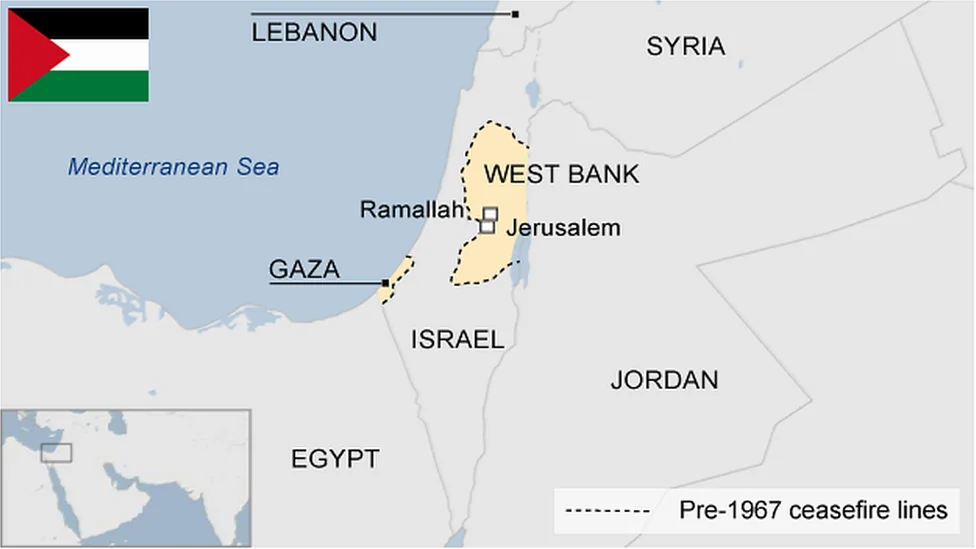
Israel-Palestine. India has moved from an earlier pro-Palestine position to de-hyphenation: engaging both separately, on independent interests, while continuing to support a negotiated two-state solution. The Gaza war and its humanitarian consequences make that balance harder to hold in public.
Iran. Israel treats Iran as an existential threat. India needs Iran for Chabahar, the International North-South Transport Corridor and access to Afghanistan and Central Asia. These are not reconcilable positions; they are simply held simultaneously.
The Gulf. India has major energy, remittance, diaspora and investment interests in Saudi Arabia, the UAE, Qatar, Oman and Kuwait. An excessive tilt towards Israel carries costs in the Arab world that are diffuse but real.
IMEC. The corridor depends on regional stability. Gaza, Iran-Israel tension and Red Sea disruption have already slowed its momentum.
Technology transfer. India wants deeper transfer and source-code access under Aatmanirbhar Bharat. Israel protects core intellectual property in sensitive defence and cyber systems. That is a structural limit, not a negotiating gap.
The Honest Assessment
De-hyphenation has worked better than most observers expected, but it works because India has kept the relationship transactional and quiet rather than ideological and loud. The moment the relationship becomes symbolically charged in Indian domestic politics, it becomes harder to sustain alongside the Gulf and Iran.
Operation Sindhu, the evacuation of Indian nationals from Iran and Israel during their conflict, is the clearest illustration of the cost side: India’s presence across every camp in the region means every regional war is partly an Indian consular emergency.
The Way Forward
- Conclude the free trade agreement, which is the fastest way to broaden a narrow trade basket.
- Prioritise co-development over procurement, since that is where capability actually transfers.
- Scale agricultural Centres of Excellence, the highest-return and least contentious channel.
- Insulate the relationship from domestic symbolism, which is what keeps de-hyphenation credible.
- Maintain the Iran channel deliberately, because Chabahar and the INSTC have no substitute.
India’s Israel policy is not a choice between camps. It is a sustained refusal to make one, and its viability depends on keeping that refusal quiet.
Frequently Asked Questions
When did India establish diplomatic relations with Israel?
India recognised Israel in 1950 but established full diplomatic relations only in 1992. The 42-year gap reflected India’s anti-colonial solidarity with Palestine, domestic political sensitivities, energy dependence on Arab states and the Cold War context.
What is de-hyphenation in India’s West Asia policy?
De-hyphenation means engaging Israel and Palestine separately, on the basis of independent interests, rather than treating support for one as opposition to the other. India has deepened strategic ties with Israel while continuing to support a negotiated two-state solution.
What defence systems has India acquired from Israel?
Unmanned aerial vehicles including Heron drones, radars, missiles, surveillance systems, precision-guided munitions, air-defence systems and border-security technology. The Barak-8 or MRSAM air-defence system is jointly developed by India and Israel rather than simply purchased.
How does agricultural cooperation with Israel work?
Through a network of Centres of Excellence across Indian states, transferring Israeli strengths in drip and micro-irrigation, protected cultivation, horticulture, post-harvest management, nursery systems, seed technology and water recycling.
What is the current state of India-Israel trade?
Total merchandise trade stood at about USD 3.93 billion in FY 2025-26. The second round of free trade agreement negotiations concluded in July 2026, covering goods, services, rules of origin, sanitary and phytosanitary measures, technical barriers, intellectual property, customs procedures and trade facilitation. The Bilateral Investment Agreement came into force in July 2026.
What is I2U2?
A minilateral grouping of India, Israel, the UAE and the United States, focused on food security, clean energy, technology, water, transportation and investment. Israel is also relevant to the India-Middle East-Europe Economic Corridor.
Why is Iran a complicating factor?
Israel regards Iran as an existential threat, while India needs Iran for Chabahar port, the International North-South Transport Corridor and access to Afghanistan and Central Asia. India therefore has to sustain two relationships that regard each other as adversaries.
What was Operation Sindhu?
The evacuation operation India launched during the Israel-Iran conflict to bring Indian nationals out of Iran and Israel. It illustrated how quickly regional escalation converts into a consular and citizen-safety problem for India.
Practice Questions
Prelims MCQs
- India established full diplomatic relations with Israel in
(a) 1950
(b) 1974
(c) 1992
(d) 2017
Answer: (c) Recognition came in 1950 but full diplomatic relations were established only in 1992. - The Barak-8 or MRSAM system is best described as
(a) An Israeli system purchased off the shelf
(b) A jointly developed India-Israel air-defence system
(c) An indigenous DRDO system
(d) A Russian system licensed to Israel
Answer: (b) MRSAM is a joint development programme rather than a direct purchase, which is what distinguishes it from most Israeli supplies. - De-hyphenation in Indian foreign policy refers to
(a) Ending relations with one party to a conflict
(b) Engaging two rival parties separately on independent merits
(c) Linking trade to human rights
(d) Refusing to take sides at the United Nations
Answer: (b) It means India's relationship with Israel is not derived from, or traded against, its relationship with Palestine. - Centres of Excellence under India-Israel cooperation are associated primarily with
(a) Cyber security
(b) Agriculture and water technology
(c) Space launch
(d) Semiconductor fabrication
Answer: (b) The Centres of Excellence transfer Israeli irrigation, horticulture and post-harvest technology to Indian states. - Operation Sindhu was launched to
(a) Evacuate Indian nationals from Iran and Israel
(b) Conduct a joint naval exercise
(c) Deliver humanitarian aid to Gaza
(d) Escort merchant shipping in the Red Sea
Answer: (a) It was the evacuation of Indian nationals during the Israel-Iran conflict.
Mains Questions
- India's Israel policy is an exercise in simultaneous relationships with mutual adversaries. Examine the costs and benefits of de-hyphenation. (250 words)
- Evaluate defence and technology cooperation with Israel in the context of Aatmanirbhar Bharat and technology-transfer limits. (250 words)
- Discuss the contribution of Israeli agricultural technology to Indian farm modernisation, and its limits. (150 words)
- Assess how the Gaza conflict and Iran-Israel escalation affect India's IMEC and energy interests. (250 words)
- India's West Asia policy requires balancing Israel, Iran and the Gulf simultaneously. Critically examine its sustainability. (250 words)
Tell Google you want more of this.
Add Anantam IAS as a preferred sourceOne tap, and this site shows up more often in your own Top Stories, AI Overviews and AI Mode. Remove it any time.