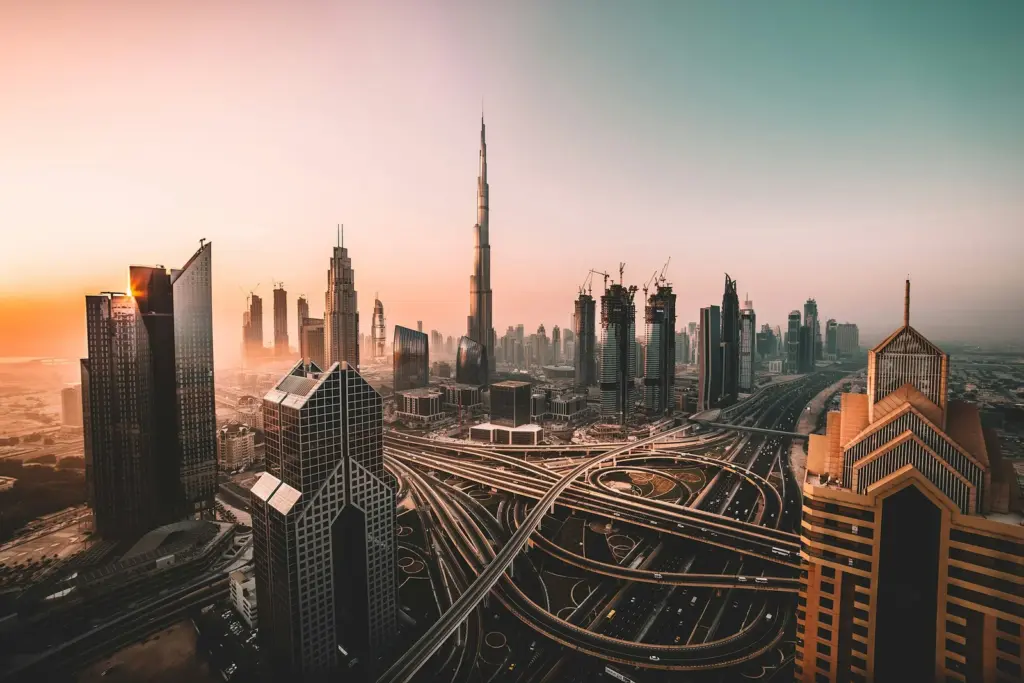
India buys oil from the UAE, sends it four million workers, and takes back nearly a fifth of its remittances. That was the whole relationship for four decades. It is not the relationship any more. India-UAE relations now run through an 8-exaflop supercomputing cluster, rupee-dirham settlement, and 30 million barrels of Emirati crude stored on Indian soil.
Bilateral trade reached USD 101.25 billion in FY 2025-26. The stated target is USD 200 billion by 2032.
How the Relationship Was Built
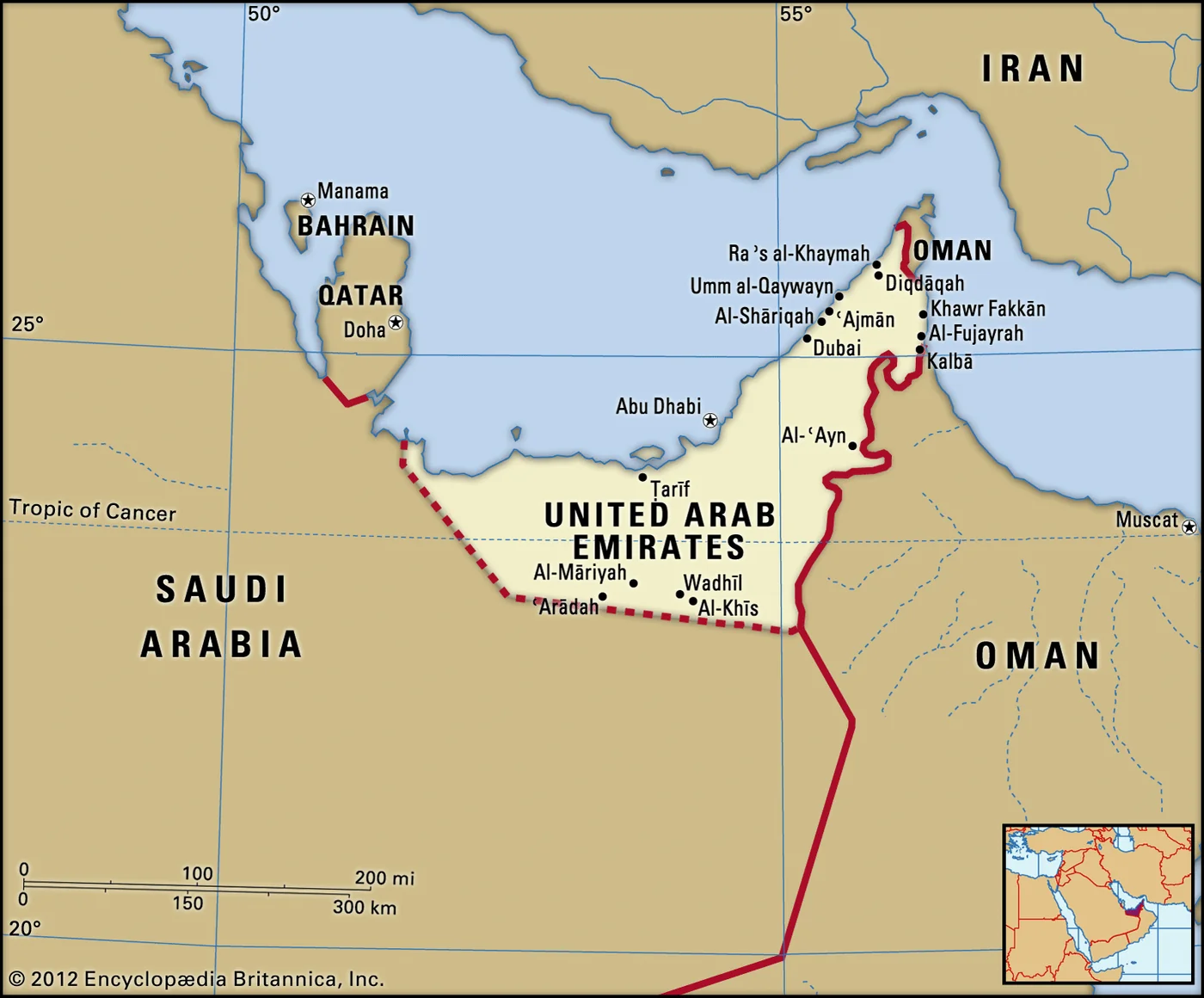
Diplomatic relations were established in 1972, but the transformation is recent. Prime Minister Modi’s 2015 visit, the first by an Indian Prime Minister in 34 years, restarted the relationship politically. Ties were elevated to a Comprehensive Strategic Partnership in 2017, and institutional machinery followed: the Joint Commission Meeting, the Strategic Dialogue, a High-Level Task Force on Investments and sectoral working groups.
The 2024 round of the Strategic Dialogue and the 15th Joint Commission Meeting in New Delhi covered defence, emerging technologies, nuclear energy, polar research, critical minerals, renewable energy, IMEC, fintech and energy.
Why Each Side Needs the Other
For India: energy security, trade, investment, diaspora welfare, remittances, food security, fintech, maritime connectivity, IMEC, and access to West Asia, Africa and Europe.
For the UAE: a large market, a major labour and talent source, a food and pharmaceutical supplier, a technology partner, an investment destination and a gateway to the Global South.
Notice the asymmetry in kind rather than in degree. India supplies people, food and market scale. The UAE supplies energy, capital and location.
The Economic Pillars
CEPA. Signed in 2022, it is the strongest single element of the relationship. The trade basket covers petroleum products, gems and jewellery, food items, textiles, chemicals, electronics and engineering goods.
Investment. The Bilateral Investment Treaty entered into force in 2024. Cumulative UAE foreign direct investment into India stood at about USD 25 billion from 2000 to 2026. Sovereign wealth funds, notably the Abu Dhabi Investment Authority, have gone into infrastructure, real estate, energy, financial services and private equity, with ADIA’s GIFT City presence deepening the financial link.
Energy. Cooperation has widened from crude to LNG, LPG, strategic reserves, green hydrogen and renewables. The agreement for ADNOC to store up to 30 million barrels in India’s strategic petroleum reserves, including Visakhapatnam and Chandikhol, is the structurally interesting one: India gets physical crude on its territory without paying to hold it, and ADNOC gets a forward market position. Both sides also agreed to explore Indian crude storage at Fujairah.
Defence, Fintech and Technology
Defence. A Framework for Strategic Defence Partnership covers defence-industrial collaboration, advanced technology, training, exercises, maritime security, cyber defence, secure communications and interoperability. Desert Cyclone was the first Army-to-Army exercise.
Fintech and local currency. The Reserve Bank and the UAE Central Bank have signed understandings for a Local Currency Settlement System for rupee-dirham transactions and for linking payment systems, including UPI with the UAE’s instant payment platform and RuPay with UAE card systems. This is quietly one of the most consequential items on the list: it reduces dollar exposure in a trade corridor worth over USD 100 billion.
Technology. Cooperation now extends to AI, supercomputing, fintech, digital public infrastructure, critical minerals, green hydrogen, food technology and space. In 2026 the two sides signed a term sheet for an 8-exaflop supercomputing cluster between C-DAC and the UAE’s G42 under India’s AI Mission.
People, Food and Multilateral Platforms
The Indian community of about 4.3 million is the UAE’s largest expatriate group, and the UAE is India’s second-largest remittance source at about 19.2 percent of inflows. The profile has shifted upward, from mainly blue-collar workers to professionals, entrepreneurs, doctors, engineers, bankers and business leaders.
More than 100 Indian schools operate in the UAE, and the IIT Delhi Abu Dhabi campus adds an institutional education dimension. The BAPS Hindu Mandir inaugurated in Abu Dhabi in 2024 carried real symbolic weight.
On food, the complementarity is close to perfect: the UAE imports most of what it eats, India exports rice, sugar, meat, dairy, fruit, vegetables and processed foods.
Multilaterally, the two work through I2U2, IMEC, BRICS, G20, GCC frameworks and the UAE-France-India trilateral.
The Honest Constraints
- Trade imbalance. Imports of crude, gold and petroleum products create a structural deficit that CEPA has widened in absolute terms even as it has grown total trade.
- Regional volatility. Diaspora safety, remittance flows and shipping routes are all exposed to West Asian escalation.
- IMEC uncertainty. The corridor is only as reliable as the region it crosses.
- The balancing problem. India’s simultaneous relationships with Iran, Israel, Saudi Arabia and Qatar mean every deepening with one partner is read by the others.
The Way Forward
- Broaden the export basket beyond gems, jewellery and refined products, which is where CEPA’s promise remains unrealised.
- Scale local currency settlement from pilot volumes to a meaningful share of the corridor.
- Convert the strategic reserve arrangement into a template for other producers.
- Protect diaspora welfare through enforceable labour mobility agreements, not goodwill.
- Keep IMEC alive politically while accepting that its timeline is set by regional stability, not by Indian planning.
The reframe worth holding: the UAE is no longer where India buys oil and sends workers. It is where India is testing whether it can run a large trade corridor outside the dollar.
Frequently Asked Questions
When were India-UAE diplomatic relations established?
In 1972. The relationship gained major political momentum after Prime Minister Modi’s 2015 visit to the UAE, the first by an Indian Prime Minister in 34 years, and was elevated to a Comprehensive Strategic Partnership in 2017.
What is the India-UAE CEPA?
The Comprehensive Economic Partnership Agreement, signed in 2022, is the strongest economic pillar of the relationship. Bilateral trade rose to USD 101.25 billion in FY 2025-26, and both sides have agreed to target USD 200 billion by 2032. The basket covers petroleum products, gems and jewellery, food, textiles, chemicals, electronics and engineering goods.
What is the significance of ADNOC crude storage in India?
India and the UAE signed an understanding for ADNOC to store up to 30 million barrels of crude in India’s strategic petroleum reserves, including at Visakhapatnam and Chandikhol. It gives India physical crude on its own soil at no carrying cost and gives ADNOC a forward market position, so the same barrel serves both energy security and commerce.
How much does the UAE invest in India?
Cumulative UAE foreign direct investment into India stood at about USD 25 billion between 2000 and 2026. Sovereign wealth funds such as the Abu Dhabi Investment Authority have invested in infrastructure, real estate, energy, financial services and private equity, and ADIA’s presence in GIFT City deepens financial connectivity.
What is the Local Currency Settlement System?
An arrangement between the Reserve Bank of India and the UAE Central Bank to settle bilateral transactions in rupees and dirhams rather than in dollars. It is paired with linking of payment systems, including UPI with the UAE’s instant payment platform and RuPay with UAE card systems.
How large is the Indian diaspora in the UAE?
About 4.3 million, the UAE’s largest expatriate community. The UAE is India’s second-largest source of remittances, contributing about 19.2 percent of total inflows, and the profile has shifted from mainly blue-collar workers to include professionals, entrepreneurs and business leaders.
What is IMEC and why does the UAE matter to it?
The India-Middle East-Europe Economic Corridor seeks to connect India with the Gulf, Israel and Europe through ports, railways, logistics, digital links and energy infrastructure. The UAE is the first landing point on the western leg, which makes it structurally central to the corridor.
What are the main challenges in the relationship?
A structural trade imbalance driven by crude, gold and petroleum imports; exposure of the diaspora and remittance flows to regional instability; dependence of IMEC on West Asian stability; and the need to balance the UAE relationship against India’s simultaneous ties with Iran, Israel, Saudi Arabia and Qatar.
Practice Questions
Prelims MCQs
- The India-UAE Comprehensive Economic Partnership Agreement was signed in
(a) 2015
(b) 2017
(c) 2022
(d) 2024
Answer: (c) CEPA was signed in 2022 and became the strongest economic pillar of the partnership. - India-UAE ties were elevated to a Comprehensive Strategic Partnership in
(a) 2015
(b) 2017
(c) 2019
(d) 2022
Answer: (b) The elevation took place in 2017, after which institutional mechanisms such as the Joint Commission Meeting and Strategic Dialogue deepened cooperation. - Desert Cyclone is associated with which of the following?
(a) A joint naval exercise with Oman
(b) The first India-UAE Army-to-Army exercise
(c) A UAE space mission
(d) An energy storage agreement
Answer: (b) Desert Cyclone was the first Army-to-Army exercise under the India-UAE defence framework. - The UAE is India's source of approximately what share of total remittance inflows?
(a) 6.5 percent
(b) 12.4 percent
(c) 19.2 percent
(d) 31.7 percent
Answer: (c) The UAE contributes about 19.2 percent of India's remittance inflows, second only to the United States. - I2U2 comprises which four countries?
(a) India, Iran, UAE, USA
(b) India, Israel, UAE, USA
(c) India, Indonesia, UAE, UK
(d) India, Israel, Uzbekistan, USA
Answer: (b) I2U2 brings together India, Israel, the UAE and the United States on food security, clean energy, technology, water and transport.
Mains Questions
- India-UAE relations have moved from a labour and oil relationship to a technology and capital relationship. Examine this transition and its strategic implications. (250 words)
- Evaluate CEPA as a model for India's trade agreements with Gulf economies. (250 words)
- Discuss the strategic logic of hosting foreign crude in India's strategic petroleum reserves. (150 words)
- The UAE is central to IMEC but IMEC depends on regional stability. Critically examine. (250 words)
- Assess the risks that diaspora concentration and remittance dependence create for India in the Gulf. (150 words)
Tell Google you want more of this.
Add Anantam IAS as a preferred sourceOne tap, and this site shows up more often in your own Top Stories, AI Overviews and AI Mode. Remove it any time.