Disclosure: this guide contains Amazon affiliate links. As an Amazon Associate, Anantam IAS earns from qualifying purchases — at no extra cost to you.
The India Year Book is the government’s own annual record of its schemes, policies and institutions, and the question most aspirants bring to it is whether 736 pages of official prose deserve their time. The current edition is Bharat 2026: A Reference Annual, published by the Publications Division of the Ministry of Information and Broadcasting in English and Hindi. It’s the most authoritative single source on central schemes you can buy. It’s also the dullest book on any UPSC shelf to read cover to cover. Read selectively, it becomes the fact-checker behind your GS Paper 2 and GS Paper 3 notes.
The name is the first thing that trips people up. Search for India Year Book 2026 and the cover you’re shown says Bharat 2026, even on the English edition. Until the 2024 edition the English book was titled India 2024: A Reference Annual. The Publications Division’s catalog lists the 2025 English print as Bharat 2025, and the 2026 edition was released as Bharat 2026 in both languages. Same publisher, same book, new name on the cover.
Aspirants usually go wrong with it in one of two ways. Some buy it in the first month, read the opening chapters on land, people and national symbols, and never reach the chapters that carry marks. Others hear it’s too long, skip it altogether and then write a GS Paper 2 answer with a scheme’s ministry or launch year wrong. The useful path is a short reading list, read properly, and the rest kept for lookups. The edition and the format come first; the chapter map comes after.
What the India Year Book is, and which edition to buy
Buy Bharat 2026, the current edition, released on 12 March 2026. The English print on Amazon.in runs about 736 pages under ISBN 978-9363929142, and the Hindi edition about 754 pages.
- Publisher: Publications Division, Ministry of Information and Broadcasting, Government of India.
- Release: 12 March 2026, in English and Hindi, by Bhupendra Kainthola, Principal Director General of the Publications Division.
- Format change: for the first time the whole book is printed in four colors, with each section and chapter color-coded, and with photographs and infographics added.
- Scope: 32 chapters on central government schemes, programs and policies, with the states and union territories covered as well.
- E-book: an official Kindle edition is sold under the Publications Division’s name, ISBN 978-9363928350.
The year on the cover matters more than it does for most books. Each edition is compiled afresh from government material, and schemes get launched, merged and renamed every year. A two-year-old copy is two Budgets behind, and some of the scheme names in it may no longer exist.
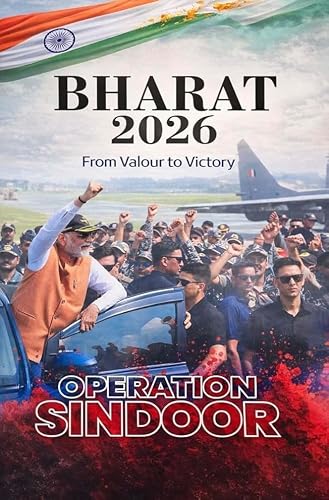
Bharat 2026: A Reference Annual (India Year Book 2026), English
- About 736 pages, Publications Division, Ministry of Information and Broadcasting
- Released 12 March 2026 and printed in four colors for the first time
- Central schemes, policies and institutions, plus the states and union territories
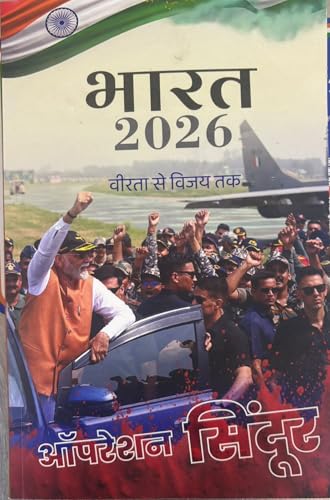
भारत 2026: संदर्भ वार्षिकी (हिंदी संस्करण)
- लगभग 754 पेज, प्रकाशन विभाग, सूचना और प्रसारण मंत्रालय
- 12 मार्च 2026 को जारी, पहली बार पूरी किताब चार रंगों में
- योजनाओं और मंत्रालयों के आधिकारिक हिंदी नाम, जो हिंदी माध्यम के उत्तरों में चाहिए
If you write the exam in Hindi, buy the Hindi edition. Scheme and ministry names appear there in their official Hindi form, and that’s the vocabulary a Hindi-medium answer needs.
Who the India Year Book is for, and who can leave it
It’s for UPSC aspirants who need official facts on schemes and institutions for Mains, and for anyone who wants a reliable place to check a fact before it goes into their notes. It isn’t a first-read book for any exam.
Read the selected chapters if:
- You’re preparing for UPSC Mains, where GS Paper 2 and GS Paper 3 answers need a scheme’s ministry, launch year and target group right.
- You’re writing a state PSC Mains that asks about central schemes and about your own state.
- Your answers keep describing schemes loosely, without the name or the ministry behind them.
Leave it on the shelf if:
- SSC, railway or banking exams are your target. A static GK book such as Lucent GK serves those one-line questions far better.
- You’re in the last month before Prelims. A monthly compilation and your own scheme sheet will do more in that time.
- You haven’t finished the standard books yet. The yearbook adds facts to a structure; it doesn’t give you the structure.
It isn’t wise to ignore the book, and it isn’t wise to study it like a textbook either. Its right place is the one our best current affairs sources guide gives it: a selective, official reference that checks what the compilations tell you.
The chapter map: which chapters to read
Read the social sector, agriculture and economic data chapters properly, and treat the rest as a reference. The chapter plan has stayed steady across recent editions, and the grouping below follows the chapter titles the Publications Division uses.
| Chapters | What they hold | UPSC | State PSC and other exams |
|---|---|---|---|
| Land and People; National Symbols | Basic geography, population and the national symbols with their rules | Skim once | Read; state papers still ask about symbols |
| Polity; Law and Justice | The Constitution, Parliament, the judiciary and recent legislation | Read after Laxmikanth, for the recent changes | Read |
| Defence; India and the World | The armed forces, defense production and foreign relations | Read for GS Paper 2 and GS Paper 3 context | Skim |
| Basic Economic Data; Finance; Commerce; Industry; Corporate Affairs | Official data and each ministry’s initiatives | Read Basic Economic Data; look up the rest | Look up |
| Agriculture; Farmers and Foodgrains; Food, Civil Supplies and Consumer Affairs; Rural Development | Farm, food and rural schemes and the bodies that run them | Core for GS Paper 3 | Core |
| Education; Health and Family Welfare; Welfare; Labour, Skill Development and Employment; Housing and Urban Affairs | Social sector schemes and institutions | Core for GS Paper 2 | Core |
| Energy; Water Resources; Environment; Transport | The infrastructure and environment ministries | Read Energy, Water Resources and Environment | Read |
| Communication | Broadcasting and mass media | Skip | Skip |
| States and union territories | A profile of each state and union territory | Read your own state before the interview | Core for your own state |
That leaves a short reading list for UPSC: the social sector group, the agriculture and food group and the economic data chapter. Everything else you open when a compilation mentions a scheme and you need its ministry, its year or its target group.
How to read India 2026 in four weeks
Tie the chapters to the GS papers: one cluster a week, about 45 minutes a day, with each session ending in a scheme sheet rather than underlining.
- Week 1, the social sector. Education, health, welfare and labour. For each scheme, write one line: name, ministry, year, who it serves and one number. Our list of central government schemes is a good index to check against.
- Week 2, agriculture, food and rural development. The same sheet, with the institution that runs each program added.
- Week 3, the economy. Basic Economic Data with the Economic Survey 2025-26 open beside it, so each official figure has its analysis next to it.
- Week 4, polity, law, defense and India and the World, then your own state’s profile.
The lookup habit runs alongside the plan and outlives it. Every time your monthly current affairs compilation mentions a scheme, check its ministry and launch year against the book before it goes into your notes. Yojana magazine makes a useful companion, because it argues about the schemes the yearbook only records.
What to skip, and what to cross-check
Skip the paragraphs that describe how a department is organized and the long lists of institutions under each ministry. UPSC asks what a scheme does and for whom, not which division runs it. Skip the chapters the map marks as skip unless your optional or your state paper needs them.
Cross-check the numbers. The book is collated from material gathered across government, so every achievement and target in it is the government’s own account:
- Budget figures and targets, which change with every Budget. Take the latest from the Budget documents or the Economic Survey.
- Coverage and beneficiary numbers, which ministries update on their scheme portals through the year.
- Anything dated after the book went to press in early 2026, which it cannot contain.
What the India Year Book will not do
It won’t give you the other side. The book is the government describing its own work, so shortfalls, audit findings and criticism aren’t in it, and a balanced Mains answer needs them. It won’t cover current affairs after its release, and it isn’t a static GK bank for one-line questions. It won’t teach concepts either; it assumes you already know what a fiscal deficit or a minimum support price is.
It’s a self-assessment, now in four colors. Read it the way you’d read any self-assessment.
India Year Book vs Manorama Yearbook vs Economic Survey
These three get grouped together on booklists, but they do different jobs.
| Title | Pages and edition | What it is | Verdict |
|---|---|---|---|
| Bharat 2026 (India Year Book), Publications Division | About 736, 2026 edition | The government’s official record of schemes, policies and institutions | The source for scheme and institution facts |
| Manorama Yearbook 2026 | About 1,012, 2026 edition | A private almanac of general knowledge, current affairs and quizzes | The better lookup book for one-line facts |
| Economic Survey 2025-26 | Free on the government’s Budget website | The official analysis of the economy, with its data | Read its chapters for economy; download it rather than buying a printout |
If you’re weighing the private almanac instead, our Manorama Yearbook reading guide covers which sections to read and which to skip.
If you buy only one of the three for UPSC, buy the India Year Book and download the Survey. Manorama earns its place when a state PSC or an SSC paper is also in your plan, because those papers still ask the one-line facts it collects.
Is there an India Year Book PDF?
There’s an official e-book, but no official free PDF. The Publications Division sells Bharat 2026 as a Kindle edition under its own name, and its own website sells e-books of earlier editions, including India 2024 and Bharat 2024. The free files that pass around as an India Year Book PDF are unofficial copies, and a file with no clear edition on it is a poor bet for a book whose whole value lies in being current.
The India Year Book is the most trustworthy book on your shelf and the one you should read least of. Buy Bharat 2026 in your exam language, read the social sector, agriculture and economic data chapters with a scheme sheet open, keep the rest for lookups and cross-check every number against a newer source. Do that and your Mains answers get their facts right without the book eating a month. Start with the health chapter this week, one scheme to a line.
Frequently Asked Questions
Is the India Year Book necessary for UPSC?
Not cover to cover. It is the most reliable source for scheme names, ministries and launch years, which Mains answers need, but only the social sector, agriculture and economic data chapters deserve a full read. Use the rest to check facts.
Why is India Year Book 2026 called Bharat 2026?
The Publications Division now titles the English edition Bharat as well as the Hindi one. The English book was India 2024: A Reference Annual, the 2025 English print is cataloged as Bharat 2025, and the 2026 edition was released as Bharat 2026 in both languages. It is the same publication.
Which chapters of the India Year Book are important for UPSC?
Education, health, welfare and labour for GS Paper 2; agriculture, food, rural development, energy, water resources and environment for GS Paper 3; and the basic economic data chapter. Read the polity and defence chapters for recent changes and skim the rest.
When was India Year Book 2026 released?
The Publications Division released Bharat 2026: A Reference Annual in English and Hindi on 12 March 2026. It is the first edition printed entirely in four colors, with color-coded sections and chapters.
Is there an official India Year Book e-book?
Yes. The Publications Division sells Bharat 2026 as a Kindle edition under its own name, and its website sells e-books of earlier editions such as India 2024. There is no official free PDF.
Is there a free India Year Book PDF?
Not an official one. Free files online are unofficial copies with no clear edition, and scheme details in an older edition go out of date quickly. Buy the print or the official e-book.
India Year Book or Manorama Yearbook, which is better?
They do different jobs. The India Year Book is the official record of government schemes and institutions; Manorama is a private almanac of general knowledge and current affairs. UPSC aspirants get more from the India Year Book, while SSC and state PSC aspirants get more from Manorama.
Should I buy the India Year Book in English or Hindi?
In the language you will write the exam in. The Hindi edition runs about 754 pages and uses the official Hindi names for schemes and ministries, which is the vocabulary a Hindi-medium answer needs.
Tell Google you want more of this.
Add Anantam IAS as a preferred sourceOne tap, and this site shows up more often in your own Top Stories, AI Overviews and AI Mode. Remove it any time.