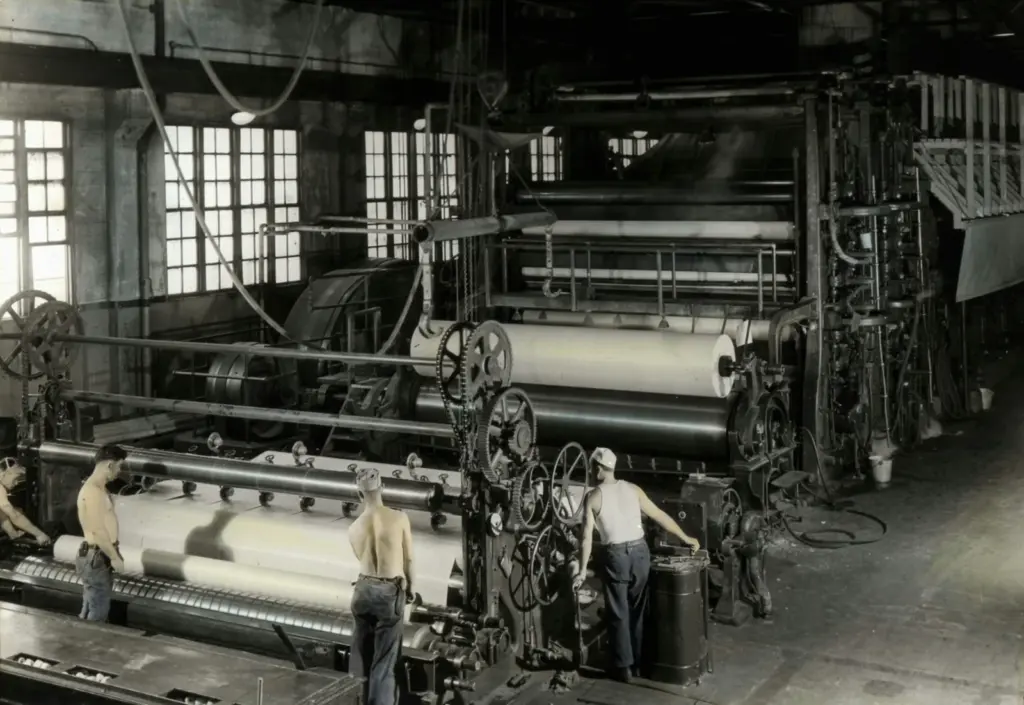
At Independence India had a handful of consumer goods industries and a little jute and textiles. By the late 1980s it had steel, engineering, chemicals, pharmaceuticals, automobiles, petroleum refining and capital goods. Any assessment of industrial policy 1950-1991 has to begin by conceding that the framework built an industrial base where there had been almost none.
It also has to explain why that base could not compete, and why the whole structure had to be dismantled in 1991.
The Nehru-Mahalanobis Strategy
The Second Five-Year Plan of 1956 to 1961 placed industrialisation at the centre of India’s development strategy, following the Nehru-Mahalanobis model.
Focus on basic and capital goods industries. Priority went to heavy industries producing capital goods, machinery and engineering goods. The reasoning was sequential: capital goods industries would generate investment in ancillary industries, create employment and accelerate long-term industrial growth. Build the machines that build machines, and everything else follows.
Import substitution. Domestic industry was to replace imports, conserving scarce foreign exchange and building self-reliance.
Public sector leadership. The state took the commanding heights, partly because private capital at that scale did not exist, and partly to promote balanced regional development.
The Regulatory Architecture
Four instruments carried the policy.
- Industrial licensing. Capacity, expansion and product mix required prior government approval.
- MRTP Act, 1969. Enacted to prevent concentration of economic power and to curb monopolistic and restrictive trade practices.
- Small-scale industry reservation. Production of several products was reserved exclusively for the small-scale sector to promote employment and protect small enterprises.
- Import protection. High tariff barriers and quantitative restrictions insulated domestic industry from foreign competition.
What It Achieved
- Industrial expansion. Industry’s share of GDP rose from around 13 to 14 percent in 1950-51 to about 24 to 25 percent by the late 1980s.
- Diversification. The manufacturing base widened from a few consumer goods industries to a genuinely broad structure spanning heavy industry, chemicals, pharmaceuticals and transport equipment.
These are not small achievements, and they were accomplished in an economy with negligible domestic capital markets and a chronic foreign exchange shortage. The strategy answered the question it was built to answer.
Where It Broke Down
Licence-Permit Raj. Excessive licensing discouraged private investment, delayed industrial decisions and reduced efficiency. Approval became a scarce resource, and scarce resources attract rent-seeking.
Lack of competition. Protection from foreign competition removed the incentive to improve quality, innovate or reduce cost. A firm with a captive market and a licensed capacity has no reason to do any of those things.
Constraints on scale. The MRTP Act restricted expansion by large business houses, which limited economies of scale in exactly the industries where scale determines cost.
Reservation trap. Small-scale reservation created a vested interest among firms in remaining small. Growing past the threshold meant losing protection, so firms optimised for staying below it, forgoing both scale and technological upgradation.
The Pattern Worth Naming
Each instrument was individually defensible and collectively self-defeating. Licensing was meant to direct scarce capital to priority uses; it directed it to whoever navigated the approval process. MRTP was meant to prevent monopoly; combined with import protection it produced protected incumbents without the discipline of either domestic or foreign competition. Reservation was meant to protect employment; it protected inefficiency.
The common failure is that every instrument controlled inputs and entry, and none created pressure on output quality or cost. That is the structural lesson, and it is why the eventual reform had to be about competition rather than about better administration of licences.
The Transition to 1991
These inefficiencies and rigidities accumulated into weak productivity growth and poor export competitiveness. When the balance of payments crisis came in 1991, India lacked the export earnings to finance essential imports. The New Industrial Policy of 1991 dismantled industrial licensing for most sectors and began liberalisation, privatisation and globalisation.
It is worth being precise about causation. The 1991 crisis was the trigger. The cause was four decades of a framework that had solved the problem of building industry and had no answer to the problem of making it good.
The Reframe
The usual verdict, that pre-1991 policy was a mistake, is too easy. It built the base that liberalisation later made competitive. The accurate criticism is not that India chose state-led industrialisation in 1956. It is that India kept the control apparatus for two decades after it had stopped serving its purpose.
Frequently Asked Questions
What was the Nehru-Mahalanobis strategy?
It was the industrialisation framework underpinning the Second Five-Year Plan of 1956 to 1961. It placed heavy and capital goods industries at the centre of development on the reasoning that capital goods generate investment in ancillary industries, create employment and accelerate long-term industrial growth.
What was import substitution industrialisation?
The strategy of building domestic capacity to produce goods that were previously imported, protected by high tariffs and quantitative restrictions. The objective was self-reliance and conservation of scarce foreign exchange, at the cost of exposure to competitive pressure.
What did the MRTP Act, 1969 do?
The Monopolies and Restrictive Trade Practices Act was enacted to prevent concentration of economic power and to curb monopolistic and restrictive trade practices. In practice it required large business houses to obtain approval for expansion, which constrained economies of scale.
What was small-scale industry reservation?
Production of a long list of items was reserved exclusively for the small-scale sector to promote employment and protect small enterprises. Its unintended effect was to create an incentive for firms to remain small, since crossing the threshold meant losing the reservation benefit.
What were the achievements of the 1950 to 1991 framework?
Two are undeniable. Industry’s share of GDP rose from about 13 to 14 percent in 1950-51 to roughly 24 to 25 percent by the late 1980s. And the manufacturing base diversified from a handful of consumer goods industries at Independence into steel, engineering, chemicals, pharmaceuticals, automobiles, petroleum refining and capital goods.
What was the Licence-Permit Raj?
The system under which industrial capacity, expansion, product mix and often technology required prior government licensing. It discouraged private investment, delayed industrial decisions, created rent-seeking around approvals and reduced overall efficiency.
Why did the framework eventually fail?
Because protection removed the incentive to improve. Insulated from foreign competition, firms had little reason to invest in quality, innovation or cost reduction. Combined with licensing delays, MRTP restrictions on scale and small-scale reservation, the system produced diversified but uncompetitive industry.
How did this lead to the 1991 reforms?
The structural rigidities compounded into low productivity growth and weak export competitiveness, which left India unable to finance its imports when the balance of payments crisis arrived in 1991. The New Industrial Policy of 1991 dismantled industrial licensing and opened the economy, beginning the liberalisation era.
Practice Questions
Prelims MCQs
- The Nehru-Mahalanobis strategy formed the basis of which plan?
(a) First Five-Year Plan
(b) Second Five-Year Plan
(c) Fourth Five-Year Plan
(d) Sixth Five-Year Plan
Answer: (b) The Second Five-Year Plan of 1956 to 1961 placed heavy and capital goods industries at the centre of development strategy. - Industry's share in India's GDP rose from about 13 to 14 percent in 1950-51 to approximately what level by the late 1980s?
(a) 18 percent
(b) 24 to 25 percent
(c) 32 percent
(d) 40 percent
Answer: (b) The share roughly doubled over four decades, reflecting genuine industrial expansion. - The MRTP Act, 1969 was enacted primarily to
(a) Promote exports
(b) Prevent concentration of economic power and restrictive trade practices
(c) Reserve items for small-scale industry
(d) Regulate foreign exchange
Answer: (b) It targeted monopolistic and restrictive trade practices and the concentration of economic power. - The unintended consequence of small-scale industry reservation was that
(a) Small firms rapidly became large
(b) Firms had an incentive to remain small
(c) Exports of reserved items surged
(d) Large firms entered reserved sectors
Answer: (b) Because benefits were tied to remaining below a size threshold, reservation discouraged growth and technological upgradation. - Which of the following was not a feature of the pre-1991 industrial framework?
(a) Industrial licensing
(b) High tariff barriers and quantitative restrictions
(c) Automatic route for foreign direct investment
(d) Reservation for small-scale industries
Answer: (c) An automatic route for FDI is a post-liberalisation feature; the pre-1991 regime tightly controlled foreign investment.
Mains Questions
- The pre-1991 industrial framework succeeded in diversification and failed in competitiveness. Critically examine. (250 words)
- Evaluate the Nehru-Mahalanobis strategy in the context of the constraints India faced in the 1950s. (250 words)
- Small-scale industry reservation protected employment at the cost of scale. Discuss. (150 words)
- Discuss the role of import substitution in shaping India's industrial structure and its eventual limits. (250 words)
- The 1991 reforms were a response to accumulated structural rigidity rather than to a single crisis. Comment. (150 words)
Tell Google you want more of this.
Add Anantam IAS as a preferred sourceOne tap, and this site shows up more often in your own Top Stories, AI Overviews and AI Mode. Remove it any time.