Babu Veer Kunwar Singh — the zamindar-king of Jagdishpur in present-day Bhojpur district, Bihar — was almost eighty years old when the Revolt of 1857 reached his territory. He chose, at an age when most men had long retreated into private life, to lead a military campaign against the East India Company that carried him across three provinces and produced one of the last Indian victories of the uprising. When a British bullet shattered his left wrist, he amputated his own arm and flung it into the Ganga. He died six days after winning the Battle of Jagdishpur on 23 April 1858, and his name has survived in the Bhojpuri countryside long after many grander revolt leaders were forgotten.
For UPSC aspirants, Kunwar Singh is the face of the 1857 revolt in Bihar and a compulsory figure on any list of regional revolt leaders alongside Rani Lakshmibai, Tatya Tope, Nana Sahib, and Begum Hazrat Mahal.
Early Life and Background
| Detail | Information |
|---|---|
| Born | Around 1777 (some sources say 13 November 1777) |
| Birthplace | Jagdishpur, Shahabad district (now Bhojpur, Bihar) |
| Community | Rajput (Ujjainiya clan) |
| Father | Sahebzada Singh, zamindar of Jagdishpur |
| Mother | Panch Ratan Kuer |
| Brothers | Dayal Singh, Amar Singh (who would continue resistance after Kunwar Singh's death) |
| Died | 26 April 1858, Jagdishpur (aged about 80) |
Kunwar Singh inherited the Jagdishpur estate in the early 19th century. By the 1850s he was already elderly, but had retained deep networks among the peasantry, the sepoys of the local cantonments, and the neighbouring zamindars. The East India Company had been pressing him for years over revenue arrears and disputed land rights — a common pattern across northern India where the Company's fiscal machinery progressively squeezed the old landed aristocracy.
Outbreak of the Revolt in Bihar
The 1857 uprising reached Bihar when sepoys of the Bengal Native Infantry stationed at Danapur (near Patna) mutinied on 25 July 1857. The rebels marched the short distance west to Arrah, the administrative headquarters of Shahabad district, and appealed to Kunwar Singh for leadership.
He accepted — a decision that, at his age, required no ordinary conviction.
The Siege of Arrah (July–August 1857)
Kunwar Singh led the mutinous Danapur sepoys and his own militia against the British garrison at Arrah. A small group of English officials and a detachment of loyal Sikh soldiers under Lt. Herwald Wake took refuge in a fortified house that came to be known as the "Little House at Arrah" and held out for eight days under siege. A relief force under Major Vincent Eyre broke the siege on 3 August 1857 and defeated Kunwar Singh's forces in the Battle of Bibiganj.
Kunwar Singh retreated from Jagdishpur, which the British destroyed, and began a long guerrilla campaign that would take him across the Gangetic plains.
The Long March: 1857–1858
Over the next nine months, Kunwar Singh conducted a mobile campaign that demonstrated tactical mastery unusual for a rebel of his age:
- Eastern Uttar Pradesh: Operated in Azamgarh and adjoining districts in early 1858
- Rewa and Banda (Central India): Coordinated with other rebel leaders
- Ghazipur and Ballia: Harassed British supply lines
- Azamgarh campaign (March–April 1858): Defeated a British column at Atraulia (22 March 1858)
- Recrossing the Ganga (April 1858): Under pursuit by British forces led by Brigadier Douglas, he recrossed the river near Sheopur Ghat
It was during this crossing of the Ganga that a British bullet struck his left forearm. Aware that a musket-ball wound in that age almost guaranteed gangrene, Kunwar Singh, so legend records, drew his sword and cut off his own arm, throwing it into the Ganga as an offering. He continued to command with one arm.
Battle of Jagdishpur — 23 April 1858
On 23 April 1858, Kunwar Singh's force met a British column under Captain Le Grand at Jagdishpur. Despite his wounds, age, and the fatigue of weeks on the move, Kunwar Singh led a decisive attack. The British were routed:
- Le Grand was killed along with many of his soldiers
- The British force retreated in disorder toward Arrah
- Jagdishpur was briefly restored to Kunwar Singh's rule
The Battle of Jagdishpur stands among the last major Indian victories of the 1857 Revolt. It was a victory of discipline, terrain knowledge, and conviction against superior firepower.
Death and Succession
Kunwar Singh died of his wounds on 26 April 1858, three days after the battle, at the age of about 80. His younger brother Amar Singh — himself in his late seventies — took up command and continued the resistance in Shahabad and the hills of Kaimur through the end of 1858 and into 1859. Amar Singh was one of the last 1857 rebels to remain in the field. He eventually retreated into Nepal after his forces were finally broken.
The Jagdishpur estate was confiscated by the British.
Character and Style of Leadership
Three features stand out in contemporary and later accounts of Kunwar Singh:
- Age-defying mobility. He conducted a nine-month campaign across three provinces while in his late seventies, crossing rivers, mountains, and British-held territory.
- Tactical use of guerrilla warfare. Having lost his seat at Jagdishpur early, he refused to be pinned down and used mobility to keep superior British forces perpetually chasing him.
- Inter-caste and inter-community alliance. He commanded sepoys, Rajput militia, Muslim officers, and peasant volunteers — a broad coalition that mirrored the 1857 uprising at its best.
Kunwar Singh's Wars — Chronology
| Date | Event |
|---|---|
| 25 July 1857 | Danapur Mutiny — sepoys of Bengal Native Infantry revolt |
| 27 July – 3 August 1857 | Siege of Arrah — Kunwar Singh besieges the Little House |
| 3 August 1857 | Battle of Bibiganj — Major Eyre lifts the siege |
| August 1857 | Jagdishpur sacked by the British; Kunwar Singh retreats |
| December 1857 | Operates in Rewa and Banda |
| 22 March 1858 | Battle of Atraulia (Azamgarh) — defeats a British column |
| April 1858 | Recrosses the Ganga; legend of the severed arm |
| 23 April 1858 | Battle of Jagdishpur — Captain Le Grand killed |
| 26 April 1858 | Kunwar Singh dies of wounds |
Legacy and Memorials
- Veer Kunwar Singh University, Arrah (Bihar) — established 1992
- Kunwar Singh Setu — a bridge over the Ganga at Arrah
- Veer Kunwar Singh Vijayotsav — an annual festival observed in Bihar on 23 April to commemorate the Jagdishpur victory
- Postage stamps — issued by the Government of India in 1966 and subsequent commemorative issues
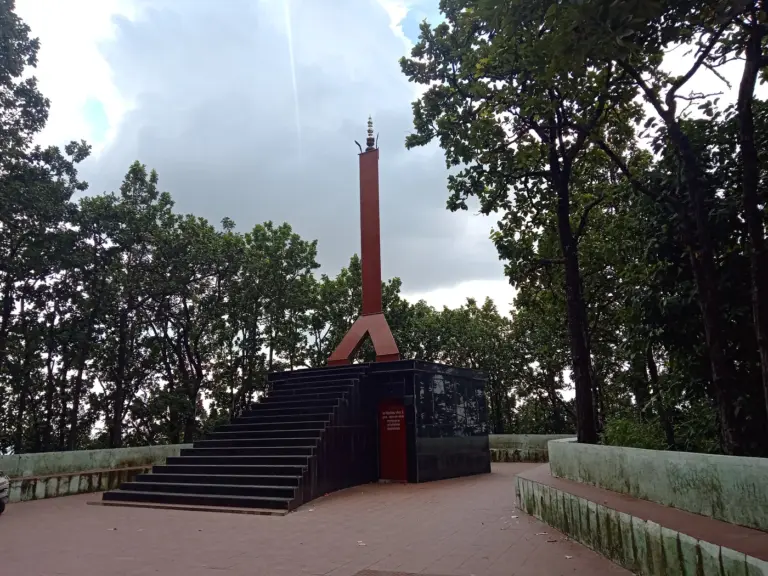
- 200th Death Anniversary (2018) — Government of India observed the bicentenary commemorations, with a Victory Pillar (Vijay Stambh) unveiled at Jagdishpur
- The state of Bihar continues to treat Kunwar Singh as its foremost 1857 hero
Historiographical Note
Colonial historians long treated 1857 in Bihar as a minor theatre, focused on better-documented centres like Kanpur, Lucknow, Jhansi, and Delhi. Modern Indian historians — including S. B. Chaudhuri, K. K. Datta, and R. C. Majumdar — have restored Kunwar Singh's centrality. The Jagdishpur victory is now recognised as one of the few instances in which Indian forces, late in the campaign and against veteran British columns, decisively defeated a British field force.
UPSC Relevance
GS1 (Modern History): Revolt of 1857 — regional centres, leaders, causes of failure, long-term significance.
GS1 (Indian Society): Role of landed aristocracy in the early nationalist resistance; cross-community mobilisation.
GS4 (Ethics): Leadership, courage under adversity, duty in old age.
Key Prelims facts:
- Born around 1777 at Jagdishpur, Shahabad district (now Bhojpur, Bihar)
- Age at the time of the 1857 revolt: around 80 years
- Led the revolt in Bihar after the Danapur Mutiny (25 July 1857)
- Besieged the British garrison at Arrah; siege lifted by Major Vincent Eyre at the Battle of Bibiganj (3 August 1857)
- Won the Battle of Atraulia (Azamgarh) on 22 March 1858
- Severed his own wounded arm and threw it into the Ganga during his escape in April 1858
- Won the Battle of Jagdishpur on 23 April 1858, killing Captain Le Grand
- Died on 26 April 1858
- Brother Amar Singh continued the resistance after his death
- Veer Kunwar Singh Vijayotsav is observed on 23 April in Bihar
- Veer Kunwar Singh University, Arrah, is named after him
Tell Google you want more of this.
Add Anantam IAS as a preferred sourceOne tap, and this site shows up more often in your own Top Stories, AI Overviews and AI Mode. Remove it any time.