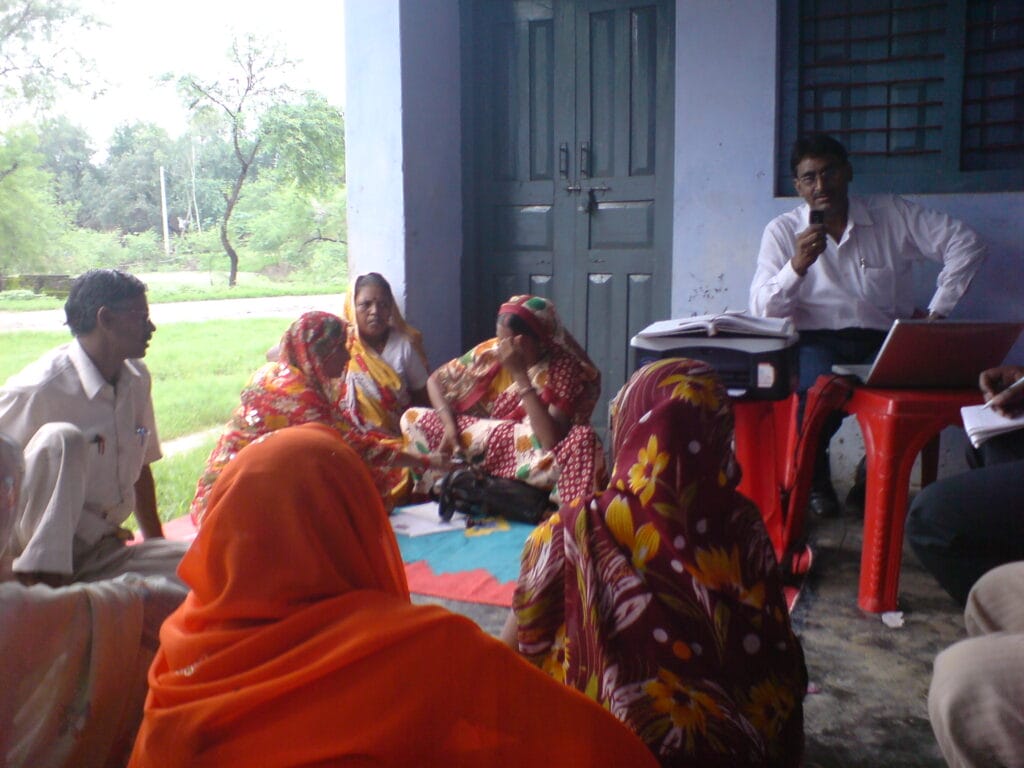
The Lakhpati Didi (Sister) Scheme is a flagship initiative launched by the Government of India to empower rural women through Self-Help Groups (SHGs) by enabling them to earn a minimum of Rs. 1 lakh (Rs 100,000) annually through sustainable economic activities. Announced by Prime Minister Narendra Modi in his Independence Day speech (August 15, 2023) and expanded to a target of 3 crore (30 million) Lakhpati Didis by 2025-26, the scheme represents one of the largest women's empowerment programmes globally.
For UPSC, the Lakhpati Didi scheme is important for Governance (GS2), Women Empowerment, and Rural Development topics.
Background
Origins
The concept was first articulated by PM Narendra Modi during the National Conference of Self-Help Groups held on Mann Ki Baat and subsequent speeches:
- August 15, 2023 — Mentioned in Independence Day address: "2 crore Lakhpati Didi" target
- 2024 Budget — Target expanded to 3 crore Lakhpati Didis
- Integrated with existing SHG infrastructure
The Challenge Addressed
Rural women in India face significant economic challenges:
- Low income — most earn below Rs. 50,000 annually (if anything)
- Limited skills — traditional subsistence activities
- Limited access to markets, credit, and technology
- Gender disparity — women often excluded from formal employment
- Under-utilised SHGs — many SHGs existed but generated limited income
The scheme aims to scale up existing SHG members to higher earning levels.
Scheme Objectives
Target
Make 3 crore (30 million) rural women — already members of SHGs — into Lakhpati Didis (earning at least Rs. 1 lakh annually):
| Milestone | Target |
|---|---|
| By end of FY 2024-25 | 2 crore Lakhpati Didis |
| By end of FY 2025-26 | 3 crore Lakhpati Didis |
| Increase of income | To Rs. 1 lakh+ annually (from typically Rs. 25,000-50,000) |
Strategic Approach
- Leverage existing SHG infrastructure (via DAY-NRLM)
- Value chain approach — move beyond subsistence to commercial activities
- Skill enhancement in profitable sectors
- Credit facilitation through banks and MFIs
- Market access for SHG products
- Technology adoption for productivity
Implementation Framework
Under DAY-NRLM
DAY-NRLM (Deendayal Antyodaya Yojana – National Rural Livelihoods Mission) is the nodal programme:
- Launched: 2011 (as NRLM)
- Renamed DAY-NRLM in 2015
- Ministry: Rural Development
- Objective: Poverty alleviation through SHGs and collective livelihoods
Structure of SHGs
Women SHGs under DAY-NRLM:
- Self-Help Group (SHG) — typically 10-20 women
- Village Organisation (VO) — federation of SHGs in a village
- Cluster Level Federation (CLF) — federation of VOs in a cluster
- Block Level Federation (BLF) — federation of CLFs
As of 2024, there are approximately:
- 9.85 lakh SHGs federated
- 9+ crore SHG members (across 500,000+ villages)
- Major states: Andhra Pradesh, Telangana, Kerala, Tamil Nadu, West Bengal, Odisha, Bihar, Chhattisgarh
Pathway to Lakhpati Status
A typical Lakhpati Didi would transition from:
Stage 1: Basic SHG Member (Rs. 10,000-30,000/year)
- Small subsistence activities
- Little credit access
Stage 2: Active SHG Member (Rs. 30,000-50,000/year)
- Better savings and credit
- Small enterprise (e.g., vegetable farming, small handicrafts)
Stage 3: Lakhpati Didi (Rs. 100,000+ /year)
- Diversified income streams
- Quality products or services
- Market linkages
- Professional enterprise
Key Economic Activities
Lakhpati Didis are active in diverse sectors:
Traditional Rural Activities (Scaled Up)
- Dairy farming — buffalo/cow rearing
- Poultry — broiler and layer birds
- Goat and sheep rearing
- Beekeeping
- Horticulture — fruits, vegetables
- Floriculture
- Mushroom cultivation
- Organic farming
Handicrafts and Small Industry
- Handloom weaving
- Tailoring and garment making
- Basket making
- Pottery
- Food processing (pickles, papads, jams)
- Agarbatti (incense) making
- Candle making
Services
- Retail shops (kirana)
- Beauty services (parlours)
- Educational support (tutoring)
- Water purifier services
Emerging Activities
- Solar power systems (part-ownership, maintenance)
- Drone services (for agricultural applications)
- Mobile banking agents (BC Sakhi model)
- Digital service providers
- EV charging stations
Drone Didi Initiative
A significant sub-component of the Lakhpati Didi scheme:
Namo Drone Didi
Launched: 2024
Features:
- 15,000 SHGs to receive drones
- Women SHG members trained as drone pilots
- Drones used for:
- Agricultural spraying (pesticides, fertilisers)
- Crop monitoring
- Land mapping
- Training by PMKVY and other skill development programmes
Revenue model:
- SHGs earn by renting drone services to farmers
- Average income: Rs. 1.5-3 lakh per drone per year
- Drones become community assets
Financial Framework
Budget Allocation
- Dedicated budget under DAY-NRLM
- 2024-25 Union Budget: Significant allocation for scheme expansion
- 2025-26 Budget: Further commitment
Credit and Funding
Lakhpati Didis receive support through:
| Source | Type |
|---|---|
| DAY-NRLM | Community Investment Fund |
| Commercial banks | SHG-Bank Linkage Program |
| NABARD | Rural financing |
| MUDRA loans | Micro-credit |
| Mahila Kisan Sashaktikaran Pariyojana | Capacity building |
| Stand-Up India | Women entrepreneurs |
Interest Subvention
Under the scheme, eligible SHG loans get interest subvention:
- 7% interest rate for eligible SHGs (vs. regular commercial rates)
- Additional 3% subvention for timely repayment (effective 4% interest)
- Substantial concession for Lakhpati Didis
State-level Initiatives
Madhya Pradesh (Lead State)
MP has the highest number of Lakhpati Didis and has been the flagship state for the initiative:
- Lakhpati Didi Yojana at state level
- Lakhpati Kaushal training
- Mukhyamantri Ladli Behna Yojana — complementary scheme
- State budget allocation for SHG activities
Other Leading States
- Andhra Pradesh — strong SHG culture through SERP
- Telangana — Mission Shakti
- Tamil Nadu — Mission Shakti
- Odisha — Mission Shakti
- Kerala — Kudumbashree
- Uttar Pradesh — Mukhyamantri Udyogini Scheme (parallel)
Progress and Impact
Numbers Achieved (Approximate)
As of early 2026:
- ~1.5 crore women have become Lakhpati Didis
- ~3 crore women nearing Lakhpati status
- Total SHG members: ~9 crore (many yet to reach Rs. 1 lakh)
Economic Impact
- Collective income of Lakhpati Didis estimated at Rs. 1.5-2 lakh crore annually
- Significant GDP contribution from women's entrepreneurship
- Rural demand generation — Lakhpati Didis spend locally, boosting rural economy
Social Impact
- Women's decision-making power increased in families
- Financial independence for millions
- Educational spending on children increased
- Health outcomes improved
- Confidence and leadership skills developed
Related Schemes and Programs
The Lakhpati Didi scheme is part of a broader ecosystem:
| Scheme | Focus |
|---|---|
| DAY-NRLM | Overall SHG program |
| MKSP (Mahila Kisan Sashaktikaran Pariyojana) | Women farmers |
| Stand-Up India | Women entrepreneurs |
| MUDRA Yojana | Micro loans |
| PM-KISAN | Direct income support |
| Namo Drone Didi | Drone-based livelihoods |
| BC Sakhi | Banking correspondents (women) |
| Ladli Behna (various states) | Direct cash transfers |
| Mahila Udyam Nidhi | Women's enterprise funding |
Challenges
Implementation Challenges
- Capacity building — trained staff to support SHGs
- Quality control — ensuring products meet market standards
- Market linkages — connecting SHGs to urban markets
- Financial literacy — helping women understand credit
- Technology access — digital payment, online retail
Scale-up Challenges
- From Rs. 30,000 to Rs. 1 lakh is a significant jump in rural context
- Market demand for SHG products is sometimes limited
- Competition from large enterprises
- Middlemen exploiting SHGs
Sustainability Challenges
- Climate change affecting agricultural activities
- Migration of young women from villages
- Generational change — younger women have different aspirations
- Debt burden if loans aren't managed well
International Recognition
The scheme has received international attention:
- UN Women has noted India's SHG model as a global best practice
- World Bank supports SHG programs
- Multiple countries have sent delegations to study India's SHG approach
UPSC Relevance
GS2 (Governance): Women empowerment schemes, rural development, federal-state coordination.
GS3 (Economy): Rural economy, women's entrepreneurship, financial inclusion.
GS1 (Society): Women's status, gender equality, social mobility.
Essay: Women's empowerment, inclusive growth, rural transformation.
Key Prelims facts:
- Announced: August 15, 2023 (Independence Day speech)
- Target: 3 crore Lakhpati Didis by 2025-26
- Original target: 2 crore, expanded to 3 crore in Budget 2024
- Defines Lakhpati: Women earning Rs. 1 lakh+ annually
- Nodal program: DAY-NRLM (Ministry of Rural Development)
- Total SHG members: ~9+ crore
- Lakhpati Didis (approximate): ~1.5 crore (as of 2026)
- Drone Didi component: 15,000 SHGs to receive drones
- Interest rate: 7% (effective 4% with prompt repayment incentive)
- Lead state: Madhya Pradesh
- Related: DAY-NRLM, MKSP, MUDRA, Stand-Up India, BC Sakhi
Tell Google you want more of this.
Add Anantam IAS as a preferred sourceOne tap, and this site shows up more often in your own Top Stories, AI Overviews and AI Mode. Remove it any time.