The question of which is the largest gland in human body is one of the most frequently asked items in school biology, in basic medical curricula, and in competitive exams. The answer is straightforward: the largest gland in human body is the liver. The liver is also the heaviest internal organ in the human body, weighing approximately 1.5 kilograms in an average adult. Skin, which is sometimes confused with a gland because it contains glandular structures, is the largest organ by surface area but is not classified as a gland in itself.
For UPSC and other competitive exam aspirants the largest gland in human body topic shows up across general science prelims questions, biology-focused science and technology questions, and as part of the broader public health discussion around liver disease in India, which is one of the most rapidly growing categories of non-communicable disease burden in the country.
This piece walks through why the liver counts as the largest gland in human body, its anatomical structure and lobes, the major functions it performs, the diseases that affect it most commonly, the rising burden of non-alcoholic fatty liver disease in India, and the state of liver transplantation in the country.
Quick Facts at a Glance
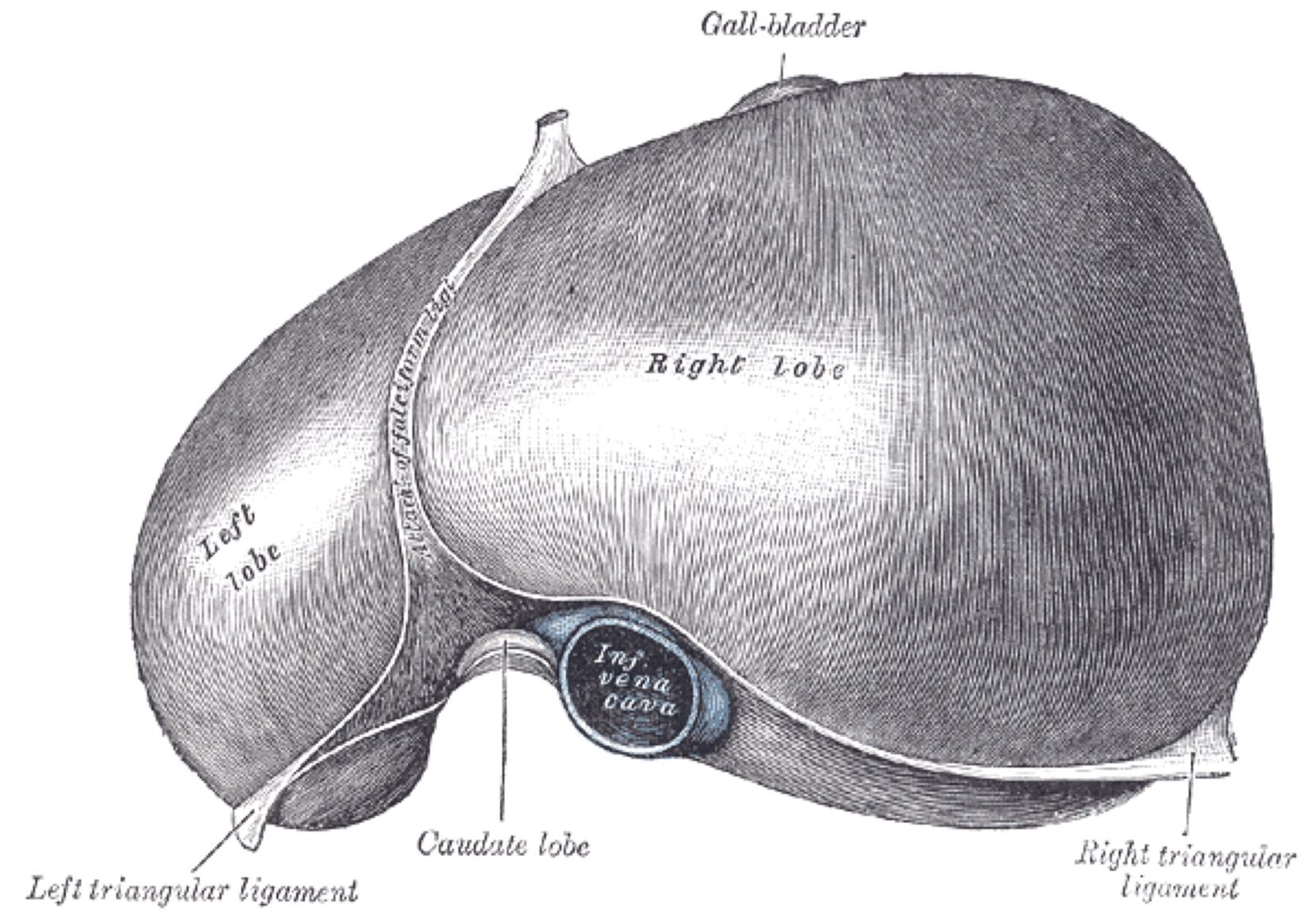
- Largest gland in human body: Liver
- Average adult weight: Approximately 1.5 kilograms (3.3 pounds)
- Approximate width: Around 15 centimetres
- Location: Right upper quadrant of the abdomen, just below the diaphragm, mostly protected by the lower rib cage
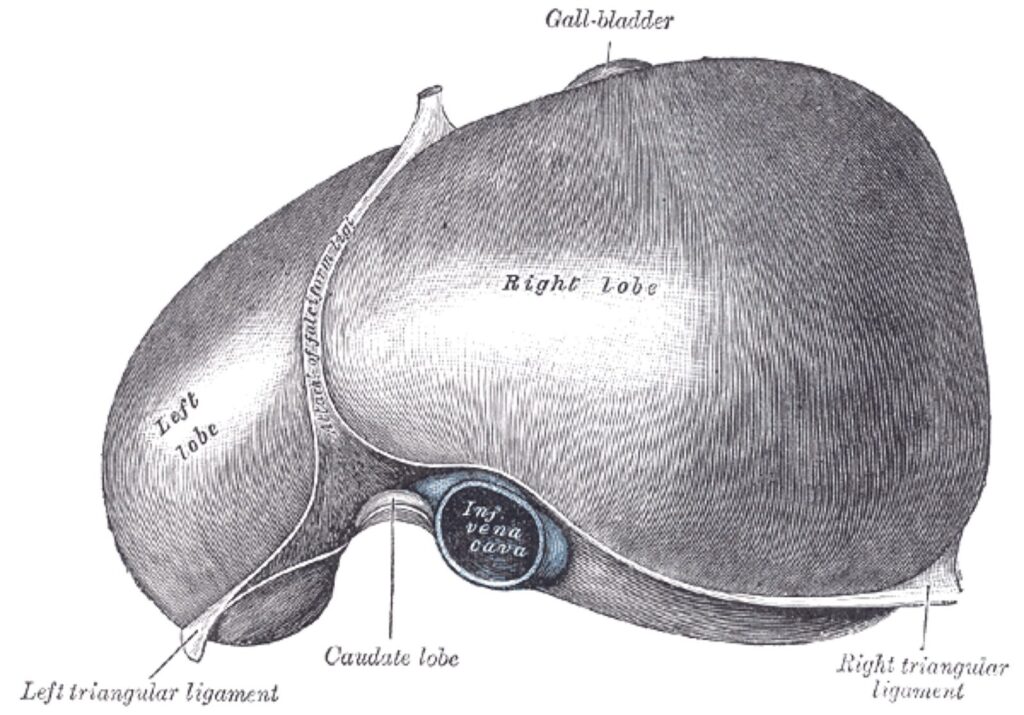
- Lobes (anatomical surface view): Two principal lobes from above, four lobes from below (right, left, caudate, quadrate)
- Functional segments: Eight segments under the Couinaud classification
- Type of gland: Both exocrine (producing bile) and endocrine (releasing hormones into blood)
- Approximate number of functions: Around 500 distinct biochemical functions
- Blood storage capacity: Roughly 450 millilitres of blood as a reservoir
- Regeneration capacity: Can regenerate from as little as 25% of original tissue
Why the Liver Counts as the Largest Gland in Human Body
A gland is any organ or specialized tissue that produces and secretes a substance for use elsewhere in the body. By that working definition the largest gland in human body is the liver, hands down. The liver is an exocrine gland because it produces bile, which is secreted through the bile ducts into the duodenum to help digest fats. It is also an endocrine gland because it produces and releases hormones and hormone-like substances directly into the bloodstream, including angiotensinogen, thrombopoietin, and insulin-like growth factor 1.
For comparison, the pancreas, often cited as a gland in second place by size, is much smaller in mass. The thyroid, adrenal, and pituitary glands are all in a different size class. Among glands the liver is therefore the unambiguous answer to which is the largest gland in human body.
Anatomical Structure of the Liver
The liver sits in the right upper quadrant of the abdomen, tucked under the diaphragm, and weighs around 1.5 kg in an adult. It is wedge-shaped, with a wide right portion and a tapering left portion. Viewed from above, the liver appears to have two lobes, the right and the left, separated by the falciform ligament. Viewed from below, the liver shows four lobes: the larger right lobe, the smaller left lobe, the caudate lobe (sitting near the inferior vena cava), and the quadrate lobe (next to the gallbladder).
Background and Historical Context
For surgical purposes the liver is divided into eight functional segments according to the Couinaud classification, each receiving its own branch of the portal vein, hepatic artery, and bile duct. This segmental anatomy is critical for liver surgery because it allows surgeons to remove diseased segments while preserving the blood supply and bile drainage of the remaining parenchyma. The Couinaud segmentation is why partial liver resection and split-liver transplantation are technically feasible.
The liver receives a dual blood supply, which is unusual among organs. About 75% of its blood comes from the portal vein, carrying nutrient-rich (but oxygen-poor) blood from the digestive tract. The remaining 25% comes from the hepatic artery, carrying oxygen-rich blood. Both supplies meet in the liver sinusoids, where hepatocytes (the liver’s main functional cells) extract nutrients, process toxins, and synthesize proteins.
Functions of the Liver
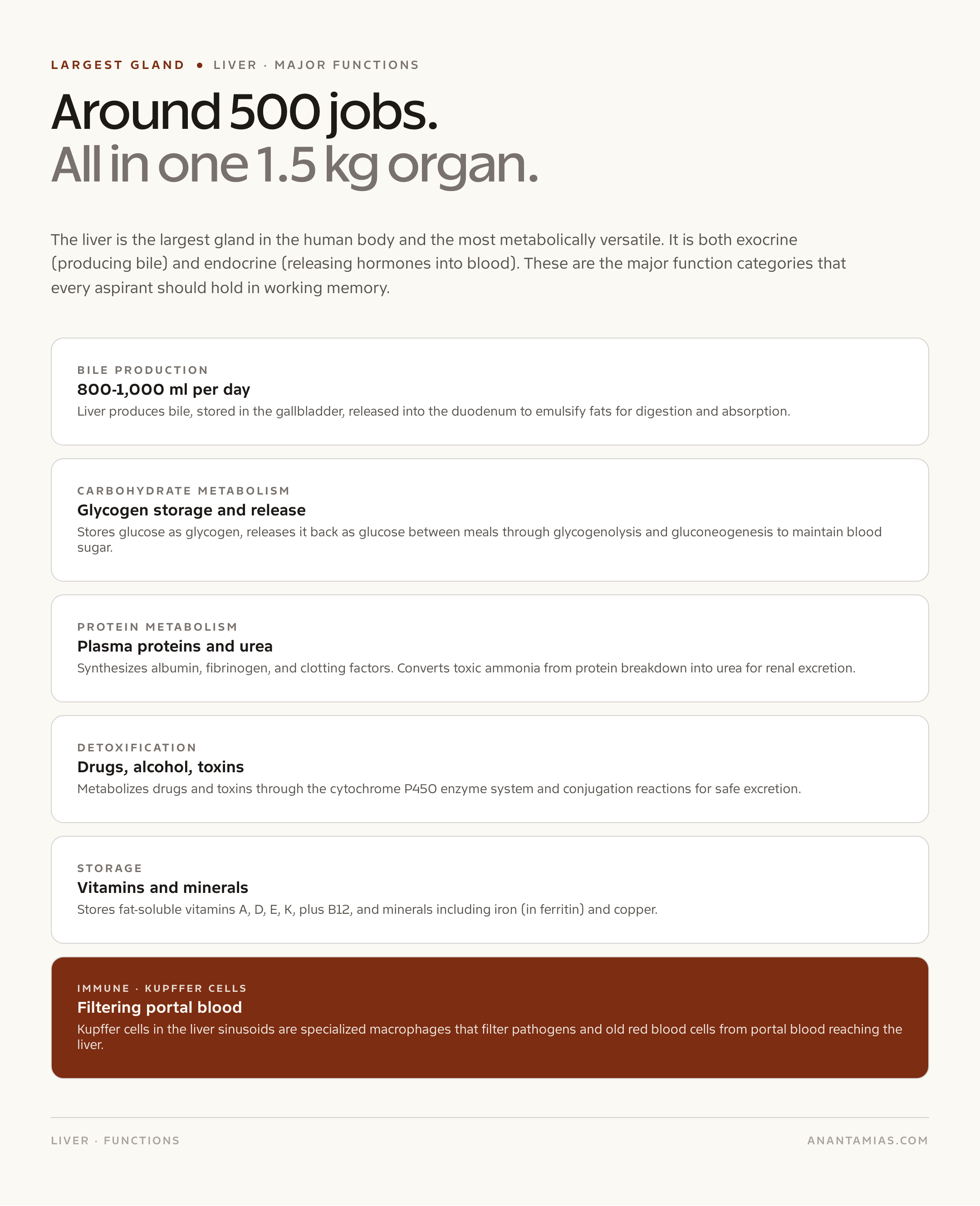
The liver performs around 500 distinct biochemical functions, which is part of why it counts as the most metabolically versatile gland in the human body. The major categories include:
- Bile production — the liver produces around 800-1,000 millilitres of bile a day, which is stored in the gallbladder and released into the small intestine to emulsify fats for digestion and absorption.
- Carbohydrate metabolism — the liver stores glucose as glycogen and releases it back as glucose to maintain blood sugar between meals (glycogenesis, glycogenolysis, gluconeogenesis).
- Protein metabolism — the liver synthesizes most plasma proteins including albumin, fibrinogen, and several clotting factors, and converts ammonia (a toxic by-product of protein breakdown) into urea for excretion through the kidneys.
- Lipid metabolism — the liver synthesizes cholesterol, triglycerides, and lipoproteins, and is central to fat transport in the blood.
- Detoxification — the liver metabolizes drugs, alcohol, and ingested toxins through cytochrome P450 enzyme systems and conjugation reactions.
- Storage — the liver stores fat-soluble vitamins A, D, E, K, plus B12, and minerals like iron (in ferritin) and copper.
- Immune function — Kupffer cells in the liver sinusoids are specialized macrophages that filter pathogens and old red blood cells from portal blood.
- Hormone metabolism — the liver inactivates many circulating hormones, including insulin and steroid hormones.
This combination of functions is why severe liver failure is rapidly fatal. There is no other organ that can compensate for liver loss the way the kidneys can sometimes compensate for each other or the way ventilator support can substitute for failing lungs.
Major Liver Diseases
The liver is exposed to nearly everything the body absorbs, so it bears a heavy disease burden. The most clinically important categories are:
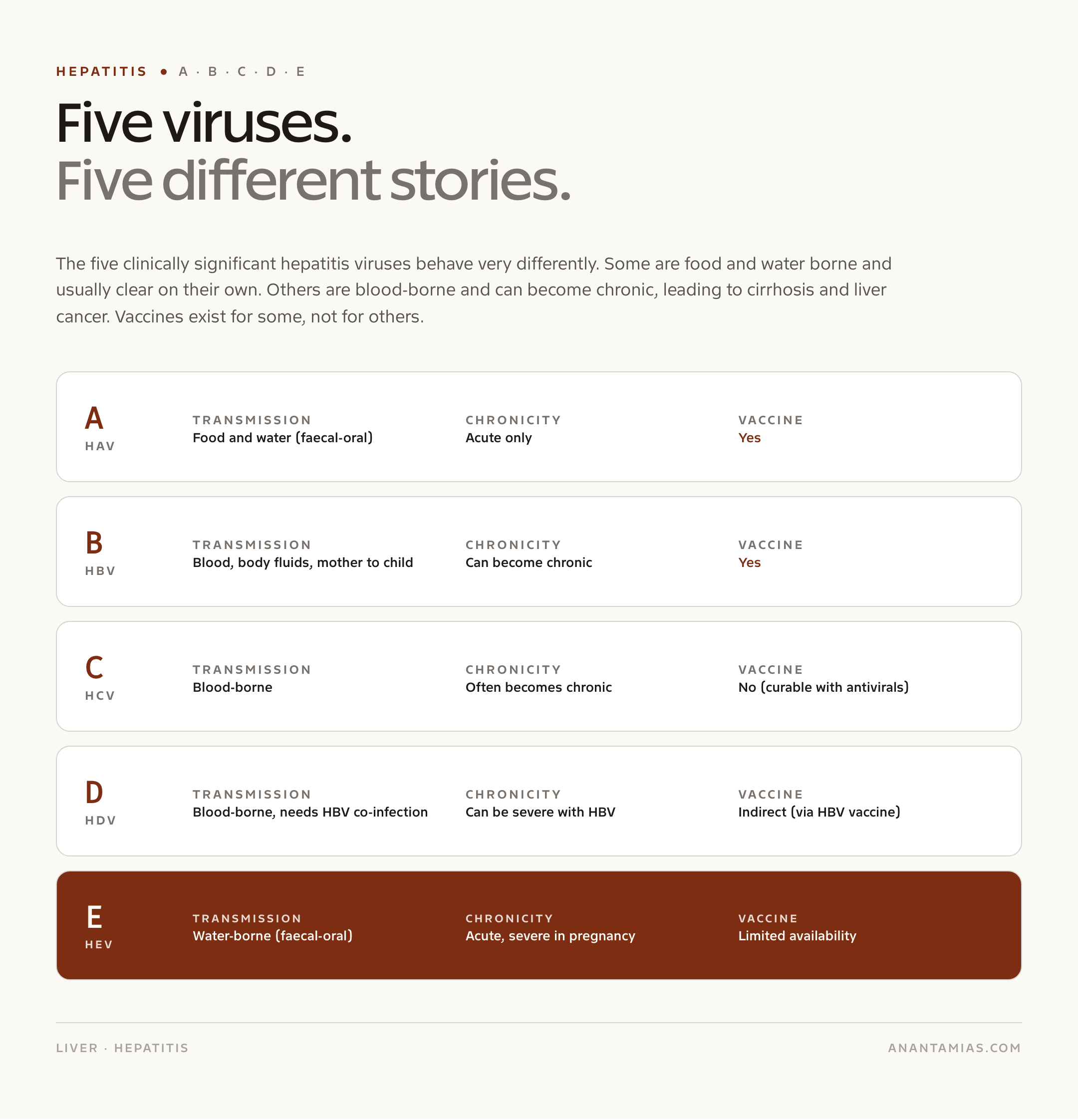
- Viral hepatitis — hepatitis A, B, C, D, and E are the five clinically significant types. Hepatitis A and E are usually acute and transmitted through contaminated food and water. Hepatitis B, C, and D are blood-borne and can become chronic, with B and C being the major causes of cirrhosis and liver cancer globally. Vaccines exist for hepatitis A and B (and indirectly D, since D requires B for replication), but not yet for C or E.
- Alcoholic liver disease — chronic alcohol consumption causes fatty liver, alcoholic hepatitis, and cirrhosis in a progressive sequence.
- Non-alcoholic fatty liver disease (NAFLD) — fat accumulation in the liver in people without significant alcohol consumption, increasingly common and now sometimes renamed metabolic dysfunction-associated steatotic liver disease (MASLD). Around one-third of the global population is estimated to be affected to some degree.
- Cirrhosis — scarring of the liver from chronic injury (viral, alcoholic, fatty, autoimmune), eventually leading to liver failure if not addressed.
- Liver cancer — primarily hepatocellular carcinoma, often arising in the background of chronic hepatitis B or C infection or long-standing cirrhosis.
- Autoimmune liver diseases — autoimmune hepatitis, primary biliary cholangitis, primary sclerosing cholangitis.
- Drug-induced liver injury — adverse effects from medications, herbal preparations, and supplements.
Non-Alcoholic Fatty Liver Disease in India
NAFLD is now one of the fastest-growing categories of chronic non-communicable disease in India. Multiple Indian studies estimate prevalence in the adult population at somewhere between 9% and 35% depending on the population studied, with urban populations and people with metabolic syndrome (diabetes, hypertension, obesity, dyslipidemia) showing the highest rates. NAFLD is increasingly being detected in younger adults, including in children with childhood obesity.
The clinical importance of NAFLD is that a subset of patients progress to non-alcoholic steatohepatitis (NASH), then to fibrosis, cirrhosis, and in some cases hepatocellular carcinoma. The drivers of NAFLD in India track the broader metabolic syndrome story: sedentary lifestyles, energy-dense low-quality diets, central obesity, and insulin resistance. The Ministry of Health and Family Welfare has integrated NAFLD into the National Programme for Prevention and Control of Cancer, Diabetes, Cardiovascular Diseases and Stroke (NPCDCS) recognizing that liver disease prevention is now part of the broader NCD agenda. This connects directly to the wider Indian health system challenge of managing non-communicable diseases.
Liver Transplantation in India
Liver transplantation in India has grown into one of the most established subspecialties in Indian medicine. India performs several thousand liver transplants each year across leading centres in Delhi, Mumbai, Chennai, Hyderabad, Bengaluru, and Kochi. The bulk are living donor liver transplants, in which a portion of a healthy donor’s liver (usually a close family member) is transplanted into the recipient and both segments regenerate over the following months.
This regeneration is possible only because the liver, uniquely among solid organs, retains a strong capacity for regrowth from a small remnant. Cadaveric liver transplantation also happens but is constrained by the limited supply of deceased donor organs through the National Organ and Tissue Transplant Organisation (NOTTO) network. The cost of liver transplant in India is substantially lower than in the United States or Europe, which has made it a destination for medical tourism, though access for poorer Indians remains constrained by cost and geography.
Why This Matters for UPSC and Competitive Exams
The largest gland in human body question is a one-line factual prelims item that almost everyone gets right, but the underlying liver topic offers a richer set of testable angles. Anatomy and functions are standard biology questions. Hepatitis vaccination policy is a public health topic. The NAFLD epidemic ties into the NCD agenda and lifestyle disease policy. Liver transplantation links to the broader debate around organ donation policy, the Transplantation of Human Organs Act, and ethical issues around living donation. The wider connection to Indian biotechnology and bioengineering research, including work on artificial liver support systems, also matters.
For mains-level writing, the liver is a useful concrete anchor for any essay on lifestyle disease, healthcare access, or technology in medicine.
Conclusion
The largest gland in human body is the liver, weighing around 1.5 kilograms in an adult, with four lobes when viewed from below, eight functional Couinaud segments, and around 500 biochemical functions ranging from bile production to detoxification, glycogen storage, plasma protein synthesis, and hormone metabolism. The liver is also the site of some of the fastest-growing chronic disease categories in India, particularly non-alcoholic fatty liver disease. Liver transplantation, enabled by the organ’s unique regenerative capacity, has made India a global centre for living donor transplant. Knowing the liver well covers a surprising amount of the biology, public health, and science policy syllabus at once.
Frequently Asked Questions
What is the largest gland in human body?
The largest gland in human body is the liver, which weighs approximately 1.5 kilograms in an average adult and is also the heaviest internal organ.
How many lobes does the liver have?
The liver has two principal lobes when viewed from above (right and left) and four lobes when viewed from below (right, left, caudate, and quadrate). For surgical purposes it is divided into eight functional Couinaud segments.
Is the liver an exocrine or endocrine gland?
The liver is both. It is exocrine because it secretes bile into the digestive tract through the bile ducts, and endocrine because it releases hormones such as angiotensinogen and thrombopoietin directly into the blood.
What is non-alcoholic fatty liver disease (NAFLD)?
NAFLD is the accumulation of excess fat in the liver in people without significant alcohol consumption. It is now one of the most common chronic liver conditions globally and is strongly linked to obesity, type 2 diabetes, and metabolic syndrome.
Why can the liver be transplanted from a living donor?
The liver has a remarkable regenerative capacity. A portion of a healthy donor’s liver can be removed and transplanted, and both the donor’s remaining liver and the transplanted segment grow back close to full size within months.
How many types of hepatitis are there?
The five clinically significant types of viral hepatitis are A, B, C, D, and E. A and E are usually acute and food or water borne, while B, C, and D are blood-borne and can become chronic.
Tell Google you want more of this.
Add Anantam IAS as a preferred sourceOne tap, and this site shows up more often in your own Top Stories, AI Overviews and AI Mode. Remove it any time.