Minimum Support Price (MSP) has been India's principal farm-price policy instrument since the 1960s, but it has never carried the force of law. The 2020-21 farmers' movement and the 2024-25 "Delhi Chalo 2.0" protests have brought the demand for a statutory legal guarantee of MSP back to the policy centre stage. Union Budget 2025-26 stopped short of a legal MSP but announced the Atmanirbharta in Pulses Mission with unconstrained procurement for tur, urad and masoor. The debate remains live and is among the most probable GS Paper III topics for UPSC 2025-26.
What does MSP mean today?
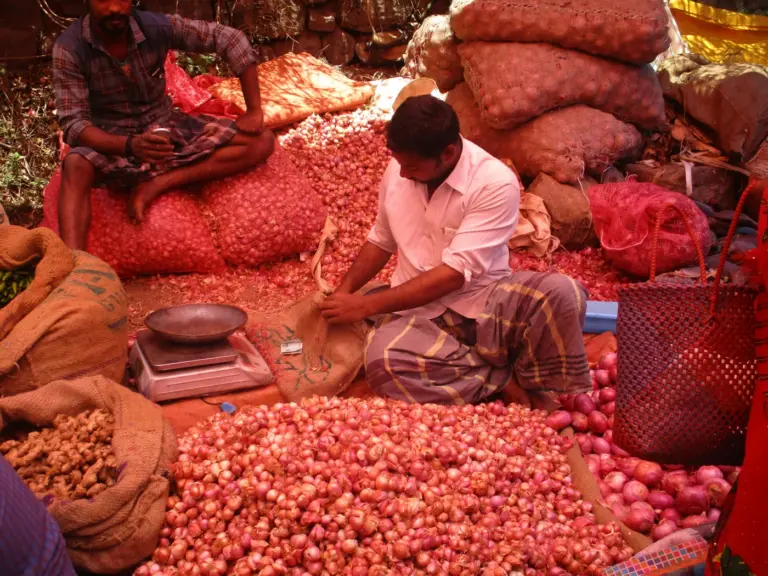
Every year, the Commission for Agricultural Costs and Prices (CACP) recommends MSPs for 23 crops, which the Cabinet Committee on Economic Affairs approves. The government procures mainly paddy, wheat, some coarse cereals and limited quantities of pulses and oilseeds. For remaining crops, MSP is a signal – there is no legal obligation on the private sector or the government to purchase at that price.
What would legalisation mean?
Legalisation would make it illegal for anyone – private trader, processor, exporter, or even the government – to transact below MSP for the 23 notified crops. Non-compliance would attract penalties. Farmer unions in 2024-25 have additionally demanded:
- MSP calculated at C2+50% (full cost including imputed rent + 50% margin) as Swaminathan Commission recommended, not current A2+FL+50%.
- Coverage for all 23 crops through statutory procurement or price-deficiency payment.
Benefits of a legal MSP
Income security for farmers
- Guarantees a price floor, reducing distress selling during bumper harvests.
- Stabilises rural incomes and consumption.
Multiplier effect
- Higher farm-gate incomes feed into rural consumption – FMCG, two-wheelers, construction materials – boosting demand and employment.
Crop diversification
- Remunerative prices for pulses, oilseeds and millets could break the paddy-wheat lock-in.
- Helps achieve atmanirbharta in pulses and edible oils, easing import bills.
Nutritional security
- Broader MSP coverage for pulses, millets and horticulture supports dietary diversity highlighted by MPI 2024.
Reduced fiscal strain (in some scenarios)
- If private trade buys at MSP, government procurement and storage outlays fall.
- Savings in FCI storage, transport and carrying costs.
Environmental benefits
- Shift away from water-intensive paddy-wheat to pulses, millets and oilseeds reduces groundwater depletion.
Challenges and concerns
Private sector exit
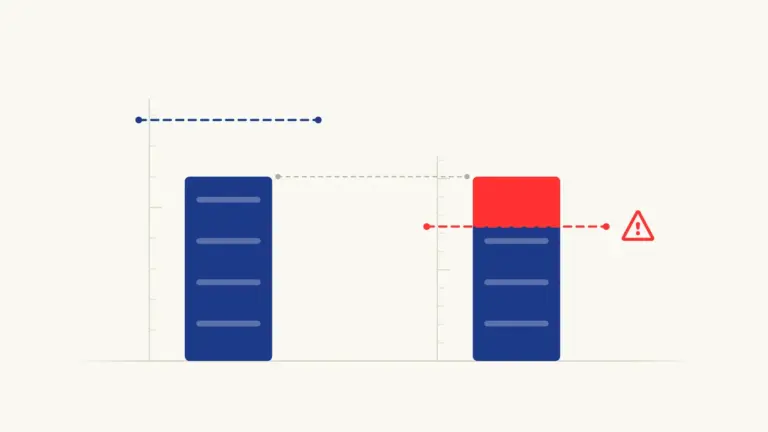
In a bumper year, if market prices dip below MSP, private buyers may simply stop procuring to avoid penalties. The entire surplus then falls on government agencies, ballooning procurement bills.
Fiscal burden
A legal MSP applied to marketed surplus across 23 crops could cost Rs 10-17 lakh crore annually, roughly 40-50% of the Union Budget – fiscally unsustainable. Even with limited procurement, the contingent liability is enormous.
Over-production and storage
Guaranteed prices may encourage over-production of cereals, worsening FCI's already overstocked granaries (~80 million tonnes against a buffer norm of ~40 million tonnes). Storage losses and carrying costs rise.
Distorted markets
Traders would buy from FCI at subsidised rates rather than from farmers, undermining price discovery.
Inflationary pressure
Statutory procurement floors push up wholesale food prices, feeding CPI inflation and complicating RBI's 4% (+/- 2%) inflation-targeting mandate.
Export competitiveness
Higher domestic prices make Indian agri-exports – rice, wheat, sugar, spices – uncompetitive.
Administrative capacity
Procurement machinery exists mainly in Punjab, Haryana, western UP, MP, Chhattisgarh, Telangana, Andhra Pradesh. Extending unconstrained procurement nationally requires massive investment in mandis, warehouses and digitised payment systems.
WTO complications
India's rice and wheat procurement already bumps against the Agreement on Agriculture's 10% de minimis ceiling on product-specific support. A legal MSP could trigger WTO disputes – similar to the 2018-19 US-India friction. India's "Peace Clause" for public stockholding is a negotiated stopgap, not a permanent solution.
Regional and farm-size inequity
Only around 6% of farmers currently benefit from MSP procurement, concentrated in a handful of states. Legalising MSP without expanding machinery may deepen inequity.
Environmental externalities in the short term
Without complementary reforms, legal MSP could reinforce paddy-wheat monocultures in existing procurement states.
Models discussed
- Full statutory MSP: legally enforced price floor on all trade of 23 crops. Maximal protection; maximal cost.
- Price deficiency payment (PDP): government pays farmer the difference between MSP and market price. Lower fiscal cost but requires robust farmer IDs and market price monitoring. Madhya Pradesh's Bhavantar Bhugtan Yojana tested this for oilseeds with mixed results.
- Unconstrained procurement for strategic crops: Atmanirbharta in Pulses Mission (Budget 2025-26) follows this path for tur, urad and masoor.
- PM-AASHA revamped: umbrella scheme with PSS, PDPS, PPSS operating in tandem.
Latest developments (2024-26)
Budget 2025-26:
- Atmanirbharta in Pulses Mission: NAFED and NCCF procure 100% of registered farmers' produce at MSP for tur, urad and masoor for four years.
- Expanded PM-AASHA implementation with enhanced PDPS coverage.
- Mission for Cotton Productivity to revive MSP procurement utility.
- National Mission on High-Yielding Seeds.
Farmer protests 2024-25: "Delhi Chalo 2.0" under Samyukta Kisan Morcha (non-political) continues to demand statutory MSP, debt waiver, Swaminathan Commission implementation, and farmer pension.
MSP Committee Report (July 2024): Sanjay Agrawal committee recommended institutional reforms – strengthening CACP, widening procurement, digital price intelligence – instead of a statutory MSP.
MSP hikes 2024-25: tur Rs 7,550; moong Rs 8,682; urad Rs 7,400; paddy common grade Rs 2,300; wheat Rs 2,425.
16th Finance Commission: states have sought dedicated grants for MSP machinery expansion in historically under-procured states.
MPI 2024: nutritional deprivation data strengthens the case for expanding procurement to pulses, millets and oilseeds.
WTO: India continues to push for a permanent solution on public stockholding at WTO negotiations, vital for any expansion of MSP.
Way forward
- Selective, strategic legalisation: statutory MSP only for strategic commodities (pulses, oilseeds) with a clear exit when self-sufficiency is achieved.
- PDP scale-up: digital-first price deficiency payments through farmer IDs and Agristack.
- Strengthen CACP: transparent cost methodology, independent research, C2+50% benchmarking.
- Procurement decentralisation: state-led procurement with central backstop, like decentralised procurement in Chhattisgarh and Odisha.
- Crop diversification incentives: premium MSP or price bonus for millets and pulses in rice-wheat belts.
- WTO diplomacy: permanent solution on public stockholding.
UPSC Relevance
- GS III (Economy/Agriculture): MSP, procurement, food management, inflation, WTO AoA.
- GS II (Polity/Governance): centre-state relations in agriculture, farmer protests, policy reform.
- Prelims pointers: CACP, 23 crops under MSP, A2+FL+50% vs C2+50%, PM-AASHA components (PSS, PDPS, PPSS), Swaminathan Commission, Peace Clause (Bali 2013), Agreement on Agriculture 10% de minimis.
Likely question: "Examine the benefits and challenges of legalising MSP in India. How does Budget 2025-26 balance farmer income security with fiscal prudence?" (GS III, 250 words)
Tell Google you want more of this.
Add Anantam IAS as a preferred sourceOne tap, and this site shows up more often in your own Top Stories, AI Overviews and AI Mode. Remove it any time.