Mauryan art and architecture (322-185 BCE) represents the first major phase of Indian imperial art. Before the Mauryas, monumental stone architecture simply did not exist in the subcontinent. Ashoka alone is responsible for at least 30 pillar edicts, 84,000 stupas (traditional count), and the oldest surviving rock-cut caves in India. UPSC Prelims has tested Mauryan art at least 8 times between 2011 and 2025.
Two categories matter here: court art (pillars, palaces, sculptures commissioned by the emperor) and folk/popular art (terracotta figurines, yaksha-yakshi images from local traditions). Understand this distinction, and you can answer 90% of what UPSC asks about this period.
Ashoka's Pillars: Monolithic Engineering
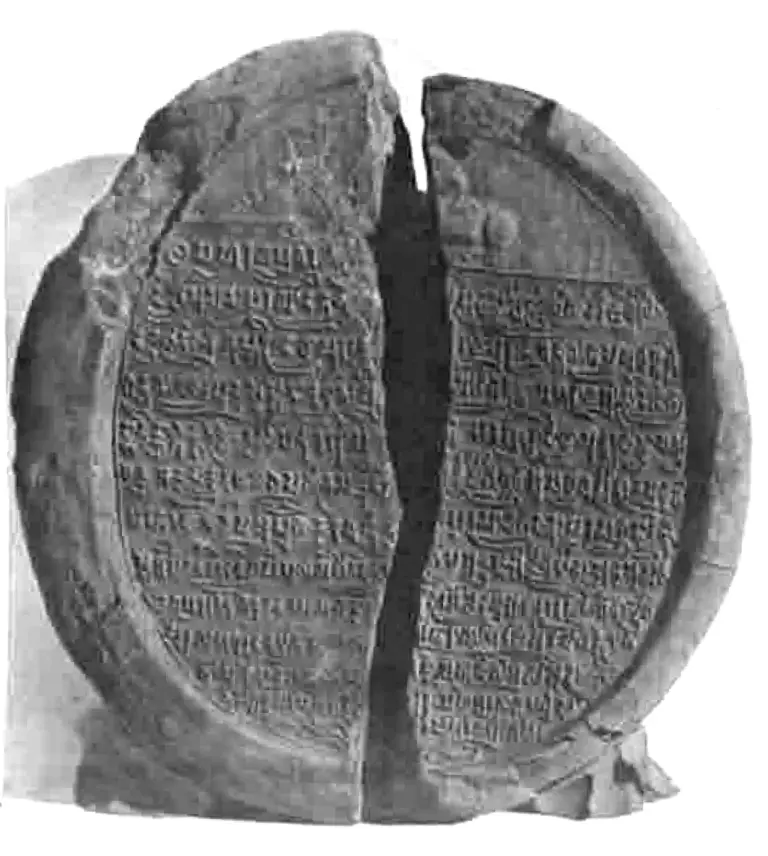
The Ashokan Pillars are the most recognizable symbols of Mauryan art. There are about 30 pillars spread across North India, each carved from a single piece of Chunar sandstone quarried near Varanasi.
Key characteristics of Ashokan Pillars:
- Monolithic — each pillar is a single stone shaft, not assembled from blocks
- Height — typically 12 to 15 metres, weighing up to 50 tonnes
- Mauryan polish — a mirror-like lustre on the surface that has survived 2,300 years. How this polish was achieved remains debated among art historians. Some suggest it involved a specific lacquer treatment; others argue it was an advanced stone-grinding technique
- Capital on top — each pillar has an inverted lotus base, an abacus with decorative motifs, and an animal sculpture (lion, bull, elephant, or horse)
- No base or foundation trench — the pillars were simply set into the ground
The Lion Capital at Sarnath is the most important pillar capital for UPSC. Erected at the site of Buddha's first sermon, it features four Asiatic lions standing back-to-back on a circular abacus. The abacus shows four animals (elephant, horse, bull, lion) separated by four 24-spoke dharma chakras. This capital was adopted as India's national emblem in 1950, and the dharma chakra appears on the Indian flag.
Common student mistake: Students confuse the Sarnath Lion Capital with the Allahabad Pillar (also called the Prayagraj Pillar). The Allahabad Pillar contains Ashoka's edicts plus later inscriptions by Samudragupta (Gupta dynasty) and Jahangir (Mughal). It is historically significant but does NOT feature the Lion Capital.
Other important pillars include Lauriya Nandangarh (Bihar, with a single lion capital), Rampurva (bull and lion capitals), and Sanchi (four-lion capital similar to Sarnath, now in Sanchi Museum).
Stupas: Buddhist Reliquary Architecture
Stupas are hemispherical mound structures built to enshrine relics of the Buddha or Buddhist saints. Ashoka is traditionally credited with building 84,000 stupas, though this is a symbolic number.
Parts of a stupa — memorize these for Prelims:
| Component | Description |
|---|---|
| Anda | Hemispherical dome (main body of the stupa) |
| Harmika | Square railing on top of the anda (represents the abode of gods) |
| Chattra | Umbrella-like disc(s) above the harmika (symbol of honour and sovereignty) |
| Medhi | Raised circular terrace around the base for circumambulation |
| Torana | Ornamental gateway (typically four, at cardinal directions) |
| Vedika | Stone railing enclosing the stupa |
| Pradakshina patha | Circumambulatory path around the stupa |
Sanchi Stupa (Madhya Pradesh) is the most important stupa for UPSC. Key facts:
- UNESCO World Heritage Site (1989)
- Originally built by Ashoka in the 3rd century BCE as a simple brick structure
- Expanded and enclosed in stone during the Shunga period (2nd century BCE)
- The famous four toranas (gateways) were added under the Satavahanas (1st century BCE)
- The toranas contain exquisite narrative carvings — Jataka tales, events from Buddha's life, and everyday scenes
- Buddha is NOT shown in human form at Sanchi. He is represented through symbols: Bodhi tree (enlightenment), footprints (presence), empty throne (royalty), dharma chakra (first sermon)
Other Mauryan-era stupas include Bharhut (now largely in Indian Museum, Kolkata) and Amaravati (discussed under the Amaravati school of sculpture).
Cave Architecture: Barabar & Beyond
The Barabar Caves in Bihar are the oldest surviving rock-cut caves in India, dating to the 3rd century BCE under Ashoka. There are four caves in the Barabar group and three in the nearby Nagarjuni Hills.
Key facts about Barabar Caves:
- Donated by Ashoka to the Ajivika sect (not Buddhist — this is a common Prelims trap)
- The Lomas Rishi Cave is the most architecturally significant, featuring a horseshoe-shaped (chaitya) arch entrance that became the model for later Buddhist chaitya halls
- Interior walls have the characteristic Mauryan polish — smooth, mirror-like finish
- The Sudama Cave has a circular inner chamber, likely used for meditation
Common student mistake: Students assume Barabar Caves are Buddhist. They are not. Ashoka's inscriptions clearly state they were gifted to Ajivikas. UPSC Prelims 2014 tested this.
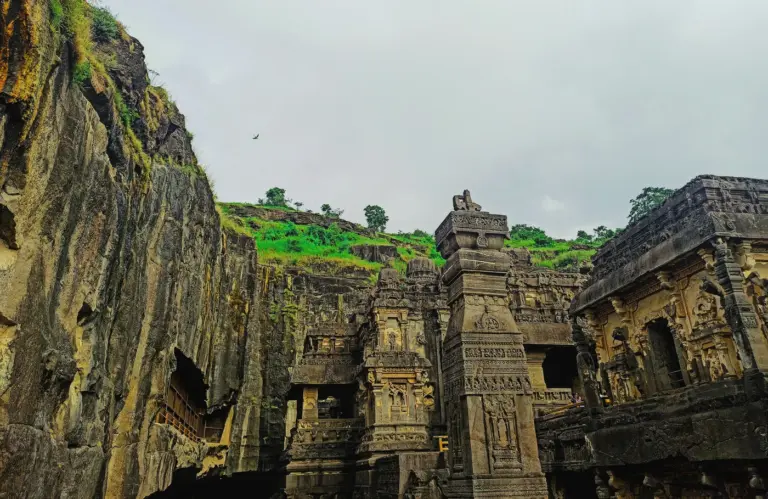
These caves influenced all later rock-cut architecture in India, from Ajanta and Ellora to the cave temples of the Deccan.
Mauryan Sculpture: Yaksha-Yakshi Tradition
Mauryan sculpture falls into two streams: court-sponsored works (polished, refined, formal) and folk art (terracotta, less polished, depicting popular deities).
The Didarganj Yakshi is the finest example of Mauryan sculpture. Found near Patna (ancient Pataliputra), this life-sized female figure (approximately 1.6 metres) holds a chauri (fly-whisk) and stands in a graceful tribhanga (three-bend) pose. The surface has the unmistakable Mauryan polish. Some scholars date it to the Mauryan period; others place it in the 2nd century BCE (post-Mauryan). Regardless, it demonstrates the highest level of stone-carving skill in early India.
Other important Yaksha-Yakshi figures:
- Parkham Yaksha (Mathura) — massive male figure, over 2.5 metres tall, heavy and frontal in posture
- Patna Yaksha — found in Patliputra, similar Mauryan polish
- Besnagar Yakshi — another female figure from Madhya Pradesh
The animal capitals on Ashokan pillars also qualify as sculpture. The Sarnath lions, Rampurva bull, and Dhauli elephant are carved with anatomical accuracy and a naturalism that suggests trained sculptors of high skill.
Court Art vs Folk Art
This distinction is central to understanding Mauryan art and appears regularly in UPSC Mains (GS-1 and Art & Culture optional).
| Parameter | Court Art | Folk Art |
|---|---|---|
| Patron | Emperor/State | Local communities, merchants |
| Material | Polished Chunar sandstone | Terracotta, wood, unpolished stone |
| Finish | Mauryan polish (lustrous) | Rough, unpolished |
| Scale | Monumental (pillars, capitals) | Small-scale figurines |
| Subjects | Lions, bulls, dharma symbols | Yakshas, Yakshis, mother goddesses |
| Purpose | Political/religious propaganda | Popular worship, fertility cults |
| Examples | Lion Capital, Ashokan Pillars | Terracotta figurines from Pataliputra |
| Style | Formal, idealized | Expressive, stylized |
The Persian Influence Debate
Did Mauryan art borrow from the Achaemenid Persian Empire? This question has been asked in UPSC Mains and is a favourite in Art & Culture optionals.
Arguments FOR Persian influence:
- Ashoka's pillars resemble the pillared halls of Persepolis (Iran)
- Both use animal capitals (though Persian capitals are typically double-animal, back-to-back)
- Chandragupta Maurya defeated Seleucus Nicator, and cultural exchange with West Asia is well-documented
- John Marshall and early British archaeologists argued that Persian artisans may have worked at the Mauryan court
Arguments AGAINST (indigenous development):
- Mauryan pillars are monolithic; Persian pillars are assembled from stone blocks
- The lustrous Mauryan polish has no parallel in Persian art
- Animal forms in Mauryan art (especially the Indian lion and bull) differ stylistically from Persian prototypes
- Yaksha-Yakshi tradition is entirely indigenous with no Persian counterpart
- Ananda Coomaraswamy argued that Mauryan art represents an evolution of pre-existing Indian woodworking traditions translated into stone
The current scholarly consensus leans toward a synthesis: some technical knowledge may have come from Persia, but the artistic vision and execution are distinctly Indian. UPSC expects you to present both sides and arrive at a balanced view.
Terracotta Art: The Overlooked Dimension
While pillars and stupas dominate UPSC questions, Mauryan terracotta art provides crucial evidence of everyday life and popular religion. Excavations at Pataliputra (modern Patna), Taxila, and Mathura have yielded thousands of terracotta figurines.
Common subjects include:
- Mother goddess figures — seated or standing female figures with elaborate headdresses, reflecting fertility worship that predates both Hinduism and Buddhism
- Toy carts and animals — indicating sophisticated children's culture and trade-based economy
- Ring wells — terracotta rings used to construct wells, found throughout Mauryan-era urban sites
These terracotta works lack the polish and refinement of court art, but they tell us something court art cannot: what ordinary people believed, how they dressed, and what their daily life looked like. The Mauryan ring well system also demonstrates advanced urban planning, complementing literary evidence from Kautilya‘s Arthashastra about Pataliputra’s infrastructure.
Terracotta figurines from Mauryan sites can be distinguished from later Shunga-period terracottas (2nd-1st century BCE) by their simpler forms and less ornate decoration. Shunga terracottas — especially from Kaushambi and Mathura — show far more detail in jewelry, clothing, and facial features.
Major Mauryan Monuments: Quick Reference
| Monument | Location | Material | Significance |
|---|---|---|---|
| Lion Capital, Sarnath | Uttar Pradesh | Chunar sandstone | India’s national emblem; four lions, dharma chakra |
| Allahabad (Prayagraj) Pillar | Uttar Pradesh | Chunar sandstone | Ashoka + Samudragupta + Jahangir inscriptions |
| Lauriya Nandangarh Pillar | Bihar | Chunar sandstone | Single lion capital, best-preserved Ashokan pillar |
| Sanchi Stupa | Madhya Pradesh | Stone (brick core) | UNESCO site; toranas with Jataka narratives |
| Barabar Caves | Bihar | Rock-cut granite | Oldest rock-cut caves; Ajivika donation |
| Lomas Rishi Cave | Bihar | Rock-cut granite | Horseshoe arch; model for later chaitya halls |
| Didarganj Yakshi | Bihar (Patna) | Chunar sandstone | Finest Mauryan polish sculpture |
| Parkham Yaksha | Uttar Pradesh (Mathura) | Sandstone | Largest surviving Mauryan-era free-standing figure |
| Dhauli Elephant | Odisha | Rock-cut | Earliest known rock-cut sculpture in India |
| Rampurva Bull Capital | Bihar | Chunar sandstone | Now in Rashtrapati Bhavan; anatomically precise bull |
FAQs on Mauryan Art and Architecture
Q1: What is the Mauryan polish, and why is it significant? The Mauryan polish is a mirror-like lustre found on Ashokan pillars and sculptures like the Didarganj Yakshi. The exact technique remains unknown. It has survived over 2,300 years without deterioration, indicating an advanced understanding of stone treatment that was not replicated in later Indian art.
Q2: Why is the Lion Capital at Sarnath important for UPSC? It is India's national emblem (adopted January 26, 1950). UPSC tests its components: four Asiatic lions, four animals on the abacus (elephant, horse, bull, lion), and the 24-spoke dharma chakra that appears on the national flag.
Q3: Were the Barabar Caves built for Buddhists? No. Ashoka's inscriptions specifically dedicate them to Ajivika monks. This is a frequently tested Prelims fact. The Ajivikas were a separate ascetic sect founded by Makkhali Gosala.
Q4: What is the difference between court art and folk art in the Mauryan period? Court art was state-sponsored, monumental, made of polished stone, and served political-religious purposes (pillars, capitals). Folk art was community-driven, small-scale, made of terracotta, and depicted popular deities like Yakshas and Yakshis.
Q5: Did Persian influence shape Mauryan architecture? Partially. Some structural elements (pillared halls, animal capitals) show similarities with Achaemenid Persia. However, the monolithic pillar technique, Mauryan polish, and Yaksha-Yakshi tradition are indigenous. The balanced view is that Mauryas absorbed some Persian ideas but developed a distinct Indian artistic identity.
Q6: What are the main parts of a Buddhist stupa? Anda (dome), harmika (square railing on top), chattra (umbrella), medhi (base terrace), torana (gateway), vedika (railing), and pradakshina patha (circumambulatory path). UPSC Prelims 2019 tested stupa terminology.
Q7: How is Sanchi Stupa connected to multiple dynasties? Built by Ashoka (Maurya), enlarged by the Shungas (2nd century BCE), and decorated with toranas by the Satavahanas (1st century BCE). It represents a continuity of Buddhist patronage across three dynasties.
Internal Links for Further Study
- Temple Architecture in India: Nagara, Dravida & Vesara
- Indian Painting Schools
- Bhakti and Sufi Movements
Tell Google you want more of this.
Add Anantam IAS as a preferred sourceOne tap, and this site shows up more often in your own Top Stories, AI Overviews and AI Mode. Remove it any time.