Basaveshwara, also called Basavanna or Basava, was a twelfth-century Kannada poet and the head of the royal treasury at Kalyana under the Kalachuri king Bijjala, who reigned from 1156 to 1167. Basaveshwara’s short Kannada sayings, the vachanas, addressed to Shiva as Kudalasangamadeva, the “lord of the meeting rivers”, carried an attack on caste, temple ritual and priestly privilege into plain speech. He matters because the Lingayat (Virashaiva) tradition of Karnataka treats him as its central figure, and Karnataka’s politics still argue over what he meant.
Most readers carry a tidy story: Basavanna founded a new religion, built a parliament called the Anubhava Mantapa and led a revolution at Kalyana. Each piece of that story has a softer twin in the sources. Britannica, reading the Kalachuri inscriptions, says he revived an existing Shaiva sect rather than founding one, and the fullest accounts of the Mantapa and the revolt come from texts written centuries later. This note keeps the record and the tradition in separate columns.
Who Was Basaveshwara?
Basaveshwara was a Shaiva devotee who rose to high office in a north Karnataka kingdom and used his position to patronize wandering Shiva devotees, the jangamas. The table gives the core facts; where sources disagree, the row says so.
| Fact | Detail |
|---|---|
| Names | Basava, Basavanna (“elder brother Basava”), Basaveshwara |
| Dates | Disputed: A. K. Ramanujan gives 1106 to 1168; Carl Olson gives 1131 to 1196; India’s 1967 stamp marked his 800th death anniversary |
| Birthplace | Bagewadi (Basavana Bagewadi), Vijayapura district, by tradition |
| Office | Head of the treasury of the Kalachuri king Bijjala (r. 1156 to 1167) at Kalyana, today Basavakalyan in Bidar district |
| Tradition | Virashaiva, also called Lingayat: worship of Shiva alone, with a personal linga worn on the body |
| Works | Vachanas in Kannada, signed with the name Kudalasangamadeva |
| Companions | Allama Prabhu, Akkamahadevi, Channabasavanna and other sharanas (devotees) |
| Earliest life accounts | Harihara’s Kannada Basavarajadevara Ragale (early 13th century); Palkuriki Somanatha’s Telugu Basava Purana (13th century); Bhima Kavi’s Kannada Basava Purana (14th century) |
| Resting place | Kudalasangama, at the meeting of the Krishna and Malaprabha, Bagalkot district |
Basavanna’s Life in Three Phases
The life of Basavanna is known almost entirely through devotional biographies, so every date below is the tradition’s, checked against the one firm anchor: Bijjala’s reign. Britannica dates Bijjala to 1156 to 1167, and many Indian accounts call the same king Bijjala II, counting an earlier namesake. The number differs; the man is the same.
The Student at Kudalasangama
The hagiographies make Basava the son of a Shaiva Brahmin family who refused the sacred thread ceremony and left home; IGNOU’s medieval history course, by contrast, counts him among vachanakaras it describes as non-Brahmins, so his birth caste is itself a point of disagreement. He spent his youth at Kudalasangama, a temple school on the Krishna, where the deity Sangamesvara gave him the name he would sign at the end of every vachana. The early break with ritual is told as a family argument; the Basava Purana stages it as a debate between father and son over whether ritual or devotion leads to liberation.
The Treasurer at Kalyana
Kalyana was the capital of the Kalyani Chalukyas until Bijjala, their Kalachuri feudatory, took the throne in the 1150s. Britannica says it was Basava’s uncle, a minister, who secured him a court appointment, and that he rose to chief of the treasury. He used that office to fund Lingayat guilds and mendicants, and for several years his faction flourished. That is the record’s version of the “minister reformer”: an able official with a sectarian program, not a king.
The phrase to fix for exams is bhakti bhandari, the treasurer of devotion. It captures the double life the sources describe: a man who kept the king’s accounts and spent the surplus on Shiva’s devotees.
The Crisis and the End
Rival factions at court resented his power and the crowd of mendicants under his patronage, and Britannica says their accusations made him flee the kingdom; he died soon after. The Lingayat tradition fills in the cause. It tells of a marriage between the daughter of a Brahmin and the son of a cobbler, both sharanas, which Bijjala punished with death, setting off violence in Kalyana and the scattering of the devotees. That story is the heart of what is now called the Kalyana Kranti, the Kalyana revolution, and its details rest on later texts. What the record does support, as IGNOU’s history course notes, is that the Virashaivas faced persecution after the crisis of Kalyana, attested in both inscriptions and literature, before later Yadava and Hoysala rulers patronized them.
Basava’s death is placed at Kudalasangama, where the Aikya Mantapa marks the spot the tradition calls his union with the divine. Ramanujan’s date of 1168 and the 800th death anniversary stamp India Post issued in 1967 agree with a death soon after Bijjala’s fall; the later date of 1196 comes from a different reckoning and sits awkwardly with that chronology.
What Did Basavanna Teach?
Basavanna taught that a devotee meets Shiva directly, through a linga worn on the body and through honest work, and that birth confers no rank before God. NCERT’s Class 7 history text puts the movement’s core in one line: the Virashaivas argued for the equality of all human beings and against Brahmanical ideas about caste and the treatment of women, and rejected ritual and idol worship.
Five terms carry most of his thought, and each is worth knowing in Kannada:
- Ishtalinga, the “chosen linga”: a small linga in a case, worn on a cord at the neck by men and women alike, in place of the sacred thread. Worship moves from the temple to the body.
- Kayaka, work as worship: every devotee lives by productive labor, and no labor is low. Many sharanas are remembered by their trades, as ferryman, cobbler or washerman.
- Dasoha, sharing the surplus: what work earns beyond need goes to the community of devotees.
- Sthavara and jangama, the standing and the moving. His best-known vachana contrasts the rich, who build temples, with the poor devotee whose legs become pillars and body the shrine, and ends that what stands will fall while what moves will stay.
- Shatsthala, the six stages through which the devotee rises to union with Shiva.
The theology has a learned side. Britannica notes that the Lingayat conception of devotion and their qualified monism show the influence of Ramanuja, the eleventh-to-twelfth-century Vaishnava thinker; later Virashaiva scholars wrote commentaries on the Vedanta Sutras to place the creed within Vedanta. So the movement attacked Brahmin privilege without abandoning Sanskrit philosophy altogether.
Britannica also records how far the social program went. Lingayats rejected the authority of the Vedas, the doctrine of transmigration, child marriage and the ill treatment of widows, which is why reformers of the nineteenth century were later read back into him. The same entry adds the caveat that matters: the early overthrow of caste distinctions “has been modified in modern times”. The community itself came to function much like a caste cluster.
What Are Vachanas and the Anubhava Mantapa?
A vachana, literally “saying”, is a short unmetered Kannada prose-poem, meant to be spoken, that ends with the poet’s chosen name for God. Basavanna’s signature is Kudalasangamadeva; Akkamahadevi’s is Chennamallikarjuna; Allama Prabhu’s is Guheshvara. The form belongs to a whole community of twelfth-century poets, the vachanakaras, and several were women and people of working castes.
The vachanas mattered for two reasons. They put devotion and argument into the spoken Kannada of the street, so no priest was needed to translate, and they gave Kannada one of its earliest bodies of devotional prose. Britannica ranks Basava’s poems in the front rank of Kannada literature.
There’s a caution the textbooks skip. The vachanas circulated orally and in manuscripts for centuries, and the collections that survive were compiled much later, probably no earlier than the fifteenth century. Scholars such as R. Blake Michael warn that sorting authentic verses from later additions needs critical work. The core is old; any single verse may not be.
The Anubhava Mantapa: Record and Tradition
The Anubhava Mantapa, the “hall of experience”, is described as an assembly at Kalyana where sharanas of every caste, men and women, met to discuss spiritual and social questions, with Allama Prabhu presiding. The fullest picture of it comes from the Shunyasampadane, a fifteenth-century compilation that arranges the vachanas as dialogues among the saints.
Read carefully, the evidence supports a community of devotees who gathered, argued and composed at Kalyana. It does not document a building, a constitution or a “first parliament”. Calling the Mantapa an early democratic forum is a modern interpretation, useful in an Ethics answer if it is labeled as one.
How Have Later Movements and States Used Basavanna?
Basavanna’s afterlife is a contest over who owns him. The Lingayat tradition reveres him as the founder; historians call him a reviver; Karnataka’s governments have made him a state symbol; and the question of whether Lingayats are Hindus has reached the courts.
The milestones, all dated:
- 1967: India Post issued a stamp for his 800th death anniversary.
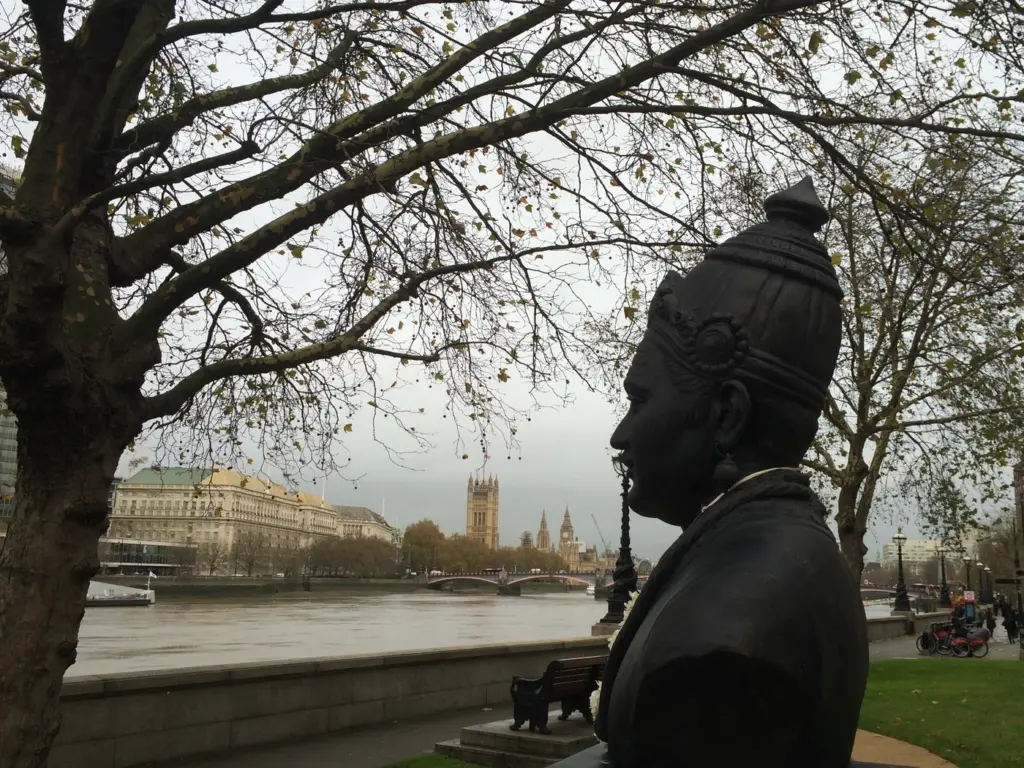
- 2015: a bronze bust of Basaveshwara was installed on the Albert Embankment in London, facing the UK Parliament.
- March 2018: the Karnataka government accepted the Justice Nagamohan Das committee’s recommendation to treat Lingayats as a separate religious minority and sent it to the Centre.
- 13 November 2018: in a letter filed in the Karnataka High Court, the Union government declined, noting that Lingayats had been counted as Hindus since the 1871 Census and that separate status would end Scheduled Caste status for members who claim it.
- January 2021: the state laid the foundation stone of a New Anubhava Mantapa at Basavakalyan.
The dispute has a doctrinal layer too. Some leaders treat “Lingayat” and “Virashaiva” as one community; others argue the Virashaivas are a Vedic-leaning stream and the Lingayats Basava’s anti-Vedic followers. A study note doesn’t need to settle that. It needs to report that the two labels are contested inside the community itself.
Basaveshwara Today
Basaveshwara’s present status is official and political at once. On 18 January 2024 the Karnataka cabinet declared Basavanna the state’s cultural leader, the first such declaration in the state, after Lingayat seers asked for it. The state also marks Basava Jayanti each year, and the site’s current-affairs note on Basavanna and the Lingayat movement covers the ethics angle that the 2024 decision brought back into the news.
The separate-religion question stands where the Centre left it in 2018. Lingayats remain classified within Hinduism for Census and reservation purposes, and demands for recognition resurface around each Census and state election. For an answer, that’s the current legal position: no separate religion status, an active demand and a state government that has adopted Basavanna as its emblem.
How to Study Basaveshwara for Exams
Basaveshwara sits in General Studies Paper I, under Indian culture and the Bhakti movement, and again in Paper IV, where kayaka and dasoha supply ready Ethics illustrations. Kannada literature optional candidates read the vachanas in the original; the Kannada literature optional guide lists the vachana texts on that syllabus.
Mains questions rarely name him but often need him. Mains 2014 GS Paper I asked candidates to comment on this: “Sufis and medieval mystic saints failed to modify either the religious ideas and practices or the outward structure of Hindu/Muslim societies to any appreciable extent.” Basavanna fits both sides: the vachanas broke caste and Sanskrit at once, while the later Lingayat community settled into caste-like divisions. Mains 2022 GS Paper I asked candidates to “Analyse the salience of ‘sect’ in Indian society vis-a-vis caste, region and religion.“, and the Lingayat case, a sect that hardened into a caste-like community and then sought separate religion status, fits that question almost perfectly.
In Prelims, Art and Culture accounts for 94 of the 1,403 questions in the Prelims question bank from 2013 to 2026, and saint-to-region or saint-to-doctrine pairings are the common shape.
The revision facts worth fixing:
- Treasurer of the Kalachuri king Bijjala (r. 1156 to 1167) at Kalyana, now Basavakalyan in Bidar district.
- Vachanas in Kannada, signed Kudalasangamadeva, the lord of the meeting rivers.
- Ishtalinga, kayaka and dasoha: the linga worn on the body, work as worship and sharing the surplus.
- Companions Allama Prabhu and Akkamahadevi; the Shunyasampadane (15th century) presents their dialogues.
- Basava Purana: Palkuriki Somanatha in Telugu, then Bhima Kavi in Kannada.
- Kudalasangama, Bagalkot district, is his resting place.
- Declared Karnataka’s cultural leader on 18 January 2024.
Four confusions cost marks:
- Founder or reviver? Tradition says founder; Britannica, reading Kalachuri inscriptions, says reviver of an existing sect. Write both.
- Anubhava Mantapa as parliament. It is a fifteenth-century textual picture of a twelfth-century community; “first parliament” is modern interpretation.
- Basava and Ramanuja. Both were roughly contemporary, but Ramanuja was a Vaishnava teacher of qualified non-dualism; the Lingayat theology shows his influence without being Vaishnava. Read the note on Ramanujacharya for the contrast.
- Lingayat beliefs. Lingayats bury their dead and reject transmigration; the movement opposed caste hierarchy, so any option saying they championed purity and pollution is wrong.
Place him among the other saints with this table:
| Saint | Region and century | Language | Deity | Signature move |
|---|---|---|---|---|
| Basavanna | Karnataka, 12th | Kannada vachanas | Shiva | Ishtalinga and kayaka against temple ritual |
| Ramanuja | Tamil country, 11th to 12th | Sanskrit | Vishnu | Qualified non-dualism, temple-centered |
| Sant Tukaram | Maharashtra, 17th | Marathi abhangs | Vithoba | Kirtan and the Varkari pilgrimage |
| Kabir | North India, 15th | Hindavi dohas | Formless God | Rejected both Hindu and Muslim orthodoxy |
For the wider frame, read this note with the overview of the Bhakti movement in India, the Sufi comparison in Bhakti and Sufi ethics and the Marathi parallel in Sant Tukaram. For the caste angle, the note on the caste system in India explains how reform movements end up producing new jatis.
Basaveshwara is worth more than his syllabus line because he lets you argue both sides of the Bhakti debate with one name. The vachanas show devotion breaking caste and Sanskrit at once; the Lingayat community’s later history shows how far that break held. A candidate who can say which parts are inscription and which are hagiography is answering the question the examiner is really asking.
Frequently Asked Questions
Who was Basaveshwara?
Basaveshwara, also known as Basavanna or Basava, was a twelfth-century Kannada poet and the head of the royal treasury of the Kalachuri king Bijjala at Kalyana in north Karnataka. He composed vachanas, short Kannada sayings addressed to Shiva, that attacked caste privilege and temple ritual. The Lingayat tradition treats him as its central teacher.
Did Basavanna found the Lingayat religion?
Lingayat oral tradition says he did. Britannica notes that Kalachuri inscriptions suggest he revived and spread an existing Shaiva sect rather than founding a new one, so the safest answer is that he was its most influential leader. Either way, the community took its shape around his teaching and his patronage.
What are kayaka and dasoha?
Kayaka means work as worship: every devotee should live by honest productive labor, and no trade is low. Dasoha means sharing what work earns beyond one’s needs with the community of devotees. Together they form the economic ethic most often quoted from his vachanas.
What is the Anubhava Mantapa?
The Anubhava Mantapa, the ‘hall of experience’, is described as an assembly at Kalyana where devotees of every caste and both sexes discussed spiritual and social questions, with Allama Prabhu presiding. Its fullest description comes from the Shunyasampadane, a fifteenth-century compilation. Calling it India’s first parliament is a modern interpretation rather than a documented fact.
What is the Ishtalinga?
The Ishtalinga is a small linga, kept in a case and worn on a cord around the neck by Lingayat men and women. It replaces the sacred thread and moves worship from the temple to the devotee’s own body. Basavanna encouraged it for everyone regardless of birth.
When did Basaveshwara live?
He lived in the twelfth century, but exact dates are disputed. A. K. Ramanujan gives 1106 to 1168, while Carl Olson gives 1131 to 1196. The firm anchor is his service under Bijjala, who reigned from 1156 to 1167.
Are Lingayats a separate religion?
Not in law. Karnataka recommended separate religious minority status in March 2018, but the Union government declined in November 2018, noting that Lingayats had been counted as Hindus since the 1871 Census. The demand continues to come up around Census and election debates.
Why was Basavanna declared Karnataka’s cultural leader?
The Karnataka cabinet declared Basavanna the state’s cultural leader on 18 January 2024 after a delegation of Lingayat seers requested it. It was the first such declaration in the state. The move honored his reform legacy and also carried obvious political weight, since Lingayats are a large and influential community.
Practice Questions
Prelims
1. Consider the following statements about Basaveshwara: 1. He served as head of the treasury of the Kalachuri king Bijjala at Kalyana. 2. His vachanas were composed in Telugu. 3. The Basava Purana in Kannada was written by Bhima Kavi. Which of the statements given above is/are correct?
- (a) 1 and 2 only
- (b) 1 and 3 only
- (c) 2 and 3 only
- (d) 1, 2 and 3
Answer: (b) The vachanas are in Kannada; Palkuriki Somanatha wrote the earlier Telugu Basava Purana, which Bhima Kavi recast in Kannada.
2. Consider the following statements about the Lingayats: 1. They wear a small linga on the body in place of the sacred thread. 2. They accept the doctrine of transmigration of souls. 3. They bury their dead. Which of the statements given above is/are correct?
- (a) 1 and 2 only
- (b) 2 and 3 only
- (c) 1 and 3 only
- (d) 1, 2 and 3
Answer: (c) Britannica records that Lingayats reject transmigration; burial and the worn linga are both standard Lingayat practice.
3. The term ‘kayaka’ in the teaching of Basavanna refers to:
- (a) the six stages of spiritual ascent
- (b) work as worship through honest labor
- (c) the sharing of surplus wealth
- (d) the wandering Shiva devotees
Answer: (b) Kayaka is work as worship; shatsthala is the six stages, dasoha the sharing of surplus and jangamas the wandering devotees.
4. Which of the following pairs of a vachanakara and the name used as a signature is correctly matched?
- (a) Basavanna: Chennamallikarjuna
- (b) Akkamahadevi: Kudalasangamadeva
- (c) Allama Prabhu: Guheshvara
- (d) Basavanna: Vitthala
Answer: (c) Basavanna signed Kudalasangamadeva and Akkamahadevi signed Chennamallikarjuna; Vitthala belongs to the Haridasa and Varkari poets.
5. Kudalasangama, regarded as the resting place of Basaveshwara, stands at the meeting of which rivers?
- (a) Tungabhadra and Krishna
- (b) Krishna and Malaprabha
- (c) Ghataprabha and Bhima
- (d) Kaveri and Hemavati
Answer: (b) Kudalasangama in Bagalkot district lies where the Malaprabha joins the Krishna.
Mains
- Evaluate the nature of the Bhakti literature and its contribution to Indian culture. (10 marks, 150 words) Previous year: Mains 2021, GS Paper I.
- “Basavanna was less the founder of a new religion than the most effective reviver of an old one.” Examine this view in the light of the evidence for his life and teaching. (15 marks, 250 words)
- Discuss how the vachana movement used a regional language to challenge caste and ritual in twelfth-century Karnataka. How far did its social program survive in the later Lingayat community? (15 marks, 250 words)
- Explain the ideas of kayaka and dasoha. How can they inform the ethics of public service today? (10 marks, 150 words)
- Examine the debate over the recognition of Lingayats as a separate religion. What does it reveal about the relationship between sect, caste and religion in India? (15 marks, 250 words)
Tell Google you want more of this.
Add Anantam IAS as a preferred sourceOne tap, and this site shows up more often in your own Top Stories, AI Overviews and AI Mode. Remove it any time.