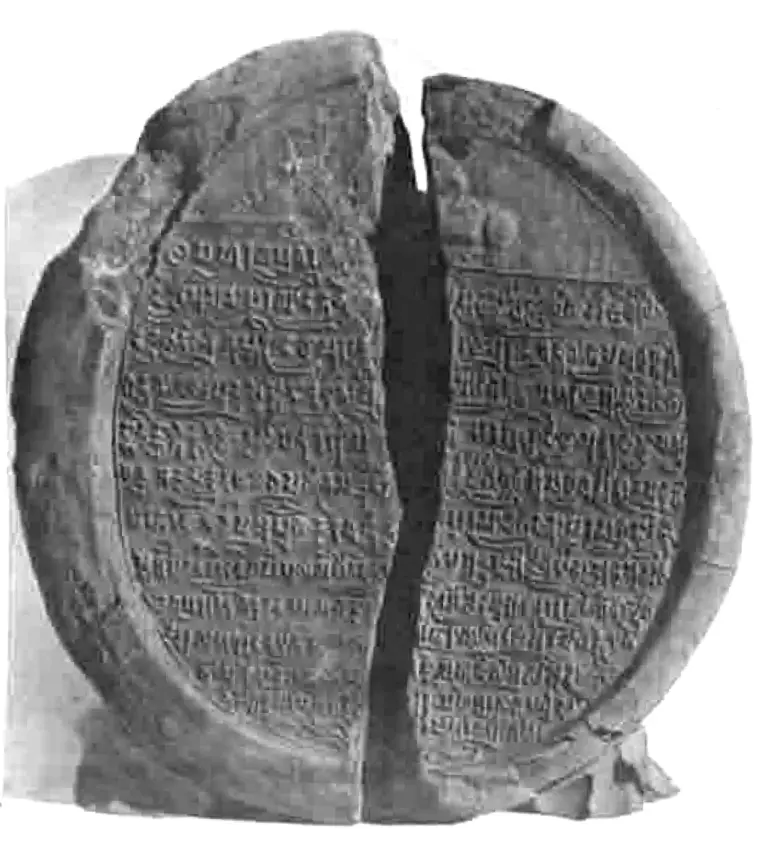
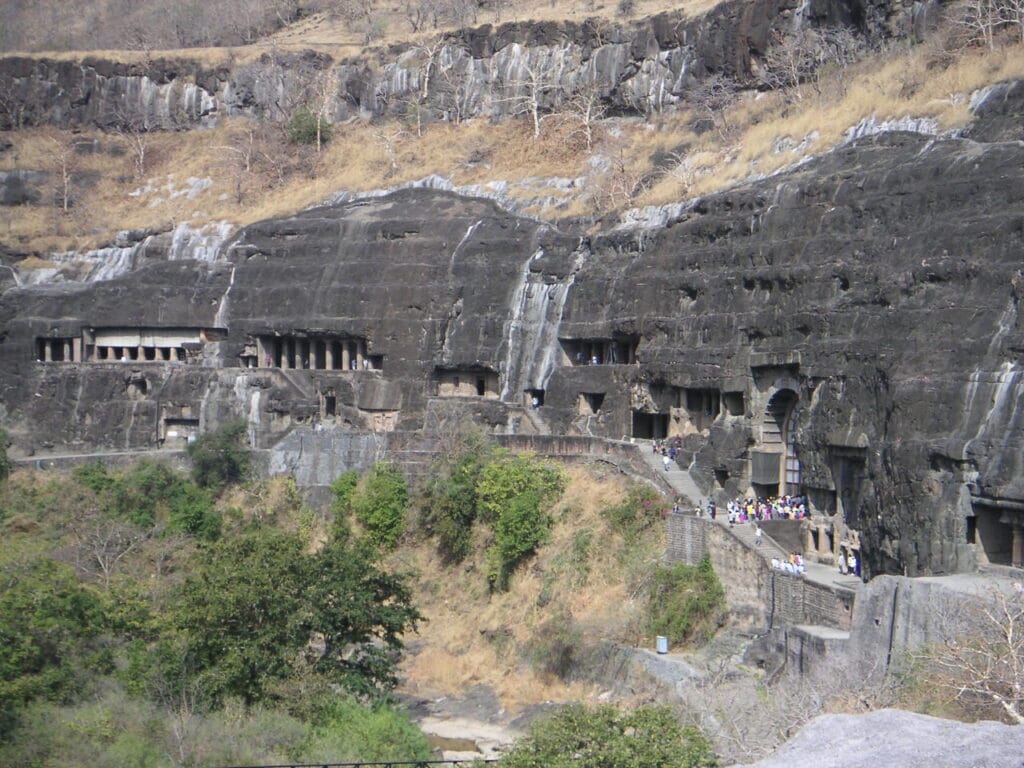
Mural painting is the art of painting on walls, ceilings, or other large permanent surfaces — distinct from smaller portable paintings (miniatures, canvases). India has one of the world's oldest and most continuous mural painting traditions, spanning from prehistoric rock paintings (30,000+ years ago) through Ajanta and Ellora Caves (2nd century BCE – 7th century CE), the Kerala Mural tradition (9th-18th centuries), and into the modern era.
For UPSC, mural painting is an important Art & Culture (GS1) topic — covering artistic techniques, regional styles, religious themes, and the evolution of Indian painting traditions.
What Is a Mural?
Definition
A mural is a large painting created directly on:
- Walls (wall painting/mural)
- Ceilings (ceiling painting)
- Rock surfaces (rock painting)
- Cave walls (cave painting)
- Large permanent surfaces
The word "mural" comes from Latin "murus" meaning "wall."
Techniques
Indian mural techniques have evolved over millennia:
| Technique | Description |
|---|---|
| Fresco | Painting on wet plaster; colours merge with plaster chemically |
| Tempera | Colours mixed with egg yolk binding |
| Chittrasutra (Indian) | Traditional Indian technique described in ancient texts |
| Seco | Painting on dry plaster |
| Encaustic | Wax-based colours |
| Dry pigment | Direct application without binder |
Prehistoric Rock Paintings
The earliest Indian mural tradition begins with prehistoric rock paintings in caves and rock shelters.
Bhimbetka (Madhya Pradesh)
- Age: 30,000+ years ago (Upper Paleolithic)
- Location: Raisen district, MP
- UNESCO World Heritage Site (since 2003)
- 600+ rock shelters with paintings
- Subjects: Hunting scenes, animals, dance, rituals
- Colours: Natural pigments — red ochre, white lime, black (charcoal)
Other Prehistoric Sites
- Edakkal Caves (Kerala) — Neolithic to early Historic
- Jogimara Caves (Chhattisgarh) — 3rd century BCE onwards
- Lakhudiyar Caves (Uttarakhand) — prehistoric to medieval
- Panchmarhi Rock Shelters (MP)
Ancient/Classical Murals
Ajanta Caves (Maharashtra)
The Ajanta Caves (2nd century BCE – 6th century CE) represent the peak of Indian mural art:
Details:
- Location: Aurangabad district, Maharashtra
- Total: 30 caves (Buddhist)
- Chronology: Two phases — Satavahana (2nd c. BCE – 1st c. CE) and Vakataka/Gupta (5th-6th c. CE)
- UNESCO World Heritage Site (since 1983)
Subjects:
- Jataka tales (Buddha's previous lives)
- Life of Buddha (Bodhisattva)
- Daily life scenes — courts, palaces, monasteries
- Religious iconography
- Hunters, elephants, animals
Famous murals:
- Padmapani (Cave 1) — bodhisattva with lotus
- Vajrapani (Cave 1) — bodhisattva with thunderbolt
- Persian Ambassador (Cave 1) — attributed to Persian embassy
- Chaddanta Jataka (Cave 10) — Buddha as elephant king
- Black Princess (various caves)
Technique:
- Tempera on lime plaster
- Vegetable and mineral colours — indigo, lapis lazuli, lampblack
- Precise line drawing followed by colour
- Remarkable preservation due to cave shelter
Ellora Caves (Maharashtra)
Not primarily mural-rich (more famous for sculpture), but some murals exist:
- Located near Ajanta
- 6th-10th century CE
- Syncretic — Buddhist, Hindu, and Jain caves
- Kailash Temple (Cave 16) — has some mural remnants
- UNESCO World Heritage Site
Bagh Caves (Madhya Pradesh)
- 5th-7th century CE
- 9 Buddhist caves with murals
- Contemporary with Ajanta's later phase
- Subjects: Buddhist themes, similar to Ajanta
- Condition: Less preserved than Ajanta
Badami Caves (Karnataka)
- 6th-7th century CE (Early Chalukya)
- Cave 4 (Jain) and Cave 3 (Vaishnava) have significant murals
- Natraja figure and other motifs
- Vivid colours in parts preserved
Sittanavasal (Tamil Nadu)
- Jain murals of the Pandya/Pallava period (7th-9th century CE)
- Samavasarana (Jain celestial assembly) depicted
- Beautiful cave temple painted entirely
- Remnants visible today
Kanheri Caves (Maharashtra)
- Buddhist caves with minor murals
- 2nd century BCE – 11th century CE
Medieval Murals
Kerala Mural Painting
Kerala has a distinct, continuous mural tradition from the 9th century to the 18th century:
Characteristics:
- Temple murals — traditional Hindu themes
- Rich colours — red, yellow, green, black, white
- Flat figures with sharp outlines
- Specific iconography — Vishnu, Shiva, Devi, Krishna
- Detailed ornamentation
Important sites:
- Pundareekapuram Temple (Kottayam)
- Ettumanur Mahadevar Temple (Kottayam) — 16th century
- Padmanabhapuram Palace (Kanyakumari)
- Mattancherry Palace (Kochi) — 16th-century Dutch Palace with Kerala murals
- Vadakkunnathan Temple (Thrissur)
- Guruvayoor Temple (Thrissur)
Technique:
- Natural pigments from minerals and plants
- Layered application — 5-6 coats of pigment
- Specific traditional recipes
- Still practiced in Kerala
Lepakshi Murals (Andhra Pradesh)
- Vijayanagara era (16th century)
- Virabhadra Temple, Lepakshi
- Ceiling murals — major feature
- Hindu mythological themes
- Rich red and ochre colour palette
Chola Period Murals
Tanjavur (Tamil Nadu) period:
- Brihadeshwara Temple (built 1010 CE) — has Chola murals below later Nayak paintings
- Nayak era paintings (17th century) on top of Chola work
- Hindu themes
Mughal Miniature Tradition
The Mughal era (16th-18th century) emphasised miniature paintings rather than large murals. However:
- Palace interiors had some murals
- Mughal-style wall paintings in some forts
- Transition from mural to miniature as dominant form
Colonial Period
Company School and Colonial Murals
- 17th-19th century
- British influence on Indian painting
- Bengal School emerged as a nationalist response
Modern Indian Mural Tradition
Bengal School (Early 20th Century)
- Abanindranath Tagore and Nandalal Bose — leaders
- Ajanta-inspired — revived classical Indian mural tradition
- Nationalist movement — Indian art as political statement
- Modernist Indian painting
Post-Independence Era
Nandalal Bose and others:
- Decorative murals in public buildings
- Parliament House (New Delhi) — murals by Nandalal Bose
- Lucknow Imambara restoration projects
- Mural tradition in public art
Contemporary Movement
- Public art movements in Indian cities
- Delhi Murals — various streets
- Mumbai Street Art
- Bangalore Graffiti Scene
- Delhi Street Art Festival
- Mumbai Makeba Festival
Techniques in Detail
Ajanta Technique (Most Studied)
Preparation:
- Rock surface preparation — smoothing
- First plaster layer — rough (clay + sand + plant fibres)
- Second plaster layer — smooth (lime + fine sand)
- White surface coating — lime wash
Drawing:
- Red outline in sinopia (iron oxide)
- Dark outline (refinement)
- Colour application in stages
- Final detailing
Kerala Technique
Colours:
- Red — from red ochre, cinnabar
- Yellow — from yellow ochre
- Green — from malachite, indigo + yellow
- Black — from lamp black
- White — from zinc, shell
- Binding — neem gum, gum arabic
Process:
- Wall preparation with thick plaster
- Base coat of white
- Outlining with carbon
- Layer painting — 3-5 layers
- Outlining again for emphasis
- Varnish with tree resin for protection
Themes in Indian Murals
Traditional Indian murals cover diverse themes:
Religious Themes
- Hindu mythology: Ramayana, Mahabharata, Puranic stories
- Buddhist: Jataka tales, Buddha's life, Bodhisattvas
- Jain: Tirthankaras, Jain cosmology
- Divine consorts: Shiva-Parvati, Vishnu-Lakshmi
Secular Themes
- Court scenes — royal life, feasts, music
- Daily life — markets, hunting, dance
- Landscape — nature, animals
- Portrait studies — kings, queens, nobles
Abstract
- Geometric patterns — yantras, mandalas
- Tantric imagery
- Cosmic diagrams
Preservation Challenges
Environmental Threats
- Moisture — water damage
- Sunlight — fading
- Temperature fluctuations — cracking
- Air pollution — chemical deterioration
- Biological — insects, fungi
- Natural disasters — earthquakes (cracking)
Human Threats
- Tourist damage — touching, flash photography
- Vandalism
- Improper restoration
- Urban development near sites
- Neglect of lesser-known sites
Conservation Efforts
- ASI (Archaeological Survey of India)
- Regional archaeology departments
- UNESCO — for World Heritage sites
- Indian National Trust for Art and Cultural Heritage (INTACH)
- International collaborations — e.g., Japan-India conservation at Ajanta
UPSC Relevance
GS1 (Art & Culture): Indian painting traditions, Buddhist/Hindu/Jain art, regional styles, UNESCO Heritage.
GS3 (Environment): Heritage conservation, traditional techniques.
Key Prelims facts:
- Earliest murals: Prehistoric rock paintings (Bhimbetka, MP) — 30,000+ years old
- Bhimbetka: UNESCO World Heritage Site (2003)
- Ajanta Caves: 30 Buddhist caves; 2nd BCE – 6th CE; UNESCO 1983
- Ajanta famous mural: Padmapani (Cave 1)
- Ellora Caves: 6th-10th century CE; Buddhist, Hindu, Jain
- Bagh Caves (MP): 5th-7th century CE
- Sittanavasal (Tamil Nadu): Jain murals; 7th-9th century CE
- Lepakshi: 16th-century Vijayanagara murals
- Kerala Mural tradition: 9th-18th century
- Major Kerala sites: Ettumanur, Padmanabhapuram, Mattancherry
- Parliament murals: Painted by Nandalal Bose
- Ajanta technique: Tempera on lime plaster
- Kerala technique: Multi-layer natural pigments
- Mughal style: Emphasised miniature painting, less wall murals
- Conservation: ASI, UNESCO, INTACH
Tell Google you want more of this.
Add Anantam IAS as a preferred sourceOne tap, and this site shows up more often in your own Top Stories, AI Overviews and AI Mode. Remove it any time.