
India occupies a unique position in the global nuclear order. It is a declared nuclear weapons state but has never signed the NPT or the CTBT. It maintains a policy of No First Use and credible minimum deterrence while simultaneously pursuing membership in the Nuclear Suppliers Group. Understanding these apparent contradictions and India's reasoning is essential for UPSC.
This topic cuts across International Relations (GS-II), Science & Technology (GS-III), and Ethics (nuclear weapons as a moral question). UPSC has tested it repeatedly in both Prelims and Mains.
The Nuclear Non-Proliferation Treaty (NPT)
Structure and Pillars
The NPT was opened for signature in 1968 and entered into force in 1970. It rests on three pillars:
Pillar 1: Non-Proliferation. Non-nuclear weapon states (NNWS) commit to not acquiring nuclear weapons. They accept IAEA safeguards on all nuclear material and facilities (comprehensive safeguards agreement).
Pillar 2: Disarmament. Nuclear weapon states (NWS) commit, under Article VI, to pursue negotiations in good faith toward nuclear disarmament. This pillar has been the most contentious because the five recognized NWS have not fulfilled this obligation in over five decades.
Pillar 3: Peaceful Use. All parties have the right to develop nuclear energy for peaceful purposes, with appropriate safeguards. NWS are expected to facilitate technology transfer for peaceful nuclear energy.
Membership and Non-Signatories
The NPT has 191 state parties, making it one of the most widely adhered-to treaties in history. Four UN member states have never signed:
- India
- Pakistan
- Israel (neither confirms nor denies possessing nuclear weapons)
- South Sudan (newest UN member, has not acceded)
North Korea signed but withdrew in 2003.
Why India Refuses to Sign the NPT
India's objection is principled and consistent: the NPT is inherently discriminatory.
The treaty recognizes only states that tested nuclear weapons before January 1, 1967 as "nuclear weapon states": the United States, Russia (then USSR), United Kingdom, France, and China. Every other state is classified as a "non-nuclear weapon state" regardless of its actual capabilities.
India's specific objections:
- Frozen hierarchy: The NPT creates a permanent two-tier system. States that acquired weapons before an arbitrary date retain them permanently, while all others are prohibited. India tested in 1974 and 1998 but cannot be recognized as a NWS under the NPT framework.
- No disarmament timeline: Article VI requires NWS to pursue disarmament, but the treaty contains no timeline, no benchmarks, and no enforcement mechanism. Over 50 years later, the five NPT NWS collectively maintain approximately 12,500 nuclear warheads.
- Obligations fall disproportionately on NNWS: Non-nuclear states accept comprehensive safeguards and give up the nuclear weapons option. Nuclear states accept no comparable constraint. India views this as a fundamentally unfair bargain.
- India's security environment: India's nuclear program responded to specific security threats from China (which tested in 1964) and Pakistan. Signing the NPT as a NNWS would require India to dismantle its weapons without any guarantee that its neighbors would do the same.
Common student mistake: Saying India opposes nuclear non-proliferation. India's objection is to the NPT's discriminatory structure, not to the principle of non-proliferation. India has a strong non-proliferation record, has never exported nuclear weapons technology, and supports a time-bound, universal, non-discriminatory nuclear disarmament framework.
India's Nuclear Tests
1974: Smiling Buddha. India's first nuclear test on May 18, 1974 at Pokhran, Rajasthan. India described it as a "peaceful nuclear explosion" (PNE). This test used plutonium from the CIRUS reactor (supplied by Canada for peaceful purposes), which led to the creation of the Nuclear Suppliers Group in 1975 to control nuclear technology exports.
1998: Pokhran-II (Operation Shakti). India conducted 5 nuclear tests on May 11 and 13, 1998 under PM Atal Bihari Vajpayee. These included a thermonuclear (hydrogen bomb) device and sub-kiloton tests. India declared itself a nuclear weapons state.
Pakistan responded with 6 tests on May 28 and 30, 1998. Both countries faced international sanctions, which were gradually lifted.
The Comprehensive Nuclear-Test-Ban Treaty (CTBT)
What CTBT Does
The CTBT (1996) bans all nuclear explosions, whether for military or civilian purposes. It established the Comprehensive Nuclear-Test-Ban Treaty Organization (CTBTO) and an International Monitoring System (IMS) with 337 monitoring facilities worldwide (seismic, hydroacoustic, infrasound, radionuclide).
Signature and Ratification Status
- 187 signatories, 178 ratifications
- NOT in force because it requires ratification by all 44 Annex 2 states (countries with nuclear technology)
- Signed but not ratified: United States, China, Egypt, Iran, Israel
- Not signed: India, Pakistan, North Korea
Why India Has Not Signed
India's objections mirror its NPT stance:
- CTBT without disarmament is discriminatory. A test ban freezes the technological advantage of states that have already conducted extensive testing programs. The US conducted 1,032 tests, Russia 715, France 210, UK 45, and China 45 before the CTBT. India conducted 6 total. A test ban locks in this asymmetry.
- No disarmament linkage. India demanded that the CTBT be linked to a time-bound framework for universal nuclear disarmament. This was rejected. Without a disarmament commitment, the CTBT merely prevents new states from developing weapons while allowing existing arsenals to be maintained and modernized through sub-critical and computer-simulated testing.
- Entry into force clause. The CTBT's Article XIV requires all 44 Annex 2 states to ratify for the treaty to enter force. India objected to being included in this list without its consent, arguing this was coercive.
The Nuclear Suppliers Group (NSG)
The NSG is a 48-member group that controls exports of nuclear and nuclear-related materials, equipment, and technology. It was established in 1975 in direct response to India's 1974 test.
India's NSG Membership Bid
India has sought NSG membership since 2008, following the India-US Nuclear Deal. The case for India's admission:
- India has a clean non-proliferation record (no technology transfers to other states)
- India has separated civilian and military nuclear facilities
- India has an Additional Protocol with the IAEA for its civilian facilities
- India received a unique NSG waiver in 2008 for civilian nuclear trade
China blocks India's entry, insisting that NPT membership must be a prerequisite for NSG membership. China simultaneously supports Pakistan's bid, despite Pakistan's history of nuclear proliferation (the A.Q. Khan network transferred centrifuge technology to Libya, Iran, and North Korea).
Common student mistake: Treating the NSG as a treaty. It is a voluntary export control group, not a legally binding treaty. Its guidelines are politically binding. India's waiver in 2008 was unprecedented and came through intensive US-led diplomacy.
The India-US Nuclear Deal (2005/2008)
The 123 Agreement between India and the US transformed India's global nuclear status.
Key provisions:
- India separated its civilian and military nuclear facilities (14 civilian reactors under IAEA safeguards, military facilities excluded)
- India committed to a voluntary moratorium on nuclear testing
- India received an NSG waiver allowing civilian nuclear trade with NSG members
- India gained access to nuclear fuel, reactors, and technology from multiple countries (US, France, Russia, Australia)
- India signed an Additional Protocol with the IAEA for its civilian facilities
This deal effectively brought India into the global nuclear mainstream without requiring it to sign the NPT. It was a pragmatic recognition that India's nuclear status was a reality that could not be reversed.
India's Nuclear Doctrine
India's nuclear doctrine, first articulated in 1999 (draft) and operationalized in 2003 (Cabinet Committee on Security review), has distinct features:
No First Use (NFU): India will not use nuclear weapons first against any state. Nuclear weapons will only be used in retaliation against a nuclear attack on Indian territory or Indian forces anywhere.
Credible Minimum Deterrence: India maintains the minimum nuclear arsenal necessary to inflict unacceptable damage on an aggressor in a second strike. India does not pursue nuclear parity with China or any other state.
Massive Retaliation: If India is attacked with nuclear weapons, its response will be "massive" and designed to inflict "unacceptable damage."
No use against non-nuclear states: India will not use nuclear weapons against states that do not possess them (negative security assurance).
Exception: India reserves the right to use nuclear weapons in retaliation for a chemical or biological weapons attack (added in the 2003 revision).
Nuclear Command Authority
India's nuclear weapons are under civilian control through the Nuclear Command Authority (NCA):
- Political Council (chaired by the Prime Minister): the sole body authorized to order a nuclear strike
- Executive Council (chaired by the National Security Advisor): provides inputs and executes directives
India's Nuclear Triad
India maintains a nuclear triad for survivable second-strike capability:
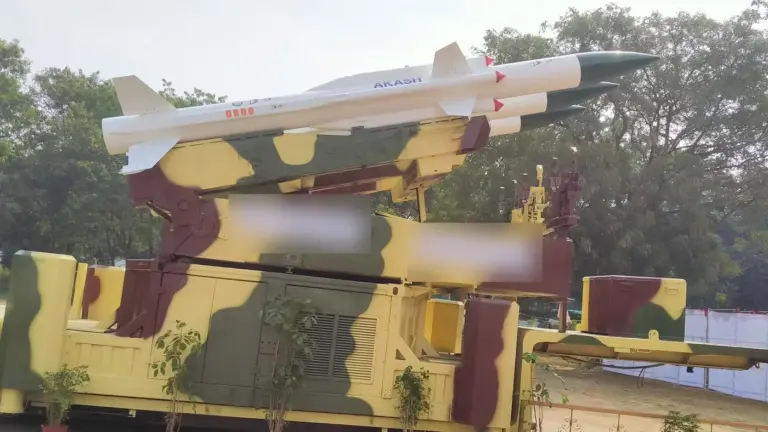
- Land-based: Agni missile series (Agni-I through Agni-V). Agni-V is an intercontinental ballistic missile with a range of 5,000+ km, capable of reaching all of China
- Sea-based: INS Arihant class nuclear-powered ballistic missile submarines (SSBNs) carrying K-15 Sagarika (750 km) and K-4 (3,500 km) missiles. The sea-based leg is the most survivable component
- Air-based: Nuclear-capable aircraft (Su-30MKI, Rafale, Mirage 2000)
NPT vs CTBT vs NSG: Comparison
| Feature | NPT (1968/1970) | CTBT (1996) | NSG (1975) |
|---|---|---|---|
| Type | Treaty (legally binding) | Treaty (not yet in force) | Voluntary export control group |
| Members/Parties | 191 state parties | 187 signatories, 178 ratified | 48 member states |
| Purpose | Prevent spread, promote disarmament and peaceful use | Ban all nuclear explosions | Control nuclear technology exports |
| India’s status | Non-signatory | Non-signatory | Non-member, has NSG waiver (2008) |
| India’s objection | Discriminatory two-tier system, no disarmament timeline | Freezes testing asymmetry, no disarmament linkage | China blocks entry, demands NPT as prerequisite |
| Key challenge | NWS have not disarmed per Article VI | Cannot enter force without Annex 2 ratification | Consensus-based, one member can block |
Treaty on the Prohibition of Nuclear Weapons (TPNW)
The TPNW (2017), also known as the Nuclear Ban Treaty, was adopted by 122 UN member states. It comprehensively bans nuclear weapons: development, testing, production, acquisition, possession, stockpiling, use, and threat of use.
None of the nine nuclear-armed states (US, Russia, UK, France, China, India, Pakistan, Israel, North Korea) have signed. India views the TPNW as well-intentioned but impractical without the participation of nuclear weapon states and without addressing India's security concerns.
Current Global Nuclear Landscape
The nuclear disarmament agenda faces severe headwinds:
- US-Russia arms control collapse: The INF Treaty (1987) was terminated in 2019. New START (2010) was extended to 2026 but its future is uncertain
- China's nuclear expansion: China is estimated to be expanding its arsenal from approximately 350 to potentially 1,000+ warheads by 2030
- North Korea: continues to develop ICBMs and warheads outside any treaty framework
- Iran: JCPOA (2015) collapsed after US withdrawal in 2018, Iran's enrichment has reached 60%+
India's position remains consistent: it supports universal, non-discriminatory, verifiable nuclear disarmament but will not accept treaties that freeze the existing discriminatory order.
For the broader context of India's foreign policy positioning, see our analysis of the Cold War and its legacy on non-alignment. India's nuclear relationship with Russia is discussed in India-Russia Relations.
Common student mistake: Stating that India opposes nuclear disarmament. India is one of the strongest advocates for complete nuclear disarmament. It proposed the Rajiv Gandhi Action Plan (1988) for time-bound, universal nuclear disarmament. India objects to selective disarmament treaties that perpetuate inequality, not to disarmament itself.
Watch on YouTube
Related video from the Anantam IAS YouTube channel.
The New Nuclear Arms Race

Tell Google you want more of this.
Add Anantam IAS as a preferred sourceOne tap, and this site shows up more often in your own Top Stories, AI Overviews and AI Mode. Remove it any time.