Nuclear fusion powers the Sun. Replicating it on Earth would deliver almost limitless, clean, intrinsically safe energy — and end the climate crisis. After decades of slow progress, fusion is now delivering record energy yields at facilities like JET in the UK and the National Ignition Facility in the US. India is a full partner in ITER, the world's largest fusion experiment. For UPSC GS Paper III, fusion links energy security, climate action and frontier science.
What Is Nuclear Fusion?
Nuclear fusion is a nuclear reaction in which small nuclei combine to form a larger nucleus, releasing enormous energy. It is the opposite of fission (splitting heavy nuclei). Fusion powers the Sun through proton-proton chains and the CNO cycle. On Earth, the most accessible reaction is between deuterium and tritium, two heavy isotopes of hydrogen.
The Deuterium-Tritium Reaction
D + T -> He-4 + neutron + 17.6 MeV
The fusion of deuterium and tritium releases a helium nucleus and a high-energy neutron, carrying most of the energy as kinetic energy. The helium is inert; the neutron's energy is captured as heat.
Plasma: The Fourth State of Matter
Fusion occurs in the plasma state — a hot, charged fluid of free ions and electrons. To fuse, nuclei must overcome electrostatic repulsion, requiring temperatures of roughly 100 million degrees Celsius — ten times hotter than the Sun's core, because terrestrial plasma pressures are lower.
Confining the Plasma: Tokamaks
A tokamak is a doughnut-shaped (toroidal) apparatus that uses strong magnetic fields to confine plasma. Superconducting electromagnets hold the plasma in place as it spins, heats, fuses and releases energy as heat. Laser inertial confinement (as at the National Ignition Facility) compresses fuel pellets to fusion conditions using hundreds of lasers simultaneously.
Significance of Nuclear Fusion
- Enormous energy density — about 10 million times more energy than a chemical reaction per unit mass, and four times more than fission.
- Abundant fuel — deuterium is distilled from seawater; tritium can be bred from lithium.
- Environmentally friendly — the major by-product is inert helium.
- No long-lived radioactive waste — reactor structure does become activated, but at much shorter half-lives than fission products.
- No meltdown risk — if any disturbance occurs, plasma cools within seconds and reactions stop.
- Low proliferation risk — no fissile uranium or plutonium involved; tritium is radioactive but not fissile.
- Economic and social gains — rural electrification, industrial competitiveness, innovation diffusion in superconductors, cryogenics, nano-materials and AI control systems.
- Space exploration enabler — mineral mining, He-3 prospecting, interplanetary propulsion.
Global Milestones
- JET (Joint European Torus) in the UK produced 59 megajoules of sustained fusion energy in December 2021, a world record later broken.
- National Ignition Facility (NIF) at Lawrence Livermore achieved fusion ignition in December 2022 — releasing more energy than was delivered by the lasers to the fuel pellet.
- KSTAR (South Korea) maintained 100 million degrees plasma for 48 seconds in 2024.
- EAST (China) achieved 403 seconds of steady-state high-confinement plasma in 2023.
- ITER assembly progresses at Cadarache, France.
India's Fusion Programme
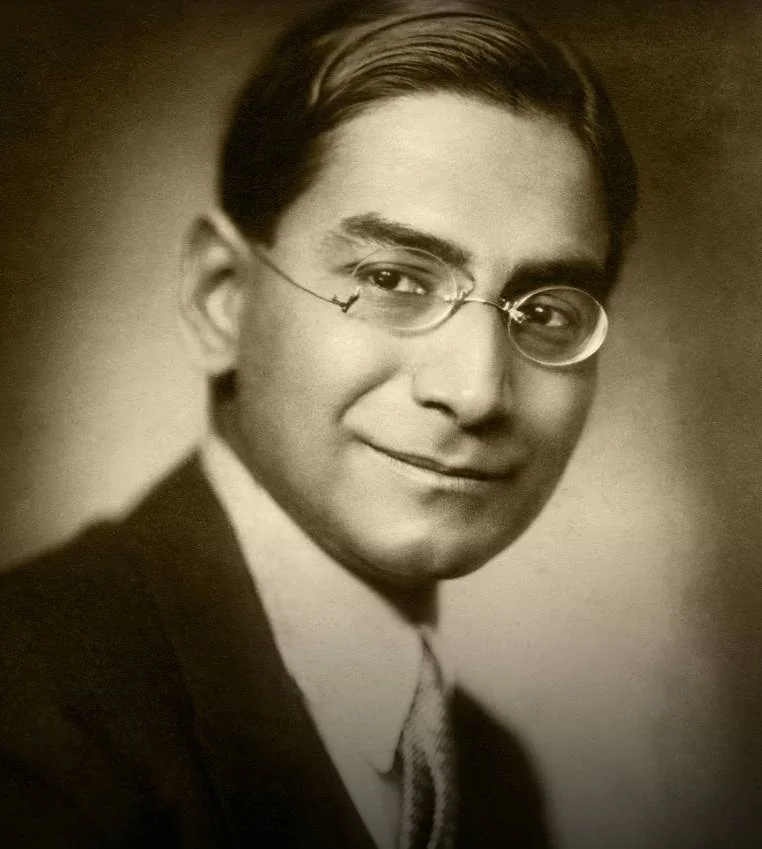
- At the first Atoms for Peace meeting in Geneva in 1955, Homi J. Bhabha famously predicted that thermonuclear fusion would be the energy source of the future.
- The Institute for Plasma Research (IPR) in Gandhinagar and the Saha Institute of Nuclear Physics (SINP) in Kolkata lead Indian fusion research.
- ADITYA Tokamak — India's first indigenous tokamak, operated at IPR. Built in 1989, achieved 0.4 second plasma duration; upgraded to ADITYA-U in 2016.
- SST-1 (Steady-State Tokamak) — IPR's superconducting tokamak to study plasma under steady-state conditions and develop steady-state operation technologies.
ITER Project
- Initiated in 1988, construction began in 2007 in Cadarache, France.
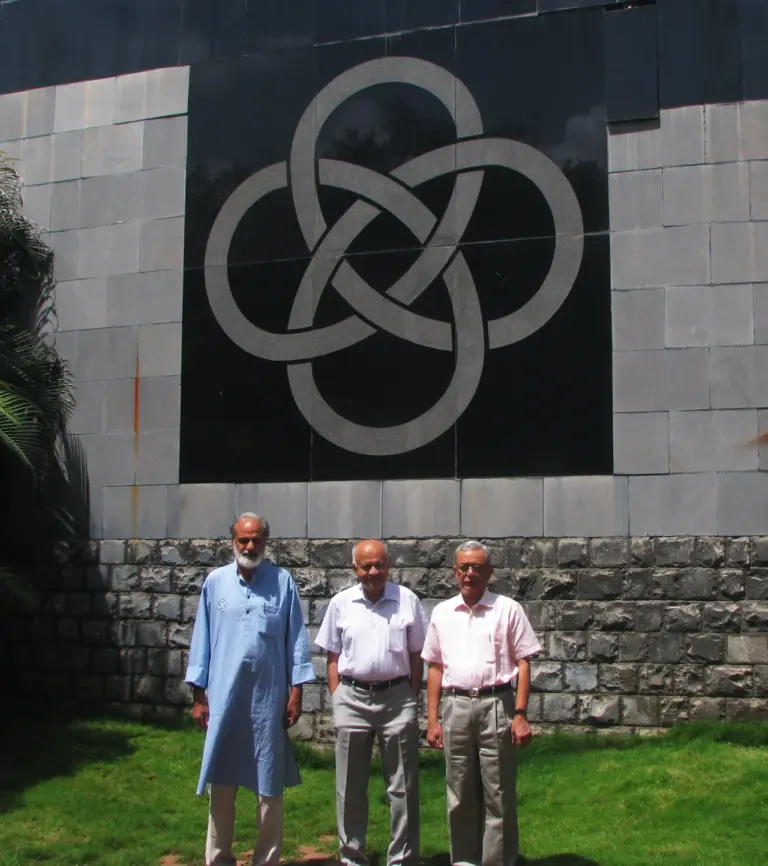
- India became a member in 2005. IPR represents India in ITER.
- Members: China, European Union, India, Japan, South Korea, Russia and the United States.
- Mission: demonstrate feasibility of fusion power as a large-scale, carbon-free source of energy.
- Target: momentarily produce a fusion plasma with thermal power 10 times greater than injected thermal power (Q = 10).
India's ITER Contributions
India is building and delivering:
- Cryostat — the vacuum chamber that encases the tokamak (one of India's largest contributions).
- In-wall shielding.
- Cooling water systems.
- Cryogenic systems.
- Ion-cyclotron and electron-cyclotron RF heating systems.
- Diagnostic neutral beam systems.
- Power supply systems.
Challenges
- Achieving net energy gain beyond ignition at commercial scale.
- Materials science — plasma-facing materials that withstand neutron bombardment and heat flux.
- Tritium breeding and handling — tritium is radioactive and scarce; sustainable fusion must breed its own.
- Cryogenic and superconducting magnet technology at scale.
- Cost and timeline — ITER's timeline has slipped repeatedly; first plasma now targeted after 2033.
- Workforce — a global shortage of fusion engineers and plasma physicists.
Ethical and Policy Concerns
- Equitable access — who benefits from fusion energy first?
- Technology transfer risks if commercial fusion becomes a monopoly.
- Dual-use concerns with high-energy laser and magnetic technologies.
- Opportunity cost of decades-long public investment versus immediate renewable scale-up.
India's Position
India's entry into ITER positions it among the world's nuclear elite. Indigenous ADITYA-U and SST-1 tokamaks build the engineering base for a future Indian DEMO reactor. Private fusion ventures globally (Commonwealth Fusion, TAE, Helion, Tokamak Energy) have attracted multi-billion-dollar investments, and India must decide how to enable similar entrepreneurship.
Latest Developments (2024-26)
- AI Action Summit, Paris (February 2025) — discussed AI-driven plasma control as a key path to fusion ignition control.
- India Semiconductor Mission — strengthens supply of custom chips for magnet and diagnostic electronics.
- Chandrayaan-4 and Gaganyaan — advance materials and cryogenics expertise that feed into fusion R&D.
- National Quantum Mission — complementary frontier-science mission; fusion diagnostics may use quantum sensors.
- DPDP Act has limited direct impact on fusion research but governs personnel data.
- ITER first plasma delayed to post-2033 (announced in 2024).
- NIF achieved multiple ignitions with rising yields through 2023-24.
- Private fusion start-ups have raised over USD 7 billion globally; India is exploring a private-sector fusion policy under the Department of Atomic Energy.
- SST-1 upgrades and the conceptual design of SST-2 (India's next-generation steady-state fusion machine) progressing.
UPSC Relevance
For Prelims, remember the deuterium-tritium reaction, tokamaks, ITER partner countries, India's cryostat contribution, and the institutes IPR and SINP. For GS III Mains, fusion is a showcase example for indigenous science, international cooperation, clean energy and long-cycle strategic investment. Ethics and Essay papers can use fusion as a metaphor for patient, collaborative global science. Track ITER milestones and the emerging private fusion industry for contemporary relevance.
Tell Google you want more of this.
Add Anantam IAS as a preferred sourceOne tap, and this site shows up more often in your own Top Stories, AI Overviews and AI Mode. Remove it any time.