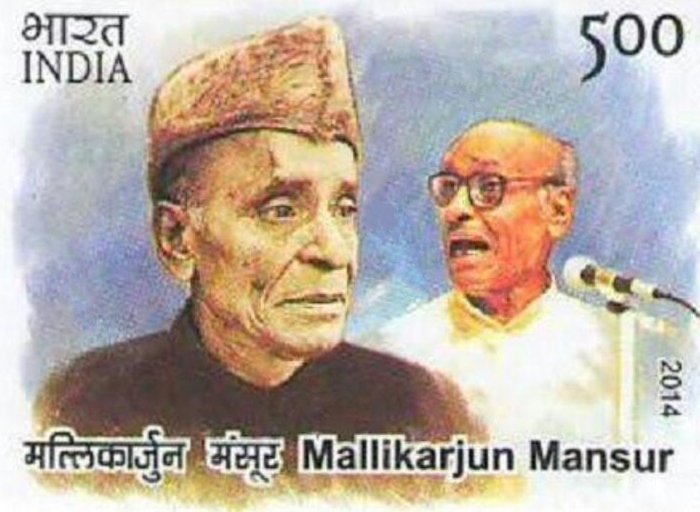
Pandit Mallikarjun Mansur (1910–1992) was one of the twentieth century’s greatest Hindustani classical vocalists and the foremost exponent of the Jaipur-Atrauli Gharana. A khayal singer from Dharwad in Karnataka, he was honoured with the Padma Vibhushan — India’s second-highest civilian award — in 1992, the year of his death, and is remembered for keeping alive a repertoire of rare and compound ragas that would otherwise have been lost.
| Field | Detail |
|---|---|
| Full name | Mallikarjun Bheemarayappa Mansur |
| Born | 31 December 1910, Mansur, Dharwad district, Karnataka |
| Died | 12 September 1992, Dharwad |
| Genre | Hindustani classical vocal (khayal) |
| Gharana | Jaipur-Atrauli |
| Principal gurus | Manji Khan and Bhurji Khan (sons of Ustad Alladiya Khan) |
| Highest honour | Padma Vibhushan (1992) |
Pandit Mallikarjun Mansur was born on 31 December 1910 in Mansur, a small village in the Dharwad district of present-day Karnataka, and died on 12 September 1992 in Dharwad town. For most of those eighty-two years he sang a form of *khayal* that few in India quite matched — austere, structurally rigorous, almost defiant in its refusal to court the listener — and he carried into the twentieth century a repertoire of rare ragas from the Jaipur-Atrauli Gharana that would otherwise have been lost.
He was a singer from Karnataka who belonged irrevocably to the Jaipur-Atrauli Gharana of Hindustani classical music.
Early life and Dharwad’s musical climate
Mallikarjun was the son of Bhimaraya Mansur, a farmer of modest means. His introduction to music was not formal at first — his older brother Basavraj sang in the local Kannada theatre and brought home the *Marathi sangeet natak* idiom that was sweeping the Deccan in the 1910s. The young Mallikarjun joined the Mahalakshmi Theatre Company at the age of nine, playing female roles in Kannada plays for which singing was the centrepiece. His clear, unaffected voice attracted the attention of Pandit Neelkanthbuwa Alurmath, a Gwalior Gharana singer based in Miraj, who took him under tutelage in 1923.
Dharwad in the 1920s was one of the most musically dense small towns in India. Sawai Gandharva, Bhimsen Joshi, Gangubai Hangal, Kumar Gandharva, Basavraj Rajguru — almost the entire roster of mid-century Hindustani greats either came from Dharwad-Hubli or trained there. The town sat at the meeting point of three classical traditions — Hindustani from the north, Carnatic from the south, and the dramatic music of the Marathi stage — and Mallikarjun absorbed all three.
Training under Manji Khan and Bhurji Khan
The decisive turn came in 1935, when Mallikarjun met Manji Khan, the elder son of Ustad Alladiya Khan — the legendary founder of the Jaipur-Atrauli Gharana. Manji Khan accepted him as a *ganda-bandh shagird* and began transmitting the family repertoire of complex *jod* ragas (Basanti Kedar, Lalita Gauri, Khat, Sampoorna Malkauns) that defined the gharana’s signature.
Manji Khan’s death in 1937 cut the training short. Mallikarjun moved to Bhurji Khan, Alladiya Khan’s younger son, and continued under him until Bhurji Khan’s death in 1950. Under these two ustads he received what he later called “the entire grammar” of the Jaipur-Atrauli idiom: dense *tappa*-influenced *tans*, severe *bandish* construction, the gharana’s characteristic *nom-tom alap*, and an unsentimental approach that prized structural integrity over decoration.
What made Jaipur-Atrauli distinctive
The gharana, founded by Alladiya Khan in the late nineteenth century after he left the Atrauli tradition for Jaipur, is known for:
- Rare ragas — Sampoorna Malkauns, Bihari, Khokhar, Yashodanand, Nat Kedar, Hem Nat — many available only within this lineage.
- Compound (jod) ragas that combine two parent ragas with strict structural rules.
- A weighty, almost masculine vocal projection — the voice flows through *meend* and *gamak* without the ornamental flourishes that distinguish Patiala or Gwalior styles.
- Bandishes that build slowly — the singer rarely abandons the chosen tempo for vistas of *taan*; instead the raga is excavated note by note.
Mallikarjun Mansur inherited and refined this idiom for half a century after his teachers’ deaths.
Career and recognition
Mallikarjun joined All India Radio Dharwad in 1942 and remained associated with AIR for decades. His earliest commercial recordings were on 78 rpm discs in the late 1930s; his major LP and CD discography, mostly through HMV and Music Today, captures him at full maturity from the 1960s onwards.
Recognition came slowly. His refusal to soften the Jaipur-Atrauli severity for audiences raised on the more accessible Kirana style (Sawai Gandharva, Bhimsen Joshi) kept him from the largest mainstream platforms for years. But within the community of musicians and serious listeners, his stature was unquestioned. The honours arrived in waves:
- Padma Shri (1970)
- Sangeet Natak Akademi Award (1976)
- Sangeet Natak Akademi Fellowship (1982)
- Padma Bhushan (1976)
- Kalidas Samman (1990)
- Padma Vibhushan (1992) — awarded the year he died
He also held an honorary doctorate from Karnatak University, Dharwad.
Singing style and signature ragas
Mansur’s voice in maturity carried a distinctive *gandhar*-anchored *thaat*, with the upper register slightly nasal and the lower octave deeply resonant. He rarely employed elaborate *sargam* sequences and avoided crowd-pleasing *taans*. The *alap* in a Mansur performance was structural rather than mood-painting — each phrase locked the raga’s identity tighter.
His most-recorded ragas include:
- Bihari, Hem Nat, Khat, Khokhar — rare ragas of the gharana
- Sampoorna Malkauns — full-grammar variant of Malkauns
- Basanti Kedar, Yashodanand, Lalita Gauri — compound ragas
- Sarpada Bilaval — a Bilaval variant attached to the gharana
- Bhairavi and Bhimpalasi — common ragas in his austere reading
A widely circulated anecdote captures his pedagogy: a student asking about emotional expression in a *bandish* was told, “If the raga is right, the emotion follows. Don’t go looking for it.”
The book and the disciples
Mansur’s autobiography *Rasa Yatra: My Journey in Music* — published in Kannada and later in English translation — is a rare first-person account of mid-century gharana life. It documents the routine of *taleem*, the relationships with the Alladiya Khan family, the social position of musicians in pre-Independence Karnataka, and the financial precariousness of a serious classical career.
His leading disciples include his son Rajshekhar Mansur, who continues to perform the gharana repertoire; Som Joshi; and several musicians from Karnataka who carry the Jaipur-Atrauli line into the present.
Legacy
Mallikarjun Mansur represents the high tide of an uncompromising gharana ideal in twentieth-century Hindustani music. He resisted commercialisation, kept rare ragas alive, refused to dilute the Jaipur-Atrauli idiom for popular tastes, and provided — through both his recordings and his memoir — one of the most complete documentary records of an Indian classical career. The Karnataka government has established the Mallikarjun Mansur National Music Award in his memory, and the All India Radio archive of his concert recordings is one of the most studied collections in Hindustani musicology.
FAQs
Which gharana did Pandit Mallikarjun Mansur belong to?
The Jaipur-Atrauli Gharana, founded by Ustad Alladiya Khan. Mansur was trained by Alladiya Khan’s sons Manji Khan and Bhurji Khan.
Where was Mansur born?
In the village of Mansur, Dharwad district, Karnataka, on 31 December 1910. Dharwad remained his home throughout his life and is one of India’s densest concentrations of Hindustani musical talent.
What made his style distinctive?
A structurally rigorous reading of ragas, slow tempo development, minimal ornament, dense bandish construction, and a repertoire of rare and compound ragas drawn from the Jaipur-Atrauli tradition.
Which ragas was he most known for?
Bihari, Hem Nat, Khat, Khokhar, Sampoorna Malkauns, Basanti Kedar, Yashodanand, Lalita Gauri, and Sarpada Bilaval — many of these are seldom heard outside the Jaipur-Atrauli lineage.
What awards did he receive?
Padma Shri (1970), Padma Bhushan (1976), Sangeet Natak Akademi Award (1976), Sangeet Natak Akademi Fellowship (1982), Kalidas Samman (1990), and Padma Vibhushan (1992).
Did he write an autobiography?
Yes. *Rasa Yatra: My Journey in Music* was published in Kannada and later in English translation. It documents his training, his relationships with the Alladiya Khan family, and the social context of mid-century gharana life.
Who were his teachers?
First Pandit Neelkanthbuwa Alurmath of the Gwalior Gharana, then — most importantly — Manji Khan and Bhurji Khan, the sons of Ustad Alladiya Khan of the Jaipur-Atrauli Gharana.
Who continues the gharana after him?
His son Rajshekhar Mansur is the principal carrier of the lineage today. Several Karnataka-based vocalists trained directly or indirectly under Pandit Mansur continue to perform the gharana repertoire.
Tell Google you want more of this.
Add Anantam IAS as a preferred sourceOne tap, and this site shows up more often in your own Top Stories, AI Overviews and AI Mode. Remove it any time.