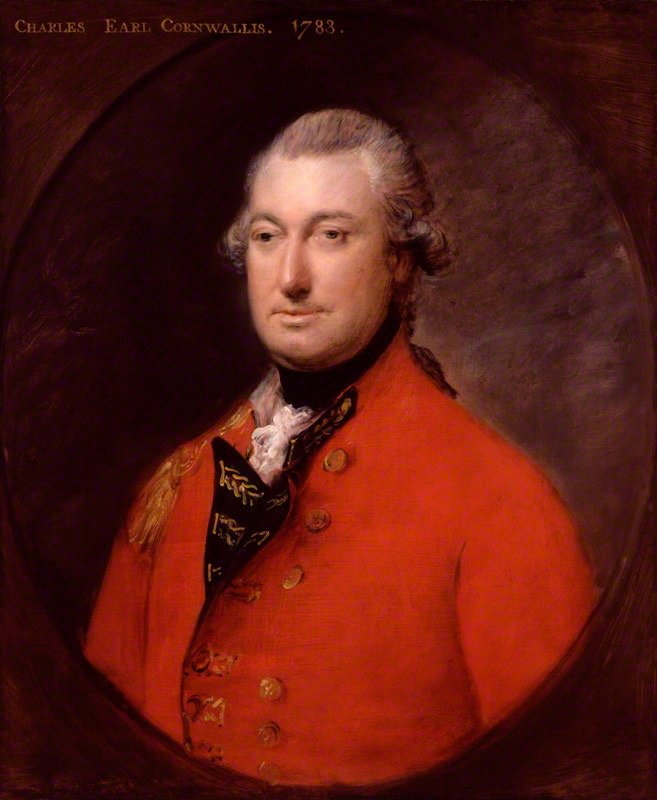
The Permanent Settlement 1793, also called the Zamindari Settlement or the Cornwallis Code, was the first major land revenue arrangement of the British East India Company. Promulgated by Governor-General Lord Cornwallis on 22 March 1793, the Permanent Settlement 1793 fixed in perpetuity the land revenue payable by zamindars of Bengal, Bihar and Orissa, and — for the first time in Indian history — recognised the zamindar as the absolute proprietor of the soil. Roughly one-fifth of British India came under the Permanent Settlement 1793, and its consequences shaped agrarian relations for the next 150 years until abolition in the early 1950s.
The settlement is studied as part of UPSC GS-I Modern India alongside the Mansabdari System, the Ryotwari System and the Mahalwari System — together the three pillars of colonial land revenue. It also feeds into the long agrarian discontent that fed events like 1857 ki Kranti.
Background to the Permanent Settlement 1793
After acquiring the Diwani of Bengal in 1765, the Company struggled to extract a stable revenue. Warren Hastings tried short quinquennial (five-year) and then annual farming of revenue between 1772 and 1786. Both failed: bidders defaulted, peasants were squeezed dry by ruthless contractors, and the famine of 1770 had already wiped out nearly a third of Bengal’s rural population.
Cornwallis arrived in 1786 with two convictions drawn from Whig political economy. First, that stable property rights in land were the precondition for agricultural improvement, just as enclosure had transformed England. Second, that the unsettled revenue had produced an unstable, predatory aristocracy. He proposed making the zamindars — traditionally only revenue intermediaries — into landed proprietors on the English model.
The Decennial Settlement of 1789
Before the Permanent Settlement 1793, Cornwallis introduced a Decennial (ten-year) Settlement in 1789–90, declaring that if the experiment worked it would be made permanent. Sir John Shore prepared the detailed assessment. London consented; on 22 March 1793, by Regulation I, the decennial assessment was declared permanent and unalterable.
Key Features of the Permanent Settlement 1793
The Permanent Settlement 1793 had a tight legal architecture, codified in Cornwallis’s 48 regulations of 1793.
- Proprietary right — zamindars and their heirs were declared absolute owners of the land, with the right to sell, mortgage and inherit.
- Fixed revenue in perpetuity — the revenue payable to the Company was frozen forever at the 1790–91 assessment. Of the gross rental, 10/11ths went to the state and 1/11th remained with the zamindar.
- Sun-set Law — full revenue had to be deposited by sunset of the fixed date; default triggered automatic auction of the estate.
- No state interference — the Company gave up the right to revise revenue even if cultivation, prices or yields rose.
- Peasants left to the zamindar — ryots (tenant cultivators) had no rights recognised in the original settlement; their rents and security depended entirely on the landlord.
Geographical Coverage
The Permanent Settlement 1793 originally covered Bengal, Bihar and Orissa (then Bengal Presidency), and was later extended to the districts of Banaras, parts of northern Madras Presidency and the Northern Circars — about 19% of British India by area.
The Sun-set Law and Its Consequences
The Sun-set Law was the engine that rewired the Bengal landed elite. Any zamindar who failed to deposit the revenue by sunset on the due date had his estate immediately put up for auction. The first decade of the Permanent Settlement 1793 saw a wave of auctions: by 1815, an estimated 41% of the old zamindari estates of Bengal had changed hands. The traditional zamindars — many descended from Mughal-era families — were replaced by Calcutta-based moneylenders, banians and English-educated merchants who bid for estates as financial assets.
This first transfer broke the social link between landlord and village. The new absentee zamindars rarely visited their estates and relied on layers of middlemen to extract rent.
Sub-infeudation and the Decline of the Peasant
Because the zamindar’s revenue obligation was fixed, every rupee of extra rent he could squeeze out of the ryot was pure profit. Zamindars accordingly created an elaborate hierarchy of intermediaries: patnidars leased estates from zamindars, dar-patnidars from patnidars, and so on, sometimes through 50 layers. Each tier demanded a rent margin; each tier squeezed the cultivator below.
The Permanent Settlement 1793 became a textbook case of sub-infeudation, with the actual cultivator paying many times the rent that any single intermediary owed upward. By the late nineteenth century the Bengal countryside was producing one of the highest rates of agrarian indebtedness in India, feeding the long-running tension that erupted in the Indigo Revolt (1859) and later peasant movements.
The Bengal Tenancy Act, 1885
Partial relief came only in 1885. The Bengal Tenancy Act recognised occupancy rights for ryots who had cultivated a holding for twelve years, capped rent increases and created a tenancy register. But the Act did not undo the proprietary structure; it merely tried to soften its sharpest edges.
Impact of the Permanent Settlement 1793
The settlement is judged by UPSC examiners on its political, economic and social effects.
Political Impact
- Created a loyal landed class tied to British rule — during 1857 ki Kranti, Bengal zamindars largely stood by the Company.
- Centralised property law gave the colonial state a stable ally against peasant unrest.
- Set the precedent for later settlements; the Mahalwari System of Holt Mackenzie and the Ryotwari System of Thomas Munro were both partly designed in reaction to its weaknesses.
Economic Impact
- Government revenue was stuck at 1793 levels even as Bengal’s rental income rose several-fold through the nineteenth century — a windfall to zamindars but a fiscal cap on the state.
- Agricultural investment was minimal; zamindars preferred to spend rental income on Calcutta houses and litigation rather than on irrigation, embankments or improved seed.
- The shift to cash rents and cash crops (indigo, jute) made small cultivators vulnerable to price shocks and indebtedness.
Social Impact
- Replacement of old zamindars by absentee owners broke patron–client networks.
- A new English-educated landed gentry emerged in Bengal, providing the social base for the Bengal Renaissance — and later for nationalist leadership.
- Customary peasant rights to grazing, fuel and forest produce were extinguished.
Criticism and Defence of the Permanent Settlement 1793
Critics, including Holt Mackenzie and James Mill, argued that the Permanent Settlement 1793 had given away the state’s claim on future agricultural surplus, replaced a working revenue elite with rentier landlords, and left the ryot worse off than under Mughal practice. Mackenzie’s critique fed directly into the design of the Mahalwari System in the North-Western Provinces.
Defenders pointed out that Bengal at last had a stable revenue, a loyal landed class and rising agricultural output of cash crops. The judgment of later economic historians — Daniel Thorner, Irfan Habib, Ratnalekha Ray — has been broadly negative: the Permanent Settlement 1793 froze a colonial extractive structure and starved the countryside of capital.
Comparison with the Mughal Antecedent
Under the Mansabdari System the Mughal state had taxed a notional share of the produce — typically one-third — through jagirdars who rotated every three or four years. The Permanent Settlement 1793 broke radically with that practice: it froze the demand for all time, made the intermediary a proprietor instead of a salaried officer, and gave him heritable title. Where Akbar’s design had been built to prevent a landed aristocracy, Cornwallis’s design was built to create one. The contrast is one of the cleanest comparative essays in UPSC GS-I.
Abolition of the Permanent Settlement 1793
After independence the Indian Constitution placed land reform on the State List. West Bengal, Bihar and Orissa enacted Zamindari Abolition Acts between 1950 and 1955 — the Bihar Land Reforms Act 1950, the West Bengal Estates Acquisition Act 1953 and the Orissa Estates Abolition Act 1951. The Permanent Settlement 1793 was thereby legally extinguished.
The First Amendment (1951) inserted Articles 31A and 31B and the Ninth Schedule precisely to insulate these abolition laws from judicial challenge under the right to property — one of the earliest collisions between fundamental rights and agrarian reform.
Significance for UPSC
For Prelims, remember:
- Year — 1793; Regulation I of 22 March 1793.
- Architect — Lord Cornwallis, with assistance of Sir John Shore.
- Coverage — Bengal, Bihar, Orissa (later Banaras, Northern Circars).
- Share — 10/11ths to state, 1/11th to zamindar.
- Trigger of auctions — the Sun-set Law.
For Mains, the Permanent Settlement 1793 is a standard case study in colonial agrarian policy, land tenure debates, and the constitutional history of property rights. Compare it with the Ryotwari System of Munro and the Mahalwari System of Mackenzie–Bird to see how the Company experimented with three different answers to one problem.
Frequently Asked Questions
Who introduced the Permanent Settlement of 1793?
Lord Cornwallis, the Governor-General of British India from 1786 to 1793, introduced the Permanent Settlement of 1793. The detailed assessment was prepared by Sir John Shore (later himself Governor-General).
Which areas were covered by the Permanent Settlement?
The Permanent Settlement 1793 covered Bengal, Bihar and Orissa initially, and was later extended to Banaras and the Northern Circars of Madras Presidency. In total it covered about 19% of British India.
What was the Sun-set Law?
The Sun-set Law required zamindars to deposit the entire fixed revenue by sunset of a stipulated date each year. Failure led to automatic auction of the estate. It caused mass transfer of Bengal estates from old zamindar families to Calcutta moneylenders and merchants between 1793 and 1815.
How was revenue divided under the Permanent Settlement?
Of the gross rental collected from cultivators, ten-elevenths (about 89%) went to the Company as land revenue, and one-eleventh (about 9%) was retained by the zamindar as his share. The amount was fixed for all time.
What is sub-infeudation?
Sub-infeudation is the practice by which a landlord leases his estate to a sub-tenant, who leases it to another, and so on. Under the Permanent Settlement 1793, Bengal zamindars created up to 50 tiers of patnidars and dar-patnidars between themselves and the cultivator, each level pressing down rents on the ryot.
How did the Permanent Settlement affect peasants?
It worsened peasant security. Ryots had no recognised rights in the original settlement, faced ever-rising rents from intermediaries, and were exposed to eviction. Partial protection came only with the Bengal Tenancy Act of 1885, which recognised occupancy rights after twelve years of cultivation.
When was the Permanent Settlement abolished?
State Zamindari Abolition Acts between 1950 and 1955 — beginning with Bihar in 1950 — extinguished the Permanent Settlement 1793. The First Constitutional Amendment of 1951 protected these laws by inserting Articles 31A, 31B and the Ninth Schedule.
How does the Permanent Settlement differ from the Ryotwari and Mahalwari systems?
The Permanent Settlement made zamindars proprietors and fixed revenue forever. The Ryotwari System dealt directly with the cultivator (ryot) and revised revenue every 20–30 years. The Mahalwari System made the village or mahal the unit of settlement, with periodic revisions of a share-based assessment.
Tell Google you want more of this.
Add Anantam IAS as a preferred sourceOne tap, and this site shows up more often in your own Top Stories, AI Overviews and AI Mode. Remove it any time.