
Prepaid payment instruments (PPIs) are wallets and prepaid cards that hold money you load in advance and spend later. In India they’re issued by banks and by RBI-authorized non-bank companies under the Payment and Settlement Systems Act, 2007, following the RBI’s Master Directions on PPIs of August 27, 2021. They still carry a steady slice of everyday digital payments: 3.6% of all digital transactions by number in the second half of 2025, level with NEFT, though only 0.1% by value.
Most readers carry one of two mix-ups. The first is that a wallet balance is a bank deposit. It isn’t: a PPI earns no interest, and even a full-KYC PPI can’t hold more than ₹2 lakh. The second is that PPIs and UPI compete. They don’t. UPI moves money, and a full-KYC PPI is one of the places it can move money from. Get those two straight and the rest falls into place, including the RBI’s action against Paytm Payments Bank between 2024 and 2026.
What is a prepaid payment instrument?
A prepaid payment instrument is stored value: money paid to an issuer up front and spent against that balance until it runs out. The RBI’s definition turns on payment made against the value stored in the instrument, so a PPI can be a wallet or a card but, under the rules, never a paper voucher.
A prepaid mobile plan is the closest everyday picture: you pay first and the balance falls as you use it. The picture breaks at the point that matters most. Talk-time is a service you’ve already bought, while a PPI balance is still your money, which the issuer must return on closure and keep where the RBI can check it.
A closed-system PPI, such as a gift card that works only at the store that sold it, sits outside the RBI’s net. It isn’t treated as a payment system and needs no authorization. The rest of this note concerns PPIs usable with other merchants, governed by the RBI’s Master Directions on Prepaid Payment Instruments.
| Fact | Detail |
|---|---|
| Legal basis | Payment and Settlement Systems Act, 2007; directions issued under Section 18 read with Section 10(2) |
| Rulebook | RBI Master Directions on PPIs, August 27, 2021 (updated as on December 27, 2024) |
| Who can issue | Banks with RBI approval; companies incorporated in India with RBI authorization |
| Non-bank net worth | ₹5 crore when applying; ₹15 crore by the end of the third financial year after authorization |
| Types | Small PPIs and full-KYC PPIs, plus special categories such as gift PPIs and PPIs for mass transit |
| Highest balance | ₹2 lakh, in a full-KYC PPI |
| Interest | Issuers may not pay interest on PPI balances |
| Where non-bank money sits | An escrow account with a scheduled commercial bank |
| Share of digital payments | 3.6% of transactions by number and 0.1% by value, July to December 2025 |
Types of PPI and their limits
The RBI’s PPI guidelines grade instruments by how much the issuer knows about you. The less it knows, the smaller the wallet and the fewer things it can do. Only two types need prior approval as general-purpose PPIs, small and full-KYC, and the rules add special categories, of which gift PPIs and transit PPIs matter most.
| Type | What the issuer collects | Maximum balance | Cash withdrawal | Funds transfer |
|---|---|---|---|---|
| Small PPI, cash loading allowed | OTP-verified mobile number, self-declared name and ID number | ₹10,000 | Not allowed | Not allowed |
| Small PPI, no cash loading | Same minimum details; loads from a bank account, credit card or full-KYC PPI | ₹10,000 | Not allowed | Not allowed |
| Full-KYC PPI | Full KYC, video KYC included | ₹2 lakh | ₹2,000 a transaction, ₹10,000 a month (non-bank PPIs) | ₹2 lakh a month per pre-registered beneficiary; ₹10,000 a month otherwise |
| Gift PPI | KYC of the buyer | ₹10,000, not reloadable | Not allowed | Only back to the source, with consent |
| PPI for mass transit (PPI-MTS) | No KYC | ₹3,000 | Not allowed | Not allowed |
Small PPIs: a starter wallet with tight caps
A small PPI, also called a minimum-detail PPI, opens with an OTP-verified mobile number and a self-declared name and identity-document number. In exchange, it’s fenced in on every side:
- ₹10,000 loaded in a month at most, and ₹1,20,000 in a financial year
- ₹10,000 outstanding at any time
- purchases of goods and services only, with no cash withdrawal and no funds transfer
- for the cash-loading version, ₹10,000 of debits a month and a 24-month deadline to upgrade to full KYC, after which no new credit is allowed, though the balance can still be spent
Put this in concrete terms. Asha loads ₹6,000 into a cash-loadable small PPI on April 3 and ₹4,000 on April 20. A third April top-up fails twice over, because she has hit both the monthly loading cap and the balance cap. And sending ₹500 to her brother’s bank account isn’t possible from this wallet at any balance.
Full-KYC PPIs: the only type that works like a small account
A full-KYC PPI is issued after the same KYC a bank does, video KYC included, and it’s the only type that can move money out as well as spend it. A circular of May 19, 2021 raised its cap from ₹1 lakh to ₹2 lakh. Its limits:
- a balance of up to ₹2 lakh at any time
- up to ₹2 lakh a month to each pre-registered beneficiary, someone whose bank account or PPI details you’ve saved in advance
- up to ₹10,000 a month to anyone else
- cash withdrawal from a non-bank PPI of ₹2,000 a transaction and ₹10,000 a month across all channels, a cap a bank-issued PPI faces only at point-of-sale terminals
- cash loading into any PPI of up to ₹50,000 a month
Wallet debits need two-factor authentication, gift and transit PPIs excepted, and issuers must set a cooling period before money can leave a freshly opened or loaded wallet. A PPI that can send money is also one a fraudster can use.
Gift PPIs and transit PPIs
The special categories trade features for convenience:
- a gift PPI holds at most ₹10,000, can’t be reloaded or cashed out, and its balance goes back to source only with the holder’s consent
- a PPI-MTS needs no KYC, holds at most ₹3,000, can be reloaded and never expires, but allows no cash, refunds or transfers
- an amendment of February 23, 2024 let authorized bank and non-bank issuers offer one transit card that works across public transport, tolls and parking
Other PPIs share expiry rules that favor the holder:
- validity of at least 1 year from the last load, with reminders during the 45 days before expiry
- a non-bank issuer can’t book an expired balance as profit for at least 3 years, and must refund it to a bank account on request
- a PPI with no financial transaction for a year is made inactive after notice
Who can issue PPIs, and where the money is kept
Banks need RBI approval. Non-banks need authorization under the PSS Act and clear a longer checklist:
- be a company incorporated in India
- show a positive net worth of ₹5 crore at application, rising to ₹15 crore by the end of the third financial year after final authorization
- pass a system audit within the 6-month life of the in-principle approval, then get a final Certificate of Authorisation
- sit out a 1-year cooling period before reapplying if an application is rejected or an authorization ends
Behind all of this sits one Act. The PSS Act received the President’s assent on December 20, 2007 and came into force on August 12, 2008. It makes the RBI the payments regulator, one of the core functions of the RBI, and the RBI exercises that role through the Payments Regulatory Board, whose regulations took effect on May 20, 2025. The PPI directions are issued under Section 18 read with Section 10(2) of the Act.
The RBI’s KYC Direction of 2016 and the Prevention of Money Laundering Act, 2002 bind every issuer, which must keep transaction logs for at least 10 years and report suspicious transactions to FIU-India. The broader money-laundering framework explains why cash-loadable value draws this attention.
The escrow rule, in plain words
For a bank, outstanding PPI balances count in its net demand and time liabilities, the deposit base on which its reserve requirements are worked out. A non-bank can’t take deposits, so it must park the money in an escrow account with a scheduled commercial bank. That’s a ring-fenced account whose money can be used only for paying merchants and PPI holders.
The ring-fence is tight:
- the escrow balance at the end of each day can’t fall below outstanding PPIs plus dues to merchants
- money loaded into a PPI must reach the escrow by the close of that business day
- an auditor certifies the escrow position every quarter
- the issuer’s PPI system is deemed a designated payment system under Section 23A of the PSS Act
A sharp reader will ask how a wallet company earns anything on the float if it can’t lend it. After a full year in business, a non-bank issuer may move the escrow’s core portion, the average of the lowest daily balance in each of the last 26 fortnights, into a linked interest-bearing account. That’s a deal between the issuer and its bank. Holders still earn nothing.
So a wallet balance is protected less by the issuer’s promise than by where the law makes the issuer keep the money.
How PPIs became interoperable and reached UPI
Interoperability means one issuer’s PPI works on the networks everyone else uses: a wallet through UPI, a card through an authorized card network. The RBI allowed it by a circular of October 16, 2018 and made it mandatory for full-KYC PPIs on May 19, 2021, with March 31, 2022 as the deadline for issuance and acceptance, QR codes included.
For full-KYC PPIs it’s compulsory, while small PPIs don’t get it at all. Transit PPIs are exempt, and gift PPI issuers can choose.
On UPI, the PPI issuer joins as a Payment System Provider (PSP), the member that gets a UPI handle from NPCI, and a non-bank issuer settles through a sponsor bank. Until December 2024, a wallet could pay on UPI only inside its issuer’s own app. A circular of December 27, 2024 let issuers make their full-KYC PPIs discoverable in third-party UPI apps, with payments approved by UPI credentials. The wider growth of digital payments and UPI explains why that access mattered.
Here’s what the change means for a user. Say your full-KYC wallet is with issuer A and your UPI app belongs to company B. Before the change, B’s app couldn’t see the wallet. Now, if A enables discovery, the wallet shows up in B’s app as a funding source beside your bank account.
The same plumbing reached visitors. From February 21, 2023, G-20 travelers arriving at 3 international airports could get UPI-linked PPI wallets for merchant payments after a passport and visa check.
The dates worth fixing:
| Date | Change |
|---|---|
| October 11, 2017 | Master Direction on Issuance and Operation of PPIs issued |
| October 16, 2018 | Guidelines allow PPI interoperability |
| December 24, 2019 | A small PPI without cash loading introduced |
| May 19, 2021 | Interoperability mandatory for full-KYC PPIs; limit raised from ₹1 lakh to ₹2 lakh; cash withdrawal allowed from non-bank full-KYC PPIs |
| August 27, 2021 | Master Directions on PPIs issued afresh, the text in force today |
| March 31, 2022 | Deadline for full interoperability, QR codes included |
| February 21, 2023 | UPI-linked PPI wallets for G-20 travelers at Bengaluru, Mumbai and New Delhi airports |
| February 23, 2024 | Transit PPI category rewritten for use across public transport |
| December 27, 2024 | Full-KYC PPIs usable through third-party UPI apps |
| April 22, 2026 | Draft Master Direction on PPIs released, comments due by May 22, 2026 |
PPI vs bank account vs UPI
A bank account holds deposits and a PPI holds prepaid value, but UPI holds nothing at all. Run by the National Payments Corporation of India (NPCI), it moves money out of linked sources such as bank accounts and full-KYC PPIs.
| Feature | PPI (wallet or prepaid card) | Bank account | UPI |
|---|---|---|---|
| What it is | Prepaid stored value | A deposit with a bank | A system that moves money |
| Who provides it | Banks and RBI-authorized non-banks | Licensed banks | NPCI runs it; banks and PPI issuers join as members |
| Holds money? | Yes, up to ₹2 lakh in a full-KYC PPI | Yes | No |
| Interest | Not allowed | Paid on savings deposits | Not applicable |
| KYC | Minimum details or full KYC, by type | Full KYC | Relies on the KYC of the linked account or PPI |
| Where your money is | Escrow at a scheduled commercial bank (non-bank issuers) | On the bank’s balance sheet | Stays in the linked account or PPI |
| Rulebook | Master Directions on PPIs under the PSS Act | Banking Regulation Act, 1949 and RBI directions | PSS Act and NPCI’s operating rules |
Think of UPI as the road, with bank accounts and full-KYC PPIs as vehicles that use it. The picture holds for payments and fails for storage. A road can’t hold your money, so a question about a wallet’s balance limit is always a PPI question, never a UPI one.
Why PPIs matter, and what the numbers show
PPIs matter less for the money they move than for who they let in and what they ring-fence:
- A first digital instrument. A small PPI needs only minimum details, which ties PPIs to the push for financial inclusion.
- Ring-fenced spending. Money loaded for a gift or a month’s fares can’t be overspent.
- Visitors. UPI-linked wallets let foreign travelers pay the way residents do.
The RBI’s Payment Systems Report for December 2025, released on May 18, 2026, shows a small-ticket instrument:
- PPI transactions rose from 620 crore in 2021 to 918 crore in 2025
- their value stayed almost flat, at about ₹2.65 lakh crore
- in July to December 2025, PPIs made up 3.6% of digital transactions by number and 0.1% by value, against 85.5% by number for UPI
Put the first two lines together. If the value held near ₹2.65 lakh crore while the count grew by nearly half, the average PPI payment fell from about ₹430 in 2021 to under ₹300 in 2025. People use PPIs more often, for smaller things. One caution: the RBI revises these series, and its June 2025 report put 2024 at 698.9 crore transactions worth about ₹2.23 lakh crore, so quote the edition with the figure.
The weaknesses are just as real:
- Thin economics. The float can’t be lent, and UPI lets people pay straight from a bank account.
- Fraud exposure. Cash-loadable, KYC-light value invites misuse, hence the layers of checks. The methods are covered in the note on cybercrime and cybersecurity in India.
- Compliance strain. The RBI has acted against an issuer for persistent non-compliance, as the next section shows.
PPIs today: the Paytm case, a draft rulebook and a new board
The 2021 directions, updated as on December 27, 2024, remain the text in force. Three developments since 2024 shape how the topic reads now.
The Paytm Payments Bank action
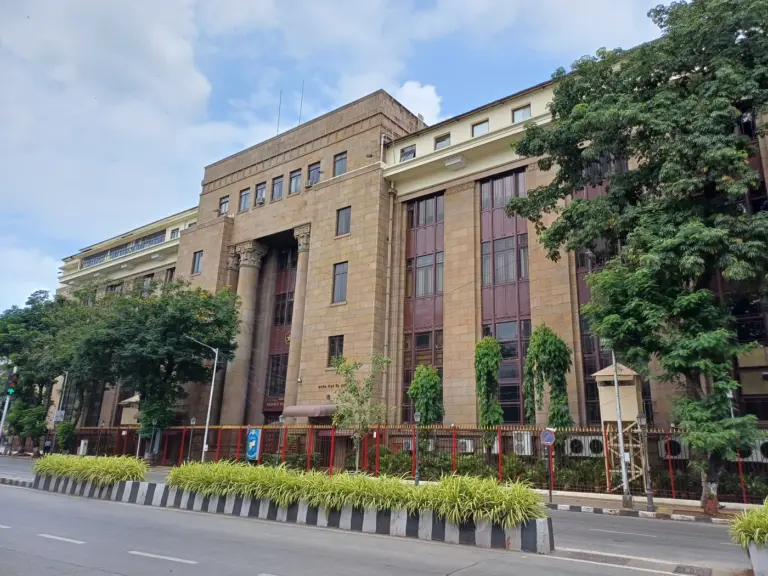
The RBI acted against Paytm Payments Bank Ltd in stages, under the Banking Regulation Act, 1949:
- March 11, 2022: the bank was told to stop onboarding new customers, under Section 35A
- January 31, 2024: citing audit findings of “persistent non-compliances and continued material supervisory concerns”, the RBI barred fresh deposits, credits and top-ups in the bank’s accounts, prepaid instruments, wallets, FASTags and NCMC cards after February 29, 2024, while customers could keep using their balances
- February 16, 2024: the top-up deadline was extended to March 15, 2024
- April 24, 2026: the RBI cancelled the bank’s banking license under Section 22(4), effective close of business that day, and said it would apply to the High Court for winding up
The April 2026 order said the bank’s affairs had been conducted against the interest of the bank and its depositors, and that its management’s general character was prejudicial to depositors and the public interest. It also found that the bank had failed to meet its payments bank license conditions and that no useful purpose would be served by letting it continue.
The RBI added that the bank had enough liquidity to repay its entire deposit liability. For this topic, the key point is that this was action against one payments bank under banking law, not a ban on wallets, and the PPI rules themselves let holders redeem balances if a scheme is wound up. The current-affairs note on the cancellation covers the payments bank model.
A draft rulebook for 2026
On April 22, 2026, the RBI released a draft Master Direction on PPIs after what it called a comprehensive review, aimed at long-term growth of PPIs with better transaction security. Comments were due by May 22, 2026. As of September 2026, the RBI’s list of master directions still shows the 2021 directions as the operative text, so the limits in this note are the ones in force. It is wise to check for the final version before quoting a number in an answer.
A new board and a new ombudsman scheme
The RBI now regulates payment systems through the Payments Regulatory Board, which replaced the older Board for Regulation and Supervision of Payment and Settlement Systems under regulations in force from May 20, 2025. The current-affairs note on the Payments Regulatory Board explains how it’s made up.
From July 1, 2026, customers of non-bank PPI issuers can escalate complaints under the Reserve Bank – Integrated Ombudsman Scheme, 2026, which replaced the 2021 scheme. Inside the issuer, a complaint should be taken up preferably within 48 hours and resolved within 30 days.
How to study prepaid payment instruments for exams
PPIs sit in the Indian economy part of GS Paper III, where banking and payment systems meet financial inclusion, and in the Prelims economy syllabus. Indian Economy accounts for 256 of the 1,403 questions in the Prelims question bank, and payment rules suit statement questions, with numbers to swap and categories to mix up.
Mains tests the theme through its neighbors. Mains 2026 GS Paper III asked “Examine the view that financial inclusion is an integral part of social and economic inclusion in a country like India. Also throw light on the usefulness of the R.B.I.’s Financial Inclusion Index.” The same paper asked “What do you mean by Digital Rupee? In this context, explain the working and progress of India’s Central Bank Digital Currency (CBDC).” Neither names PPIs, and that’s how the topic generally earns marks: as the supporting paragraph, the KYC ladder in an inclusion answer and the PPI-versus-CBDC contrast in a digital money answer.
The facts to revise:
- the PSS Act, 2007 and the RBI’s Master Directions on PPIs of August 27, 2021, updated as on December 27, 2024
- two types need prior approval, small and full-KYC, while gift PPIs and PPI-MTS are special categories
- balance caps of ₹10,000 for small PPIs, ₹2 lakh for full-KYC, ₹10,000 for gift and ₹3,000 for transit
- a 24-month deadline for the cash-loading small PPI to move to full KYC
- cash withdrawal and funds transfer only from full-KYC PPIs, which are also the only ones that must be interoperable
- ₹5 crore net worth for a non-bank to apply, ₹15 crore within 3 years, and PPI money held in escrow
- full-KYC PPIs on third-party UPI apps from December 27, 2024
Three confusions cost marks, and each has a clean way out:
- Payments bank vs PPI issuer. A payments bank, such as the India Post Payments Bank, holds a banking license and takes deposits; a non-bank PPI issuer can’t, and works under the PSS Act. A payments bank can also issue PPIs, which is why Paytm Payments Bank’s wallets were caught in the 2024 restrictions.
- Small vs gift vs transit. All three are low-value, but only the small PPI is meant to grow into a full-KYC PPI.
- No interest vs core portion. Holders never earn interest on a PPI; the core-portion arrangement is a deal between a non-bank issuer and its escrow bank.
The sibling topics are easiest to hold apart in one table. The note on UPI and the digital rupee covers the CBDC column in depth.
| Point | PPI | Payments bank account | Digital rupee (CBDC) |
|---|---|---|---|
| Issued by | A bank or an RBI-authorized non-bank | A payments bank | The RBI |
| What you hold | Prepaid value, capped by type | A bank deposit | Digital currency |
| Can the provider lend your money? | No; non-bank balances sit in escrow | No; payments banks can’t lend | Not applicable |
PPIs are the clearest case of the RBI regulating by risk: the less an issuer knows about you, the less your wallet can do and the money always sits where the regulator can count it. Learn that idea with the balance caps and the escrow rule as its evidence, and both the statement questions and the analytical ones become manageable.
Frequently Asked Questions
What are prepaid payment instruments in simple words?
Prepaid payment instruments are wallets and prepaid cards that hold money you load in advance and spend later. In India they’re issued by banks and by RBI-authorized non-bank companies under the Payment and Settlement Systems Act, 2007. A balance in one is stored value, not a bank deposit, so it earns no interest.
What are the types of PPI allowed by the RBI?
The RBI allows two general types that need its approval: small PPIs, opened with minimum details, and full-KYC PPIs, opened after complete KYC. It also permits special categories, mainly gift PPIs of up to ₹10,000 and PPIs for mass transit systems of up to ₹3,000. Closed-system cards that work only with the issuer’s own business fall outside RBI regulation.
What is the difference between a small PPI and a full-KYC PPI?
A small PPI is opened with a verified mobile number and self-declared identity details, holds at most ₹10,000 and can only be used to buy goods and services. A full-KYC PPI is opened after complete KYC, holds up to ₹2 lakh and can send money, withdraw cash and work across UPI and card networks. The cash-loading small PPI must be upgraded to full KYC within 24 months or it stops accepting new credits.
What is the maximum balance in a PPI wallet?
The highest balance allowed is ₹2 lakh, in a full-KYC PPI, a limit the RBI raised from ₹1 lakh in May 2021. Small PPIs and gift PPIs are capped at ₹10,000 and transit PPIs at ₹3,000. These limits come from the RBI’s Master Directions on PPIs of August 27, 2021.
Can I withdraw cash from a PPI wallet?
Only from a full-KYC PPI. For a non-bank PPI, cash withdrawal is capped at ₹2,000 a transaction and ₹10,000 a month across all channels, and a bank-issued PPI faces the same cap at point-of-sale terminals. Small, gift and transit PPIs don’t allow cash withdrawal at all.
Is a PPI wallet the same as UPI?
No. UPI is a payment system run by NPCI that moves money, while a PPI is an instrument that holds prepaid money. A full-KYC PPI can be linked to UPI, and since December 27, 2024 it can also be used through third-party UPI apps if the issuer enables it.
Is money in a PPI wallet safe if the company fails?
A non-bank issuer must keep the full value of outstanding PPIs, plus dues to merchants, in an escrow account with a scheduled commercial bank, and that money can be used only to pay merchants and holders. The rules also let holders redeem their balance if a PPI scheme is wound up or discontinued by the RBI. The balance earns no interest, since issuers are barred from paying it.
What did the RBI do to Paytm Payments Bank?
The RBI barred Paytm Payments Bank from onboarding new customers in March 2022 and, on January 31, 2024, stopped fresh deposits and top-ups in its accounts and wallets, with the deadline later extended to March 15, 2024. On April 24, 2026 it cancelled the bank’s banking license under Section 22(4) of the Banking Regulation Act, 1949. The RBI said the bank had enough liquidity to repay its entire deposit liability on winding up.
Practice Questions
Prelims
1. Consider the following statements about prepaid payment instruments (PPIs) under the RBI’s Master Directions of 2021: 1. A small PPI can be used to transfer up to ₹10,000 a month to a bank account. 2. A full-KYC PPI can hold up to ₹2 lakh at any time. 3. PPI issuers may pay interest on PPI balances. Which of the statements given above is/are correct?
- (a) 2 only
- (b) 1 and 2 only
- (c) 2 and 3 only
- (d) 1, 2 and 3
Answer: (a) Small PPIs allow purchases only, and the directions bar issuers from paying interest on PPI balances.
2. Consider the following statements about PPIs for mass transit systems (PPI-MTS): 1. They can be issued without KYC of the holder. 2. The amount outstanding cannot exceed ₹3,000 at any time. 3. Issuers must make them interoperable through UPI. Which of the statements given above is/are correct?
- (a) 1 and 2 only
- (b) 2 and 3 only
- (c) 1 and 3 only
- (d) 1, 2 and 3
Answer: (a) Transit PPIs need no KYC and are capped at ₹3,000, but they are exempt from interoperability.
3. The RBI issues its directions on prepaid payment instruments under which of the following laws?
- (a) Banking Regulation Act, 1949
- (b) Payment and Settlement Systems Act, 2007
- (c) Foreign Exchange Management Act, 1999
- (d) Information Technology Act, 2000
Answer: (b) The directions are issued under Section 18 read with Section 10(2) of the PSS Act, 2007.
4. A non-bank PPI issuer must keep the outstanding balance of the PPIs it has issued in
- (a) government securities of up to 1-year maturity
- (b) a current account with NPCI
- (c) an escrow account with a scheduled commercial bank
- (d) a fixed deposit with any bank of its choice
Answer: (c) The escrow balance must cover outstanding PPIs and dues to merchants at the end of every day.
5. Consider the following statements: 1. Interoperability is mandatory for full-KYC PPIs. 2. Since December 2024, full-KYC PPIs can be linked to third-party UPI applications. 3. Small PPIs can be linked to UPI through third-party applications. Which of the statements given above is/are correct?
- (a) 1 only
- (b) 1 and 2 only
- (c) 2 and 3 only
- (d) 1, 2 and 3
Answer: (b) Interoperability and third-party UPI access apply to full-KYC PPIs only, not to small PPIs.
Mains
- What are prepaid payment instruments? Explain how the RBI’s KYC-based classification of PPIs tries to balance financial inclusion against the risk of misuse. (10 marks, 150 words)
- Explain the escrow and net-worth requirements for non-bank PPI issuers in India. How far do they protect PPI holders? (10 marks, 150 words)
- Discuss how interoperability requirements since 2018, including access to UPI, have changed the role of prepaid payment instruments in India’s payment system. (10 marks, 150 words)
- UPI now carries most digital transactions in India by number. In this context, examine the continuing relevance and the limitations of prepaid payment instruments. (15 marks, 250 words)
- Using the RBI’s actions against Paytm Payments Bank between 2022 and 2026 as a case, discuss the challenges of supervising payment platforms that combine banking and wallet services. (15 marks, 250 words)
Tell Google you want more of this.
Add Anantam IAS as a preferred sourceOne tap, and this site shows up more often in your own Top Stories, AI Overviews and AI Mode. Remove it any time.