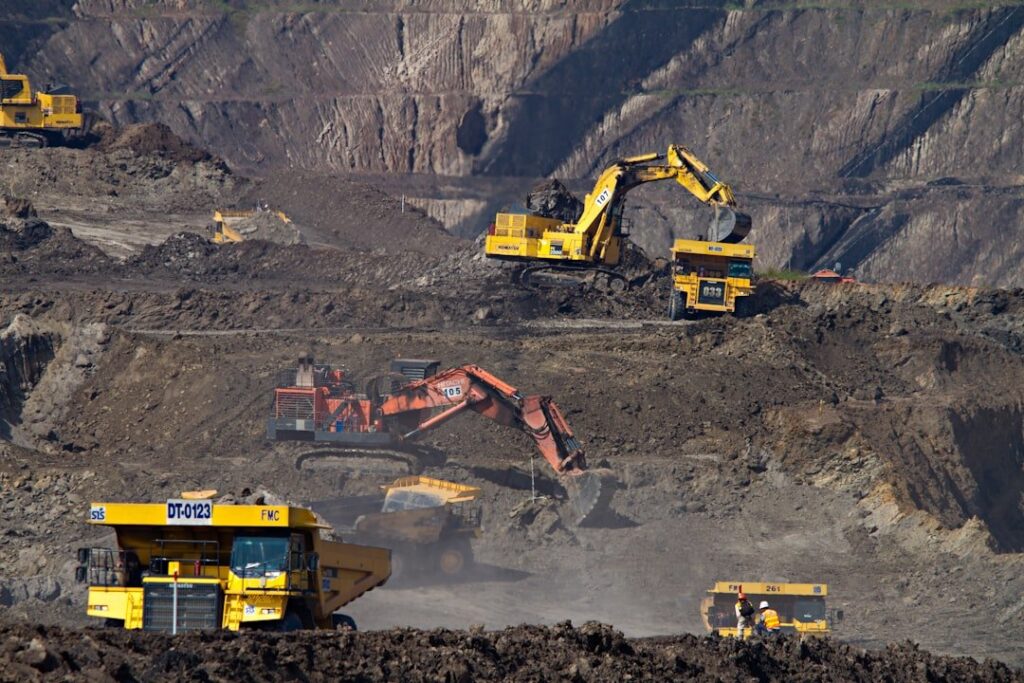
Rare earth elements are a group of seventeen chemically similar metals that have become indispensable to modern technology. They are essential for electric vehicle motors, wind turbine generators, fighter aircraft, missile guidance systems, smartphones, and a long list of clean-energy products. The phrase rare earth elements is something of a misnomer because most of these metals are reasonably abundant in the earth’s crust. What is rare is their occurrence in concentrations dense enough to mine economically, and what is even rarer is the processing capacity needed to refine them into usable forms. India has launched the National Critical Mineral Mission in 2025 to reduce its dependence on imports of rare earth elements and related critical minerals.
What Counts as a Rare Earth Element
The seventeen rare earth elements include fifteen lanthanides plus scandium and yttrium. The lanthanides run from lanthanum to lutetium in the periodic table. Yttrium and scandium are grouped with them because they occur in the same ore bodies and share similar chemical properties. The seventeen are commonly subdivided into light rare earths such as neodymium, praseodymium, cerium, and lanthanum, and heavy rare earths such as dysprosium, terbium, and yttrium. The heavy group is far scarcer and commands higher prices.
It is worth being precise about the count. Sometimes documents refer to thirteen lanthanides or fifteen rare earths, but the standard internationally accepted figure for rare earth elements is seventeen, comprising fifteen lanthanides, plus scandium and yttrium.
Why They Matter
Rare earths underpin three technology stacks that are central to the energy transition and national security.
Permanent magnets made of neodymium, iron, and boron, with dysprosium added for high-temperature performance, are the most efficient magnets known. They power electric vehicle traction motors, wind turbine direct-drive generators, robotics, and disk drives. Without these magnets, electric vehicles would be heavier and less efficient.
Phosphors in displays and lighting use europium, terbium, and yttrium to produce the red, green, and blue components of white light. LEDs, plasma screens, and energy-efficient lamps depend on rare earth phosphors.
Catalysts in petroleum refining, particularly cerium and lanthanum-based fluid catalytic cracking units, are critical for converting crude into petrol and diesel. Cerium is also used in vehicle catalytic converters that scrub emissions.
In defence, rare earths go into precision guidance systems, radar, sonar, electronic warfare equipment, and laser rangefinders.
China’s Dominant Share
China holds roughly thirty to forty per cent of global rare earth reserves and produces about sixty to seventy per cent of mined rare earths. Its dominance in refining is even higher, often quoted at eighty-five to ninety per cent of global processed rare earths. The reason is a decades-long industrial policy that subsidised mining, refining, and the building of magnet manufacturing capacity. China’s environmental tolerance for the chemically intensive processing of rare earth ores also gave its industry a cost advantage.
This concentration creates supply-chain risk for every importer. China has used export restrictions on rare earths to apply geopolitical pressure on multiple occasions. Other producers including Australia, the United States, Vietnam, Brazil, and India have reserves but limited refining capacity.
India’s Position
India has the world’s third or fourth largest rare earth reserves, mostly in monazite-bearing beach sands along the Kerala, Tamil Nadu, Odisha, and Andhra Pradesh coastlines. Indian Rare Earths Limited, a public sector undertaking, processes monazite and extracts a mixed rare earth concentrate. However, India lacks downstream capacity for separating the seventeen elements and converting them into oxides, metals, and magnets at scale.
Most Indian electric vehicle manufacturers, wind turbine producers, and electronics assemblers therefore import refined rare earths and finished magnets from China and a few other suppliers.
National Critical Mineral Mission 2025
The National Critical Mineral Mission was announced in early 2025 to address this gap. The mission has four pillars. Domestic exploration is being expanded by the Geological Survey of India and the Atomic Minerals Directorate. International acquisitions are being pursued by Khanij Bidesh India Limited, a joint venture of NALCO, Hindustan Copper, and Mineral Exploration Corporation. Refining and processing capacity is being financed through production-linked incentive schemes and partnerships with global technology holders. Recycling and circular economy initiatives are being supported to recover rare earths from spent magnets and end-of-life electronics.
The mission covers thirty critical minerals identified by the government, of which several are rare earths. Lithium, cobalt, nickel, graphite, and platinum group metals are also on the list because they are essential for batteries, semiconductors, and clean-energy technology. The work links closely with the Semiconductor Mission, the Electric Vehicles push, Green Hydrogen plans, and Solar Energy capacity additions.
What Lies Ahead
Building rare earth processing capacity is not just a matter of money. It requires technology that the leading producers guard closely, regulatory clearances for chemically intensive plants, and assured demand from downstream users. The mission’s success will depend on partnerships with friendly producers, investment in domestic processing, and a parallel push on recycling so that India does not simply replicate the linear take-make-dispose model that created the current concentration risk.
FAQs
How many rare earth elements are there?
There are seventeen rare earth elements, comprising fifteen lanthanides plus scandium and yttrium.
Why are rare earths called rare?
Not because they are absolutely scarce in the earth’s crust but because they rarely occur in concentrations dense enough to mine economically.
What are rare earths used for?
For permanent magnets in electric vehicles and wind turbines, phosphors in displays and lighting, catalysts in oil refining, and components in defence systems.
Why does China dominate the rare earth market?
Decades of industrial policy, environmental tolerance for chemically intensive processing, and concentration of refining capacity have given China a commanding position.
Does India have rare earth reserves?
Yes, India has substantial reserves in monazite beach sands but lacks downstream separation, metal-making, and magnet manufacturing capacity at scale.
What is the National Critical Mineral Mission?
A 2025 mission to expand domestic exploration, international acquisition, processing capacity, and recycling for thirty critical minerals including rare earths.
Which rare earth is most important for electric vehicles?
Neodymium is the largest component of permanent magnets in EV motors, with dysprosium added for high-temperature performance.
Can rare earths be recycled?
Yes. Spent magnets, batteries, and electronics can be processed to recover rare earths, though the technology is still expensive and at small scale.
Tell Google you want more of this.
Add Anantam IAS as a preferred sourceOne tap, and this site shows up more often in your own Top Stories, AI Overviews and AI Mode. Remove it any time.