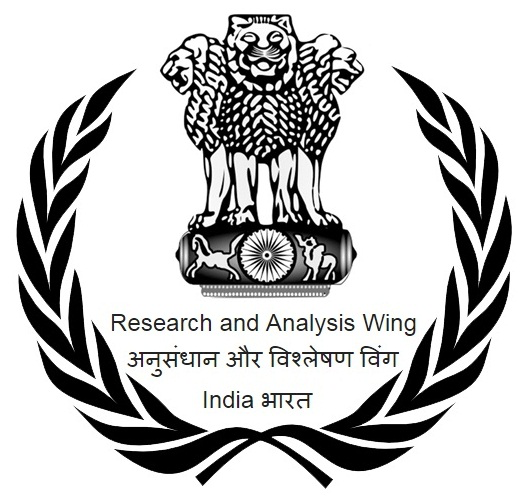
The Research and Analysis Wing is India’s external intelligence agency, headquartered in New Delhi and functioning under the Cabinet Secretariat. The Research and Analysis Wing was set up on 21 September 1968 in the aftermath of the 1962 Sino-Indian War and the 1965 Indo-Pakistani War, both of which exposed gaps in India’s strategic intelligence about its neighbourhood. Until 1968, the Intelligence Bureau handled both domestic and foreign intelligence, and the splitting of the foreign-intelligence function into a separate agency was the single most consequential reform in India’s post-independence intelligence architecture.
The Research and Analysis Wing reports to the Prime Minister through the Cabinet Secretariat. It is headed by a Secretary (R) in the Cabinet Secretariat, an officer of the rank of Secretary to the Government of India. There is no parent statute. The agency was created by executive order under the Allocation of Business Rules, and its budget falls within the Cabinet Secretariat’s allocation in the Union Budget, without a separate line item. The lack of a statutory framework and the absence of parliamentary oversight have been the principal points of criticism through five decades of the agency’s existence.
This explainer covers the founding of the Research and Analysis Wing, the Aviation Research Centre that supports it, the principal operations attributed to the agency (the integration of Sikkim, the 1971 Bangladesh war, intelligence on Osama bin Laden), the institutional position of the Secretary (R) within the national-security structure, and the long-running debate on parliamentary oversight and a statutory charter.
Quick Facts on the Research and Analysis Wing
- Established. 21 September 1968.
- Parent department. Cabinet Secretariat, Government of India.
- Headed by. Secretary (R), Cabinet Secretariat, rank of Secretary to the Government of India.
- Founder. Rameshwar Nath Kao (first Secretary, R&AW).
- Reports to. Prime Minister.
- Headquarters. New Delhi.
- Statute. None. Created by executive order under the Allocation of Business Rules.
- Sister agency. Aviation Research Centre (ARC), set up in 1963 and brought under R&AW in 1968.
- Parliamentary oversight. None at present. Exempt from the RTI Act under Section 24.
- Cadre. R&AW Allied Services (RAS), Research and Analysis Service (initially drawn from IPS, Indian Foreign Service, and Indian Revenue Service).
Founding: 1962 and 1965 as the Triggers
The case for a separate external-intelligence agency was made within Indian policy circles after the 1962 Sino-Indian War. The Intelligence Bureau, which then handled both internal and external intelligence, was criticised by the Henderson Brooks-Bhagat report and other reviews for failing to anticipate the scale and direction of the Chinese build-up. The 1965 Indo-Pakistani War reinforced the same concern with respect to the Pakistani military’s intelligence profile.
Prime Minister Indira Gandhi accepted the recommendation of a small group of senior officials, including R.N. Kao, K.F. Rustamji, and Bhola Nath Mullik, and constituted the Research and Analysis Wing as a separate organisation within the Cabinet Secretariat in 1968. The Intelligence Bureau was left with the internal-intelligence and counter-intelligence functions. The Research and Analysis Wing absorbed the external-intelligence personnel and the Aviation Research Centre, which had been set up in 1963 to fly aerial reconnaissance along the China border.
The first Secretary (R) was Rameshwar Nath Kao, an IPS officer of the 1940 batch who had earlier served as the Director of the Aviation Research Centre. Kao is widely regarded as the founder of the agency. The first generation of R&AW officers, drawn from the IPS, IFS, and IRS, came to be known informally as the “Kaoboys”, a coinage that survives in popular Indian intelligence literature.
Structure and Reporting Line
The Research and Analysis Wing is organised as a Wing of the Cabinet Secretariat. The Cabinet Secretariat is, in turn, headed by the Cabinet Secretary, the senior-most civil servant in the Government of India. The Secretary (R) reports to the Cabinet Secretary administratively, but for substantive intelligence matters reports directly to the Prime Minister.
This arrangement reflects the constitutional position that intelligence is an executive function of the Union Government under the Allocation of Business Rules. The Prime Minister exercises political control through the office of the Principal Secretary to the Prime Minister and the National Security Adviser. The NSA, a creation of 1998, is the principal day-to-day point of coordination for the Secretary (R) on operational matters.
Within the Research and Analysis Wing, the structure is organised by geographical desks, technical wings, and operational divisions. Geographical desks cover Pakistan, China, the Indian Ocean Region, Western Europe, North America, and so on, with intelligence officers stationed abroad under diplomatic cover. Technical wings include signals intelligence, imagery intelligence, and cyber operations. The Special Frontier Force, a paramilitary force raised in 1962 for high-altitude operations, is operationally linked to the R&AW through the Aviation Research Centre.
The Aviation Research Centre
The Aviation Research Centre (ARC) was set up in 1963 as a specialised aerial-reconnaissance organisation. It absorbed personnel from the Air Force and the IPS and built up a capability for high-altitude photographic reconnaissance along the China border. The ARC was brought under the Research and Analysis Wing in 1968.
The ARC’s principal current functions include signals intelligence and imagery intelligence from aerial and satellite platforms. The Centre flies fixed-wing aircraft and helicopters for cross-border reconnaissance, monitors Chinese and Pakistani military communications, and contributes to the strategic intelligence brief that the Secretary (R) places before the Prime Minister.
The ARC is headquartered in Charbatia, Odisha, with operational bases in several locations along the Line of Actual Control and the western border. Aviation Research Centre operations have been intermittently in public attention, including during the 2017 Doklam stand-off and the 2020 Galwan crisis.
Key Operations: Sikkim, Bangladesh 1971, OBL Intelligence
The Research and Analysis Wing has been credited, in academic literature and intelligence memoirs, with several significant operations.
Sikkim merger (1973-1975). The integration of Sikkim into the Indian Union as the 22nd state in April 1975 was preceded by extensive R&AW work, including liaison with the Sikkim National Congress, the documentation of public sentiment in support of merger, and the management of the political transition from the Chogyal’s monarchy to a democratic state. The Constitution (Thirty-sixth Amendment) Act 1975 gave Sikkim full statehood.
Bangladesh war (1971). The Research and Analysis Wing, then in its third year of operation, ran intelligence and liaison operations in East Pakistan from late 1970 onwards. The agency liaised with the Mukti Bahini, ran training camps for Bangladeshi guerrilla fighters, and provided strategic intelligence to the Eastern Army Command. The 1971 war is the most-cited operational success in R&AW literature.
Osama bin Laden intelligence. In the period leading up to the 2 May 2011 U.S. raid on Osama bin Laden’s Abbottabad compound, the Research and Analysis Wing reportedly maintained an independent intelligence picture of the Pakistani military’s involvement in the protection of jihadist leaders. The agency had earlier flagged jihadist infrastructure in Abbottabad in dossiers shared with intelligence partners. The 2011 raid validated the broader Indian intelligence assessment that Pakistan-based jihadist networks operated with the protection of segments of the Pakistani security establishment.
Nuclear test 1974 and 1998. The agency contributed to the protective intelligence around the 1974 Pokhran I test (Operation Smiling Buddha) and the 1998 Pokhran II tests (Operation Shakti), maintaining the secrecy that surrounded both events.
Other operations widely attributed to the agency in academic literature include the safe evacuation of Indian nationals from war zones, intelligence support to Sri Lankan operations in the 1980s, and continuing intelligence work on Khalistani networks in foreign jurisdictions. The agency does not publicly confirm specific operations, and primary-source verification is limited.
Cadre, Recruitment, and Structure
Officers of the Research and Analysis Wing are drawn from two streams. The first is the Research and Analysis Service (RAS), an internal cadre with direct entry through a confidential recruitment process. The second is officers on deputation from the Indian Police Service, the Indian Foreign Service, the Indian Revenue Service, and from the armed forces.
The 2008 establishment of the RAS cadre was a significant reform. Until then, the agency was almost entirely staffed by officers on deputation, with attendant problems of dual loyalty, lack of career progression within the agency, and short institutional memory. The RAS cadre provides for direct recruitment, a career structure within the agency, and an internal training academy.
The agency’s training is run at facilities that are not publicly identified. Officers are trained in tradecraft, foreign languages, cryptology, and area studies, with specialised training for officers posted to particular regions.
Parliamentary Oversight: The Long-Running Debate
The Research and Analysis Wing has no statutory charter and is not subject to parliamentary oversight. The agency is exempt from the Right to Information Act 2005 under Section 24 read with the Second Schedule, except in respect of allegations of corruption and human rights violations. The Comptroller and Auditor General does not audit operational expenditure of the agency in the manner in which other government expenditure is audited.
This absence of oversight has been the principal point of structural criticism. The Administrative Reforms Commission, the National Commission to Review the Working of the Constitution (2002), and several private bills introduced in Parliament have all argued for a statutory charter for the intelligence agencies and a Parliamentary Standing Committee on Intelligence Oversight.
The “Intelligence Services (Powers and Regulation) Bill, 2011” introduced as a private member’s bill by Manish Tewari proposed a statutory charter for the R&AW, the Intelligence Bureau, and the National Technical Research Organisation, along with a National Intelligence Tribunal and a parliamentary committee. The bill lapsed but the underlying debate has continued. The Group of Ministers report on national security (2001), the Naresh Chandra Task Force report (2012), and the second Administrative Reforms Commission have all recommended some form of oversight.
The principal arguments for parliamentary oversight are accountability and constitutional propriety. Intelligence is an executive function but operates with significant powers (use of intercepts, foreign-currency expenditure, deployment of personnel abroad) that affect citizens’ rights and the country’s external relations. The arguments against oversight focus on operational security, source protection, and the risk of leaks from political committees.
The contemporary policy view, articulated by successive National Security Advisers, is that the present system of executive control through the Prime Minister and the NSA is the appropriate model, supplemented by internal audits and the Cabinet Secretariat. The federalism overlay matters here too — the Rajya Sabha has been the forum for most of the parliamentary discussion on intelligence reform.
Indian Intelligence Architecture: R&AW Among Peers
The R&AW is one of several agencies in the Indian intelligence architecture, and a UPSC-relevant overview situates it among its peers.
Intelligence Bureau. Set up in 1887, it is India’s internal-intelligence and counter-intelligence agency, reporting to the Ministry of Home Affairs. The Director of the Intelligence Bureau is an officer of the rank of DG and the senior-most officer in the IB.
National Technical Research Organisation. Set up in 2004 on the recommendation of the Kargil Review Committee, the NTRO is the technical intelligence agency, handling signals intelligence and cyber operations. It reports to the National Security Adviser and is funded from the Prime Minister’s office.
Defence Intelligence Agency. Set up in 2002, the DIA is the integrated military-intelligence agency under the Headquarters Integrated Defence Staff, coordinating intelligence across the Army, Navy, and Air Force.
Joint Intelligence Committee / National Security Council Secretariat. The Joint Intelligence Committee was subsumed into the National Security Council Secretariat after the latter’s creation in 1998. The Secretariat is the analytical and coordinating body that supports the National Security Adviser.
Investigative agencies. The Central Bureau of Investigation, the National Investigation Agency, and the Enforcement Directorate are investigative rather than intelligence agencies, with statutory powers under the DSPE Act, the NIA Act, and the PMLA respectively.
The Research and Analysis Wing’s distinctive position is as the sole agency with a primary external-intelligence mandate.
Notable Secretaries (R)
A short list of secretaries who shaped the agency:
- R.N. Kao (1968-1977). Founder; ran the agency through the Bangladesh war, the Sikkim integration, and the 1974 nuclear test.
- N.F. Suntook (1977-1983). Consolidated the cadre and operations across South Asia.
- G.S. Bajpai, A.K. Verma, G.S. Bajpai (1980s-90s). Period of focus on Punjab, Kashmir, and Sri Lankan operations.
- A.S. Dulat (1999-2000). Later wrote influential memoirs on Kashmir and Indian intelligence.
- C.D. Sahay, P.K.H. Tharakan, Ashok Chaturvedi, K.C. Verma (2000s). Period of post-Kargil reorganisation.
- Alok Joshi, Rajinder Khanna (2010s). Built up the technical and cyber wings.
- Anil Kumar Dhasmana, Samant Goel (2017-2023). Focus on Pakistan and the Balakot strike intelligence (2019).
- Ravi Sinha (2023-present). Current Secretary (R) at the time of writing.
UPSC Angles on the Research and Analysis Wing
For prelims, the Research and Analysis Wing is tested on the founding year (1968), R.N. Kao as founder, the parent department (Cabinet Secretariat), the absence of a statute, and the Aviation Research Centre.
For mains GS-II, the questions ask about parliamentary oversight of intelligence agencies, the case for a statutory charter, and the appropriate institutional placement of an external-intelligence service. The Manish Tewari bill (2011) and the second ARC recommendations are useful reference points.
For mains GS-III internal security and external security, the R&AW is discussed in the context of cross-border terrorism, the Pakistan-China security architecture, and the role of intelligence in counter-terror operations. The agency’s coordination with the armed forces, the National Security Adviser, and the National Investigation Agency is a recurring discussion point. The National Disaster Response Force joins the picture in scenarios involving CBRN incidents where intelligence and response converge.
Frequently Asked Questions
What is the Research and Analysis Wing?
The Research and Analysis Wing is India’s external intelligence agency, set up in 1968 within the Cabinet Secretariat. It reports to the Prime Minister through the Cabinet Secretary and handles foreign-intelligence collection, analysis, and covert operations.
When was R&AW established?
The Research and Analysis Wing was established on 21 September 1968, in the aftermath of the 1962 Sino-Indian War and the 1965 Indo-Pakistani War, both of which exposed gaps in India’s strategic intelligence about its neighbourhood.
Who founded R&AW?
Rameshwar Nath Kao, an IPS officer of the 1940 batch, was the first Secretary of R&AW and is widely regarded as the founder. The first generation of R&AW officers came to be known informally as the u0022Kaoboysu0022.
To whom does R&AW report?
R&AW reports to the Prime Minister through the Cabinet Secretariat. The agency is administratively a wing of the Cabinet Secretariat and is headed by a Secretary (R), an officer of the rank of Secretary to the Government of India.
Is R&AW under parliamentary oversight?
No. The Research and Analysis Wing is not subject to parliamentary oversight. It is also exempt from the Right to Information Act 2005 under Section 24 read with the Second Schedule, except in respect of allegations of corruption and human rights violations. Several proposals, including the Manish Tewari Bill 2011, have called for a statutory charter and parliamentary oversight.
What is the Aviation Research Centre?
The Aviation Research Centre (ARC) was set up in 1963 as a specialised aerial-reconnaissance organisation and brought under R&AW in 1968. It handles signals intelligence and imagery intelligence from aerial and satellite platforms, headquartered in Charbatia, Odisha.
What are R&AW’s most-known operations?
The principal operations widely attributed to R&AW in academic literature include intelligence and liaison work in the 1971 Bangladesh war, the integration of Sikkim into India in 1975, intelligence around the 1974 and 1998 nuclear tests, and continuing intelligence on Pakistan-based jihadist networks including the Osama bin Laden complex in Abbottabad.
How is R&AW different from the Intelligence Bureau?
The Intelligence Bureau (set up 1887) is India’s internal-intelligence and counter-intelligence agency, reporting to the Ministry of Home Affairs. R&AW (set up 1968) is India’s external-intelligence agency, reporting to the Cabinet Secretariat. The split was created in 1968 precisely to give external intelligence a dedicated organisation.
Tell Google you want more of this.
Add Anantam IAS as a preferred sourceOne tap, and this site shows up more often in your own Top Stories, AI Overviews and AI Mode. Remove it any time.