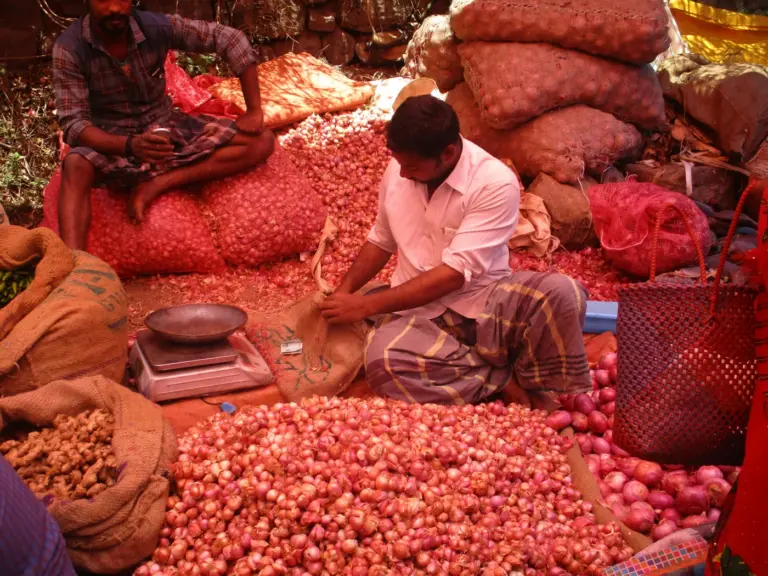
Long before APMCs and e-NAM, India's rural produce moved through gramin haats – weekly or bi-weekly village markets that still dot the countryside. An estimated 22,000 of these rural periodic markets operate across India, known variously as haats, Rythu bazaars, Rytha santhes, mandis or peths. Though often overlooked in policy discussions, gramin haats are the primary outlet for roughly 90% of marketable surplus produced by small and marginal farmers in remote areas. Their transformation into Gramin Agricultural Markets (GrAMs) was flagged as a priority in Union Budget 2018-19 and has gained new urgency under Budget 2025-26 and the Digital Agriculture Mission.
Why gramin haats matter
APMC coverage is thin
The average Indian APMC serves an area of around 450 sq km – vastly above the 80 sq km benchmark recommended by the M.S. Swaminathan Committee. Many villages in central India, the north-east and hill regions lie 30-50 km from the nearest mandi. For small and marginal farmers who contribute around 40% of marketable surplus, the transport cost to an APMC often exceeds the marginal price benefit.
Alternative marketing infrastructure
Gramin haats fill this gap:
- They function weekly or fortnightly, matching farmer cash flow.
- They are within walking or short-cycle distance of villages.
- They bring together producers, consumers, processors and input sellers in one place.
Farm-to-fork shortening
By enabling direct sales to end-consumers and local retailers, gramin haats eliminate multiple middleman layers, improving price realisation for farmers and reducing retail markups for consumers.
Small-farmer focus
These markets serve the exact demographic that APMCs and e-NAM tend to miss – tribal, hilly, and rainfed-region farmers with tiny surpluses not worth the APMC trip.
Hub-and-spoke potential
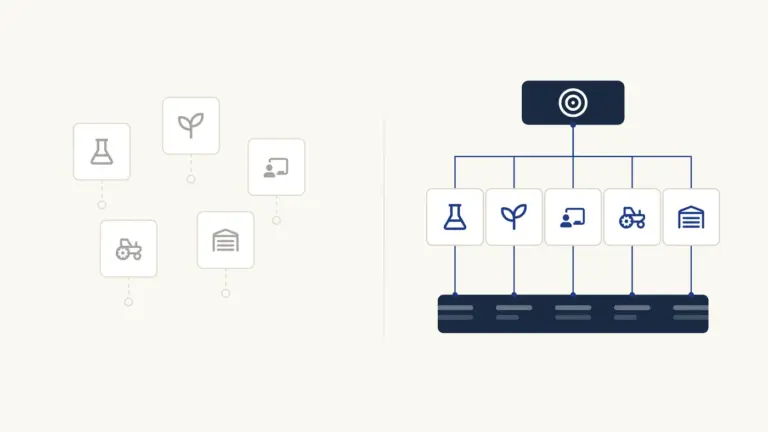
As feeders to larger APMCs and e-NAM-integrated mandis, GrAMs can create a hub-and-spoke architecture where aggregation happens at the village level.
Integrated input market
Many haats double as points of sale for seeds, organic manure, tools, agri-credit counselling and animal feed.
Ownership and governance
Gramin haats are owned and managed by a patchwork of institutions:
- Gram Panchayats
- Urban Local Bodies in peri-urban areas
- APMCs (some operate satellite haats)
- Trusts, cooperatives and private lessees
This fragmented governance has hindered standardisation, infrastructure investment and digitisation.
The GrAMs scheme: vision and slow progress
Announcement (Budget 2018-19): Upgrade existing 22,000 rural haats into Gramin Agricultural Markets (GrAMs) through MGNREGA-funded infrastructure and link them to e-NAM. GrAMs were to be exempt from the regulatory provisions of APMC Acts, allowing direct farmer-consumer transactions.
Progress by 2021: Only about 6% of the 22,000 target was operational as GrAMs. Reasons:
- Inadequate convergence between MGNREGA works and agricultural marketing
- Capacity gaps in panchayats
- Limited e-NAM integration infrastructure (assaying, digital payments)
- Low awareness among farmers
Latest developments (2024-26)
Budget 2025-26:
- PM Dhan-Dhaanya Krishi Yojana (covering 100 low-productivity districts) includes GrAMs upgrade as a core component.
- National Mission on Vegetables and Fruits channels funds to cold-storage-equipped haats near production clusters.
- Increased allocation to the Agriculture Infrastructure Fund (extended tenure, 3% interest subvention) explicitly mentions rural haat infrastructure.
Digital Agriculture Mission (2024-26): Agristack and digital crop surveys will enable GrAMs to display real-time surplus availability for buyers; farmer IDs allow direct digital payments.
PM-KISAN + PACS linkage: Many PACS are being repurposed as procurement and storage nodes adjacent to haats under the world's largest grain storage plan.
FPO push: 10,000 FPOs scheme (extended and deepened) encourages collective selling through upgraded haats, linked to e-NAM.
16th Finance Commission: state submissions highlight rural haats infrastructure as candidates for tied grants – covering electrification, cold storage, covered platforms, sanitation.
MPI 2024: the correlation between rural market access and nutritional diversity has strengthened the policy case for rapid GrAM upgrade.
Challenges
- Finance: per-haat infrastructure cost (Rs 30-50 lakh for basic facilities) exceeds the absorptive capacity of gram panchayats.
- Convergence fatigue: MGNREGA + AIF + PMKSY convergence is administratively complex.
- Quality standards: lack of graders and assayers limits premium pricing.
- Connectivity: many haats still lack reliable mobile data, hurting e-NAM linkage.
- Dominance by traders: in some haats, a few wholesalers continue to dictate prices.
Way forward
- Fast-track GrAM upgrade: target 10,000 GrAMs by 2027 with AIF funding and District Mineral Foundation grants.
- Cold storage at haats: small, solar-powered cold rooms (5-10 MT) to handle vegetables, fruits and dairy.
- Direct e-NAM interface: tablets with FPO facilitators; integration with Digital Agriculture Mission infrastructure.
- Capacity building: train Panchayat Secretaries, SHG federations and FPO boards in haat management.
- Consumer outreach: urban-linked farmers' markets on the kisan mandi model, with branding and traceability.
- Cluster approach: one large GrAM plus 4-5 feeder haats, linked by small logistics (Kisan Rath).
- Grading and assaying: mobile assaying vans through KVKs.
UPSC Relevance
- GS III (Agriculture): agricultural marketing reform, APMC coverage, GrAMs, e-NAM.
- GS III (Economy): rural income, price realisation, food processing linkages.
- GS II (Governance): role of Panchayati Raj institutions, MGNREGA convergence.
- Prelims pointers: 22,000 rural haats, Budget 2018-19 GrAMs scheme, Swaminathan Committee 80 sq km benchmark, Rythu bazaar, Rytha santhe, Agriculture Infrastructure Fund.
Likely question: "Gramin haats remain the backbone of marketing for India's small and marginal farmers. Examine the role of GrAMs in closing the APMC access gap, with reference to Budget 2025-26." (GS III, 250 words)
Tell Google you want more of this.
Add Anantam IAS as a preferred sourceOne tap, and this site shows up more often in your own Top Stories, AI Overviews and AI Mode. Remove it any time.