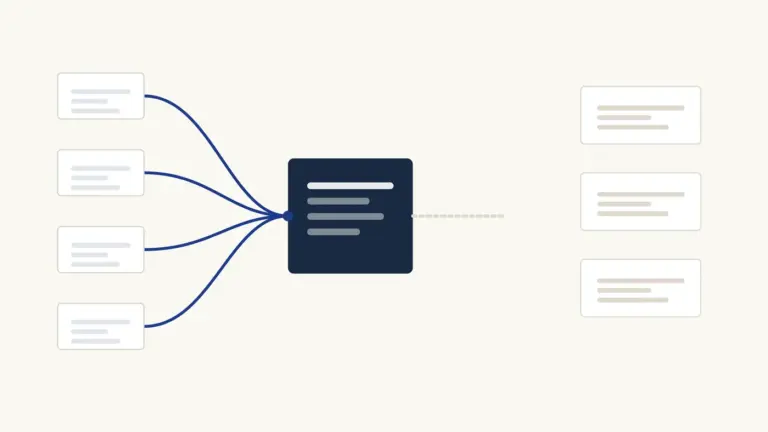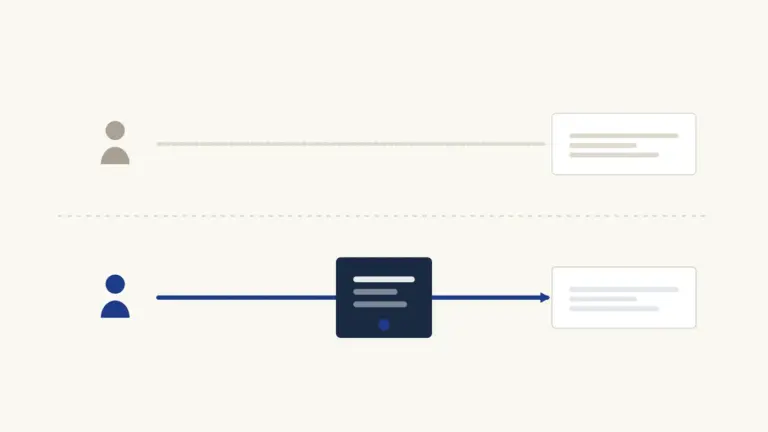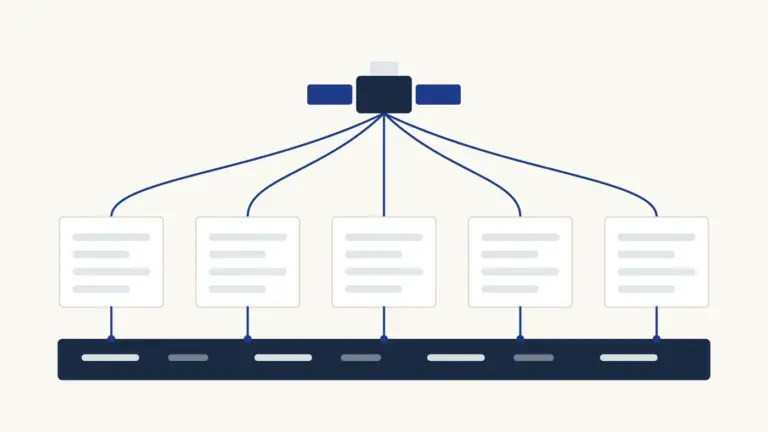

The RTI Act 2005 is the single piece of legislation that converted government information from a bureaucratic privilege into a citizen’s enforceable right. Passed by Parliament on 15 June 2005 and made fully operational on 12 October 2005, it replaced the weaker Freedom of Information Act 2002 and gave every Indian citizen the power to file a written request to almost any public authority and receive a substantive reply within thirty days. The architecture rests on three pillars — proactive Section 4 disclosure, a Public Information Officer in every public office, and an independent Information Commission that hears appeals. For UPSC General Studies II, the RTI Act 2005 is the cleanest case study of accountability, transparency, and the operational meaning of Article 19(1)(a) freedom of speech, which the Supreme Court has repeatedly read as containing a right to know.
The law was not a gift from the state. It was forced into existence by a movement — the Mazdoor Kisan Shakti Sangathan in Rajasthan in the mid-1990s, demanding muster rolls and bills for famine relief works, then the National Campaign for People’s Right to Information, then state-level RTI laws in Tamil Nadu, Goa, Madhya Pradesh, Maharashtra and Delhi between 1997 and 2003. The central Act consolidated those experiments and added enforcement teeth.
Constitutional and statutory foundation
The Supreme Court had already located a right to information inside fundamental rights well before 2005. In State of UP v. Raj Narain (1975) Justice K.K. Mathew wrote that “the people of this country have a right to know every public act, everything that is done in a public way, by their public functionaries.” In S.P. Gupta v. Union of India (1981) and Union of India v. Association for Democratic Reforms (2002) the Court extended that reasoning to judicial appointments and to the criminal antecedents of electoral candidates.
The RTI Act 2005 operationalised this jurisprudence. Section 3 declares that “subject to the provisions of this Act, all citizens shall have the right to information.” Section 2(j) defines that right to include inspection of work, documents and records; taking notes, extracts, or certified copies; taking certified samples of material; and obtaining information in electronic form. The covered entity is the “public authority” under Section 2(h) — any body established by the Constitution, by Parliament or a state legislature, by a government notification, or any body owned, controlled or substantially financed by government, including non-government organisations substantially financed by government funds.
Information vs records
The Act draws a sharp line. A public authority must supply information that it holds or that is under its control. It is not obliged to create new information, to give opinions, or to answer hypothetical questions. The CIC has held repeatedly that an RTI application is not a tool for adjudication of grievances — it is a tool for accessing existing records.
Section 4: suo motu disclosure
Section 4 is the proactive heart of the RTI Act 2005 and the most under-implemented part. Every public authority must, on its own initiative, publish seventeen categories of information within 120 days of the Act coming into force and update them annually. These include the particulars of organisation and functions, powers and duties of officers, decision-making procedures, norms for discharge of functions, rules and regulations, categories of documents held, public-consultation arrangements, directories of officers, the monthly remuneration of every officer, budget allocations, subsidy programmes, recipients of concessions and permits, electronic information held, and facilities available for citizens to obtain information.
Section 4(2) directs that authorities should “endeavour to take steps … to provide as much information suo motu to the public at regular intervals … so that the public have minimum resort to the use of this Act to obtain information.” The 2013 DoPT guidelines, the 2014 Task Force Report and the 2018 Justice Sri Krishna proactive-disclosure framework all flow from this provision. Compliance remains patchy — a 2023 RaaG–Satark Nagrik Sangathan audit found average compliance across central ministries below 40 per cent.
PIO, APIO and the Appellate Authority
Each public authority must designate, under Section 5, a Central Public Information Officer (CPIO) or State Public Information Officer (SPIO) in every administrative unit. Assistant PIOs sit at sub-district level to receive applications and forward them. The PIO is the first responder — she or he must decide on the application within thirty days (forty-eight hours where life or liberty is involved) and either provide the information or pass a reasoned order of refusal under one of the exemption clauses.
A first appeal lies under Section 19(1) to the First Appellate Authority — an officer senior in rank to the PIO inside the same public authority — within thirty days of the PIO’s decision. The FAA must dispose of the appeal within thirty days, extendable to forty-five for recorded reasons. A second appeal lies under Section 19(3) to the Central or State Information Commission within ninety days.
Penalties and the chilling effect
Section 20 empowers the Information Commission to impose a penalty of ₹250 per day on a PIO, subject to a ceiling of ₹25,000, for refusing to receive an application, malafide denial, knowingly giving incorrect information, or obstructing the supply of information. Compensation to the applicant can also be ordered. In practice penalties are imposed in less than 4 per cent of cases where they could be — a CHRI study published in 2023 found this consistently across central and state commissions. The under-enforcement is the single biggest operational weakness of the RTI Act 2005.
Central Information Commission and State Information Commissions
The Central Information Commission (CIC) is constituted under Section 12 and consists of a Chief Information Commissioner and up to ten Information Commissioners. They are appointed by the President on the recommendation of a committee comprising the Prime Minister (chair), the Leader of the Opposition in the Lok Sabha, and a Union Cabinet Minister nominated by the PM. Eligibility — persons of eminence in public life with wide knowledge and experience in law, science and technology, social service, management, journalism, mass media or administration and governance.
State Information Commissions are constituted under Section 15 on the same pattern, with the Chief Minister, Leader of Opposition in the Legislative Assembly and a state cabinet minister forming the selection committee. The CIC and SICs have the powers of a civil court under Section 18(3) — summoning witnesses, requiring documents, receiving evidence on affidavit, and issuing binding decisions on second appeals.
The 2019 amendment
The Right to Information (Amendment) Act 2019 was the most controversial structural change to the regime. The original 2005 Act fixed the term of every Information Commissioner at five years or until age 65, whichever was earlier, and equated the salary of the Chief Information Commissioner with that of the Chief Election Commissioner and of Information Commissioners with that of Election Commissioners. This statutory equivalence was a deliberate guarantee of institutional independence.
The 2019 amendment replaced these statutory fixations with delegated legislation — the central government was empowered to prescribe by rules the term, salary, allowances and other conditions of service of the Chief Information Commissioner and Information Commissioners of both the CIC and the SICs. Subsequent 2019 rules set the term at three years and made salaries determinable by the Union. Critics — including most of the original 2005 drafters — argued that vesting tenure and pay in the executive of the day undermines the independence promised by Section 12(5). The government defended the change as bringing the CIC’s status in line with other statutory bodies. The Supreme Court is still seized of constitutional challenges to the amendment.
Section 8 exemptions and Section 24 exclusions
Section 8(1) lists ten categories of information that are exempted from disclosure. The most invoked are:
- 8(1)(a) — information whose disclosure would prejudicially affect the sovereignty and integrity of India, security, strategic, scientific or economic interests, relations with foreign states or lead to incitement of an offence.
- 8(1)(d) — commercial confidence, trade secrets or intellectual property where disclosure would harm the competitive position of a third party.
- 8(1)(e) — information available to a person in a fiduciary relationship.
- 8(1)(h) — information that would impede the process of investigation or apprehension or prosecution of offenders.
- 8(1)(j) — personal information that has no relationship to any public activity or interest or would cause unwarranted invasion of privacy.
Section 8(2) contains the public-interest override — exempt information must still be disclosed if the public interest in disclosure outweighs the harm to the protected interests. Section 9 allows refusal where disclosure would infringe a third-party copyright. Section 24 excludes intelligence and security organisations listed in the Second Schedule (IB, RAW, NTRO and others) from the Act altogether, with the exception that allegations of corruption and human rights violations against them remain accessible.
The Supreme Court in CBSE v. Aditya Bandopadhyay (2011) and RBI v. Jayantilal Mistry (2015) gave the public-interest override real bite — the Court refused to let the RBI shield inspection reports of banks behind the fiduciary clause. CPIO Supreme Court of India v. Subhash Chandra Agarwal (2019) was equally significant. A Constitution Bench held that the office of the Chief Justice of India is a “public authority” under Section 2(h) and that judges’ assets disclosures, information on collegium correspondence and similar records are not blanket-exempt — they must be tested against Section 8(1)(j) read with the public-interest override.
Subhash Chandra Agarwal and the law’s accumulated jurisprudence
Subhash Chandra Agarwal’s RTI applications over two decades have shaped the operational meaning of the Act more than any other single litigant. His applications produced the CIC v. Manmohan Sharma line on parliamentary records, the assets-of-judges disclosure regime, the 2019 ruling on the CJI’s office, and the disclosure norms for political parties (still resisted by the parties themselves). The CIC in 2013 held that six national political parties are “public authorities” under Section 2(h) because they are substantially financed by tax exemptions, free airtime, government bungalows and large land allotments. The parties have refused to comply, and the matter is pending before the Supreme Court — a useful UPSC mains case on the limits of administrative law without political consent.
Procedural details every aspirant should know
- Application fee — ₹10 in the central government, varying state fees, free for BPL applicants on certification.
- Time limit — 30 days from receipt of the application by the PIO; 48 hours where life or liberty is involved; 35 days if routed through an APIO; 40 days where third-party information is involved.
- Format — written application or electronic, no specific form, no requirement to state reasons under Section 6(2).
- Transfer of application — Section 6(3) requires a PIO who receives an application that concerns another public authority to transfer it within five days.
- No-action defaults — failure to respond within the time limit is deemed refusal, opening the first-appeal route.
Connections to allied accountability laws
The RTI Act 2005 sits inside a broader transparency architecture. The Whistle Blowers Protection Act 2014, the Lokpal and Lokayuktas Act 2013, the Prevention of Corruption Act 1988 (amended 2018), and the social audit regime under MGNREGA 2005 all derive operational strength from RTI disclosures. The constitutional companion is Article 14 — equality before law requires that the state act on rational, knowable, and reviewable criteria, which transparency makes possible. Sectoral rights regimes like the Forest Rights Act 2006 explicitly require gram sabha access to government records, an RTI logic embedded in subject law.
Continuing controversies
Three structural weaknesses dominate the contemporary debate. First, vacancies — the CIC and most SICs operate at half strength for long stretches, building a pendency now exceeding 4 lakh cases nationally. Second, the dilution of Section 4 — proactive disclosure remains the cheapest way to reduce demand on the system, but most ministries treat it as a documentation exercise rather than a substantive duty. Third, the proposed Digital Personal Data Protection Act amends Section 8(1)(j) of the RTI Act to extend the personal-information exemption — civil-society groups argue this could shrink the public-interest override in journalism and election-finance investigations.
The RTI Act 2005 turned twenty in October 2025. Its trajectory is the test case for whether transparency law in India can outlast the institutional culture it was built to challenge.
Frequently Asked Questions
What is the RTI Act 2005 in simple terms?
The RTI Act 2005 is the central law that gives every Indian citizen the right to request information from any public authority — central or state government departments, public sector undertakings, and bodies substantially financed by government. The authority must reply within thirty days, either supplying the information or giving a reasoned refusal under one of the Section 8 exemptions.
Who is a Public Information Officer under the RTI Act?
A Public Information Officer (PIO) is the designated officer in every public authority who receives RTI applications and either supplies the information requested or issues a reasoned refusal. Assistant PIOs sit at sub-district level only to receive and forward applications. The PIO can be penalised up to ₹25,000 for malafide refusal or knowingly false information under Section 20.
What changed in the 2019 amendment to the RTI Act?
The 2019 amendment removed the statutory parity between Information Commissioners and Election Commissioners. Before 2019, the term was fixed at five years and salary was equal to the Election Commission. After 2019, the central government prescribes the term (now three years) and salary by rules, applicable to both CIC and SICs. Critics say this weakens institutional independence.
What is Section 4 suo motu disclosure?
Section 4 requires every public authority to publish on its own initiative seventeen categories of information — organisational structure, officer remuneration, budgets, subsidies, decision-making norms, and so on — and update them annually. The intent is to reduce the volume of RTI applications by making routine information already available. Compliance audits consistently show under 40 per cent average compliance.
What does Section 8 of the RTI Act exempt?
Section 8(1) exempts ten categories — national security, foreign relations, cabinet papers (until decision), commercial confidence, fiduciary information, third-party copyright, ongoing investigations, personal information unconnected to public interest, and a few others. Section 8(2) is the public-interest override — exempt information must still be disclosed if public interest in disclosure outweighs the harm.
How is the Central Information Commission appointed?
The CIC is appointed by the President on the recommendation of a three-member committee — Prime Minister (chair), Leader of Opposition in the Lok Sabha, and a Union Cabinet Minister nominated by the PM. It consists of one Chief Information Commissioner and up to ten Information Commissioners drawn from public life with experience in law, science, journalism, management or administration.
Why is the Subhash Chandra Agarwal case important?
In 2019 a Constitution Bench of the Supreme Court ruled on his RTI applications and held that the office of the Chief Justice of India is a u0022public authorityu0022 under Section 2(h). Judges’ assets, collegium correspondence and similar records must be tested under Section 8(1)(j) read with the public-interest override — they are not blanket-exempt. This ruling brought the higher judiciary inside the transparency regime.
Are political parties covered under the RTI Act?
The Central Information Commission held in 2013 that six national political parties (then INC, BJP, CPI, CPI(M), NCP, BSP) are u0022public authoritiesu0022 because they are substantially financed by tax exemptions, free airtime and land allotments. The parties refused to comply and the matter is pending before the Supreme Court. Operationally, political parties remain outside the RTI regime today.
Tell Google you want more of this.
Add Anantam IAS as a preferred sourceOne tap, and this site shows up more often in your own Top Stories, AI Overviews and AI Mode. Remove it any time.