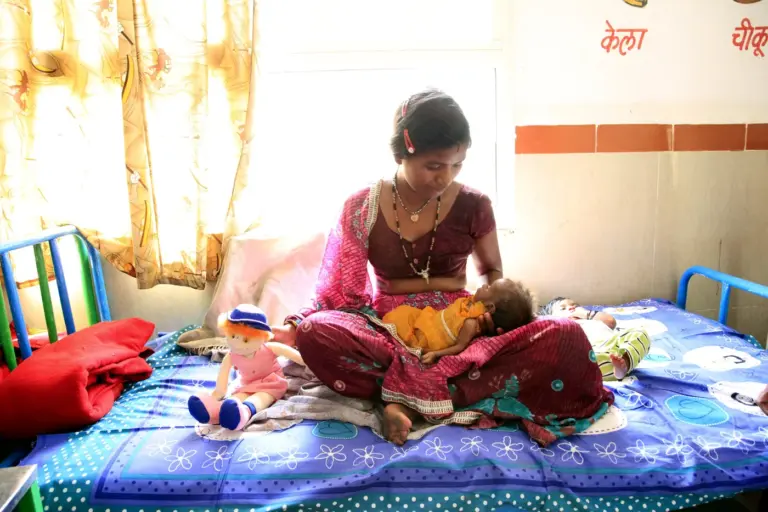
Scheduled Tribes constitute 8.6% of India's population (10.45 crore) per the 2011 Census, spread across more than 705 recognised tribal groups. The Constitution offers ST communities the most extensive protective architecture of any social group — constitutional safeguards, statutory rights, reserved legislatures, special tribal administrations and customised welfare missions. Yet nearly every social indicator — literacy, infant mortality, multidimensional poverty — shows ST communities trailing national averages.
This guide maps the constitutional and legal framework for Scheduled Tribes, explains the Fifth and Sixth Schedules, examines PESA, FRA and contemporary welfare missions like PM-JANMAN and DAJGUA.
Who Are Scheduled Tribes?
Article 342 empowers the President, in consultation with the state Governor, to notify tribes or tribal communities as Scheduled Tribes. The 1965 Lokur Committee laid down criteria:
- Indications of primitive traits.
- Distinctive culture.
- Geographical isolation.
- Shyness of contact with the community at large.
- Backwardness.
These criteria have been critiqued as paternalistic; the recognition process has also been inconsistent, with some communities awaiting ST recognition for decades.
Constitutional Protections
- Article 15(4) and 16(4) — reservations in education and employment.
- Article 17 — abolition of untouchability (relevant for Dalit-Adivasi solidarity).
- Article 46 — state to promote educational and economic interests.
- Article 244 with Fifth and Sixth Schedules — special tribal administration.
- Article 244A — autonomous state within Assam.
- Article 275 — grants-in-aid to states for tribal welfare and Scheduled Areas administration.
- Article 330, 332, 334 — reservation in Parliament and State Legislatures.
- Article 335 — claims of SC/ST in services and posts.
- Article 338A — National Commission for Scheduled Tribes.
- Article 339 — Centre's power to direct state on Scheduled Areas administration.
Fifth Schedule
The Fifth Schedule covers tribal areas in 10 states: Andhra Pradesh, Telangana, Chhattisgarh, Gujarat, Himachal Pradesh, Jharkhand, Madhya Pradesh, Maharashtra, Odisha, Rajasthan.
Key features:
- Governor's special powers — may direct that central or state laws shall not apply, or apply with modifications.
- Tribes Advisory Council (TAC) — advises on welfare and advancement; at least three-fourths ST representation.
- Prohibition of land alienation from tribal to non-tribal persons.
- Regulation of moneylending.
- Annual Governor's report to the President.
Sixth Schedule
The Sixth Schedule covers tribal areas in four Northeast states: Assam, Meghalaya, Tripura, Mizoram. It provides for Autonomous District Councils (ADCs) and Autonomous Regional Councils with legislative, executive and financial powers.
Powers of ADCs include:
- Making laws on land, forests, shifting cultivation, inheritance, marriage, social customs.
- Establishing village councils and village courts.
- Levying taxes and fees.
Examples: Bodoland Territorial Council (BTC) in Assam, Khasi Hills ADC and Jaintia Hills ADC in Meghalaya, Tripura Tribal Areas ADC, Chakma ADC in Mizoram.
The 125th Constitutional Amendment Bill, pending in Parliament, proposes to expand ADC powers.
PESA 1996
The Panchayats (Extension to Scheduled Areas) Act 1996 extends the 73rd Amendment to Fifth Schedule areas with significant modifications:
- Gram Sabha as the highest authority — approves plans, manages community resources, controls minor water bodies, regulates moneylending and sale of liquor.
- Consultation for land acquisition — Gram Sabha consultation mandatory.
- Ownership of minor forest produce — community ownership.
- Traditional customs — preserved in panchayat functioning.
- Reservation — not less than half of seats in PRI for STs; Chairperson at all levels reserved for STs.
Implementation is uneven; state PESA rules vary, and enforcement of Gram Sabha consent for acquisition has been a major fault-line in mining and infrastructure disputes.
Forest Rights Act 2006
The Scheduled Tribes and Other Traditional Forest Dwellers (Recognition of Forest Rights) Act 2006 recognises:
- Individual Forest Rights (IFR) — land used for self-cultivation.
- Community Forest Rights (CFR) — community use and access.
- Community Forest Resource Rights (CFRR) — management of customary forest areas (up to the traditional/community boundary).
- Other rights — grazing, NTFP, water bodies, rehabilitation.
Status — as of late 2024, roughly 24 lakh IFR titles and 1.15 lakh CFR titles have been distributed under FRA, but implementation remains patchy, with backlog of claims in major tribal states.
Particularly Vulnerable Tribal Groups (PVTGs)
75 PVTGs (formerly Primitive Tribal Groups, renamed 2006) across 18 states and UTs. Criteria:
- Pre-agricultural level of technology.
- Stagnant or declining population.
- Extremely low literacy.
- Subsistence level of economy.
Examples: Jarawas, Onges, Sentinelese (Andaman); Cholanaickans, Kadar, Kattunayakan (Kerala); Asurs, Birhor, Hill Kharia (Jharkhand); Sahariyas (MP/Rajasthan); Lodha, Toto (West Bengal).
Flagship Schemes
- Eklavya Model Residential Schools (EMRS) — target 740 schools by 2026-27.
- Scholarships — Pre- and Post-Matric, National Fellowship for ST students.
- TRIFED initiatives — Van Dhan Vikas Kendras (VDVK), Minimum Support Price for Minor Forest Produce (MSP for MFP).
- PM-JANMAN (2023) — Rs 24,104 crore mission for 75 PVTGs across 11 sectors (housing, roads, water, electricity, healthcare, education).
- DAJGUA (Dharti Aaba Janjatiya Gram Utkarsh Abhiyan, 2024) — Rs 79,156 crore mission for saturation coverage of tribal villages.
- PM-AJAY umbrella scheme for adjacent beneficiaries.
Key Institutions
- Ministry of Tribal Affairs (created 1999) — nodal ministry.
- National Commission for Scheduled Tribes (NCST) — under Article 338A.
- TRIFED — Tribal Cooperative Marketing Development Federation.
- National Tribal Research Institute.
- Tribal Research Institutes (TRIs) in states.
Indicators
- Literacy — 59% (ST) vs 74% (national average) per 2011 Census.
- Multidimensional poverty — higher among STs; UNDP-OPHI MPI 2024 shows significant ST exit from poverty between 2005-06 and 2019-21 but absolute deprivation remains.
- Under-5 mortality — higher than national average.
- Land alienation — despite legal protections, significant tribal land loss continues through distress sales, displacement for mining and infrastructure, and benami transactions.
- Displacement — estimates suggest 40-50% of development-induced displaced persons since 1947 have been tribals, despite STs being under 9% of the population.
Contemporary Debates
Tribal vs Non-Tribal Tensions
Ethnic and religious fault-lines have surfaced in Manipur (Meitei-Kuki conflict from May 2023) and earlier in Assam (BTR). These strain the Sixth Schedule framework and raise questions about recognition, representation and resource-sharing.
Manipur Meitei-Kuki Conflict
Since May 2023, violent conflict between Meiteis (seeking ST recognition) and Kukis (already ST and largely in hill districts) has displaced tens of thousands and tested the state-central framework.
ST Status Pending Claims
Communities like Gujjars (Rajasthan), Dhangars (Maharashtra), Kurmis (West Bengal) have long demanded ST status; debate continues on constitutional criteria and modern relevance.
Forest Rights Conflict
Tensions between FRA implementation and forest administration, especially after the 2019 Supreme Court order that threatened to evict lakhs of rejected claimants (stayed pending state review processes).
Latest Developments (2024-26)
PM-JANMAN rollout. Implementation across 75 PVTGs; approximately 55,000 PVTG households benefited by late 2024 through housing, water and electricity components.
DAJGUA launch. Approved October 2024, targeting saturation coverage in ~63,000 tribal villages with 17 interventions across 9 ministries.
Supreme Court on FRA. In April 2024, Supreme Court emphasised due process in forest rights claim rejection; stayed eviction drives pending re-examination.
Caste Census 2025. Union Cabinet approved caste enumeration in the next national census (April 2025); ST enumeration will be refreshed with disaggregated data.
MPI 2024. The Global Multidimensional Poverty Index 2024 reported 415 million Indians exited multidimensional poverty between 2005-06 and 2019-21; ST populations still have higher deprivation rates despite significant gains.
Manipur Violence. Continuing through 2024 with displacement camps in Churachandpur and Imphal; central and state response has been criticised for delay.
Women's Reservation Act. The Nari Shakti Vandan Adhiniyam 2023 reserves one-third of Lok Sabha and state assembly seats for women with ST sub-quota under existing ST reservation.
Global Gender Gap Index 2024. India ranked 129/146; tribal women face intersectional disadvantage not captured in aggregate metrics.
EMRS expansion. Over 440 EMRS schools operational by 2024; target of 740 by 2026-27 under NESTS (National Education Society for Tribal Students).
Policy Recommendations
- Full PESA implementation — state rules harmonised, Gram Sabha consent legally binding.
- Speed up FRA recognition — clear pendency, expand CFR/CFRR coverage.
- Reform Fifth Schedule — legally enforceable TAC consultation.
- Expand Sixth Schedule — 125th Amendment Bill passage.
- PVTG sustainability — move beyond infrastructure to livelihoods.
- Review displacement policy — R&R through LARR Act 2013 reinforced.
- Decentralise tribal education — more mother-tongue and culturally grounded curricula.
UPSC Relevance
GS Paper I — Indian Society
- Salient features of Indian society; diversity.
- Poverty and developmental issues.
GS Paper II — Polity and Governance
- Functions and responsibilities of the Union and States.
- Fifth and Sixth Schedules.
- Welfare schemes for vulnerable sections.
Possible mains questions
- "The Fifth and Sixth Schedules represent distinct constitutional approaches to tribal self-rule. Compare." (250 words)
- "PESA 1996 remains under-implemented two decades on. Examine the reasons." (150 words)
- "Evaluate PM-JANMAN and DAJGUA as vehicles for tribal development." (150 words)
Prelims pointers. Article 342; 705 STs; Fifth Schedule (10 states); Sixth Schedule (Assam, Meghalaya, Tripura, Mizoram); Article 244 and 244A; PESA 1996; Forest Rights Act 2006 (IFR, CFR, CFRR); 75 PVTGs; NESTS; EMRS; TRIFED; MSP for MFP; PM-JANMAN (2023, Rs 24,104 crore); DAJGUA (2024); Article 338A (NCST).
Essay themes. "Adivasi citizenship"; "Forest, land and law"; "A different development".
Tribal welfare in India is rich in constitutional commitments and thin in local capacity. Closing that gap is the task of the next decade.
Tell Google you want more of this.
Add Anantam IAS as a preferred sourceOne tap, and this site shows up more often in your own Top Stories, AI Overviews and AI Mode. Remove it any time.