India has made genuine progress in expanding access to school education over the last two decades. The number of out-of-school children dropped from 13.46 million in 2006 to roughly 6.1 million in 2014, according to SRI-IMRB surveys, and near-universal enrolment has been achieved at the primary level. The legal and policy scaffolding has been built: the Right of Children to Free and Compulsory Education (RTE) Act 2009, the National Early Childhood Care and Education Policy 2013, Sarva Shiksha Abhiyan and its successor Samagra Shiksha, PM POSHAN for school meals, and more recently the NEP 2020 framework.
But scale has not translated into quality. The ASER reports, National Achievement Surveys and the 2021 Foundational Learning Study show that Indian children remain well below grade-level expectations in reading and arithmetic. Children enter the system; they just don't learn as much as they should while inside it.
Challenges in the School Education Sector
- Dropouts and incomplete transitions: Roughly 29 per cent of girls and boys drop out before completing the full cycle of elementary education (SRI-IMRB surveys). Around half of adolescents do not complete secondary education. Some 20 million children never attend pre-school (Rapid Survey on Children 2013–14, Ministry of Women and Child Development).
- Grade-level learning gap: About half of primary school-going children — nearly 50 million — do not reach grade-appropriate learning levels (National Achievement Survey, NCERT 2017 and 2021).
- School readiness: Children at age 5 are often far below expected levels of pre-literacy and pre-numeracy readiness.
These symptoms trace back to two kinds of challenges — visible and invisible.
The Visible Challenge: Inadequate Inputs
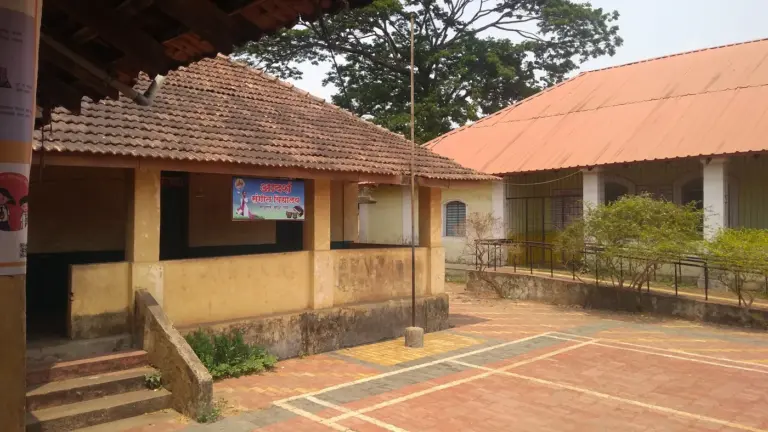
Several schools still lack adequate infrastructure — functional toilets, drinking water, boundary walls, electricity and libraries. Teacher shortages persist in many states: Bihar, Jharkhand, Uttar Pradesh and Madhya Pradesh have large vacancies despite recent recruitment drives. Institutional support for teachers' professional development — coaching, mentoring, continuous assessment — remains weak in most states.
The Invisible Challenge: Children Falling Behind
A typical Indian classroom is structured around completing the syllabus, not around every child reaching a learning milestone. Students who fall behind in the early grades rarely catch up. This is the "low learning trap" documented by economists such as Lant Pritchett and by Pratham's ASER team. It is invisible because children sit in classrooms and appear to be learning — but the gap between what they should know and what they do know widens with each grade.
Government Initiatives for Elementary Education
India has built on the National Policy on Education with multiple schemes:
- Sarva Shiksha Abhiyan (SSA), now merged into Samagra Shiksha, is the flagship programme for universalising elementary education. It targets universal access and retention, bridging of gender and social category gaps, and enhancement of learning levels.
- PM POSHAN (formerly Mid-Day Meal Scheme) provides hot cooked meals to over 11 crore children in classes 1–8, addressing both nutrition and school attendance.
- Mahila Samakhya focused on empowering women and girls through education in marginalised communities.
- Strengthening for Providing Quality Education in Madrassas (SPQEM) supports inclusion of modern subjects in madrassa curricula.
Government Initiatives for Secondary Education
Secondary education (Classes 9–12) is the bridge to higher education and the labour market. Major schemes targeting the 14–18 age group include:
- Rashtriya Madhyamik Shiksha Abhiyan (RMSA), now subsumed under Samagra Shiksha
- National Scheme of Incentives to Girls for Secondary Education
- Girls' Hostel Scheme for students of secondary and higher secondary schools
- Inclusive Education for Disabled at Secondary Stage (IEDSS)
- Scheme of Vocational Education
- National Means-cum-Merit Scholarship Scheme (NMMSS)
- Pre- and post-matric scholarships for minority students
- National Scholarships Portal for consolidated access
The National Council for Educational Research and Training (NCERT) leads curriculum development and conducts the National Achievement Survey and Foundational Learning Study. It runs the National Talent Search Scheme to identify gifted students and the Chacha Nehru Scholarships for artistic excellence. The National Bal Bhavan recognises talent through the Bal Shree awards.
Way Forward
- Ensure maximum enrolment of children in the 6–14 age group, now a justiciable right under Article 21-A.
- States should publicly declare learning goals and articulate concrete plans to achieve them, with annual targets and dashboards.
- Place children's learning outcomes at the centre of policy, as recommended by the Education chapter of the 12th Five-Year Plan.
- Increase inputs, improve infrastructure and tighten education systems.
- Group children by ability wherever feasible (as Pratham's Teaching at the Right Level (TaRL) model has shown to work at scale).
- Support teachers through continuous training and mentoring rather than one-off workshops.
- Conduct systematic, low-stakes assessments to diagnose learning gaps early.
- Promote gender equality through girls' scholarships, safe transport and menstrual hygiene facilities.
- Deploy technology that is cost-effective and language-appropriate — not premium hardware that schools cannot maintain.
Conclusion
India has won the battle for enrolment. The unfinished battle is for learning. Children sitting in unsafe buildings, taught by overworked teachers using outdated methods, produce the predictable result we see in ASER year after year. Closing the gap requires the state to measure what matters, publish the results, and hold itself accountable.
Latest Developments (2024–26)
Implementation of NEP 2020 has reshaped the school landscape. The National Curriculum Framework for School Education (NCF-SE) 2023 has been operationalised with new NCERT textbooks for Classes 3 and 6 in 2024, and for additional grades in 2025. NIPUN Bharat continued as the flagship push on foundational literacy and numeracy by 2026–27. The PM SHRI Yojana, launched in 2022, is upgrading 14,500 existing government schools into model schools that showcase NEP 2020 pedagogy; phase-wise approvals and funds transfers continued through 2024 and 2025. ASER 2023 and subsequent reports showed modest post-pandemic recovery in learning, with improvement in basic reading but continuing arithmetic gaps. The PARAKH body was established to bring parity across state and central boards. The Union Budget 2024–25 and 2025–26 increased allocations for Samagra Shiksha and PM POSHAN, and several states notified their own state curriculum frameworks aligned with NCF-SE. CBSE announced a phased shift to competency-based and biannual Class 10 and 12 examinations. Teacher eligibility and training reforms continued through NISHTHA 3.0.
UPSC Relevance
School education is a recurring theme in GS Paper II (education, government policies for vulnerable sections) and in GS Paper I (social issues). Mains prompts have asked about the RTE Act, learning outcomes, dropout rates and the impact of mid-day meals. Candidates should be able to cite ASER and NAS findings, the RTE Act’s provisions (including the 25 per cent EWS reservation in private schools), the Samagra Shiksha framework, PM POSHAN, PM SHRI, NIPUN Bharat and NCF-SE 2023. For Prelims, remember the RTE Act year (2009), the 5+3+3+4 structure under NEP 2020, and the target of universal FLN by 2026–27. The topic connects to larger themes — demographic dividend, female labour force participation, child nutrition and digital divide — all of which appear in GS Paper III and Essay.
Tell Google you want more of this.
Add Anantam IAS as a preferred sourceOne tap, and this site shows up more often in your own Top Stories, AI Overviews and AI Mode. Remove it any time.