Shaheed Bhagat Singh International Airport Chandigarh is the main civil airport serving the Chandigarh tri-city region, with its IATA code IXC and ICAO code VICG. The airport is physically located in Jhiurheri, Mohali district, Punjab — not within the Union Territory of Chandigarh — and operates as a civil-military dual-use facility sharing infrastructure with IAF Station Chandigarh. For UPSC, it combines location geography, federal complexity, infrastructure development, and memorial naming.
Quick Facts
| Parameter | Details |
|---|---|
| Official name | Shaheed Bhagat Singh International Airport |
| IATA code | IXC |
| ICAO code | VICG |
| Location | Jhiurheri, Mohali district, Punjab |
| Elevation | 317 metres (1,040 ft) AMSL |
| Runway | Runway 11/29 — approx. 2,743 metres (9,000 ft) |
| Terminal | New integrated terminal (opened 2015) |
| Operator | Chandigarh International Airport Limited (CHIAL) — a joint venture |
| Military co-user | Indian Air Force (IAF Station Chandigarh) |
| Serves | Chandigarh UT, Punjab, Haryana, Himachal Pradesh |
| Renamed | 24 September 2012 — named after Shaheed Bhagat Singh |
| International status | Declared international airport in 2015 |
History and Naming
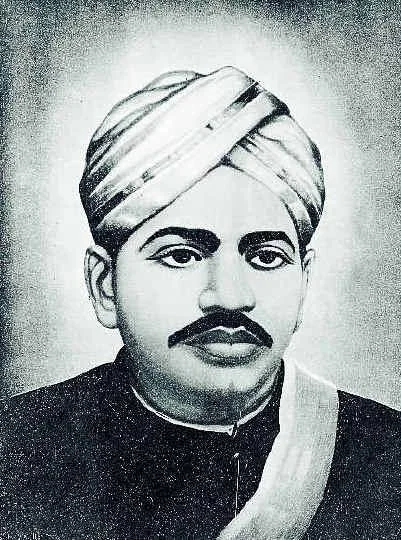
The airport was originally known simply as Chandigarh Airport. On 24 September 2012, it was renamed Shaheed Bhagat Singh International Airport in honour of the revolutionary freedom fighter Bhagat Singh (1907-1931).
Why Bhagat Singh?
- Bhagat Singh was born in Banga, Lyallpur district (now in Pakistan) but his family roots and legacy are deeply connected to Punjab
- He was hanged on 23 March 1931 at Lahore Central Jail at the age of 23
- The naming reflects the broader trend of memorial naming in Indian public infrastructure — connecting national heroes with modern development assets
- The Chandigarh-Punjab-Haryana region has a strong historical association with Bhagat Singh's legacy
This naming pattern is itself a UPSC-relevant observation: India frequently names airports, stadiums, and institutions after historical figures as acts of commemorative nationalism.
Civil-Military Dual Use
The airport shares its airfield with IAF Station Chandigarh. This is a common pattern in Indian aviation infrastructure.
| Aspect | Details |
|---|---|
| Military user | Indian Air Force |
| Civil operator | CHIAL (AAI + state governments of Punjab and Haryana + Chandigarh UT administration) |
| CHIAL structure | Joint venture — reflects federal complexity of the tri-city region |
| Operational model | Civil flights operate from the new terminal; IAF maintains its own operational area |
| Strategic significance | IAF station provides northern sector air defence capability |
The dual-use model is important for UPSC because many Indian airports — including Srinagar, Leh, Jammu, Goa (Dabolim), Pune — operate under similar civil-military arrangements. This creates unique governance challenges around scheduling, security, and expansion.
Location and Administrative Context
This is not just an airport fact. It is a federal geography fact.
| Question | Correct Answer |
|---|---|
| Does the airport serve Chandigarh? | Yes |
| Is the airport physically in Chandigarh UT? | No — it is in Mohali district, Punjab |
| Why is this significant? | Three-state + UT governance complexity |
| States/UT served | Chandigarh (UT), Punjab, Haryana, Himachal Pradesh |
The airport serves:
- Union Territory of Chandigarh — the administrative capital shared by Punjab and Haryana
- Punjab — where the airport is physically located
- Haryana — Panchkula and beyond
- Himachal Pradesh — Shimla and hill regions (nearest major airport)
That makes it more than a city airport. It is a regional gateway. The tri-city region — Chandigarh, Mohali, and Panchkula — depends on this single airport for air connectivity.
Strategic Significance
1. Northern India Aviation Hub
The airport is one of the most important air-connectivity points in north India outside Delhi. It reduces dependence on Indira Gandhi International Airport for passengers from the Chandigarh tri-city region and adjoining states.
2. Gateway to Himachal Pradesh
For passengers heading to Shimla, Manali, Dharamshala, and the broader hill regions, Chandigarh airport is the nearest major airport with reliable all-weather operations. Shimla's Jubbarhatti airport has limited capacity due to terrain.
3. Defence Significance
The co-located IAF Station provides air defence coverage for the northern sector, including proximity to the India-Pakistan border. This dual-use arrangement adds a security dimension to any expansion planning.
4. Administrative Hub Connectivity
Chandigarh is the joint capital of both Punjab and Haryana. The airport therefore serves administrative, judicial (Punjab & Haryana High Court), and governmental travel needs for two state governments and a UT administration.
Economic Impact
The airport supports:
- Business travel — Chandigarh is a major IT, pharma, and services hub
- Education and medical mobility — PGI Chandigarh, Punjab University, and surrounding institutions attract pan-India traffic
- Tourism — gateway for Himachal hill tourism, heritage tourism in Punjab
- Government and administrative movement — critical for the multi-government Chandigarh region
- Real estate and urban development — airport connectivity has driven growth in Mohali and New Chandigarh
The deeper UPSC lesson: transport infrastructure does not only move passengers — it reorganizes regional economies.
CHIAL: Governance Structure
Chandigarh International Airport Limited (CHIAL) is a unique governance entity:
| Stakeholder | Role |
|---|---|
| Airports Authority of India (AAI) | Technical management, ATC, ground handling |
| Government of Punjab | Equity stakeholder |
| Government of Haryana | Equity stakeholder |
| Chandigarh UT Administration | Equity stakeholder |
This multi-stakeholder model reflects the federal peculiarity of Chandigarh — a Union Territory that serves as the capital of two states. UPSC governance questions can draw on this model to discuss cooperative federalism in infrastructure.
Related: Jewar Airport: Key Facts, Location & Significance
Related: Cochin International Airport: India's First Solar Airport
Related: Bhagat Singh: Life, Legacy & UPSC Relevance
UPSC Relevance
| Paper | Relevance |
|---|---|
| Prelims | IATA/ICAO codes, location (Mohali, not Chandigarh), naming, civil-military airports |
| GS-I (History) | Bhagat Singh connection, commemorative naming |
| GS-II (Governance) | Multi-stakeholder airport governance, UT-state-centre dynamics |
| GS-III (Infrastructure) | Regional connectivity, UDAN scheme context, airport expansion |
| Geography | Map-based or state-boundary questions — "serves Chandigarh, located in Punjab" |
If the exam asks a map-based or state-boundary question, remember the key distinction: serves Chandigarh, located in Mohali district, Punjab.
Frequently Asked Questions
Where is Shaheed Bhagat Singh International Airport Chandigarh located?
The airport is located in Jhiurheri, Mohali district, Punjab. It serves Chandigarh, but it is not physically situated in the Union Territory.
What is the IATA code of Chandigarh airport?
The IATA code is IXC. The ICAO code is VICG.
Why is Chandigarh airport named after Bhagat Singh?
The airport was renamed on 24 September 2012 to honour Shaheed Bhagat Singh, the revolutionary freedom fighter whose legacy is deeply connected to the Punjab region.
Is Chandigarh airport a civil-military airport?
Yes. The airport shares its airfield with IAF Station Chandigarh. Civil flights operate from the new terminal, while the IAF maintains its own operational area.
Is Chandigarh airport in Punjab or Chandigarh?
The airport serves Chandigarh but is physically located in Punjab (Mohali district). This distinction is exactly the kind of factual trap used in prelims questions.
Tell Google you want more of this.
Add Anantam IAS as a preferred sourceOne tap, and this site shows up more often in your own Top Stories, AI Overviews and AI Mode. Remove it any time.