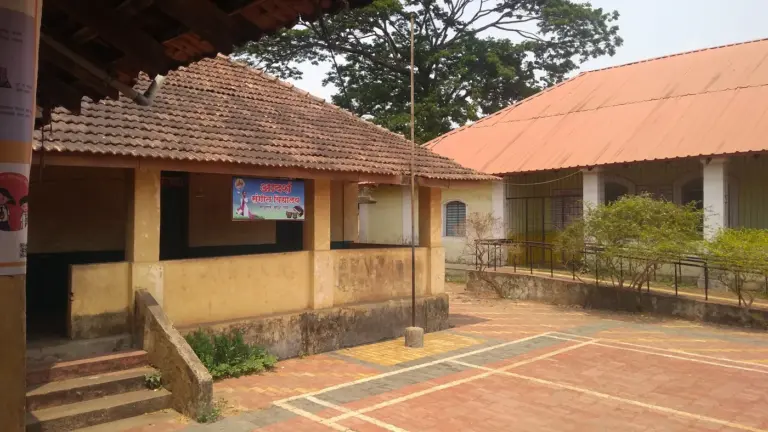
The Economic Advisory Council to the Prime Minister (EAC-PM) released the State of Foundational Literacy and Numeracy in India report, prepared by the Institute for Competitiveness. The report emphasised that the early years of schooling are the single most important lever for a child's lifetime learning, employment and earning potential — and that large sections of Indian children are not acquiring the basic reading and arithmetic skills they need to succeed in higher grades.
The FLN Index built by the report rests on five pillars and 41 indicators:
- Educational infrastructure
- Access to education
- Basic health
- Learning outcomes
- Governance
The index benchmarks states within size categories (small, large, north-eastern, UTs) to allow fair comparison and peer learning.
What is Foundational Literacy and Numeracy?
Foundational Literacy and Numeracy (FLN) refers to the basic skills a child must master by the end of Grade 3: the ability to read a simple text with understanding, write with clarity, and perform elementary mathematical calculations. Strong FLN allows children to learn, experiment, reason and create; it is the base on which all later schooling stands. The National Education Policy 2020 describes FLN as an “urgent national mission” — the precondition for every other reform to succeed.
Key Highlights of the Report
Peer learning matters. No state is best at everything. Kerala is the top-ranked small state on FLN overall, but it can still learn from Andhra Pradesh, which scores higher on access to education. Low-performing states can find practical, replicable lessons from neighbours — a politically pragmatic approach to reform.
Governance is the weakest pillar. More than half of the states score below the national average on governance (28.05 out of 100, the lowest across all pillars). Teacher absenteeism, weak monitoring and fragmented budgeting drag down outcomes even where infrastructure exists.
Access remains uneven among large states. Rajasthan (25.67), Gujarat (22.28) and Bihar (18.23) perform visibly below average on access to education. North-eastern states show stronger access metrics, though they struggle with learning outcomes in parts.
Challenges in Achieving Foundational Literacy and Numeracy
- Weak early childhood care and education: Over 85 per cent of a child's cumulative brain development occurs before the age of 6. Yet quality ECCE remains inaccessible to millions of children from socio-economically disadvantaged backgrounds, and Anganwadis remain nutrition-focused with limited pre-literacy programming.
- Overloaded Anganwadi workers: Anganwadi Workers are simultaneously teachers, nurses and social service providers. They are not adequately equipped with developmentally appropriate materials, training or compensation to deliver quality early education.
- Nutritional deficiency: The link between nutrition, health and learning is well established. The Global Hunger Index 2020 ranked India with the highest child wasting rate (17.3 per cent) of all countries surveyed — stunting directly suppresses cognitive development.
- Inadequate budget: The 1968 National Education Policy recommended public spending of 6 per cent of GDP on education. Economic Survey 2019–20 noted that India still spends only about 3.1 per cent.
- Infrastructure gaps: Despite the RTE Act 2009 mandating toilets, safe drinking water and playgrounds, basic amenities remain unavailable in many schools.
- Pupil–teacher ratios: RTE mandates a PTR of 1:35, but according to NIEPA (formerly NEUPA), around 42 per cent of government elementary schools operate with only one or two teachers across all primary grades.
- Weak pedagogy: Rote teaching, inadequate assessments and one-size-fits-all lesson plans persist.
- Language barriers: When the medium of instruction differs from a child's mother tongue, classroom participation and comprehension drop sharply.
Way Forward
- Increase budget allocation, with focused investment in FLN and early-grade reading.
- Align synergies between the Ministry of Women and Child Development (responsible for Anganwadis) and the Ministry of Education (responsible for schools). Consider two Anganwadi workers per centre so that nutrition and education functions do not crowd each other out.
- Offer primary education in the child's mother tongue, as NEP 2020 recommends.
- Ensure a minimum block of instruction time for reading and arithmetic. States currently allocate anywhere from 35 minutes to 90 minutes per day for literacy instruction — a standardised minimum is overdue.
- Strengthen teacher training with frequent coaching visits and peer learning.
- Use low-cost assessment tools modelled on ASER and Pratham to identify children falling behind and target them for additional support.
- Expand the use of Teaching at the Right Level (TaRL) approaches, which focus on grouping children by current learning level and teaching them basic skills rather than sticking rigidly to grade-level curriculum.
NIPUN Bharat Programme
The Ministry of Education launched the National Initiative for Proficiency in Reading with Understanding and Numeracy (NIPUN Bharat) to ensure that every child in the country attains FLN by the end of Grade 3 — originally targeted for 2026–27.
The expected outcomes of NIPUN Bharat include:
- Foundational skills that keep children engaged in class, reducing dropouts and improving transition rates from primary to upper primary and secondary stages.
- Activity-based learning and conducive learning environments that raise quality.
- Innovative pedagogies such as toy-based and experiential learning to make classrooms joyful.
- Intensive capacity-building of teachers with autonomy in choosing pedagogy.
- Holistic development of the child — physical, socio-emotional, cognitive and life-skill domains — reflected through a Holistic Progress Card.
- Steeper learning trajectories that yield positive effects on later life and employment outcomes.
- Equitable gains that especially benefit children from socio-economically disadvantaged groups, since almost all children attend early grades.
Latest Developments (2024–26)
The Government published the Foundational Learning Study (FLS) 2022 led by NCERT, which set state-wise benchmarks and informed a sharper targeting of NIPUN Bharat interventions. The NIPUN Bharat Mission moved into implementation mode with state-level Lakshya definitions, school readiness weeks (“Vidya Pravesh”) and dedicated teacher guides for Grades 1 to 3. ASER 2023 (“Beyond Basics”) and subsequent ASER rounds showed modest post-pandemic recovery in reading and persistent weakness in arithmetic. The Poshan Bhi, Padhai Bhi initiative was rolled out through Anganwadis in 2023–24 to integrate nutrition with early learning. State governments in Odisha, Tamil Nadu, Madhya Pradesh, Himachal Pradesh and others launched aligned state FLN missions; Odisha’s “Utkarsh” and Madhya Pradesh’s “FLN Mission” have attracted particular attention. The National Curriculum Framework for Foundational Stage (NCF-FS) and the new NCERT textbooks for Grades 1 and 2 are now in use, with activity-based workbooks replacing traditional primers.
UPSC Relevance
FLN is a high-probability GS Paper II and GS Paper I topic because it connects education, nutrition and governance. Mains questions have asked about NIPUN Bharat, the role of Anganwadis, and the effectiveness of India’s primary education system. For Prelims, remember: NIPUN Bharat’s target deadline (originally 2026–27), the five pillars of the EAC-PM FLN Index, the RTE Act’s PTR norm (1:35), and the Heckman Curve concept. Connect FLN to wider themes — demographic dividend, female labour force participation and the Sustainable Development Goal 4.1 (quality primary and secondary education). Essay and Ethics papers can use FLN to argue for early-stage public investment as the most cost-effective form of social policy.
Tell Google you want more of this.
Add Anantam IAS as a preferred sourceOne tap, and this site shows up more often in your own Top Stories, AI Overviews and AI Mode. Remove it any time.