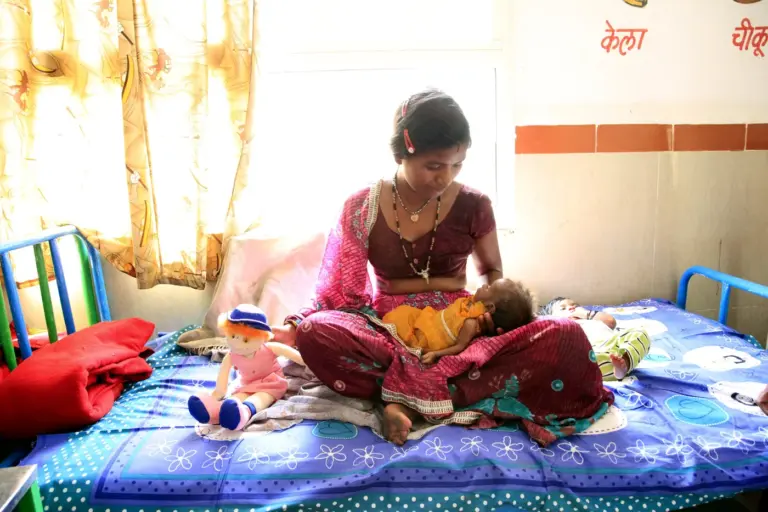
India ranks 102 out of 123 countries in the Global Hunger Index (GHI) 2025, with a score of 25.8 — placing it in the “serious” category, per the report released in October 2025 by Concern Worldwide and Welthungerhilfe. That marks an improvement from 105 out of 127 (score 27.3) in 2024, though India still records one of the world's highest child-wasting rates.
The Global Hunger Index is the international report card on hunger that India loves to argue with. Released every October by the Irish humanitarian agency Concern Worldwide and the German non-profit Welthungerhilfe, the Global Hunger Index has placed India in the “serious” category for over a decade and has, in recent years, become a regular flashpoint between the publishers and the Government of India. In the latest 2025 edition, India ranked 102 out of 123 countries with a GHI score of 25.8, classified as “serious” (down from 105 out of 127, score 27.3, in 2024). For UPSC GS-II and GS-III aspirants, the Global Hunger Index is essential reading on nutrition, food security, child health, and the broader debate about how international indices interact with national data systems and policy credibility.
What the Global Hunger Index Measures
The Global Hunger Index is designed to capture hunger as a multidimensional phenomenon rather than a single calorie shortfall. It combines four indicators into a single 0 to 100 score, where 0 is no hunger and 100 is the worst possible value. The four indicators draw on data from FAO, UNICEF, the WHO Joint Child Malnutrition Estimates, and the UN Inter-agency Group for Child Mortality Estimation.
Four Indicators, Three Dimensions of Hunger
| Indicator | Source | Weight in GHI |
|---|---|---|
| Undernourishment | FAO | 1/3 |
| Child stunting (under-5) | UNICEF/WHO/World Bank JME | 1/6 |
| Child wasting (under-5) | UNICEF/WHO/World Bank JME | 1/6 |
| Child mortality (under-5) | UN IGME | 1/3 |
The four indicators capture three dimensions of hunger: inadequate food supply (undernourishment), child nutrition status (stunting and wasting), and child mortality (a downstream consequence of severe and chronic undernutrition).
How the Score Is Calculated
Each indicator value is first standardised against a fixed maximum (for example, 80 percent for undernourishment, 70 percent for stunting, 30 percent for wasting and child mortality), giving four sub-scores on a 0 to 100 scale. The final GHI score is then a weighted average — one-third undernourishment, one-third child mortality, one-twelfth wasting, one-twelfth stunting (note: the report weights are sometimes summarised as 1/3, 1/3, 1/6, 1/6 for headline purposes, with the child nutrition pair internally split between stunting and wasting).
A GHI score below 9.9 is low, 10 to 19.9 is moderate, 20 to 34.9 is serious, 35 to 49.9 is alarming, and 50 and above is extremely alarming.
India’s GHI 2025 — The Headline
In the Global Hunger Index 2025, India ranks 102 out of 123 countries with a score of 25.8, classified as “serious.” India shares this band with Pakistan (rank 106, score 26.0), Afghanistan (rank 109, score 29.0), and several sub-Saharan African countries. India sits below all its South Asian neighbours other than Pakistan and Afghanistan.
Component Indicator Values (GHI 2025)
- Undernourishment — 12.0 percent of the population (FAO 2022–24 estimate).
- Child stunting — 32.9 percent of children under five.
- Child wasting — 18.7 percent of children under five — the second highest in the index, behind Sudan and South Sudan.
- Child mortality — 2.8 percent of children dying before age five (under-5 mortality).
The child wasting figure of 18.7 percent is the single statistic most often quoted from the report. Wasting — low weight-for-height — is a sign of acute undernutrition and is more responsive to short-term shocks than stunting. India held the world’s highest child wasting rate in almost every edition from 2014 onward. It slipped to second in the 2025 report because conflict drove Sudan and South Sudan higher, not because India’s own rate improved — 18.7 percent is exactly where it stood a year earlier.
Long-term Trend
India’s GHI score has fallen from 38.1 in the year 2000 to 25.8 in 2025 — a drop of more than 12 points across nearly a quarter-century, classifying the country in the “serious” band throughout the period. Three of the four indicators have improved substantially: undernourishment, child stunting, and child mortality. Child wasting is the indicator that has refused to budge, and it is what keeps India anchored near the bottom of the rankings.
The Government Critique
The Government of India has rejected the Global Hunger Index methodology in successive editions since 2021, and the Ministry of Women and Child Development together with the Ministry of External Affairs has issued formal rebuttals. The critique runs along four lines.
One — The Indicators Are About Children, Not Hunger
The government points out that three of the four indicators in the GHI measure outcomes for children under five — stunting, wasting, and under-5 mortality. These are nutritional and health outcomes shaped by water, sanitation, genetics, infections, and maternal health, not solely by hunger or food availability. Calling the index “Global Hunger” while measuring child anthropometrics, the argument goes, is a category error.
Two — Undernourishment Methodology
The undernourishment indicator is derived from the FAO’s food balance sheets and a Gallup World Poll-based estimate of the population unable to access sufficient calories. The MoWCD has argued that the FAO’s estimate for India is based on an opinion survey of around 3,000 respondents and is not anchored in nationally representative consumption data like the NSSO household surveys.
Three — Sample Size and Data Lag
India argues that the Gallup-based component is statistically weak, and that the child nutrition estimates rely on data points (such as those from the Comprehensive National Nutrition Survey or NFHS rounds) that are several years old by the time the index is published.
Four — Public Distribution and Welfare Coverage
The government emphasises that India’s public distribution system, the National Food Security Act (NFSA) covering around 813 million people, free foodgrain schemes (PMGKAY), and child nutrition programmes (POSHAN Abhiyaan, ICDS, mid-day meals) materially improve food access, but these institutional facts do not show up in a survey-based hunger index.
Concern Worldwide’s Reply
Concern Worldwide and Welthungerhilfe respond that the indicators are drawn from standard UN agency datasets (FAO, UNICEF, WHO, IGME) and that the index has used the same methodology since 2015. They also stress that the index measures the outcomes of hunger — including the severe child nutrition outcomes for which India remains a global outlier on wasting — even if the proximate causes go beyond food intake alone.
Cross-checking With Other Data
Indian survey data does not fully exonerate the country. NFHS-5 (2019–21) reported:
- Stunting among under-5s — 35.5 percent, against the 32.9 percent carried in the GHI 2025 source data.
- Wasting among under-5s — 19.3 percent.
- Severe wasting — 7.7 percent.
- Anaemia in women 15–49 — 57 percent.
- Anaemia in children 6–59 months — 67 percent.
The NFHS-5 anaemia and wasting numbers, particularly when contrasted with the rising obesity rates in the same survey, indicate the classic double burden of malnutrition. POSHAN Abhiyaan 2.0 and Mission POSHAN have explicitly targeted these indicators, but progress has been uneven.
India in South Asia
| Country | GHI 2025 Score | Rank | Category |
|---|---|---|---|
| Sri Lanka | 11.2 | 61 | Moderate |
| Nepal | 14.8 | 72 | Moderate |
| Bangladesh | 19.2 | 85 | Moderate |
| India | 25.8 | 102 | Serious |
| Pakistan | 26.0 | 106 | Serious |
| Afghanistan | 29.0 | 109 | Serious |
India trails Sri Lanka, Nepal, and Bangladesh on this composite measure, although the gap with Bangladesh has narrowed in some indicators in recent rounds.
Why GHI Matters Despite the Critique
For all the methodological back and forth, the Global Hunger Index has three durable contributions to the Indian debate:
- It forces an annual conversation on child wasting and stunting, often the only such conversation in the mainstream press.
- It provides a comparative international yardstick that no single Indian survey gives.
- It nudges policy convergence — POSHAN Abhiyaan, fortified rice in PDS, ICDS reforms, and Saksham Anganwadi are all in part responses to bad rankings.
The GHI feeds into international monitoring of SDG 2 — Zero Hunger, and is one input into how international agencies and donors view India’s nutrition progress. It also sits in dialogue with the Multidimensional Poverty Index, where nutrition is one of the ten indicators, and with the Human Development Index, which uses life expectancy as its health indicator.
The Way Forward
India’s child wasting numbers will only fall when three things move together — better maternal nutrition (so children are not born small for gestational age), denser primary health-care reach in the first 1,000 days, and continued improvements in water, sanitation, and behavioural inputs. POSHAN Abhiyaan 2.0 is built around exactly that convergence. Whether India accepts or rejects the Global Hunger Index, the underlying numbers from NFHS-5 are reason enough to act with urgency.
Frequently Asked Questions
What is the Global Hunger Index?
The Global Hunger Index is an annual report published by Concern Worldwide and Welthungerhilfe that measures hunger across countries using four indicators — undernourishment, child stunting, child wasting, and child mortality — to produce a 0 to 100 score classified into bands from low to extremely alarming.
Who publishes the Global Hunger Index?
The Global Hunger Index is jointly published by the Irish humanitarian agency Concern Worldwide and the German non-profit Welthungerhilfe. It draws data from FAO, UNICEF, WHO, the World Bank Joint Malnutrition Estimates, and the UN Inter-agency Group for Child Mortality Estimation.
What is India’s rank in the Global Hunger Index 2024?
India ranks 102 out of 123 countries in the Global Hunger Index 2025 with a score of 25.8, classified in the u0022seriousu0022 hunger category. India’s child wasting rate of 18.7 percent is the second highest in the index.
Why has the Indian government rejected the GHI?
The Government of India has argued that three of the four GHI indicators measure child nutrition outcomes shaped by many factors beyond hunger; that the FAO undernourishment estimate rests on a small Gallup-based survey; and that the index ignores institutional welfare like the National Food Security Act and PMGKAY.
What are the four indicators of the Global Hunger Index?
The four indicators are undernourishment (one-third weight), child stunting (one-sixth weight), child wasting (one-sixth weight), and child mortality under five (one-third weight).
What is the difference between stunting and wasting?
Stunting is low height-for-age and reflects chronic undernutrition over the long term. Wasting is low weight-for-height and reflects acute undernutrition often linked to recent food shortage or illness. Wasting is the more immediate clinical concern; stunting is the more structural one.
What GHI category is India in?
India falls in the u0022seriousu0022 hunger category, defined as a GHI score between 20 and 34.9. India has been in the serious band in every edition since 2000.
How does GHI relate to SDG 2?
The Global Hunger Index tracks four of the underlying outcomes that SDG 2 (Zero Hunger) targets, particularly SDG indicator 2.1.1 (prevalence of undernourishment) and 2.2.1 and 2.2.2 (stunting and wasting in children under five), making it one of the most cited unofficial scorecards for SDG 2 progress.
Tell Google you want more of this.
Add Anantam IAS as a preferred sourceOne tap, and this site shows up more often in your own Top Stories, AI Overviews and AI Mode. Remove it any time.