The Uniform Civil Code (UCC) is a proposed common set of laws governing personal matters — marriage, divorce, inheritance, adoption, and succession — that would apply equally to all citizens of India regardless of religion. Article 44 of the Indian Constitution directs the State to “endeavour to secure” a UCC, but it has remained a Directive Principle (non-justiciable) for over 75 years.
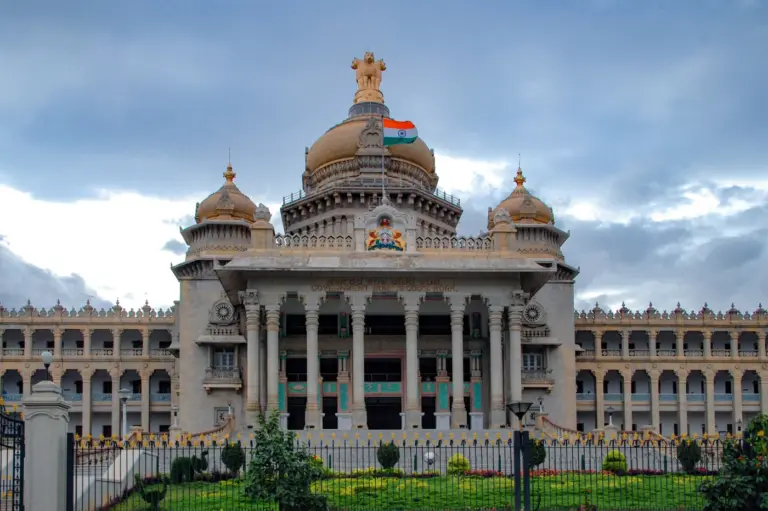
In 2024, Uttarakhand became the first Indian state to enact a UCC (effective January 27, 2025) — making the long-running constitutional debate immediately practical. Several other states have indicated similar legislation.
For UPSC, the UCC connects Polity (Article 44, fundamental rights vs. personal law), Secularism, Constitutional Law, and Ethics.
Constitutional Basis
Article 44
"The State shall endeavour to secure for the citizens a uniform civil code throughout the territory of India." — Article 44, Directive Principles of State Policy
Key features:
- It is a Directive Principle, not a Fundamental Right
- It is non-justiciable — no one can sue the government for failing to implement it
- It is a constitutional aspiration, not a binding obligation
- The State is directed to "endeavour" — implying gradual, persuasive implementation
Constituent Assembly Debate
The UCC was vigorously debated in the Constituent Assembly. Key positions:
| Position | Members | Argument |
|---|---|---|
| For UCC as a Fundamental Right | Some members | National unity requires uniform laws |
| For UCC as Directive Principle | Drafting Committee (Ambedkar) | Not feasible immediately; would alienate minorities; gradual approach better |
| Against any UCC provision | Muslim members (Mahboob Ali Baig, Naziruddin Ahmad) | Personal law is part of religious freedom; threat to minority identity |
Ambedkar's position: He supported the principle of UCC but accepted its placement as a Directive Principle for political feasibility. He famously said the UCC was "purely voluntary" — meaning that the state should pursue it but cannot impose it overnight.
The compromise — UCC as a Directive Principle — was thus a deliberate constitutional choice reflecting the difficulty of immediate implementation.
Personal Laws in India Today
In the absence of a UCC, India has multiple personal laws based on religion:
| Community | Personal Laws |
|---|---|
| Hindus, Sikhs, Jains, Buddhists | Hindu Marriage Act 1955, Hindu Succession Act 1956, Hindu Minority and Guardianship Act 1956, Hindu Adoptions and Maintenance Act 1956 |
| Muslims | Muslim Personal Law (Shariat) Application Act 1937; Dissolution of Muslim Marriages Act 1939; Muslim Women (Protection of Rights on Divorce) Act 1986; Muslim Women (Protection of Rights on Marriage) Act 2019 (banning triple talaq) |
| Christians | Indian Christian Marriage Act 1872; Indian Divorce Act 1869 (amended 2001) |
| Parsis | Parsi Marriage and Divorce Act 1936 |
| Inter-religious / Secular | Special Marriage Act 1954 (allows secular registration without conversion) |
Hindu Code Bills (1955–56): The Hindu personal laws were significantly codified and reformed in the 1950s — abolishing polygamy, granting women equal inheritance rights (later expanded in 2005), allowing divorce, and recognising women's right to maintenance. This codification was largely accepted as a model.
Muslim personal law: Has remained largely uncodified except for specific issues like triple talaq.
Goa: India's Existing UCC
Goa is the only Indian state with a UCC — the Portuguese Civil Code of 1867, which continued in force after Goa's liberation from Portugal in 1961.
Key features of Goa's UCC:
- Common rules on marriage, divorce, succession, and adoption for all citizens
- Mandatory civil marriage registration (in addition to religious ceremonies)
- Communion of property in marriage — both spouses equally own property acquired during marriage
- Equal inheritance rights for sons and daughters
- However, Goa's UCC has certain religious-specific provisions (e.g., Catholics married in church need church permission for divorce)
The Goan model demonstrates that a UCC is not unprecedented in India — it has worked for over 60 years in one state.
Uttarakhand UCC (2024)
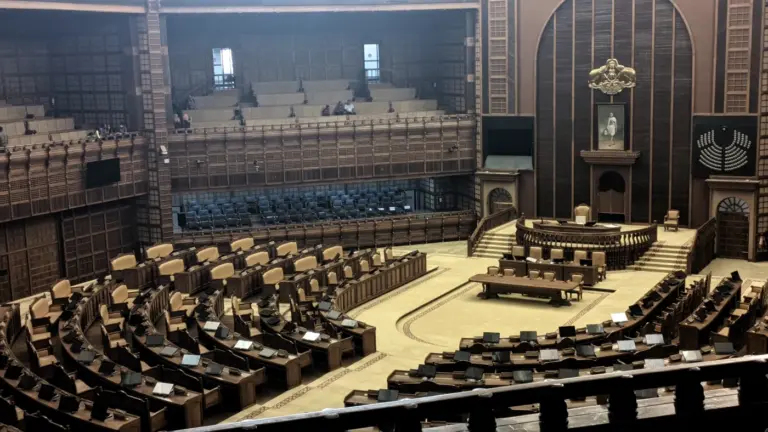
On February 7, 2024, the Uttarakhand Legislative Assembly passed the Uniform Civil Code Bill — making Uttarakhand the first state in independent India (post-Goa heritage) to enact a UCC.
The Act came into force on January 27, 2025.
Key Provisions
| Provision | Details |
|---|---|
| Marriage age | 18 (women) and 21 (men) — uniform across communities |
| Mandatory marriage registration | All marriages must be registered |
| Polygamy banned | One spouse at a time for everyone |
| Equal inheritance rights | Sons and daughters have equal share in parental property |
| Live-in relationships | Must be registered; statutory recognition with rights and obligations |
| Divorce grounds | Common grounds across communities |
| Tribal communities exempted | Scheduled Tribes excluded due to constitutional protections |
Notable Features
Live-in relationship registration: Perhaps the most controversial provision. Couples in live-in relationships must register with the local registrar. Failure to register can attract criminal penalties. Critics argue this is excessive state intrusion into private life.
Inheritance equality: Sons and daughters have equal rights to ancestral property — extending to all communities (the Hindu Succession Act has had this since 2005, but it was not uniformly applied to other communities).
Tribal exemption: The Act explicitly does not apply to Scheduled Tribes — recognising the constitutional protections under the Fifth and Sixth Schedules.
Constitutional Validity
The Uttarakhand UCC has been challenged in court on grounds including:
- Violation of religious freedom (Article 25)
- State legislature exceeding its competence (Personal law is on the Concurrent List)
- Violation of right to privacy (live-in relationship registration)
These cases are pending in the Uttarakhand High Court and the Supreme Court.
Arguments For and Against UCC
Arguments For UCC
| Argument | Explanation |
|---|---|
| National integration | A common code would foster a unified national identity |
| Gender justice | Personal laws have historically discriminated against women (especially in matters of inheritance, divorce, polygamy); UCC would ensure gender equality |
| Modernisation | Personal laws contain medieval provisions out of step with constitutional values |
| Constitutional consistency | Article 44 mandates the State to work toward UCC |
| End of judicial confusion | Multiple personal laws create complex legal situations (e.g., inter-religious marriages, conversion-related disputes) |
| Reduction of communal politics | Personal law debates have become tools for communal polarisation |
Arguments Against UCC
| Argument | Explanation |
|---|---|
| Religious freedom | Article 25–28 protect the right to practise religion, including personal law matters |
| Cultural diversity | India's strength is its diversity; uniformity may erase cultural identities |
| Minority rights concerns | UCC implementation could be perceived as majoritarian imposition on minorities |
| Practical complexity | Personal laws have evolved over centuries; sudden uniformity may create administrative chaos |
| Constitutional federalism | Personal law is on the Concurrent List; uniformity should respect state diversity |
| Sequential reform better | Continue codifying and reforming individual personal laws (as has been done with Hindu law) |
Key Supreme Court Observations
The Supreme Court has periodically commented on the UCC:
| Case | Year | Observation |
|---|---|---|
| Mohd. Ahmed Khan v. Shah Bano Begum | 1985 | Court urged the State to take steps toward UCC |
| Sarla Mudgal v. Union of India | 1995 | Court noted that "successive governments have failed to implement Article 44" |
| John Vallamattom v. Union of India | 2003 | Court reiterated the desirability of UCC |
| Shayara Bano v. Union of India | 2017 | Court struck down triple talaq; mentioned UCC in passing |
| Jose Paulo Coutinho v. Maria Luiza Valentina Pereira | 2019 | Court praised Goa's UCC as a "shining example" |
The Court has consistently expressed support for UCC but has noted that it is a matter for legislative, not judicial, action.
UPSC Relevance
GS2 (Polity): Article 44, fundamental rights vs. personal law, Centre-State relations, federalism.
GS1 (Society): Communalism, gender justice, religion in public life.
GS4 (Ethics): Reconciling individual rights, group identity, and constitutional principles.
Essay: UCC and Indian secularism, gender justice and personal law, diversity vs. uniformity.
Key Prelims facts:
- Article 44: UCC as Directive Principle
- Goa: Only state with UCC (Portuguese Civil Code 1867)
- Uttarakhand UCC: Passed February 7, 2024; enforced January 27, 2025
- First state to enact UCC (post-independence)
- Tribal communities exempted from Uttarakhand UCC
- Special Marriage Act 1954: Allows civil marriage across religions
- Hindu Code Bills: 1955–56 (codification of Hindu personal law)
- Triple talaq: Struck down in Shayara Bano (2017); criminalised by 2019 Act
- Personal law on the Concurrent List (Entry 5, List III)
Tell Google you want more of this.
Add Anantam IAS as a preferred sourceOne tap, and this site shows up more often in your own Top Stories, AI Overviews and AI Mode. Remove it any time.