UNESCO stands for United Nations Educational, Scientific and Cultural Organization. It's a specialized agency of the United Nations, established in 1945, with headquarters in Paris, France. Its mandate: promote peace and security through international cooperation in education, arts, sciences, and culture.
For UPSC, UNESCO matters because of the World Heritage Convention (1972), which has added 42 Indian sites to the World Heritage List, and the Intangible Cultural Heritage Convention (2003), under which India has 15 inscribed elements including Yoga, Kumbh Mela, and the Vedic Chanting tradition.
UNESCO Full Form and Establishment
The full form of UNESCO is United Nations Educational, Scientific and Cultural Organization.
When and How UNESCO Was Founded
UNESCO was established on November 4, 1945, when its Constitution was signed in London by 37 states. It came into force on November 4, 1946, when 20 states had ratified it. The organization replaced the International Institute of Intellectual Cooperation (IIIC), which had operated under the League of Nations.
The founding of UNESCO came from a specific post-World War II logic: the war had demonstrated that technological and military power without moral and cultural foundations was catastrophic. The UNESCO Constitution's preamble states: "Since wars begin in the minds of men, it is in the minds of men that the defences of peace must be constructed."
India was among the founding members of UNESCO, having signed the Constitution in 1945.
UNESCO Headquarters
Location: Paris, France Address: 7, Place de Fontenoy, Paris 75007
UNESCO's main campus in Paris, near the Eiffel Tower, houses its Secretariat. The organization also has over 50 field offices worldwide.
UNESCO Director-General
The UNESCO Director-General is elected by the General Conference for a 4-year term (renewable once). Audrey Azoulay of France has served as UNESCO Director-General since November 2017 and was re-elected for a second term in 2021.
India's connection: Amadou-Mahtar M'Bow of Senegal (1974–1987) was UNESCO DG during a period when India and other developing nations pushed for the New World Information and Communication Order (NWICO) — a significant episode in UNESCO's history that led to US and UK withdrawal in the 1980s.
UNESCO Structure and Governance
UNESCO has three main governance bodies:
| Body | Composition | Frequency | Function |
|---|---|---|---|
| General Conference | All 195 Member States | Every 2 years | Sets programs and budget, elects Director-General |
| Executive Board | 58 Member States (elected) | Twice yearly | Supervises program execution |
| Secretariat | Professional staff | Continuous | Day-to-day administration under Director-General |
UNESCO currently has 195 Member States and 8 Associate Members. Palestine became a member in 2011, which triggered US and Israeli withdrawal of funding (though the US rejoined UNESCO in 2023 under the Biden administration after a 5-year gap).
The World Heritage Convention (1972)
The Convention Concerning the Protection of the World Cultural and Natural Heritage — commonly called the World Heritage Convention — was adopted by UNESCO's General Conference in Paris on November 16, 1972. India ratified it in 1977.
What Gets Listed
World Heritage Sites must meet at least one of 10 Outstanding Universal Value (OUV) criteria (I–X):
- Criteria I–VI: Cultural heritage (masterpiece of human creative genius, cultural tradition, etc.)
- Criteria VII–X: Natural heritage (natural phenomena, geological processes, biodiversity, etc.)
- A site meeting criteria from both groups can be listed as a Mixed Heritage Site
The Three Categories
| Type | India Count | Examples |
|---|---|---|
| Cultural | 35 | Taj Mahal, Red Fort, Nalanda |
| Natural | 7 | Kaziranga, Western Ghats, Great Himalayan NP |
| Mixed | 0 | – |
Total: 42 World Heritage Sites (as of 2024)
India's 42 UNESCO World Heritage Sites
India has 42 World Heritage Sites, making it the 6th largest in the world by count (after Italy, China, Germany, France, and Spain).
Cultural World Heritage Sites in India
| Site | State/UT | Year | Key Features |
|---|---|---|---|
| Ajanta Caves | Maharashtra | 1983 | Rock-cut Buddhist caves, 2nd century BCE – 6th century CE |
| Ellora Caves | Maharashtra | 1983 | Hindu, Buddhist, Jain caves; Kailasa Temple |
| Agra Fort | Uttar Pradesh | 1983 | Mughal fort; also houses Jahangir's palace |
| Taj Mahal | Uttar Pradesh | 1983 | Mughal mausoleum, Shah Jahan, Mumtaz Mahal |
| Konark Sun Temple | Odisha | 1984 | 13th century Surya temple, chariot form |
| Mahabalipuram (Group of Monuments) | Tamil Nadu | 1984 | Pallava-era shore temples and rathas |
| Kaziranga National Park | Assam | 1985 | One-horned rhino; also a Natural site |
| Manas Wildlife Sanctuary | Assam | 1985 | Also a Natural site |
| Keoladeo Ghana NP | Rajasthan | 1985 | Also a Natural site |
| Churches and Convents of Goa | Goa | 1986 | Portuguese colonial architecture |
| Fatehpur Sikri | Uttar Pradesh | 1986 | Akbar's abandoned capital |
| Group of Monuments, Hampi | Karnataka | 1986 | Vijayanagara Empire capital |
| Khajuraho Monuments | Madhya Pradesh | 1986 | Chandela-era temples |
| Elephanta Caves | Maharashtra | 1987 | Rock-cut Shiva temple complex |
| Chola Temples (Great Living Chola Temples) | Tamil Nadu | 1987, 2004 | Brihadisvara, Gangaikondacholisvaram, Airavatesvara |
| Group of Monuments, Pattadakal | Karnataka | 1987 | Chalukya-era temples |
| Sundarbans NP | West Bengal | 1987 | Also a Natural site |
| Nanda Devi and Valley of Flowers | Uttarakhand | 1988, 2005 | Also a Natural site |
| Buddhist Monuments at Sanchi | Madhya Pradesh | 1989 | Ashoka's stupa, oldest stone structures in India |
| Humayun's Tomb | Delhi | 1993 | First garden tomb in Indian subcontinent |
| Qutb Minar and Monuments | Delhi | 1993 | First minaret of India |
| Mountain Railways of India | Himachal Pradesh/West Bengal/Tamil Nadu | 1999, 2005, 2008 | Darjeeling, Nilgiri, Kalka-Shimla |
| Mahabodhi Temple | Bihar | 2002 | Where Buddha attained enlightenment, Bodh Gaya |
| Rock Shelters of Bhimbetka | Madhya Pradesh | 2003 | Prehistoric cave paintings |
| Champaner-Pavagadh Archaeological Park | Gujarat | 2004 | Pre-Mughal city, Islamic and Hindu monuments |
| Chhatrapati Shivaji Terminus | Maharashtra | 2004 | Victorian Gothic railway station, Mumbai |
| Delhi — Red Fort Complex | Delhi | 2007 | Mughal fort, symbol of Indian sovereignty |
| Jantar Mantar, Jaipur | Rajasthan | 2010 | 18th century astronomical observatory |
| Western Ghats | Multiple states | 2012 | Also a Natural site |
| Hill Forts of Rajasthan | Rajasthan | 2013 | 6 forts: Chittorgarh, Kumbhalgarh, Ranthambore, Amber, Jaisalmer, Gagron |
| Rani-ki-Vav | Gujarat | 2014 | 11th century step-well, Patan |
| Great Himalayan National Park | Himachal Pradesh | 2014 | Also a Natural site |
| Archaeological Site of Nalanda Mahavihara | Bihar | 2016 | World's oldest university; also called Nalanda University |
| Khangchendzonga NP | Sikkim | 2016 | First mixed site in India (cultural + natural) |
| Le Corbusier's Chandigarh | Chandigarh | 2016 | Part of transnational nomination with 16 sites |
| Victorian and Art Deco Ensemble, Mumbai | Maharashtra | 2018 | Part of transnational nomination |
| Jaipur City | Rajasthan | 2019 | Planned city, 18th century |
| Dholavira | Gujarat | 2021 | Harappan city, Rann of Kutch |
| Hoysala Temples | Karnataka | 2023 | Belur, Halebidu, Somnathapura |
| Moidams (Ahom Mound-Burial System) | Assam | 2024 | Royal burial mounds of Ahom dynasty |
Note: Some sites serve dual/joint listing (Natural + Cultural); count above reflects unique site entries.
Natural World Heritage Sites in India
| Site | State | Year | Key Features |
|---|---|---|---|
| Kaziranga National Park | Assam | 1985 | Greater one-horned rhino |
| Manas Wildlife Sanctuary | Assam | 1985 | Tiger, elephant, golden langur |
| Keoladeo Ghana NP | Rajasthan | 1985 | Bird sanctuary; Bharatpur |
| Sundarbans NP | West Bengal | 1987 | Mangroves, Bengal tiger |
| Nanda Devi and Valley of Flowers NP | Uttarakhand | 1988, 2005 | Alpine flowers, biodiversity |
| Western Ghats | Multiple | 2012 | Biodiversity hotspot |
| Great Himalayan National Park | Himachal Pradesh | 2014 | High Himalayan ecosystem |
UNESCO Intangible Cultural Heritage: India's 15 Elements
India has 15 elements inscribed on the UNESCO Representative List of Intangible Cultural Heritage of Humanity under the 2003 Convention:
| Element | Year |
|---|---|
| Vedic Chanting | 2008 |
| Ramlila — traditional performance of Ramayana | 2008 |
| Kutiyattam — Sanskrit theatre of Kerala | 2008 |
| Ramman — religious festival of Garhwal | 2009 |
| Mudiyettu — ritual theatre of Kerala | 2010 |
| Kalbelia folk songs and dances of Rajasthan | 2010 |
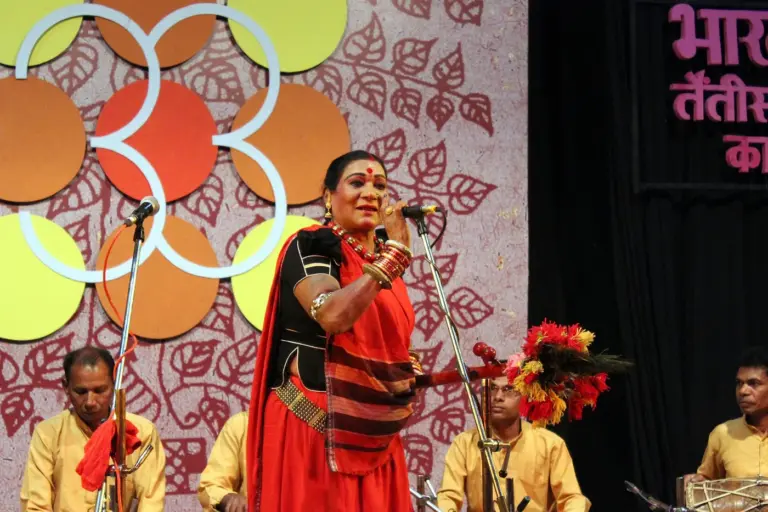
| Chhau dance (Jharkhand, West Bengal, Odisha) | 2010 |
| Buddhist chanting of Ladakh | 2012 |
| Sankirtana — ritual singing, Manipur | 2013 |
| Traditional brass and copper craft of Thatheras, Jandiala Guru | 2014 |
| Yoga | 2016 |
| Nawrouz — Persian New Year (joint nomination) | 2016 |
| Kumbh Mela | 2017 |
| Kolkata's Durga Puja | 2021 |
| Garba of Gujarat | 2023 |
Related: Kumbh Mela 2025: History, Significance & UPSC Notes
How UNESCO Nomination Works
Getting a site listed on the World Heritage List is a multi-year process:
- Tentative List: India submits sites to the Tentative List — the pool from which nominations are made
- Nomination File: A detailed dossier is prepared for each nominated site covering OUV, authenticity, integrity, state of conservation, and management plan
- Advisory Body Review: ICOMOS (for cultural sites) or IUCN (for natural sites) evaluates the nomination
- World Heritage Committee Decision: The 21-member Committee (elected from State Parties) meets annually and makes the final decision
India has around 50+ sites on its Tentative List, including the Padmanabhapuram Palace, Cellular Jail (Andaman), Cemeteries of the First World War in India, and several others awaiting formal nomination.
UPSC Relevance of UNESCO
For UPSC aspirants, UNESCO topics appear across GS papers:
- GS I (Culture): World Heritage Sites, Intangible Cultural Heritage, heritage conservation
- GS II (IR): India's role in international organizations, India-UNESCO relations
- GS III (Environment): Natural World Heritage Sites, biodiversity conservation
Frequently asked factual questions: Which is India's newest World Heritage Site? How many natural World Heritage Sites does India have? Which was India's first World Heritage Site? (Answer: Ajanta Caves, Ellora Caves, Agra Fort, and Taj Mahal — all inscribed in 1983.)
Frequently Asked Questions About UNESCO
What is the full form of UNESCO?
UNESCO stands for United Nations Educational, Scientific and Cultural Organization. It's a specialized UN agency established on November 4, 1945, with headquarters in Paris, France. India was among the founding members.
How many World Heritage Sites does India have?
India has 42 UNESCO World Heritage Sites — 35 cultural, 7 natural, and 0 mixed (as of 2024, including Moidams inscribed in 2024). India ranks 6th globally by number of World Heritage Sites.
Which is India's newest UNESCO World Heritage Site?
The Moidams — the Mound-Burial System of the Ahom Dynasty in Assam was inscribed in 2024. It represents the royal burial tradition of the Ahom kingdom that ruled Assam for 600 years.
Which Indian sites are on the UNESCO Intangible Cultural Heritage list?
India has 15 inscribed elements including Vedic Chanting (2008), Yoga (2016), Kumbh Mela (2017), Durga Puja of Kolkata (2021), and Garba of Gujarat (2023).
When was UNESCO established?
UNESCO was established on November 4, 1945 (Constitution signed in London) and came into force on November 4, 1946 after 20 states ratified it. It replaced the International Institute of Intellectual Cooperation (IIIC) that had functioned under the League of Nations.
Tell Google you want more of this.
Add Anantam IAS as a preferred sourceOne tap, and this site shows up more often in your own Top Stories, AI Overviews and AI Mode. Remove it any time.