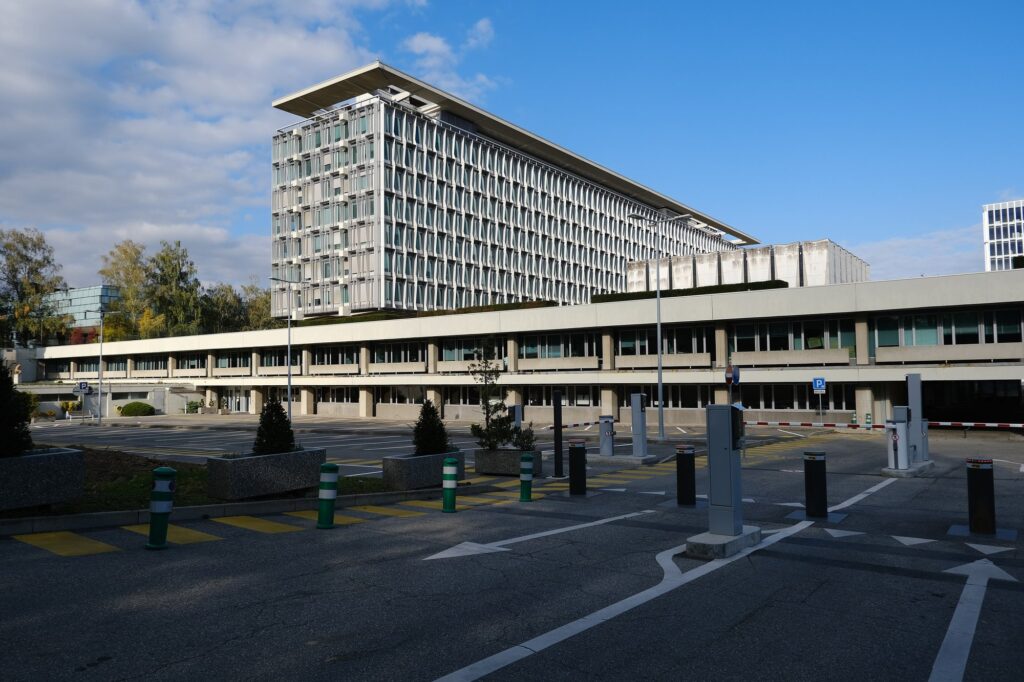
WHO and India share a relationship that goes back to the founding of the organisation itself. The World Health Organization is a specialised agency of the United Nations system established when its Constitution entered into force on 7 April 1948, a date now marked annually as World Health Day. India was among the original signatories that ratified the Constitution and is therefore a founder member of WHO. Headquartered in Geneva and currently led by Director-General Dr Tedros Adhanom Ghebreyesus of Ethiopia, who began his second five-year term in 2022, WHO operates through a decentralised model with six regional offices. The Regional Office for South-East Asia (SEARO) — to which India belongs — is based at Indraprastha Estate in New Delhi, the only WHO regional headquarters located in India.
For UPSC International Relations the WHO and India relationship belongs to the cluster of global governance institutions that emerged in the late 1940s alongside the United Nations Organisation, and operates today against the same backdrop of reform demands that shape the UNSC and India’s permanent seat campaign and India’s engagement with the WTO and India.
Founding and Constitution
The WHO Constitution is unusual among multilateral treaties in defining health expansively as “a state of complete physical, mental and social well-being and not merely the absence of disease or infirmity”.
International Health Conference, New York 1946
The Constitution of the World Health Organization was drafted at the International Health Conference held in New York from 19 June to 22 July 1946. Sixty-one states signed the Constitution on 22 July 1946. The text built on the earlier work of the League of Nations Health Organisation and the Office International d’Hygiène Publique, both of which the WHO absorbed.
Entry into Force, 7 April 1948
The Constitution entered into force on 7 April 1948 after ratification by 26 of the 61 signatories, the date now observed as World Health Day. The first World Health Assembly was convened in Geneva from 24 June to 24 July 1948.
India as Founder Member
India was among the original 61 signatories on 22 July 1946 and was among the early ratifying states. India is therefore counted as a founder member of WHO. The Indian Ministry of Health was a strong supporter of WHO from the outset and has hosted the SEARO regional office continuously since 1948.
Structure and Governance
WHO is governed by the World Health Assembly, an Executive Board and a Secretariat headed by the Director-General.
World Health Assembly
The WHA is the supreme decision-making body of WHO. It meets each year in Geneva in May, is composed of delegations from all 194 member states, and decides on the organisation’s policies, programme of work and budget. The Assembly approves the appointment of the Director-General and elects members to the Executive Board.
Executive Board
The Executive Board has 34 members elected by the WHA for three-year terms with staggered rotation. It meets twice a year — in January to prepare the agenda for the next WHA and in May immediately after the Assembly. India has frequently served on the Board.
Director-General
The current Director-General is Dr Tedros Adhanom Ghebreyesus, a former Foreign Minister and Minister of Health of Ethiopia. He took office on 1 July 2017, was elected to a second five-year term in May 2022, and is the first African and first non-physician to head WHO. The Director-General is appointed by the WHA on the nomination of the Executive Board.
Six Regional Offices
WHO is structured around six regions, each with its own regional committee, regional director and headquarters.
AFRO (Africa)
The African Region (AFRO) is headquartered in Brazzaville, Republic of Congo, and covers 47 countries.
AMRO/PAHO (Americas)
The Americas Region operates through the Pan American Health Organization, headquartered in Washington DC, which predates WHO itself (founded 1902) and functions as both an inter-American agency and the regional office for WHO.
EMRO (Eastern Mediterranean)
The Eastern Mediterranean Regional Office (EMRO) is in Cairo, Egypt, covering 22 countries from Morocco to Pakistan.
EURO (Europe)
The European Regional Office (EURO) is in Copenhagen, Denmark, covering 53 countries from Iceland to Tajikistan.
SEARO (South-East Asia) — Headquartered in India
The South-East Asia Regional Office (SEARO) is headquartered at Indraprastha Estate in New Delhi and covers eleven countries — Bangladesh, Bhutan, North Korea, India, Indonesia, Maldives, Myanmar, Nepal, Sri Lanka, Thailand and Timor-Leste. With over 2 billion people, SEARO is the most populous WHO region. The Regional Director is Dr Saima Wazed (Bangladesh), who took office in February 2024 for a five-year term; Dr Mohammed Khalid (acting) served briefly in the transition.
WPRO (Western Pacific)
The Western Pacific Regional Office (WPRO) is in Manila, the Philippines, covering 37 countries including China, Japan, Australia and the Pacific Island states.
India’s Contributions to WHO
WHO and India interact across financing, programmes, leadership and hosting.
Financial Contributions
India contributes to WHO through assessed and voluntary contributions. Assessed contributions are based on the UN scale of assessments; India’s share is around 1.05 percent. India’s voluntary contributions go to programmes such as polio eradication, tuberculosis elimination and pandemic preparedness.
TB Elimination Drive
India accounts for around 26 percent of the global tuberculosis burden. The National TB Elimination Programme targets ending TB by 2025, five years ahead of the global Sustainable Development Goal target of 2030. WHO has worked closely with the Ministry of Health on case-finding, drug resistance surveillance and new diagnostics like Nikshay.
Polio Eradication
India was declared polio-free on 27 March 2014 by the WHO Regional Certification Commission for Polio Eradication in the South-East Asia Region. The achievement followed a multi-year campaign combining oral polio vaccine, surveillance and the cold chain, with WHO providing technical assistance through the National Polio Surveillance Project.
Vaccine Maitri
During the COVID-19 pandemic India launched Vaccine Maitri (“vaccine friendship”) in January 2021, supplying Made-in-India vaccines to over 100 countries through grants, commercial sales and the COVAX facility. By the end of 2022 India had supplied more than 280 million doses overseas. WHO granted Emergency Use Listing to Covaxin in November 2021 and to Covishield (the Indian-manufactured AstraZeneca vaccine) in February 2021.
International Yoga Day and AYUSH
India led the successful campaign for International Day of Yoga, adopted by UNGA in 2014 and observed annually on 21 June. WHO and India signed a Project Collaboration Agreement in 2017 to develop benchmarks for training in ayurveda, unani and panchakarma, and in March 2022 inaugurated the WHO Global Centre for Traditional Medicine in Jamnagar, Gujarat — the only WHO global centre dedicated to traditional medicine.
COVID-19 and Reform
The COVID-19 pandemic was the most stress-testing moment in WHO history and triggered the most significant reform debate since the 1948 founding.
Pandemic Response
WHO declared COVID-19 a Public Health Emergency of International Concern on 30 January 2020 and characterised the outbreak as a pandemic on 11 March 2020. The organisation came under sustained criticism, particularly from the United States, over the timing of its declarations and its early engagement with China.
Pandemic Agreement of 2025
In May 2025 the World Health Assembly adopted the WHO Pandemic Agreement, the first new legally binding instrument under Article 19 of the Constitution since the WHO Framework Convention on Tobacco Control of 2003. The agreement covers pandemic prevention, preparedness and response, including a Pathogen Access and Benefit-Sharing System (PABS), technology transfer and a global supply chain network. India was an active negotiator and championed the equity provisions on benefit-sharing.
International Health Regulations Amendments
In June 2024 the WHA also adopted amendments to the International Health Regulations (IHR), including a new category of “pandemic emergency” between the existing PHEIC and pandemic determinations, and stronger commitments on equitable access to health products. India supported the amendments after its initial concerns on solidarity provisions were addressed.
Conclusion
WHO and India have built a 78-year partnership that runs through founding membership, the hosting of SEARO and the Global Centre for Traditional Medicine, leadership of vaccine diplomacy and a central role in the post-COVID pandemic governance reforms. The relationship is now entering a new phase shaped by the Pandemic Agreement, the universal health coverage agenda and the ongoing reform debates that connect WHO to the broader United Nations Organisation system and the International Court of Justice (ICJ) where state obligations on health may eventually be tested.
Frequently Asked Questions
When was WHO founded?
The Constitution of the World Health Organization was signed on 22 July 1946 and entered into force on 7 April 1948, a date now observed annually as World Health Day. The first World Health Assembly met in Geneva in June 1948.
Is India a founder member of WHO?
Yes, India was among the original 61 states that signed the WHO Constitution on 22 July 1946 in New York and is counted as a founder member. India hosts the SEARO regional office at New Delhi.
Where is the SEARO regional office located?
The WHO South-East Asia Regional Office is located at Indraprastha Estate in New Delhi, India. It serves eleven member states with a combined population of over 2 billion people. The current Regional Director is Dr Saima Wazed of Bangladesh.
Who is the current Director-General of WHO?
Dr Tedros Adhanom Ghebreyesus of Ethiopia is the current Director-General. He took office on 1 July 2017 and was re-elected to a second five-year term in May 2022. He is the first African and first non-physician to head WHO.
What are the six WHO regional offices?
The six regional offices are AFRO (Brazzaville), AMRO/PAHO (Washington DC), EMRO (Cairo), EURO (Copenhagen), SEARO (New Delhi) and WPRO (Manila). Each region has its own regional committee and regional director.
What is Vaccine Maitri?
Vaccine Maitri is India’s pandemic vaccine diplomacy initiative launched in January 2021. India supplied over 280 million Made-in-India doses to more than 100 countries through grants, commercial sales and the COVAX facility, supporting WHO’s equitable access goals.
What is the WHO Pandemic Agreement?
The WHO Pandemic Agreement, adopted by the World Health Assembly in May 2025, is the first new legally binding instrument under Article 19 of the WHO Constitution since 2003. It covers prevention, preparedness and response, including a Pathogen Access and Benefit-Sharing System.
Where is the WHO Global Centre for Traditional Medicine?
The WHO Global Centre for Traditional Medicine was inaugurated in March 2022 at Jamnagar, Gujarat. It is the only WHO global centre dedicated to traditional medicine and supports evidence-based integration of systems like ayurveda, unani and yoga.
Tell Google you want more of this.
Add Anantam IAS as a preferred sourceOne tap, and this site shows up more often in your own Top Stories, AI Overviews and AI Mode. Remove it any time.