
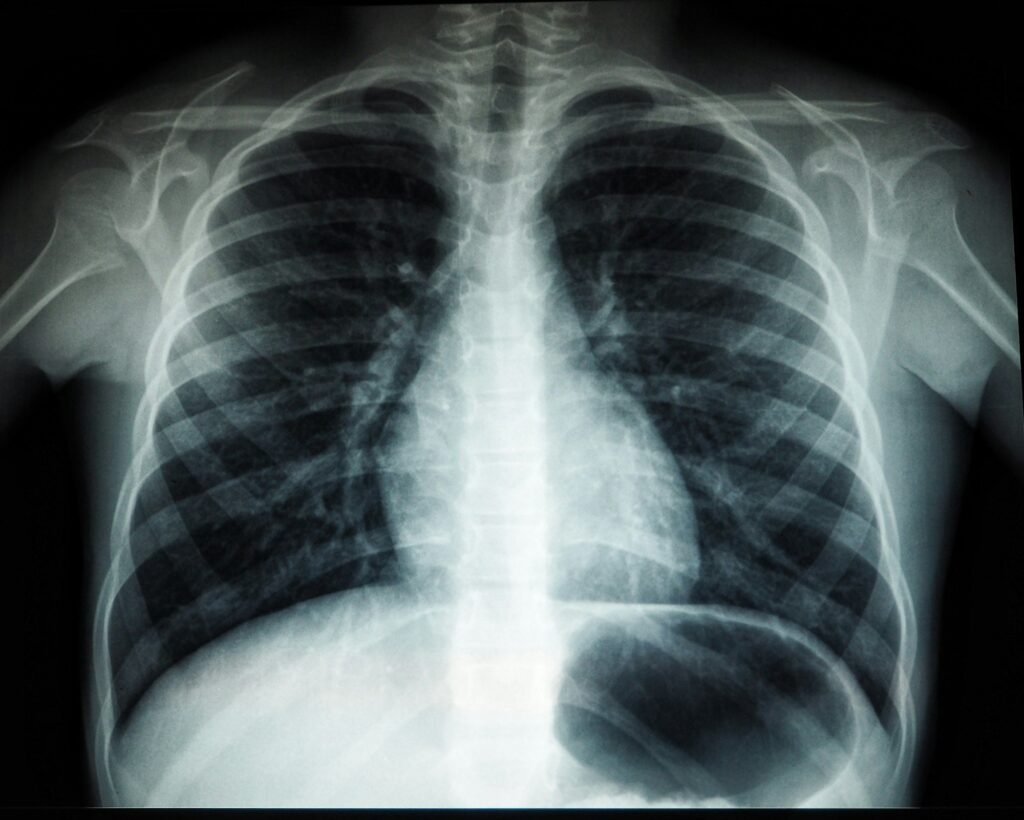
!Mycobacterium tuberculosis under acid-fast staining
Tuberculosis in India remains the country’s single largest infectious-disease challenge. India carries roughly a quarter of the global tuberculosis burden — the World Health Organization’s Global TB Report 2024 estimates around 2.8 million incident cases in India in 2023, out of about 10.8 million worldwide. The country also accounts for the largest share of multidrug-resistant tuberculosis (MDR-TB) cases globally. Despite a decade of intensified effort, tuberculosis in India still kills an estimated 320,000 people every year, making it both a clinical and a developmental priority.
The Government of India, through the National Tuberculosis Elimination Programme (NTEP) of the Ministry of Health and Family Welfare, set 2025 as the target year to eliminate tuberculosis as a public health problem — five years ahead of the United Nations Sustainable Development Goal target of 2030. Whether that target has been met has become one of the most closely watched public-health questions in India, and the official position acknowledges that while incidence and mortality have fallen sharply since 2015, full elimination by the original deadline has not been achieved and the programme is now operating on an extended horizon.
Causative Organism and Transmission
Tuberculosis is caused by Mycobacterium tuberculosis, an acid-fast bacillus first identified by Robert Koch on 24 March 1882 — the date now commemorated worldwide as World TB Day. The bacillus has a thick mycolic-acid cell wall that resists most antibiotics, grows slowly (doubling roughly once every 24 hours) and survives inside macrophages, which is why TB treatment requires multiple drugs taken for at least six months.
How TB Spreads
Tuberculosis spreads through airborne droplet nuclei generated when a person with active pulmonary TB coughs, sneezes, sings or speaks. A single infectious patient can infect 10 to 15 other people in a year through close contact. Crucially, around 90 per cent of those infected develop latent TB infection — bacilli walled off inside granulomas that produce no symptoms and are not transmissible — while only about 10 per cent progress to active disease over their lifetime. The lifetime risk of reactivation is sharply higher in people living with HIV, the malnourished, diabetics, smokers, silicosis patients and those on immunosuppressive therapy.
Pulmonary and Extra-Pulmonary TB
About 80 per cent of TB cases in India are pulmonary, presenting with cough of more than two weeks, evening fever, weight loss and night sweats. The remaining cases are extra-pulmonary — lymph-node TB, spinal TB (Pott’s disease), abdominal TB, TB meningitis, pleural and pericardial TB, and genitourinary TB — which are harder to diagnose and disproportionately affect children and people living with HIV.
National TB Elimination Programme (NTEP)
The Revised National Tuberculosis Control Programme (RNTCP), launched in 1997 and scaled up to nationwide coverage by 2006, was renamed the National Tuberculosis Elimination Programme (NTEP) in January 2020 to signal the shift from “control” to “elimination.” NTEP is implemented under the National Health Mission and follows the Stop TB Strategy and, more recently, the End TB Strategy of the WHO.
The 2025 Elimination Target
Prime Minister Narendra Modi announced at the Delhi End TB Summit in March 2018 that India would eliminate tuberculosis by 2025. “Elimination as a public health problem” is defined as reducing incidence to fewer than one case per million population per year. The National Strategic Plan 2017-25 set intermediate milestones: 80 per cent reduction in incidence and 90 per cent reduction in mortality from 2015 levels. By the end of 2023, incidence had fallen by about 17.7 per cent and mortality by 21 per cent from 2015 — substantial progress, but well short of the elimination threshold. The Government of India has acknowledged that the 2025 target will not be met in absolute terms and has reframed it as a milestone rather than a deadline, with elimination now expected in the late 2020s.
Pillars of the Strategy
NTEP rests on four pillars: detect, treat, prevent and build. “Detect” involves universal access to rapid molecular diagnostics; “treat” provides daily fixed-dose combination regimens; “prevent” extends TB preventive therapy to household contacts and people with HIV; and “build” strengthens human resources, infrastructure and the multisectoral Pradhan Mantri TB Mukt Bharat Abhiyan launched in September 2022.
Nikshay: Digital Surveillance
The Nikshay portal — ni (no) plus kshay (tuberculosis) — is the cornerstone of TB surveillance in India. Operational since 2012, Nikshay is a web-based case-notification system into which every TB diagnosis, whether in the public or private sector, must be entered within 24 hours under the mandatory notification policy of 2012 (revised 2018). It tracks patient demographics, drug-susceptibility test results, treatment regimens, follow-up sputum tests and outcomes.
Nikshay Ecosystem
Nikshay has expanded into a family of digital tools: Nikshay Aushadhi for drug-stock management, Nikshay Sampark for the helpline 1800-11-6666, Ni-kshay Mitra for community-supporter registration, and the Ni-kshay Poshan Yojana payment module. By 2024, Nikshay had recorded more than 25 million TB notifications since inception. Private-sector notifications, which the programme has actively incentivised through provider payments, now exceed 30 per cent of all notifications — a substantial improvement on the under-2-per-cent share recorded a decade ago.
Drug-Resistant Tuberculosis
Multidrug-resistant tuberculosis (MDR-TB) is defined as TB resistant to at least isoniazid and rifampicin — the two most powerful first-line drugs. Extensively drug-resistant TB (XDR-TB), redefined by WHO in 2021, is MDR-TB additionally resistant to any fluoroquinolone and at least one of the Group A drugs (bedaquiline or linezolid). India reports around 110,000 MDR-TB cases each year — the largest national burden in the world — driven by treatment interruption, sub-standard drugs in the private sector and ongoing primary transmission.
BPaL and BPaLM Regimens
Diagnostic and treatment paradigms for drug-resistant TB have changed dramatically. The WHO recommended in 2022 the all-oral, six-month BPaL regimen — bedaquiline, pretomanid and linezolid — and its variant BPaLM with the addition of moxifloxacin. India rolled out BPaLM under NTEP from 2024, replacing the older 18-to-24-month injectable-containing regimens. The shorter regimen has cure rates above 85 per cent and substantially lower side-effect burden, transforming the prognosis of MDR-TB.
Universal Drug Susceptibility Testing
NTEP has committed to universal drug susceptibility testing (UDST) for every TB patient at diagnosis. The programme has deployed cartridge-based nucleic acid amplification tests (CBNAAT, branded Xpert MTB/RIF) and Truenat — an indigenous chip-based platform developed by Molbio Diagnostics, Goa — at the block level. Together they cover more than 7,000 sites across India, allowing same-day diagnosis of rifampicin resistance.
BCG Vaccine
The Bacille Calmette-Guerin (BCG) vaccine, developed by Albert Calmette and Camille Guerin in 1921 from an attenuated strain of Mycobacterium bovis, has been part of India’s Universal Immunisation Programme since its launch in 1985 and is administered at birth or as early as possible thereafter. BCG offers strong protection against severe paediatric forms — miliary TB and TB meningitis — but its efficacy against adult pulmonary TB varies widely across populations. India launched an adult BCG revaccination study in 2024-25 across 18 states to evaluate whether a second dose in adolescents and adults can cut new TB infections in high-burden districts.
Ni-kshay Poshan Yojana and Direct Benefit Transfer
Poor nutrition is both a cause and a consequence of tuberculosis. Ni-kshay Poshan Yojana, launched in April 2018, provides direct benefit transfer to every notified TB patient for nutritional support throughout the duration of treatment. The amount was originally INR 500 per month and was doubled to INR 1,000 per month in 2024 under the Pradhan Mantri TB Mukt Bharat Abhiyan. Payment is released to the patient’s Aadhaar-linked bank account through the Nikshay portal. By 2024 the scheme had transferred more than INR 3,200 crore to over 1.1 crore TB patients.
Ni-kshay Mitra: Community Patronage
Launched in September 2022, the Ni-kshay Mitra (TB-elimination patron) initiative invites individuals, corporates, cooperatives and political representatives to “adopt” TB patients and provide additional nutritional and diagnostic support for at least one year. By the end of 2024, more than 2.5 lakh Ni-kshay Mitras had been registered and over 13 lakh consenting patients had received support, making it one of the largest community-engagement schemes in Indian public health.
TB and Co-Morbidities
Tuberculosis in India interacts with other public-health challenges in ways that have shaped programme design. TB-HIV co-infection — addressed through joint NACO-NTEP guidelines and universal HIV testing for TB patients — accounts for roughly 3 per cent of notified cases. Diabetes more than doubles the lifetime TB risk, and India’s diabetes pandemic adds an estimated 100,000 TB cases each year; bi-directional screening between TB and diabetes clinics is now national policy. Tobacco use, indoor air pollution and silica-dust occupations are other recognised drivers. The integrated one-health approach and the wider canvas of mental health in India and malnutrition shape TB outcomes more than is widely appreciated.
Tuberculosis in India for UPSC
Tuberculosis in India is a recurring theme in UPSC General Studies Paper II (health) and Paper III (science and technology). Candidates should know that India accounts for around a quarter of the global TB burden, that NTEP was renamed in 2020 with a 2025 elimination target, that Nikshay is the digital surveillance backbone since 2012, that BPaL/BPaLM is the new six-month regimen for MDR-TB rolled out from 2024, and that Ni-kshay Poshan Yojana provides INR 1,000 per month direct benefit transfer to every notified patient. The Pradhan Mantri TB Mukt Bharat Abhiyan of September 2022 and the doubling of Poshan Yojana support in 2024 are the most testable recent additions.
Frequently Asked Questions
What is the burden of tuberculosis in India?
India accounts for roughly a quarter of the global tuberculosis burden, with around 2.8 million incident cases and 320,000 deaths every year according to the WHO Global TB Report 2024. The country also has the largest national burden of multidrug-resistant TB in the world, at around 110,000 cases each year.
What is the National TB Elimination Programme?
The National TB Elimination Programme (NTEP) is India’s flagship TB programme, run by the Ministry of Health and Family Welfare under the National Health Mission. It was renamed from the Revised National TB Control Programme (RNTCP) in January 2020 to mark the shift from control to elimination and the adoption of the 2025 elimination target.
Was the 2025 TB elimination target met?
No. Although TB incidence in India fell by about 17.7 per cent and mortality by 21 per cent from 2015 levels by 2023, the country has not reached the elimination threshold of fewer than one case per million per year. The Government of India has reframed 2025 as a milestone rather than an absolute deadline, with elimination now expected later in the decade.
What is the Nikshay portal?
Nikshay is the web-based TB case-notification and patient-management system operational since 2012. Every TB diagnosis in both public and private sectors must be notified to Nikshay within 24 hours. The portal also runs the Ni-kshay Poshan Yojana payment module, the Ni-kshay Mitra registration system and the Sampark helpline.
What is the BPaL or BPaLM regimen?
BPaL is an all-oral six-month regimen for drug-resistant tuberculosis combining bedaquiline, pretomanid and linezolid. BPaLM adds moxifloxacin. WHO recommended the regimen in 2022 and India rolled it out under NTEP from 2024, replacing the older 18-to-24-month injectable-containing regimens with cure rates above 85 per cent.
What is Ni-kshay Poshan Yojana?
Ni-kshay Poshan Yojana is a direct benefit transfer scheme launched in April 2018 that pays every notified TB patient a monthly cash incentive for nutritional support throughout treatment. The amount was doubled from INR 500 to INR 1,000 per month in 2024 under the Pradhan Mantri TB Mukt Bharat Abhiyan.
Is the BCG vaccine given to all children in India?
Yes. The BCG vaccine has been part of India’s Universal Immunisation Programme since 1985 and is administered at birth or as soon as possible thereafter. It protects strongly against miliary TB and TB meningitis in children but its protection against adult pulmonary TB is variable. India launched an adult BCG revaccination study in 2024-25 across 18 states to evaluate the impact of a second dose.
What is the Pradhan Mantri TB Mukt Bharat Abhiyan?
The Pradhan Mantri TB Mukt Bharat Abhiyan is a multisectoral community-engagement campaign launched in September 2022. It combines the Ni-kshay Mitra patronage scheme, doubled Poshan Yojana payments, district-level vulnerability mapping and intensified active case-finding. By the end of 2024 more than 2.5 lakh Ni-kshay Mitras had been registered and over 13 lakh patients had received community support.
Tell Google you want more of this.
Add Anantam IAS as a preferred sourceOne tap, and this site shows up more often in your own Top Stories, AI Overviews and AI Mode. Remove it any time.





