Here is the fact that trips up most aspirants: clean, unpolluted rain is already acidic. It carries a pH of about 5.6, because carbon dioxide in the air dissolves into the falling droplet and forms weak carbonic acid. So “acid rain” is not rain that suddenly turned sour. It is rain, snow, fog or dust that has been pushed well past that natural baseline, usually to a pH between 4.2 and 4.5, by two industrial gases that have nothing to do with carbon dioxide. Miss that starting point and the whole topic reads like magic. Once you fix it, everything else, the chemistry, the dying lakes, the pitted marble of the Taj Mahal, falls into a clean cause-and-effect chain.
This is a permanent favourite in the environment section because it links four things examiners love to test together: combustion chemistry, ecology, heritage conservation, and pollution-control policy. Get the mechanism right once and you can answer almost any version of the question.
What acid rain actually is
Acid rain is precipitation, or any deposited material, made significantly more acidic than natural rainfall by dissolved acids formed from sulphur dioxide (SO2) and oxides of nitrogen (NOx). The pH scale runs from 0 (most acidic) to 14 (most alkaline), with 7 as neutral, and it is logarithmic: a drop of one unit means the acidity multiplies tenfold. So when a lake in an affected region reads pH 4.5 instead of the natural 5.6, it is not “a bit more acidic”, it is more than ten times as acidic. That single fact explains why small-looking pH shifts wreck ecosystems.
The term itself is older than most people assume. The Scottish chemist Robert Angus Smith described the phenomenon in the industrial soot of Manchester and coined the phrase “acid rain” in his 1872 book *Air and Rain: The Beginnings of a Chemical Climatology*. It went mainstream a century later, in the 1970s and 1980s, when Scandinavian lakes turned lifeless and German foresters watched whole hillsides of spruce brown and die, a die-off they named Waldsterben, literally “forest death”.
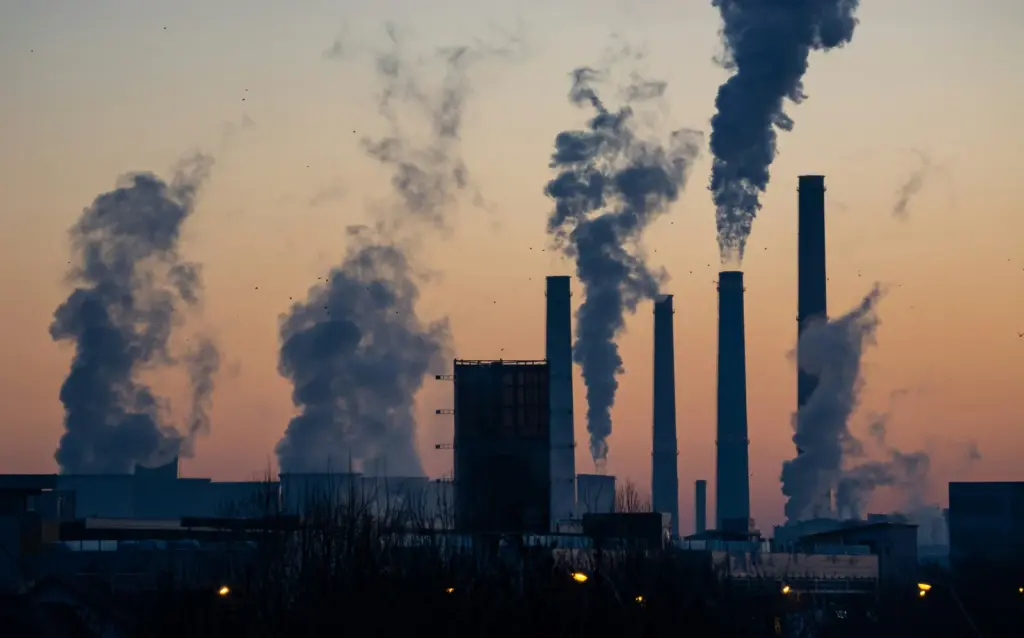
The precursor gases come overwhelmingly from burning fossil fuels. SO2 is released when coal and heavy oil, which contain sulphur, are burned in thermal power plants, smelters and refineries. NOx forms whenever anything burns hot enough for atmospheric nitrogen and oxygen to combine, so it pours out of power-plant boilers and, heavily, out of vehicle engines. Volcanoes and lightning add a natural background, but the sharp, regional pulses of acid deposition are human-made and trace back to a smokestack or a tailpipe.
The chemistry: turning gases into sulphuric and nitric acid
Two gases go up; two strong acids come down. Sulphur dioxide becomes sulphuric acid (H2SO4), and nitrogen oxides become nitric acid (HNO3). The atmosphere is doing the manufacturing, and the reactions are worth carrying in your head because a one-line version of them answers half the follow-up questions.
Start with sulphur. In the boiler, sulphur in the coal burns to sulphur dioxide:
S + O2 gives SO2.
Up in the atmosphere, SO2 is slowly oxidised to sulphur trioxide (SO3), a step helped along by sunlight, oxygen and tiny catalytic particles of dust and metals:
2SO2 + O2 gives 2SO3.
Sulphur trioxide is greedy for water and grabs it from cloud droplets to form sulphuric acid:
SO3 + H2O gives H2SO4.
Nitrogen runs a parallel track. High-temperature combustion forces nitrogen and oxygen together into nitric oxide (NO), which oxidises in air to nitrogen dioxide (NO2), the brown gas you can sometimes see hanging over congested cities. NO2 then reacts with water and the hydroxyl radical to give nitric acid:
3NO2 + H2O gives 2HNO3 + NO.
Both products, sulphuric and nitric acid, are strong acids, meaning they dissociate almost completely and release their hydrogen ions readily. That is why acid rain is corrosive out of proportion to the tiny concentrations involved. Roughly two-thirds of the acidity in most affected regions comes from sulphuric acid and about a third from nitric, though the ratio shifts with the local fuel mix: a vehicle-heavy city leans more nitric, a coal-heavy industrial belt more sulphuric.
Wet deposition and dry deposition
Acid does not only fall as rain, and this distinction is the one students most often skip. Wet deposition is the acid that comes down dissolved in some form of water: rain, snow, sleet, fog or mist. Dry deposition is the acidic gas and particle matter that settles directly onto surfaces on a dry day, coating leaves, soil, buildings and lakes, and then turns acidic the moment the next shower or dew wets it down.
Think of it like salt on food. Wet deposition is the salt already stirred into the soup. Dry deposition is the salt sitting on the rim of the bowl, harmless until liquid reaches it, at which point it dissolves and does exactly the same job. In dry, less rainy regions, dry deposition can account for a large share of total acid loading, which is why you cannot judge the problem by rainfall pH alone.
Two features make acid deposition a policy nightmare. First, it is transboundary. SO2 and NOx can ride high-altitude winds for hundreds of kilometres before they finish reacting and fall, so the country doing the burning and the country receiving the acid are often different. Scandinavia spent the 1970s absorbing acid generated by British and central European industry. Second, the damage is delayed and cumulative, showing up in soils and lakes years after the emissions, which makes it politically easy to postpone action. Understanding where the acid actually forms and settles is the first job of any monitoring authority, and in India that mapping falls to the Central and State Pollution Control Boards.
What acid rain does: water, forests, soil and stone
The damage lands in four places, and the exam expects you to name the mechanism, not just the outcome.
Aquatic ecosystems take the sharpest hit. As acid drains into lakes and streams, the water’s pH falls. Below about pH 5, fish eggs stop hatching and sensitive species disappear; below pH 4.5, most fish life is gone. There is a second, sneakier killer: acidic water leaches aluminium out of surrounding soils and carries it into the lake. Dissolved aluminium clogs fish gills and suffocates them, so a lake can end up crystal clear and completely dead, its acidity finishing the food chain from the bottom up. Springtime is worst, when a winter’s worth of acid stored in snow releases all at once in an “acid shock” as the snow melts. This is a different mechanism from thermal pollution, where the problem is heat, not chemistry, and it is worth keeping the two straight.
Forests and soil suffer more slowly. Acid rain does not usually kill trees by burning the leaves, though it does damage the waxy protective coating on needles. The bigger harm is underground. Acid strips essential nutrient cations, calcium and magnesium, out of the soil and washes them away, starving the trees, while simultaneously mobilising toxic aluminium around the roots. A forest can look fine for years and then decline suddenly once the soil’s buffering capacity is exhausted. Central Europe’s Waldsterben of the 1980s was exactly this, and high-altitude forests, bathed in acidic cloud and growing on thin soils, are the most exposed.
Buildings and monuments show the most visible damage, and this is where India’s most famous case lives. Marble and limestone are made of calcium carbonate, which reacts directly with sulphuric acid:
CaCO3 + H2SO4 gives CaSO4 + H2O + CO2.
The calcium sulphate produced is soluble and flakes away, so the stone loses its polish, blackens and slowly dissolves, an effect conservators call “marble cancer”. The Taj Mahal is the standing example: emissions from the nearby Mathura refinery and Agra’s industries were yellowing and pitting its marble. In the landmark M.C. Mehta v Union of India (1996) case, the Supreme Court created the Taj Trapezium Zone (TTZ), an area of about 10,400 sq km around the monument, and ordered polluting industries either to switch to cleaner natural gas or relocate. It remains the go-to example for linking acid rain to heritage law.
Human health is affected mainly through the same fine sulphate and nitrate particles that cause the acidity. These particles penetrate deep into the lungs and worsen asthma, bronchitis and cardiovascular disease. The acidity of the rain itself is too weak to harm skin, but the pollution package it belongs to is a serious respiratory hazard, which is why acid rain sits inside the wider story of air pollution in India.
The transboundary problem and the global response
Because acid crosses borders, the fixes had to be international, and two responses are worth knowing. In Europe, the 1979 Geneva Convention on Long-Range Transboundary Air Pollution (CLRTAP), negotiated under the UN Economic Commission for Europe, was the first legally binding treaty to tackle air pollution across national lines. It was later reinforced by protocols that set hard cuts in sulphur emissions, including the 1985 Helsinki Protocol and the 1999 Gothenburg Protocol.
In the United States, the 1990 Clean Air Act Amendments launched the Acid Rain Program, which used a cap-and-trade system for SO2: the government capped total emissions, issued tradeable allowances, and let power plants buy and sell them. It is often cited as the most successful market-based environmental policy ever run, cutting US power-sector SO2 by more than half faster and cheaper than expected. That combination, a firm cap plus flexible trading, is the model reformers point to whenever emissions markets come up, and it is a useful comparison to keep for answer-writing.
Where India stands: low-sulphur coal, high emissions
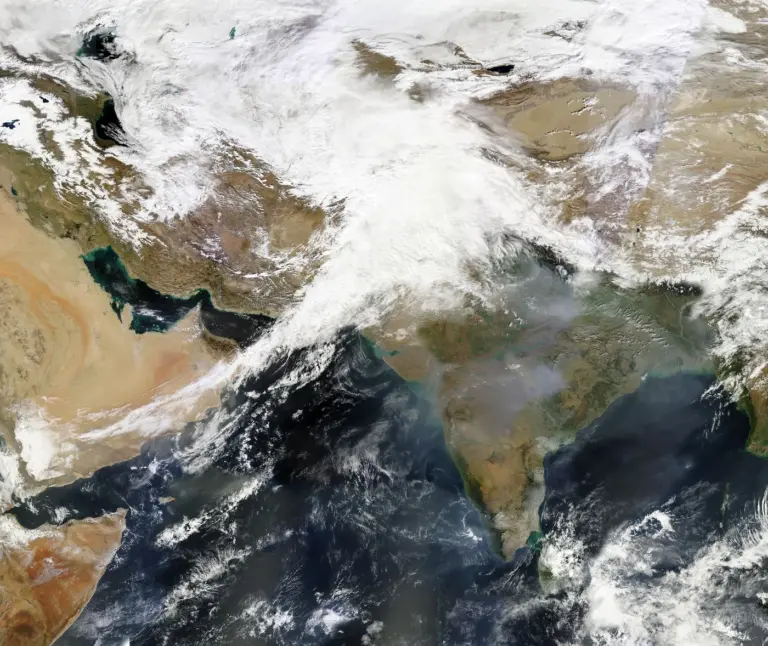
India’s position is genuinely double-edged, and this is the part current questions probe. On one hand, Indian coal is naturally low in sulphur, typically around 0.3 to 0.5 percent, far below the high-sulphur coals that devastated Europe and North America. That has spared India the acidified-lakes catastrophe seen elsewhere, and monitoring by research institutions has generally found rainfall acidity within manageable limits across much of the country. On the other hand, India burns an enormous quantity of that coal, so its total SO2 output is still one of the largest in the world; Greenpeace analyses of NASA satellite data have repeatedly flagged India’s thermal-power clusters, such as Singrauli, as among the planet’s biggest SO2 hotspots. Low concentration, vast volume.
That tension sits at the centre of a live policy fight over flue-gas desulphurisation (FGD). In 2015, India for the first time set SO2 emission limits for coal plants and required them to install FGD units, but the deadlines were pushed back repeatedly. Then in July 2025, the Ministry of Environment, Forest and Climate Change sharply narrowed the mandate. It sorted the roughly 600 coal-power units into three categories: Category A, the roughly 11 percent within 10 km of the National Capital Region or million-plus cities, must comply by December 2027; Category B, near critically polluted areas, is decided case by case; and Category C, about 78 percent of units, is exempted from FGD altogether, subject only to meeting chimney-height norms. The government’s defence, resting on studies by IIT Delhi, CSIR-NEERI and others, is that India’s low-sulphur coal and tall stacks keep ambient SO2 within limits, so tens of thousands of crores of FGD spending is hard to justify. Critics counter that SO2 still forms harmful secondary particulates regardless of stack height, and that the decision trades public health for utility balance sheets. It is a textbook cost-versus-precaution debate and exactly the kind of trade-off a good answer should present from both sides.
How to control acid rain
The whole point of control is to stop the two precursor gases before they leave the chimney or tailpipe, or to burn less of the fuel that makes them. The measures fall into a clear order.
| Approach | How it works | What it targets |
|---|---|---|
| Flue-gas desulphurisation (FGD) | Scrubbers spray limestone slurry through the exhaust; the alkali neutralises SO2 and produces gypsum as a by-product | SO2 at power plants and smelters |
| Low-sulphur fuel and coal washing | Choosing low-sulphur coal or cleaning coal before burning removes sulphur at source | SO2 at the fuel stage |
| Fluidised bed combustion | Burning coal with limestone in the bed captures sulphur during combustion itself | SO2 during burning |
| Catalytic converters and low-NOx burners | Converters cut NOx in vehicle exhaust; redesigned burners lower combustion temperature so less NOx forms | NOx from transport and power |
| Clean energy shift | Solar, wind, nuclear and gas emit little or no SO2 and NOx | Both gases, at the root |
| Liming | Adding powdered limestone to acidified lakes and soils neutralises existing acidity | Damage already done |
FGD is the workhorse for sulphur: a scrubber forces the flue gas through a fine limestone slurry that reacts with SO2, removing up to 90 percent or more of it and leaving behind gypsum that cement plants can reuse. For NOx, the front line is transport, where catalytic converters and cleaner engines have made the biggest difference, backed by low-NOx burner design in power plants. But the most durable fix is upstream: burning less coal and oil in the first place. Every megawatt shifted to renewables or gas removes both gases at once, which is why acid-rain control is really a sub-plot of the wider clean-energy transition. Liming, spreading powdered limestone on stricken lakes and forests, treats the symptom rather than the cause and is a last resort, not a solution.
India’s overall enforcement architecture sits within the environmental laws framework, chiefly the Air (Prevention and Control of Pollution) Act, 1981 and the Environment Protection Act, 1986, with the National Green Tribunal handling disputes and the pollution-control boards doing the monitoring. China’s dramatic SO2 cuts after 2013, driven largely by forcing scrubbers onto its power fleet, are the cautionary success story here, and India’s own experience learning from China’s air-pollution fight is a ready comparison for essays and GS answers.
How to study this for the exam
Do not memorise acid rain as a list of effects. Learn it as a chain and you can rebuild any answer from first principles. Fix the chain in this order: fossil fuel burns, releases SO2 and NOx, these oxidise in air to H2SO4 and HNO3, they fall as wet or dry deposition, and they damage water, forests, soil and stone. That single sentence is worth more than a page of scattered facts.
Keep three anchor examples ready, because Prelims loves the specific and Mains rewards it: the Taj Trapezium Zone and the M.C. Mehta case for the heritage-and-law angle, the US Acid Rain Program cap-and-trade for the policy-design angle, and the 2025 FGD exemption debate for the current, argue-both-sides angle. For Prelims, be precise on the two numbers people confuse, natural rain pH 5.6 and the acid-rain range around 4.2 to 4.5, and remember that the natural acidity comes from carbon dioxide, not sulphur. Do not muddle acid rain with ozone layer depletion or the greenhouse effect; all three are atmospheric pollution stories with different gases and different mechanisms, and Prelims sets traps precisely where students blur them. For Mains, the FGD question is your best material: it lets you weigh economic cost, public health and India’s low-sulphur-coal argument in a genuine trade-off, which is exactly the balanced judgement examiners reward.
Frequently Asked Questions
What causes acid rain?
Acid rain is caused mainly by sulphur dioxide (SO2) and oxides of nitrogen (NOx) released when fossil fuels like coal and oil are burned in power plants, factories and vehicles. In the atmosphere these gases react with oxygen and water to form sulphuric acid and nitric acid, which come down in rain, snow, fog or dust.
Why is normal rain slightly acidic?
Normal rain has a pH of about 5.6 because carbon dioxide in the air dissolves into water droplets and forms weak carbonic acid. Rain is only called “acid rain” when its pH falls well below this, typically to around 4.2 to 4.5, due to sulphuric and nitric acid.
What is the difference between wet and dry deposition?
Wet deposition is acid that falls dissolved in rain, snow, fog or mist. Dry deposition is acidic gas and particles that settle directly onto surfaces on a dry day and become acidic when the next rain or dew wets them. Both deliver the same acids by different routes.
How does acid rain affect the Taj Mahal?
The Taj Mahal is built of marble, which is calcium carbonate. Sulphuric acid reacts with it to form soluble calcium sulphate, so the marble yellows, pits and flakes, an effect called marble cancer. The Supreme Court created the Taj Trapezium Zone in 1996 to control industrial emissions around Agra.
Why does acid rain kill fish even when the water looks clean?
Beyond lowering the water’s pH, acid rain leaches aluminium out of the surrounding soil into the lake. Dissolved aluminium clogs and damages fish gills, suffocating them, so a lake can look perfectly clear yet be biologically dead.
What is FGD and how does it control acid rain?
Flue-gas desulphurisation (FGD) is a scrubbing system that sprays limestone slurry through a power plant’s exhaust. The alkali reacts with and removes SO2, often more than 90 percent of it, producing gypsum as a reusable by-product. It is the main technology for cutting sulphur emissions at the source.
Is acid rain a serious problem in India?
India’s coal is low in sulphur, so it has avoided the acidified-lakes crisis seen in Europe and North America, and rainfall acidity is generally within limits. But India’s huge coal consumption makes its total SO2 output one of the world’s largest, and the 2025 relaxation of FGD rules keeps the issue politically live.
Practice Questions
1. The natural pH of unpolluted rainwater is approximately:
a) 7.0
b) 5.6
c) 4.5
d) 6.8
Answer: b) 5.6, because dissolved carbon dioxide forms weak carbonic acid even in clean air.
2. Which pair of gases is primarily responsible for acid rain?
a) Carbon dioxide and methane
b) Sulphur dioxide and oxides of nitrogen
c) Ozone and carbon monoxide
d) Chlorofluorocarbons and nitrous oxide
Answer: b) Sulphur dioxide and oxides of nitrogen
3. The Taj Trapezium Zone was established following which Supreme Court case?
a) Vellore Citizens Welfare Forum v Union of India
b) Subhash Kumar v State of Bihar
c) M.C. Mehta v Union of India
d) Rural Litigation and Entitlement Kendra v State of UP
Answer: c) M.C. Mehta v Union of India, decided in 1996.
4. In an acidified lake, fish are often killed by the leaching of which element from the surrounding soil?
a) Iron
b) Mercury
c) Aluminium
d) Lead
Answer: c) Aluminium, which clogs and damages fish gills.
5. Flue-gas desulphurisation (FGD) systems typically use which material to neutralise sulphur dioxide?
a) Activated carbon
b) Limestone slurry
c) Sodium chloride
d) Silica gel
Answer: b) Limestone slurry, which reacts with SO2 to form gypsum.
Mains-style questions:
- Explain the chemistry by which sulphur dioxide and oxides of nitrogen produce acid rain, and distinguish between wet and dry deposition. (150 words)
- “Acid rain is a transboundary pollution problem that demands international rather than purely national solutions.” Discuss with reference to the global regimes that have addressed it. (150 words)
- Examine the impact of acid rain on aquatic ecosystems, forests and cultural monuments in India, using a specific example for each. (250 words)
- Critically evaluate the 2025 decision to exempt most Indian coal-power units from installing flue-gas desulphurisation systems. Should low-sulphur coal justify such a relaxation? (250 words)
- Discuss the range of technological and policy measures available to control acid rain, and assess which are most suited to India’s energy mix. (250 words)
Acid rain rewards the aspirant who resists the urge to memorise and instead learns the mechanism, because every effect, from a silent Scandinavian lake to the flaking marble at Agra, is just that one chain of chemistry playing out on a different surface. Hold the chain, keep three sharp examples, and be ready to argue the FGD trade-off honestly from both sides. That is the difference between an answer that lists what acid rain does and one that shows you understand why.
Tell Google you want more of this.
Add Anantam IAS as a preferred sourceOne tap, and this site shows up more often in your own Top Stories, AI Overviews and AI Mode. Remove it any time.