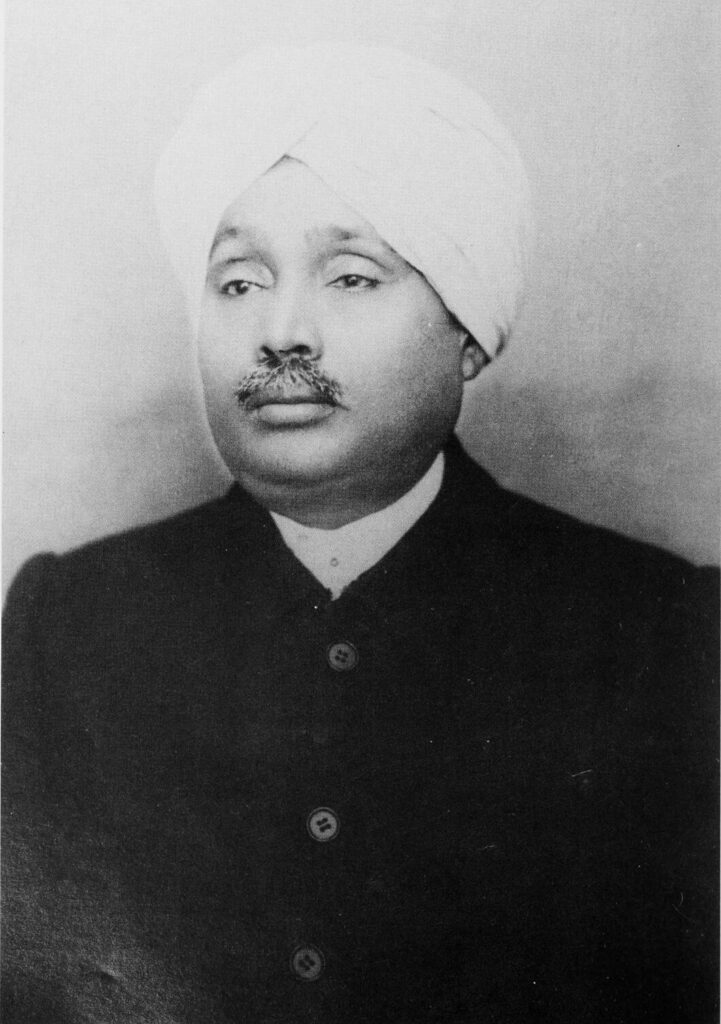
Lala Lajpat Rai (28 January 1865 – 17 November 1928) was the Punjab Kesari — Lion of the Punjab — and the senior nationalist leader of north-western India. A lawyer, Arya Samaji reformer, educationist and journalist, he was the “Lal” of the Lal-Bal-Pal trinity that gave the Indian National Congress its first mass-based Extremist leadership during the Swadeshi agitation of 1905-08. His death in November 1928 from injuries sustained during a lathi charge at the head of an anti-Simon Commission protest at Lahore radicalised an entire generation of revolutionaries, including Bhagat Singh, Sukhdev and Rajguru.
Lala Lajpat Rai’s importance in modern Indian history runs across four registers — religious reform through the Arya Samaj, educational nation-building through the DAV system, political agitation through the Congress and the Hindu Mahasabha, and welfare-state pioneering through the Servants of People Society. He was the Indian leader most familiar to American and European audiences in the 1910s, having spent the First World War years lecturing in the United States and Japan.
Early Life and Arya Samaj
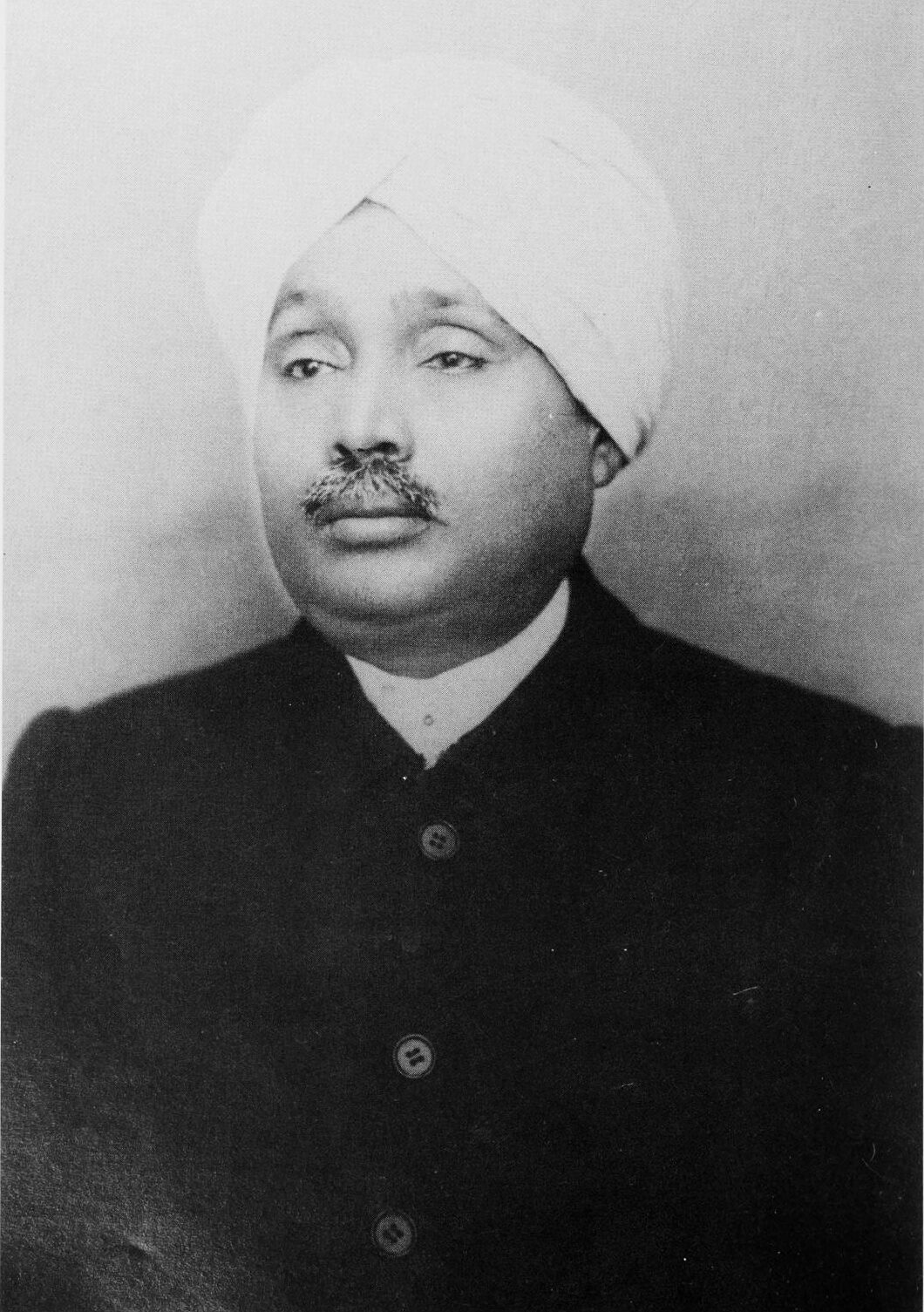
Born at Dhudike in Ferozepur district of Punjab on 28 January 1865, Lajpat Rai grew up in a family of mixed religious heritage — his father was a teacher influenced by Islam and Sikhism. He studied law at Government College Lahore, qualified as a vakil in 1885, and built a successful practice first at Hissar and then at Lahore.
In 1882 he came under the influence of Swami Dayanand Saraswati and joined the Arya Samaj. The Samaj’s combination of monotheism, social reform, opposition to untouchability and emphasis on Sanskrit and Vedic education shaped Lala Lajpat Rai for the rest of his life. He became the principal Punjab organiser of the “College” wing of the Arya Samaj that founded Dayanand Anglo-Vedic schools and colleges from 1886 onwards. DAV College Lahore, where he taught and served on the managing committee, became the largest indigenous educational network in north-west India.
Punjab Kesari and Early Politics
Lala Lajpat Rai joined the Indian National Congress in 1888 at its Allahabad session. Through the 1890s he wrote for Punjabi newspapers and authored biographies of Mazzini, Garibaldi, Shivaji, Krishna and Dayanand — the genre of nationalist hagiography by which Indian readers acquired a comparative vocabulary of patriotism.
By the early 1900s he was the most prominent political leader of the Punjab. The Lala won the title Punjab Kesari — Lion of Punjab — for his fearless platform oratory and his willingness to break with the cautious Moderate leadership of the Congress.
1907 Deportation to Mandalay
In May 1907, against the backdrop of the Canal Colonies agitation and the Punjab Land Colonisation Act, the Viceroy Lord Minto deported Lala Lajpat Rai and Sardar Ajit Singh to Mandalay in Burma without trial under Regulation III of 1818. The deportation provoked nationwide protest. Lajpat Rai spent six months in Mandalay before being released and allowed to return. The episode confirmed his stature as a national leader and pushed him decisively into the Extremist camp at the Surat session of December 1907.
Lal-Bal-Pal and the Swadeshi Movement
Lala Lajpat Rai, Bal Gangadhar Tilak and Bipin Chandra Pal were the three principal extremist leaders who drove the Swadeshi and Boycott movement against the 1905 Partition of Bengal. The Lal-Bal-Pal label, popularised by contemporary journalists, captured the geographical reach of the new militancy — Punjab, Maharashtra and Bengal — and its political content: Swaraj, Swadeshi, Boycott, National Education.
Lajpat Rai’s contribution to the trio was the Punjab dimension. The Canal Colonies of west Punjab were the empire’s settler-agricultural heartland; mobilising peasants and townsmen there carried far greater political weight than agitation in the cities of Bengal alone. He toured the province ceaselessly between 1905 and 1907, organising Swadeshi exhibitions, Hindi-Urdu newspapers and Arya Samaj branches into a single political network.
Years in America (1914-1920)
When the First World War broke out Lala Lajpat Rai was abroad. He travelled to England in April 1914 and then to the United States, where he remained for almost six years. In New York he founded the Indian Home Rule League of America (1917) and edited the journal Young India. He met Woodrow Wilson, addressed the U.S. Senate, and lectured on Indian nationalism to American audiences from Berkeley to Harvard. His book Young India: An Interpretation and a History of the Nationalist Movement from Within (1916) was the first systematic English-language exposition of Indian Extremism for Western readers.
He returned to India in February 1920 and immediately joined Gandhi’s Non-Cooperation Movement, presiding over the special Calcutta session of the Congress in September 1920 that approved the programme.
Servants of People Society (Lok Sevak Mandal)
In November 1921 Lala Lajpat Rai founded the Servants of People Society — Lok Sevak Mandal — at Lahore, modelled on Gopal Krishna Gokhale’s Servants of India Society. The Mandal recruited full-time public workers who took vows of poverty, simple living and lifelong dedication to nation-building. It ran schools, hostels, dispensaries, untouchability-uplift programmes and relief work, and after independence became a major civil-society institution. The Society survives today and continues to publish People, the English newspaper Lajpat Rai founded in 1925.
Books and Journalism
Beyond Young India, Lala Lajpat Rai’s books include The Arya Samaj (1915), The Political Future of India (1919), Unhappy India (1928, a furious reply to Katherine Mayo’s Mother India) and England’s Debt to India (1917). He edited or founded Punjabee, Bandematram (Urdu), People and Vande Mataram among many other journals. His prose was direct, polemical and accessible — the model for a generation of Punjab journalists.
Simon Commission Protest, 30 October 1928
The Simon Commission, appointed in November 1927 to review the working of the 1919 Government of India Act and recommend constitutional reform, contained no Indian member. The Congress called for a complete boycott. When the seven-member commission landed at Bombay on 3 February 1928, black-flag demonstrations followed it across India.
On 30 October 1928 the commission arrived at Lahore railway station. Lala Lajpat Rai led the protest. As the procession reached the station, Superintendent of Police James A. Scott ordered a lathi charge. Lajpat Rai was struck repeatedly on the chest and head.
Bleeding and bruised, he addressed a public meeting that evening with the words: “I declare that the blows struck at me today will be the last nails in the coffin of British rule in India.”
He never recovered. His health collapsed, and Lala Lajpat Rai died of cardiac arrest at Lahore on 17 November 1928, aged 63.
Aftermath: Bhagat Singh and the HSRA
The Hindustan Socialist Republican Association — Bhagat Singh, Sukhdev, Rajguru and Chandrasekhar Azad — resolved to avenge his death. On 17 December 1928, mistaking the assistant superintendent J.P. Saunders for Scott, they shot him dead at the gates of the District Police Headquarters at Lahore. The “Saunders murder” turned the HSRA into a national legend and led directly to the 1929 Central Legislative Assembly bombing and the Lahore Conspiracy trial. The lathi blows on Lajpat Rai thus stand at the beginning of the most consequential revolutionary action of the late colonial era.
Lajpat Rai and the Lal-Bal-Pal Legacy
Within the trio, Lala Lajpat Rai was the bridge between the religious-reformist nationalism of the Arya Samaj and the political-constitutional nationalism of the Congress. He was simultaneously a Hindu Mahasabha founder (1915), a Congress president (1920 special session), a co-operativist (he founded the Punjab National Bank in 1894), a trade unionist (he chaired the first session of the All-India Trade Union Congress in 1920) and a parliamentarian (he sat in the Central Legislative Assembly from 1926 until his death).
His death linked the Extremist generation of Bal Gangadhar Tilak to the revolutionary generation of Bhagat Singh, and his Servants of People Society linked Gandhian constructive work to the older Gokhale tradition. Few Indian leaders bridged so many strands of the freedom movement as completely.
Hindu Mahasabha and the Communal Question
Lala Lajpat Rai’s last years were complicated by his association with the Hindu Mahasabha, which he had helped found in 1915 and which he led briefly in 1925. His pamphlet The Problem of National Education in India and a series of articles in The Tribune in 1924 argued for a “two-nation” reading of communal politics that Mohammad Ali Jinnah would later inherit. He retreated from the position by 1927 and resumed full Congress activity until his death the following year. For UPSC purposes the episode illustrates the strain that the Khilafat collapse, the Moplah rebellion of 1921 and the failure of Non-Cooperation placed on every nationalist leader of the early 1920s. Lajpat Rai’s instinctive return to the Congress fold under Motilal Nehru’s leadership in 1927-28, and his death at the head of an all-party Simon protest in 1928, demonstrates the priority he placed on the anti-imperial struggle over confessional politics whenever the two came into conflict.
Frequently Asked Questions
Who was Lala Lajpat Rai?
Lala Lajpat Rai (1865-1928) was an Indian nationalist leader, lawyer, Arya Samaj reformer and author from Punjab. He was the Lal of the Lal-Bal-Pal trio, founder of the Servants of People Society (1921), and president of the special Calcutta session of the Congress in 1920.
Why is Lala Lajpat Rai called Punjab Kesari?
He was called Punjab Kesari — Lion of Punjab — for his fearless oratory, his leadership of the 1907 Canal Colonies agitation that led to his deportation to Mandalay, and his stature as the most prominent nationalist leader of north-western India.
How did Lala Lajpat Rai die?
Lala Lajpat Rai died on 17 November 1928 at Lahore from cardiac arrest after sustaining severe lathi-charge injuries on 30 October 1928 while leading a protest against the Simon Commission at Lahore railway station. Superintendent James Scott personally struck him with a lathi.
What was the Simon Commission?
The Simon Commission, appointed in November 1927 under Sir John Simon, was a seven-member British parliamentary committee to review the 1919 Government of India Act and recommend constitutional reform. It contained no Indian member, which prompted the Congress and Muslim League to boycott it with the slogan u0022Simon Go Back.u0022
What is the Servants of People Society?
The Servants of People Society or Lok Sevak Mandal is a national service organisation founded by Lala Lajpat Rai at Lahore on 9 November 1921. Members take lifelong vows of poverty and dedication to public service. It continues to operate schools, dispensaries and publications, including the English newspaper People.
What was Lala Lajpat Rai’s role in the Arya Samaj?
He was the principal Punjab organiser of the u0022Collegeu0022 wing of the Arya Samaj after 1886. He helped build the Dayanand Anglo-Vedic college network across Punjab and the United Provinces and authored The Arya Samaj (1915), the standard English account of the movement.
Who avenged Lala Lajpat Rai’s death?
The Hindustan Socialist Republican Association — Bhagat Singh, Sukhdev, Rajguru and Chandrasekhar Azad — resolved to avenge his death. On 17 December 1928 they shot dead Assistant Superintendent J.P. Saunders at Lahore, mistaking him for Superintendent Scott.
Which institutions did Lala Lajpat Rai found?
Lala Lajpat Rai co-founded the Punjab National Bank (1894), the Indian Home Rule League of America (1917), the Servants of People Society (1921) and several DAV educational institutions. He also founded or edited the newspapers People, Vande Mataram, Punjabee and Bandematram.
Tell Google you want more of this.
Add Anantam IAS as a preferred sourceOne tap, and this site shows up more often in your own Top Stories, AI Overviews and AI Mode. Remove it any time.